Marilynne Robinson - Home
Здесь есть возможность читать онлайн «Marilynne Robinson - Home» весь текст электронной книги совершенно бесплатно (целиком полную версию без сокращений). В некоторых случаях можно слушать аудио, скачать через торрент в формате fb2 и присутствует краткое содержание. Год выпуска: 2008, Издательство: Farrar, Straus and Giroux, Жанр: Современная проза, на английском языке. Описание произведения, (предисловие) а так же отзывы посетителей доступны на портале библиотеки ЛибКат.
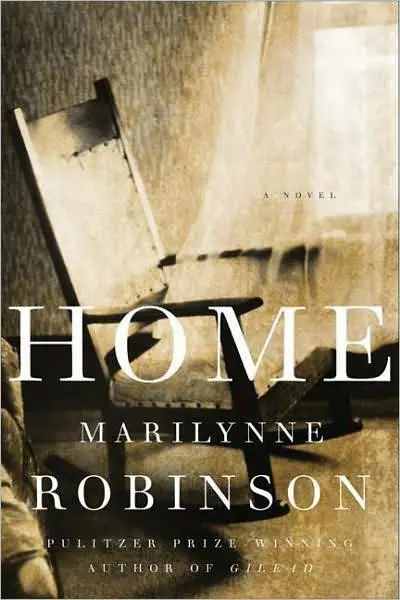
- Название:Home
- Автор:
- Издательство:Farrar, Straus and Giroux
- Жанр:
- Год:2008
- ISBN:нет данных
- Рейтинг книги:3 / 5. Голосов: 1
-
Избранное:Добавить в избранное
- Отзывы:
-
Ваша оценка:
Home: краткое содержание, описание и аннотация
Предлагаем к чтению аннотацию, описание, краткое содержание или предисловие (зависит от того, что написал сам автор книги «Home»). Если вы не нашли необходимую информацию о книге — напишите в комментариях, мы постараемся отыскать её.
, Marilynne Robinson's Pulitzer Prize — winning novel.
is an entirely independent, deeply affecting novel that takes place concurrently in the same locale, this time in the household of Reverend Robert Boughton, Ames's closest friend.
Glory Boughton, aged thirty-eight, has returned to Gilead to care for her dying father. Soon her brother, Jack — the prodigal son of the family, gone for twenty years — comes home too, looking for refuge and trying to make peace with a past littered with tormenting trouble and pain.
Jack is one of the great characters in recent literature. A bad boy from childhood, an alcoholic who cannot hold a job, he is perpetually at odds with his surroundings and with his traditionalist father, though he remains Boughton’s most beloved child. Brilliant, lovable, and wayward, Jack forges an intense bond with Glory and engages painfully with Ames, his godfather and namesake.
Home
Home — читать онлайн бесплатно полную книгу (весь текст) целиком
Ниже представлен текст книги, разбитый по страницам. Система сохранения места последней прочитанной страницы, позволяет с удобством читать онлайн бесплатно книгу «Home», без необходимости каждый раз заново искать на чём Вы остановились. Поставьте закладку, и сможете в любой момент перейти на страницу, на которой закончили чтение.
Интервал:
Закладка:
Glory said, “He seems to have friends in the church there.”
“Friends! Well, I suppose he would. That just happens in a church, doesn’t it. He didn’t really have friends as a boy, though. He never seemed to want them. I’ve prayed his whole life that he’d have a friend or two. It often came to my mind, you know, that loneliness of his. And it didn’t really occur to me — it honestly never occurred to me — that off in St. Louis somewhere my prayers were being answered! Isn’t that something!” He shook his head. “It would have been a weight off my heart, I’ll tell you that. I could have spared myself years of grief, just by having a little trust. There’s a lesson in that.” Then he said, “I do wonder what happened, though. I mean, right now he doesn’t strike me as a man who feels he has friends. Then I could be wrong.”
“He doesn’t tell me very much either.”
“Well,” he said, “here I am worrying, and this is a remarkable day! I have to bestir myself. Would you mind giving my hair a little trim, Glory? I’ve been feeling sort of shaggy. It’s probably my imagination, mostly.” He laughed. “Not much there anymore, I know. Still.”
So she brought her father into the kitchen, sat him down, wrapped a towel around his shoulders and tucked it close around his neck. She got a comb and the pair of shears and set to work. His hair had vanished, or was on the point of vanishing, not through ordinary loss but by a process of rarification. It was so fine, so white and weightless, that it eddied into soft curls. Wafted, she thought. She hated to cut it off, since there seemed very little chance that it could grow back again as it was. It was like cutting a young child’s hair. But her father claimed to be irked by the prettiness of it. Fauntleroy in his dotage, he said.
So she clipped and trimmed, making more work of it than it was in order to satisfy him that some change had been accomplished, combing it down a little with water so he would feel sleek and trim. The nape of his neck, the backs of his ears. The visible strain of holding the great human head upright for decades and decades. Some ancient said it is what makes us different from the beasts, that our eyes are not turned downward to the earth. Most of the time. It was Ovid. At the end of so much effort, the neck seemed frail, but the head was still lifted up, and the ears stood there, still shaped for attention, soft as they were. She’d have left all the lovely hair, which looked like gentle bewilderment, just as the lifted head and the ears looked like waiting grown old, like trust grown old.
“Yes,” her father said, “whenever I thought of him, he was always alone, the way he used to be, and I would wonder what kind of life he could have, with no one even to care how he was, what he needed. I realize that was the one thing I thought I knew, that he would be alone.” He laughed. “Yes, that cost me a lot of grief, and I never thought to question it. I prayed about that more than any one thing, I believe.”
The screen door opened and Jack came into the porch, then into the kitchen. He looked at her and shrugged. “My courage failed,” he said. “I thought if you were dressed you might be able to go late. Sorry.”
After a moment her father said, “Come here, son,” and held out his hands. Jack set his hat on the table and came to the old man and let him take his hands. “There is nothing surprising in this,” the old man said. “Not at all.” There was a quaver in his voice, so he cleared his throat. “Many people find it hard to go to church if they’ve been away for a while. I’ve seen it very often. And I’d say to them, It’s because it means something to you. The decision is important to you. As it should be! So, you see, there’s no reason at all to be disappointed. I used to say, The Sabbath is faithful. In a week she’ll be here again.” And he laughed, sadly, and patted Jack’s hands.
Jack looked down at him, tender and distant. “Next week,” he said.
Glory combed through her father’s hair and then kissed it where it was whitest and thinnest, just at the top of his head. “All done,” she said, and took the towel off from around him.
Jack said, “I don’t suppose you’d have time for another customer.”
“Well, sure.” She was surprised. They had always been so careful of him, almost afraid to touch him. There was an aloofness about him more thoroughgoing than modesty or reticence. It was feral, and fragile. It had enforced a peculiar decorum on them all, even on their mother. There was always the moment when they acknowledged this — no hugging, no roughhousing could include him. Even his father patted his shoulder tentatively, shy and cautious. Why should a child have defended his loneliness that way? But let him have his ways, their father said, or he would be gone. He’d smile at them across that distance, and the smile was sad and hard, and it meant estrangement, even when he was with them.
Her father was also surprised. He said, “Well, I’ll get myself out of your way here.” Glory helped him up from his chair. “I’ve got to give the paper a little going over, if Ames is coming. I have to be up to the minute in case he starts talking politics.” She settled him by the window, and when she came back, Jack was still standing there, waiting.
“You’re probably busy,” he said.
“Not especially. But I have to warn you, I don’t make any claims for myself as a barber. I really just pretend to cut Papa’s hair.”
Jack said, “If you could trim it a little. I should have gone to the barbershop yesterday. I might have felt a little less — disreputable.”
“This morning? You looked fine.”
“No.” He took off his jacket, and she wrapped the towel around his neck and around his shoulders. “I could feel it. It was like an itchiness under my skin. Like — scurrility. I thought it might be my clothes. I mean that they made it obvious. More obvious.”
He shied away from her touch. “You’re going to have to sit still,” she said. “Is it Ames?”
“Him, too. But I can’t really say the experience is unfamiliar. It has come over me from time to time. It rarely lasts more than a few months.” He laughed. “I shouldn’t have asked you to do this. You don’t have to.”
“Sit still.”
“You can’t commiserate. You have never felt disreputable.”
“How do you know?”
“Am I right?”
“I suppose.”
“I am right.” He said, “In case you’re wondering, scurrility seems to be contagious. Be warned. I should wear a leper bell. I suppose I do.”
“You’re imagining.”
“No, I’m only exaggerating.”
“You didn’t actually go inside the church.”
“I didn’t even cross the street.”
She put her hand under his chin and lifted his head. Had she ever touched his face before? “I can’t really see what I’m doing here. You’ll have to sit up.”
“I suppose old Ames must have seen me there. Loitering. Lurking. Eyeing his flock.” He laughed. “What a fool I am.”
“Sit still.”
“Will do.”
“I’m going to trim around your ears. I’ve got to get it even.”
He crossed his ankles and folded his hands and sat there obediently while she snipped at one side and then the other. She tipped up his face again to judge the effect. There were tears on his cheeks. She took a corner of the towel and patted them away, and he smiled at her.
“Exasperation,” he said. “I’m so tired of myself.”
HE ASKED HER TO CUT HIS HAIR SHORTER ON THE TOP SO it wouldn’t fall down on his forehead. He said, “I look like some damn gigolo.”
“No, you don’t.”
He eyed her. “How would you know?”
“I suppose I wouldn’t know.”
Читать дальшеИнтервал:
Закладка:
Похожие книги на «Home»
Представляем Вашему вниманию похожие книги на «Home» списком для выбора. Мы отобрали схожую по названию и смыслу литературу в надежде предоставить читателям больше вариантов отыскать новые, интересные, ещё непрочитанные произведения.




Обсуждение, отзывы о книге «Home» и просто собственные мнения читателей. Оставьте ваши комментарии, напишите, что Вы думаете о произведении, его смысле или главных героях. Укажите что конкретно понравилось, а что нет, и почему Вы так считаете.