Boualem Sansal - Harraga
Здесь есть возможность читать онлайн «Boualem Sansal - Harraga» весь текст электронной книги совершенно бесплатно (целиком полную версию без сокращений). В некоторых случаях можно слушать аудио, скачать через торрент в формате fb2 и присутствует краткое содержание. Год выпуска: 2014, Издательство: Bloomsbury Publishing, Жанр: Современная проза, на английском языке. Описание произведения, (предисловие) а так же отзывы посетителей доступны на портале библиотеки ЛибКат.
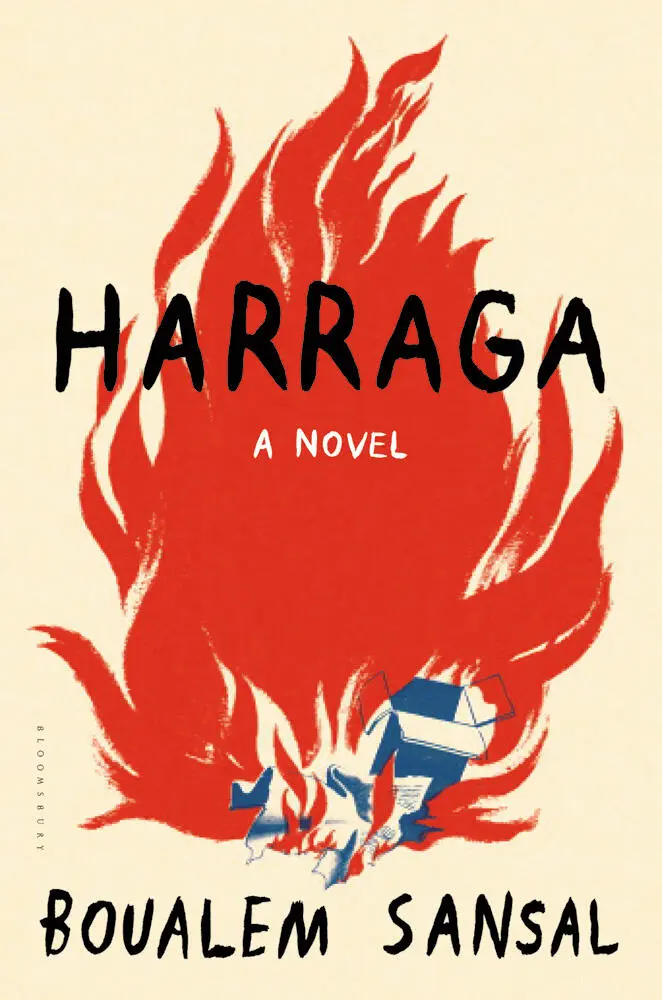
- Название:Harraga
- Автор:
- Издательство:Bloomsbury Publishing
- Жанр:
- Год:2014
- ISBN:нет данных
- Рейтинг книги:3 / 5. Голосов: 1
-
Избранное:Добавить в избранное
- Отзывы:
-
Ваша оценка:
Harraga: краткое содержание, описание и аннотация
Предлагаем к чтению аннотацию, описание, краткое содержание или предисловие (зависит от того, что написал сам автор книги «Harraga»). Если вы не нашли необходимую информацию о книге — напишите в комментариях, мы постараемся отыскать её.
Boualem Sansal creates, in Lamia, an incredible narrator: cultured, caustic, and compassionate, with an ironic contempt for the government, she is utterly convincing. With his deceptively simple story, Sansal delivers a brave indictment of fundamentalism that is also warm and wonderfully humane.
Harraga — читать онлайн бесплатно полную книгу (весь текст) целиком
Ниже представлен текст книги, разбитый по страницам. Система сохранения места последней прочитанной страницы, позволяет с удобством читать онлайн бесплатно книгу «Harraga», без необходимости каждый раз заново искать на чём Вы остановились. Поставьте закладку, и сможете в любой момент перейти на страницу, на которой закончили чтение.
Интервал:
Закладка:
If only she could read! My library is filled with treasures, the viscount and the saintly doctor left behind books enough to last us till the end of time. The others also left books by the basketful, but they’re potboilers, I keep them out of pity. Aside from a respect for the old, Papa instilled in us a love of the printed word that I have never outgrown. Everything else, I could live without. Over time, I’ve made my own additions, a handful of pearls and dozens of third-rate novels bought by the kilo and mottled with aphids and fly specks. I had to buy them in order to ride out my grief, to survive my time in the wilderness. I think I’ve probably read more books than a monkey eats peanuts in its life. The whole house is stuffed with them and I could get more if she needed them. But Chérifa doesn’t realise what she’s missing. For every single person on this planet, there is a book that speaks directly to them, that is a revelation, that tells them everything they need to know. To read that book — your book — without being forever changed is impossible. The problem with people who know nothing is that you have to explain everything, and the more you explain, the more they shut themselves off. They cling to their ignorance, it keeps them warm.
I decided it was time for a spring-clean. It was all I could come up with to keep us busy. Chérifa shrugged. I was about to suggest a tactical retreat but it was too late, the young hate it when their elders go back on their word. We put on our battle dress, tucked our skirts into our knickers, tied our hair back with bandanas and then set off, full steam ahead. This was spring-cleaning Algerian style — slopping water everywhere until it seeps under the rugs, making a racket loud enough to wake the dead, whipping up such a commotion a person could lose her marbles. It is a continuation of domestic housework by military means, a complete clear-out; it is the tradition of the harem.
This is how I learned to do it, this is how I do it, full stop!
By eight o’clock that night, we had made little progress and the house was a disaster area. We laughed, we larked, we vied to see who was faster, we set each other challenges, we slogged heroically, we mopped, we swabbed, we dusted, but it was joyless and half-hearted. In the thick of spring-cleaning, it occurred to me that playing the skivvy in order to ward off disaster was the worst thing to inflict upon a girl in love. I imagined how terrified Chérifa must feel, now that she glimpsed the yawning chasm between the dreams she had cherished and the reality I was offering. But when you have nothing, what can you offer? Sadness leached into our deepest thoughts and by a process of cross-contamination we polluted the atmosphere. Our laughter was too loud, too forced, our conversation filled with too many things unsaid.
Sometimes the defeat precedes the attempt, as it did in this case. When you’re waiting for the end of the world, all bets are off.
The evening was pleasant, but it left a bitter aftertaste. It started out well enough, we were intoxicated by the whiff of disinfectant mingling with the soothing aromas of tea and Turkish delight. Lolling in our slippers, we began to drift off, exhausted from the big clear-out. I acted just in time, I put on a CD of Rachmaninov in his heyday to open our hearts, awaken us to the beauties of the world. A vast, sweeping, subtle music echoed through the house, happiness, rapture, golden dreams and carefully crafted mysteries. In this old place which broods upon its secrets, beauty produces ghostly harmonics. When I opened my eyes again, I saw Chérifa’s face, she was deathly pale, she was about to throw up on the rug. Great music is not really her thing, she didn’t know it existed, that it existed long before she was born. I put on some classic Aznavour, then Paradès singing fado that could level a granite mountain, then something by Malek, the Franco-Moroccan singer, then Idir, the Franco-Algerian singer, and seeing that even this was new to her ears, I slipped an old, scratched vinyl disc on to my battered old record player. Something recorded during Am Charr , the Year of the Great Famine, in 1929 or 1936. On the record sleeve, an old, tattooed woman sits cross-legged at the door of her tent staring out at the desert and written on the luminescent sky in a florid, cursive font is the title of a spaghetti western: The Whore and the Flautist . From the speakers came a threnody channelled from the bowels of the earth, one that would have put a herd of elephants to flight. The old woman, a famous cheikha from before the war with a rasping drawl, was lamenting the misfortunes of a young girl of noble birth abducted by slave traders and sold for thirty douros to an evil madam who immediately put her to work on her back. Straightaway we are plunged into pathos and misery. The girl’s apprenticeship was swift and brutal; the once beautiful, joyous maiden sank into a deep depression. Then the harvest ended and so began the orgiastic season for the peasants. Amid the fantasies and feasts, libations and copulations, black magic and honour killings and heaven knows what. The summer sun is sweltering. As news of the girl’s beauty and her doe eyes reached even the blind and the deaf in the desert, men came from fields in far-flung places to straddle the newest arrival. A brave troubadour who visited the bordello between society balls fell madly in love with her the moment he slipped into her bed. It is at this point in the story that the words of the chorus become clear: ‘Enter my friend, enter, higher still you’ll find my heart, it belongs to he who claims it!’ Thirty times the cheikha sings the words, heartrending whimpers from the depths of her being. She would not be more convincing if she were in the throes of death. The minstrel carried off the girl on a thoroughbred stolen from the village cheikh and so our lovebirds are caught up in a gruelling adventure, pursued by the guards of the monstrous madam and the henchmen of the notorious caïd. The tale might have ended there on a hopeful note, since to flee is in a sense a synonym for salvation, but no, the poet decided to follow heartbreak to its logical conclusion: the couple are caught, the flautist’s throat is cut and his body dismembered on the public square while his young lover is shackled and dragged back to the hovel where she will live out her days in untold pain. Since the dawn of time, the struggle to be free has led to tragedy.
I had discovered this ballad among Sofiane’s belongings, it was just one of the curiosities he liked to collect. The young are only superficially modern, the slightest thing drags them back into the shadows of the past. And then I realised that the ballad was a bastardised version of the famous ‘Ode to Hiziya’, which brought our grandmothers to tears. At the first note, Chérifa fell into a trance, I mean a dance, listening to this cyclical rise and fall like a sultry summer that refuses to end, this violent, shuddering telluric rite from before the Gospels that abruptly segues into a bourrée of roughneck soldiers returning from war. I joined in as best I could, writhing wantonly, then passionately, in my chair, I even ventured one or two wails which went down like a lead balloon. Chérifa looked at me scornfully, I was ruining her rapturous trance. She looked at me the way someone might look at a Scandinavian tourist in Papua New Guinea who gets up in the middle of a ritual to ask the witch doctor how he does his tricks. ‘You don’t get it!’ she said disdainfully. That irritated me, so I put on music from my region, Kabylie music and rock from the mountains, and showed her how we shake our hips down Fort National way. Music so powerful, a person would have to be born deaf, mute, blind and cold to resist it. The battle had begun, between the old country and the majestic mountains, provincial honour was at stake and Chérifa and I both gave as good as we got. The finale was pitiful, we collapsed, exhausted, just before daybreak.
Читать дальшеИнтервал:
Закладка:
Похожие книги на «Harraga»
Представляем Вашему вниманию похожие книги на «Harraga» списком для выбора. Мы отобрали схожую по названию и смыслу литературу в надежде предоставить читателям больше вариантов отыскать новые, интересные, ещё непрочитанные произведения.







Обсуждение, отзывы о книге «Harraga» и просто собственные мнения читателей. Оставьте ваши комментарии, напишите, что Вы думаете о произведении, его смысле или главных героях. Укажите что конкретно понравилось, а что нет, и почему Вы так считаете.