Boualem Sansal - Harraga
Здесь есть возможность читать онлайн «Boualem Sansal - Harraga» весь текст электронной книги совершенно бесплатно (целиком полную версию без сокращений). В некоторых случаях можно слушать аудио, скачать через торрент в формате fb2 и присутствует краткое содержание. Год выпуска: 2014, Издательство: Bloomsbury Publishing, Жанр: Современная проза, на английском языке. Описание произведения, (предисловие) а так же отзывы посетителей доступны на портале библиотеки ЛибКат.
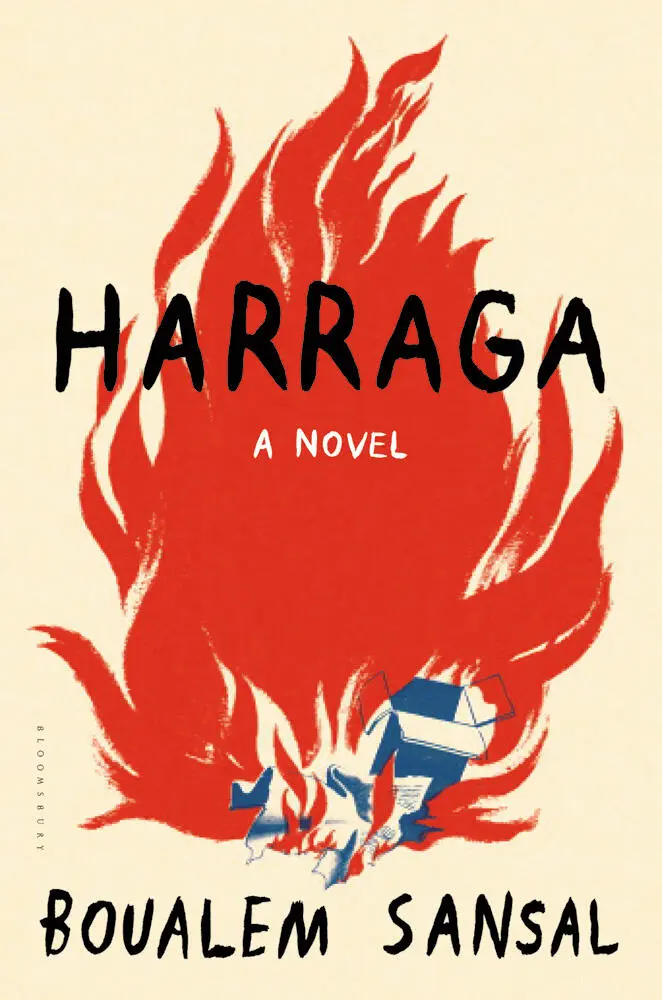
- Название:Harraga
- Автор:
- Издательство:Bloomsbury Publishing
- Жанр:
- Год:2014
- ISBN:нет данных
- Рейтинг книги:3 / 5. Голосов: 1
-
Избранное:Добавить в избранное
- Отзывы:
-
Ваша оценка:
Harraga: краткое содержание, описание и аннотация
Предлагаем к чтению аннотацию, описание, краткое содержание или предисловие (зависит от того, что написал сам автор книги «Harraga»). Если вы не нашли необходимую информацию о книге — напишите в комментариях, мы постараемся отыскать её.
Boualem Sansal creates, in Lamia, an incredible narrator: cultured, caustic, and compassionate, with an ironic contempt for the government, she is utterly convincing. With his deceptively simple story, Sansal delivers a brave indictment of fundamentalism that is also warm and wonderfully humane.
Harraga — читать онлайн бесплатно полную книгу (весь текст) целиком
Ниже представлен текст книги, разбитый по страницам. Система сохранения места последней прочитанной страницы, позволяет с удобством читать онлайн бесплатно книгу «Harraga», без необходимости каждый раз заново искать на чём Вы остановились. Поставьте закладку, и сможете в любой момент перейти на страницу, на которой закончили чтение.
Интервал:
Закладка:
Chérifa is bored. I’ve noticed that she’s become less voluble, less frivolous; she is brooding, preoccupied, serious. I scarcely recognise her. She is like a caged bird that has forgotten how to sing, to splash in its bath, to hop and skip for joy — a joy it can scarcely remember, one too distant and too fleeting to gladden the heart. Chérifa is like a living doll, in her glassy eyes there is a faraway look; are they staring at the bars or past them to a distant something that glimmers in the sky, rustles in the wind, sings in the trees? I’m reminded of the story of the man who was born blind and who, one day, for a fraction of a second, recovers his sight — a miracle — and in that second he sees a sleek, handsome rat scurry along the wall. And ever after, when something is being described to him, he asks, awestruck and anxious: ‘Does it look like the rat?’
The honeymoon period is over: our chats, our games, our rambles through the winding passageways of the house in search of some forgotten ghost no longer leave Chérifa spellbound, open-mouthed, eyes shining. I’m almost tempted to tell her the story of M. Seguin’s goat being eaten by the big bad wolf, but that might reawaken the nomad in her and if I opened the door, would she even be able to resist the call of the sea long enough to say goodbye? The thing is, I’ve grown attached to her; the only solitude I can imagine now is in her company. Dear Lord, how much do our lives truly belong to us?
Something has changed in her, I can feel it, I can sense it. What did I do? What has happened to her?
Pregnancy — of course! — and all the upheaval that entails. The swollen body, the leaden legs, the hot flushes, the swirl of hormones, the mood swings, the sudden cravings that affect the very core of one’s being. I’ve seen some odd cases at the Hôpital Parnet, women who chew their fingers, gnawing the bone down to the marrow, others who tear their hair, there are even women who stare at the ceiling like saints, oblivious to the hustle and bustle, to the midwives, to the cheeping of the chicks and the silences of the angels; there are the women who hit out at the nurses, lash out at their husbands, their brothers. There are the stately, old-fashioned princesses who come to us by chance or out of the goodness of their hearts; we crowd around to admire them, cajole and flatter them, but there is nothing to be done about their delusions, they are not of this world; with an imperious wave they brush us away like insignificant germs. They are difficult to deal with, the very fact that they are carrying the family heir means they are constantly in a state. There are the mother hens, feathery as eiderdowns, who amble between the cubicles pecking at each other; life does not bother them, they love the chaos, they love the crowing, they are always in good spirits. No sooner have they laid this baby in a manger than they are back to bustling about the house, clucking all the while. Every woman who comes to us has her own story, none of them banal. Then there are other problems, and God knows Chérifa has her share: youth, inexperience, vain hopes, bad dreams and I don’t know what else, her mood swings, her wilfulness, those things she has inherited. She is volatile, fierce and aggressive one minute, dazed and sullen the next. Love and sex and all the bother and the upset that goes with them, they destroy, they damage, they scar. Chérifa is young, she’s wild, she can’t resist the lure of the sensual. I have long since left behind the agonies of desire but there was a time when I too rolled around on the floor like an addict in withdrawal.
What can I do?
It’s a fact, I take her out less and less. Not at all, if truth be told. Where can we go? Algiers is no place for a quiet stroll, it’s exhausting; women find themselves constantly followed, pointed at, harassed. The old men spout shrill scathing proverbs, the old crones make disparaging remarks as we pass, the cops wolf-whistle and stroke their truncheons suggestively. The little boys are the worst. They shout, they make obscene gestures, they walk behind us, egging on the crowds. It says a lot about their upbringing that hardly are they out of the womb than they’re waging war on womankind. The more I think about them, the more they remind me of the film Gremlins . What a story: in the dim recesses of ancient China (an antique shop somewhere in the heart of Chinatown run by a venerable old man more ancient than his antiques), an American explorer — half crackpot, half bumbling inventor but wholly charming — discovers a curious creature, a strange furry animal with eyes like a lemur and ears like a panda, a creature so adorable anyone would want to take it home. The man offers to buy it: it would make an ideal birthday present for his son. The ancient Chinaman demurs. The American lays down another $100 bill. Still the old man refuses: With Mogwai, comes much responsibility. I cannot sell him at any price. But the old man’s grandson rushes after the American and secretly agrees to sell the creature, warning the man: keep him out of the light, especially sunlight, it’ll kill him. Second, don’t give him any water, not even to drink. But the most important rule, the rule you can never forget, no matter how much he cries, no matter how much he begs, never feed him after midnight. These are the three commandments for anyone who would have a Mogwai under their roof. Our explorer agrees to these conditions and returns to present-day America — about three blocks away. Everything happens as it was foretold. The man’s son is delighted, as is his mother since she doesn’t need to feed or wash the new pet. And then one night, the boy feeds the creature after midnight, then spills a glass of water on his head in broad daylight. What follows is horrendous: the adorable Mogwai spawns a vicious creature, a Gremlin, which immediately begins to multiply. By the end of the film, America the indomitable is on its knees, besieged by these mischievous scamps who scream and laugh and pillage, eating and multiplying until they can overrun the planet and destroy it. This is a long-winded way of saying that I, too, felt under siege. It’s impossible to face down everyone and so you bow your head, you cross the street, you put a compress on the wound. Typically, the few decent men, the genuine believers, the humble fathers — those lifeless men — express their compassion by not lifting a finger, by giving the impression that there is much they would say if only life were not so short. Afterwards, they resent us, they are embarrassed by our misfortune which serves only to emphasise their own. This country may lack many things, but we have no shortage of would-be sermonisers, of lazy bastards happy to leave you to sweat, of pathetic cowards quick to fade into the background. What with me trying to look like a fashionable mother and Chérifa’s hip and glamorous clothes, we were an affront to the prevailing air of sanctity. We reeked of brimstone, of bitches on heat, of shameless heresy, our insolence knew no bounds. ‘Like mother, like daughter’ people whispered as we passed, squinting at us, pursing their lips. One day, I’ll tell them exactly what I think of their ‘absolute perfection’. Because they think they believe in Allah, they think that means they can do what they please, throw bombs and worse, sermonise from dawn to dusk, Monday to Friday. Is it my fault that Chérifa has the beauty of a fallen angel and I look like a Madonna? The streets of Algiers are dismal, dirty, choked with seething crowds, what is there to do but stare longingly through grimy shop windows and fend off rogues? It’s true I scold Chérifa more than I realise. She’s petulant by nature and I’m turning into a cantankerous old crone, I’m starting to lose the plot, I’m sick to the back teeth of the bled , I’m eaten up by worry, I’m missing Sofiane, I’m worn out working at the hospital. The compromises and cuddles of traditional family life are not Chérifa’s thing. And the best that can be said about housework is that she loathes it.
Читать дальшеИнтервал:
Закладка:
Похожие книги на «Harraga»
Представляем Вашему вниманию похожие книги на «Harraga» списком для выбора. Мы отобрали схожую по названию и смыслу литературу в надежде предоставить читателям больше вариантов отыскать новые, интересные, ещё непрочитанные произведения.









Обсуждение, отзывы о книге «Harraga» и просто собственные мнения читателей. Оставьте ваши комментарии, напишите, что Вы думаете о произведении, его смысле или главных героях. Укажите что конкретно понравилось, а что нет, и почему Вы так считаете.