Boualem Sansal - Harraga
Здесь есть возможность читать онлайн «Boualem Sansal - Harraga» весь текст электронной книги совершенно бесплатно (целиком полную версию без сокращений). В некоторых случаях можно слушать аудио, скачать через торрент в формате fb2 и присутствует краткое содержание. Год выпуска: 2014, Издательство: Bloomsbury Publishing, Жанр: Современная проза, на английском языке. Описание произведения, (предисловие) а так же отзывы посетителей доступны на портале библиотеки ЛибКат.
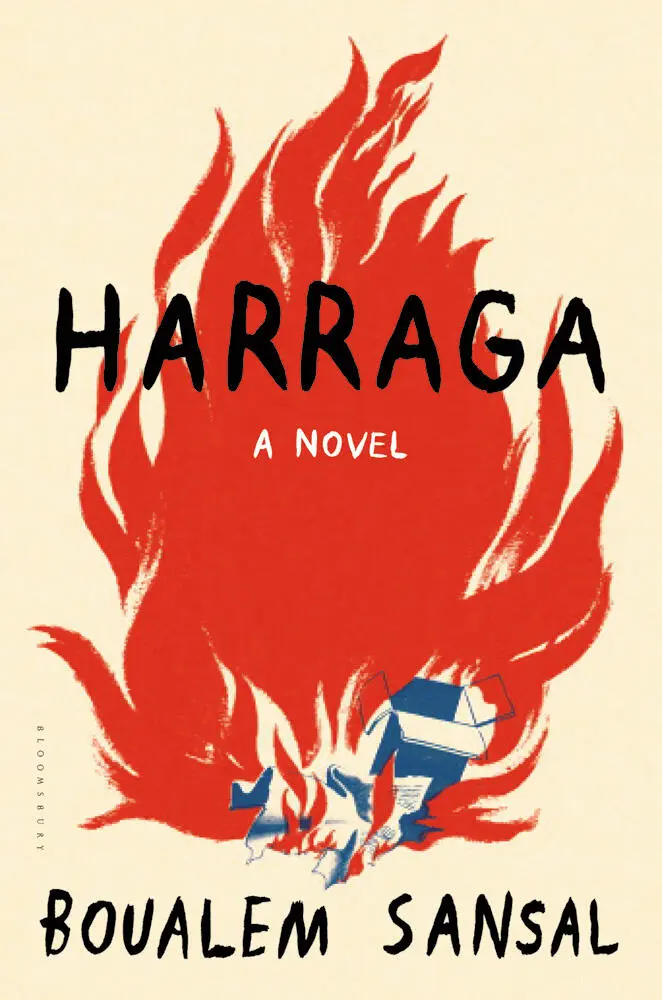
- Название:Harraga
- Автор:
- Издательство:Bloomsbury Publishing
- Жанр:
- Год:2014
- ISBN:нет данных
- Рейтинг книги:3 / 5. Голосов: 1
-
Избранное:Добавить в избранное
- Отзывы:
-
Ваша оценка:
Harraga: краткое содержание, описание и аннотация
Предлагаем к чтению аннотацию, описание, краткое содержание или предисловие (зависит от того, что написал сам автор книги «Harraga»). Если вы не нашли необходимую информацию о книге — напишите в комментариях, мы постараемся отыскать её.
Boualem Sansal creates, in Lamia, an incredible narrator: cultured, caustic, and compassionate, with an ironic contempt for the government, she is utterly convincing. With his deceptively simple story, Sansal delivers a brave indictment of fundamentalism that is also warm and wonderfully humane.
Harraga — читать онлайн бесплатно полную книгу (весь текст) целиком
Ниже представлен текст книги, разбитый по страницам. Система сохранения места последней прочитанной страницы, позволяет с удобством читать онлайн бесплатно книгу «Harraga», без необходимости каждый раз заново искать на чём Вы остановились. Поставьте закладку, и сможете в любой момент перейти на страницу, на которой закончили чтение.
Интервал:
Закладка:
Could it be that my time to leave was coming?
Algiers never ceases to amaze. Though it is a master of the low blow, it knows how to take care of its own and, when one of them is in the depths of despair, it never fails to throw her a lifeline. Today was one of those auspicious days for which Algiers is famous. The heatwave unexpectedly abated, the southerly wind shifted and now blew from the north, singing through the leaves. The air was filled with the whispers of the Mediterranean, its subtle scents, its piquant charms, its musky pleasures, its sun-dappled dreams. And the natives of Algiers, the worst city dwellers of the century, suddenly, eagerly, surrender to peace. They are amazed, they look at each other in shock, but still they forge ahead, curious to discover the extent of this illusion. One thing leads to another, there is a surge of optimism, a ripple of friendliness and before they know it people begin to think that this, too, is life. Suddenly, there is an outpouring of joy and a glorious torrent of heedless happiness sweeps across the city like a wadi bursting its banks. Hearts stirring, the women feel themselves come alive, they dare to raise their heads, to steal a glance through their hijabs . It is perfect bliss to see them taking part in life, to witness their strange and fascinating radiance dispel the darkness and the pain. God Himself is moved by such a sight, you can see it in the faces of the children which glow with good intentions. People dazzle so brightly it puts their drab Islamic rags to shame and they risk being publicly excommunicated. This just goes to prove that people should never give up their instinctive irreverence; some day the Islamists will dig their own graves and people will mock their shrivelled poisonous humps. On a day like today the Islamists feel ill at ease, swept up by the tide of joy, hemmed in on all sides, they scrabble away desperately, run to their caves there to dream of the glorious crimes against humanity yet to be committed. The exultant atmosphere of celebration begins to course through the streets, to scale the buildings, to flash from one person to the next. This is a critical moment: the devil himself, tail whipping high above his horns, might suddenly appear and ruin everything. When Algiers is beautiful, it happens of a sudden. She wrong-foots her citizens. It is love at first sight. We think of her as a wizened old crone who died in misery and is buried beneath the dust, but still sometimes she steps into the light, she dazzles, bewitches, steals, ravishes, enchants. After a little prenuptial perplexity, the city grows more civilised in leaps and bounds, great discoveries are anticipated. We would dearly love to make the most of our good fortune, to pause this moment, to bask in this hopefulness, build castles in the air; but we know Algiers all too well, she is a pantomime villain, playing the innocent is her favourite trick. Because we know this, whenever she strikes a pose we simply shrug. We simply dare to wish that a crowd of tourists would arrive in one of these magical moments so that we might surprise them, might strip away the preconceptions they have about our nonsensical stories, our dirty wars, our conspiracies against reason, our crimes against the heart, our medieval customs, our insufferable weather, our tortuous geography. Algiers is a trollop who gives of herself the better to take. Her going rate is five minutes of pleasure for one month of bitterness.
A straw mattress in the hand is worth a four-poster glimpsed on the silver screen. Maman had her little maxims, she served them up for dinner with endless split-pea soup: If you don’t eat it, you’ll be sorry in an hour. Now, I mutter them to myself to help me endure the grinding poverty, but I don’t make a business of it like the people who run around with their hands out, going from pillar to post, from bank to bank, shamelessly pleading and prattling. In Algeria, the poor — like the rich — are ruthless, they’re constantly running, tackling, dribbling, scheming, gradually gaining ground. Nowhere in the world have people better mastered the trick of distracting someone’s attention in order to steal their place in a queue. But what is wealth when people don’t know the value of things? And what is poverty when people scorn knowledge? Those who would overcome misery must first accept it! It’s time for the poor to decide whether they want to stay in a hole or climb out, and for the rich to learn how to behave. The way they behave drives me mad.
All this to say that Algiers is no picnic.
There I was, slowly trudging home, dog-tired but deliriously happy to be leaving the hospital, looking left and right, thinking to myself how wonderful life would be if everyone would stop lying. I made the usual detours to avoid the women who lurk on their doorsteps, waiting for news. For as long as I can remember they have stood there, waiting, in fruitless, uncertain expectation. They no longer remember why they’re waiting; time has forgotten them, only the ritual remains, carved into their daily routine. Each woman brings a personal touch to her vigil: tears, prayers, tremulous dirges, pitiful pleas to the men who stop and stare, and crude obscenities at those who pompously look straight ahead. I always pretend to be preoccupied with things I need to buy on the way home — milk, bread, water, vegetables, candles, salt, insecticide — so that I can give the impression of an absent-minded woman innocently remembering something she has forgotten. It’s best to pretend to be deaf to the calls from behind you. I’m tired of having to bring news of the outside world to these women who have cut themselves off. In fact, they are the crux of the problem, I can understand that they need to know their fate, but for pity’s sake, why can’t they just read the State newspapers!
I have to admit I can be a hateful bitch sometimes.
Parked outside my door I discovered a sinister contraption like a bus that had been spared the wrecking yard, a heap of twisted metal designed to ferry the dead. I’ve never seen anything like it in the neighbourhood. The streets here are so narrow that cars scrape their bodywork as they pass. A stone’s throw away, in the Kasbah, it’s like driving through the eye of a needle. The streets of the Kasbah are so narrow that when two pedestrians try to pass each other, one has to reverse or abandon her family. After a flicker of hesitation born of fear — hup! — I dashed inside my house and double-locked the door behind me. I just had time to see a figure in the bus waving and gesticulating.
Routine makes us deaf and blind. I never notice buses in the city, never hear their horns honking. There are so many and they make such an infernal racket, they’re like bulls in a corrida , hooves thundering across the sand, herding together at bus stops, muzzles steaming, bellowing like rutting bulls, jostling each other for space, only to belch black smoke then roar away in a cloud of dust. Want to know what a bullfight at a feria sounds like? There’s one outside my house right now, plain as the nose on my face, covered with a moth-eaten caparison, bellowing fit to burst. Then bang, bang , someone pounds on my door. Of course, I brush aside my fears, I open the door and who is standing there, looking more like Lolita than ever… Chérifa! And, as always, at her feet is her magic holdall.
My heart soared heavenwards.
And my eyes rolled heavenwards. Behind the shutters, Bluebeard’s shadow shifted this way and that like a hunchback dancing a jig. I remembered an image from Perrault’s fairytale, a devoted sister watching from the battlements, hoping for deliverance. Oh, Bluebeard, Sister Anne was right, Chérifa has come home to us!
Behind her comes the bus driver, teeth clenched into a smile like a boy scout who’s done the good deed of the century. Did I invite this guy?
Читать дальшеИнтервал:
Закладка:
Похожие книги на «Harraga»
Представляем Вашему вниманию похожие книги на «Harraga» списком для выбора. Мы отобрали схожую по названию и смыслу литературу в надежде предоставить читателям больше вариантов отыскать новые, интересные, ещё непрочитанные произведения.








Обсуждение, отзывы о книге «Harraga» и просто собственные мнения читателей. Оставьте ваши комментарии, напишите, что Вы думаете о произведении, его смысле или главных героях. Укажите что конкретно понравилось, а что нет, и почему Вы так считаете.