Reif Larsen - I Am Radar
Здесь есть возможность читать онлайн «Reif Larsen - I Am Radar» весь текст электронной книги совершенно бесплатно (целиком полную версию без сокращений). В некоторых случаях можно слушать аудио, скачать через торрент в формате fb2 и присутствует краткое содержание. Год выпуска: 2015, Издательство: Penguin Press, Жанр: Современная проза, на английском языке. Описание произведения, (предисловие) а так же отзывы посетителей доступны на портале библиотеки ЛибКат.
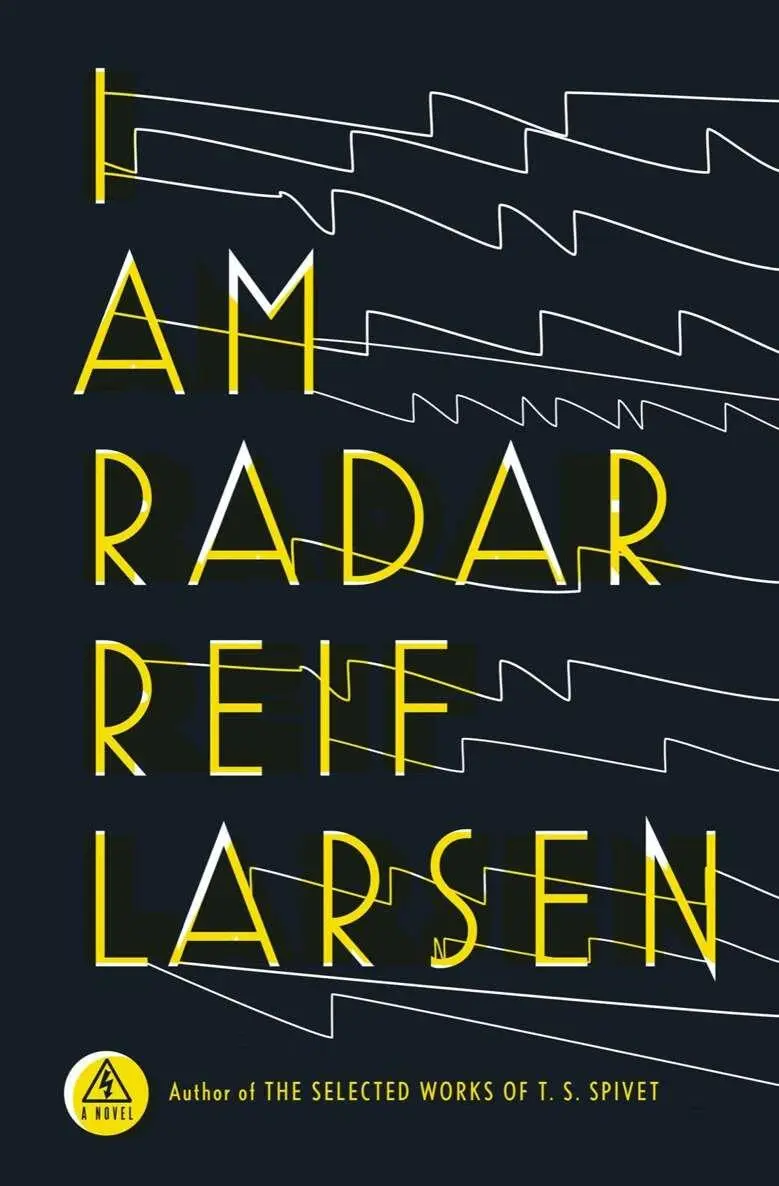
- Название:I Am Radar
- Автор:
- Издательство:Penguin Press
- Жанр:
- Год:2015
- ISBN:нет данных
- Рейтинг книги:3 / 5. Голосов: 1
-
Избранное:Добавить в избранное
- Отзывы:
-
Ваша оценка:
I Am Radar: краткое содержание, описание и аннотация
Предлагаем к чтению аннотацию, описание, краткое содержание или предисловие (зависит от того, что написал сам автор книги «I Am Radar»). Если вы не нашли необходимую информацию о книге — напишите в комментариях, мы постараемся отыскать её.
I Am Radar Deep in arctic Norway, a cadre of Norwegian schoolteachers is imprisoned during the Second World War. Founding a radical secret society that will hover on the margins of recorded history for decades to come, these schoolteachers steal radioactive material from a hidden Nazi nuclear reactor and use it to stage a surreal art performance on a frozen coastline. This strange society appears again in the aftermath of Cambodia’s murderous Khmer Rouge regime, when another secret performance takes place but goes horrifically wrong. Echoes of this disaster can be heard during the Yugoslavian wars, when an avant-garde puppeteer finds himself trapped inside Belgrade while his brother serves in the genocidal militia that attacks Srebrenica. Decades later, in the war-torn Congo, a disfigured literature professor assembles the largest library in the world even as the country around him collapses. All of these stories are linked by Radar — now a gifted radio operator living in the New Jersey Meadowlands — who struggles with love, a set of hapless parents,and a terrible medical affliction that he has only just begun to comprehend.
I Am Radar — читать онлайн бесплатно полную книгу (весь текст) целиком
Ниже представлен текст книги, разбитый по страницам. Система сохранения места последней прочитанной страницы, позволяет с удобством читать онлайн бесплатно книгу «I Am Radar», без необходимости каждый раз заново искать на чём Вы остановились. Поставьте закладку, и сможете в любой момент перейти на страницу, на которой закончили чтение.
Интервал:
Закладка:
Just then, released from its cage, one of the transceivers began to beep. The noise sounded foreign to his ears, and Radar realized he had already mentally adjusted to a world devoid of such electronic sounds. He picked up the radio and found that it was connected to an old Vibroplex Morse key — what they called “a bug” in the business. The transceiver must have been in CW mode. The beeps he was hearing were in Morse code:
—— ••• •—•• —•— ••—— •— ———•— ••••
It had been a while since Radar last used Morse, but it was a language deeply ingrained in his psyche. When he was five years old, he had learned the code in just one day, and for weeks afterwards he would speak to people only in Morse, annoying everyone but Kermin to no end.
Radar quickly translated the signal in his head:
QSL K2W9 QTH?
These were the so-called Q Codes — abbreviations developed by CW operators as shorthand for common phrases. QSL meant “Acknowledge that you receive this message.” K2W9 was his father’s call sign. QTH? meant “What’s your position?”
This was most likely one of his father’s ham friends. He probably just wanted to chew the rag about the blackout, not knowing that Kermin was, in fact, the cause of it all.
Radar picked up the paddle key. Positioned thumb and forefinger. The lingering twitch of the first dash. The code came back fast. He realized how much he had missed it. The secret to Morse code was not the length of the dits and the dahs but rather the length of the spaces in between.
—— ••• •—••—•— •—•—••he tapped, the letters coming out neat and clean. QSL QRZ? This was an acknowledgement of message and a request for the identity of the caller.
There was a pause. And then — — •——••—— This meant: 9 12.
What was this? There was a chance he was hearing it wrong, that he was out of practice, but he didn’t think so, as the sender on the other end had a tight, clear delivery, and Radar could generally understand him perfectly. “9 12” in old Western Union 92 Code meant “Priority business. Do you understand?” It was unusual for anyone to be using such antiquated lingo, but then Kermin kept strange friends.
Two can play this game. Radar tapped out 13, Western Union for “I understand.”
The reply came after a moment:
—— •—• —•• —•— ••—— •— ——•
QRZ WHERE IS K2W9?
His interlocutor obviously was not fooled. Like every CW operator, Radar had his own particular “fist,” or accent, that no doubt diverged from his father’s. It was like a sonic fingerprint. A trained ear could hear the difference between two Morse operators within the first few dashes. Radar wondered about the deviation between his father’s fist and his own. Was he more forceful? His father lazy and self-assured? Well, he would just have to come clean.
—• ••• ••• •• —• —•
QRZ K2RAD, HIS SON, he tapped out. K2W9 IS MISSING.
He waited. A long pause. Maybe he had scared him off.
Then: WHAT HAPPENED?
He responded: DON’T KNOW. I’M IN SHACK. QRZ?
—• ——•—•—• — •— •• — ••• ••••—•—•
He didn’t want to get into the whole pulse generator situation, lest this person decide to report it to the police and ruin everything.
VIRCATOR? EXPLOSION? came the reply.
How did they know?
WHO ARE YOU? Radar tapped.
Pause.
A FRIEND. WHAT ABOUT BIRDS?
Radar looked up at the creatures hanging above him. So they knew about this as well.
THEY SURVIVED, he wrote. WHAT ARE THEY?
—•• •—•— •—• •••—•• •••—•—•••—•—•— •— ••
I WILL COME OVER.
Here? Radar looked around. Kermin wasn’t even here to defend himself. It was a disaster. He couldn’t have anyone here.
HOW YOU KNOW K2W9? he tapped.
WE WORK TOGETHER.
WHY DID K2W9 HAVE VIRCATOR?
—— •••• •—•••—• •••—•• •—• —•— •——— •—• ••— ••
Pause.
FOR THE SHOW.
WHAT SHOW?
Another pause.
I’LL COME AND GET BIRDS.
NO. Radar was suddenly annoyed at the stubbornness of these beeps. Who did this person think he was?
IT’S IMPORTANT, came the response.
K2W9 MUST AGREE, he tapped.
WHERE IS HE?
I DON’T KNOW.
A long pause.
Then: K2RAD, YOU COME HERE. WE WILL SHOW YOU.
——••—— •—• •—•• —••— —•— —— ••—•—•——
SHOW ME WHAT?
THE HEADS. BRING A BIRD.
WHAT ABOUT K2W9?
There was no answer.
DO YOU KNOW WHERE HE IS?
WE ARE AT XANADU P4 D26 came the answer.
Radar took a scrap of paper and wrote this down.
XANADU P4 D26? QSD?
IN 1 HOUR. 73 SX.
“73” was a sign-off. Radar felt himself panicking.
WHAT IS XANADU? he tapped frantically. ROAD? STREET?
There was no answer.
WHICH BIRD?
Silence.
R U THERE? But it was already clear that whoever it was had slipped back into the vast, blank spectrum of night.
“Xanadu?” Radar said by candlelight. “P4 D26?”
He studied the scrap of paper. It was clearly a code of some sort. He had flirted with cryptanalysis in college, and now his mind jumped to possible encryption methods: could it be an alphanumerical substitution cipher? Maybe “Xanadu” was the keyword. Or maybe it was a columnar transposition coordinate system? Or a modified Nihilist symmetric encryption cipher? Or was it a chess move, and the board was some kind of map? It would take him days— weeks —to crack. He did not have weeks. He did not have days. He looked at his watch. He had about fifty-three minutes.
6
There was, of course, still the minor dilemma of what to do with the smoking gun of the pulse generator. With his father nowhere to be found, should he take the liberty of dismantling and destroying the evidence? Sooner or later, the authorities would triangulate the origin of the blackout to their house and they would all — he and Charlene included — be in serious, serious trouble. Radar decided to leave it for the time being. He would come back and handle it shortly, but first he needed to find Xanadu and try to track down his father.
But where could his father have gone? Kermin never went anywhere. That shack was his den. If ever he strayed too far (read: ten blocks or so), he always came rushing back to its safe haven.
Radar went over to the Faraday trunk and proceeded to pilfer it. At this point, he no longer cared what Kermin thought — after nearly blowing up New Jersey, his father had lost the moral high ground. Radar took the flashlights, the radio, one of the pocket televisions, the calculator watch, and the cell phone. He put on the watch and stuffed the rest into a backpack. He also carefully picked out three birds from the ceiling. He tried to choose three varying specimens, but to his eyes, at least, they all looked fairly similar.
Tata, what the hell were you going to do with these things?
Radar took one last look at the carnage of the shack’s interior. This, the epicenter of the Great Jersey Blackout. Would they one day write a book about this room? Radar shook his head. Just before leaving, he felt compelled to pick up the stick figure he had found by the vircator and put this into his backpack as well. Then he closed the door behind him.
Читать дальшеИнтервал:
Закладка:
Похожие книги на «I Am Radar»
Представляем Вашему вниманию похожие книги на «I Am Radar» списком для выбора. Мы отобрали схожую по названию и смыслу литературу в надежде предоставить читателям больше вариантов отыскать новые, интересные, ещё непрочитанные произведения.











Обсуждение, отзывы о книге «I Am Radar» и просто собственные мнения читателей. Оставьте ваши комментарии, напишите, что Вы думаете о произведении, его смысле или главных героях. Укажите что конкретно понравилось, а что нет, и почему Вы так считаете.