Reif Larsen - I Am Radar
Здесь есть возможность читать онлайн «Reif Larsen - I Am Radar» весь текст электронной книги совершенно бесплатно (целиком полную версию без сокращений). В некоторых случаях можно слушать аудио, скачать через торрент в формате fb2 и присутствует краткое содержание. Год выпуска: 2015, Издательство: Penguin Press, Жанр: Современная проза, на английском языке. Описание произведения, (предисловие) а так же отзывы посетителей доступны на портале библиотеки ЛибКат.
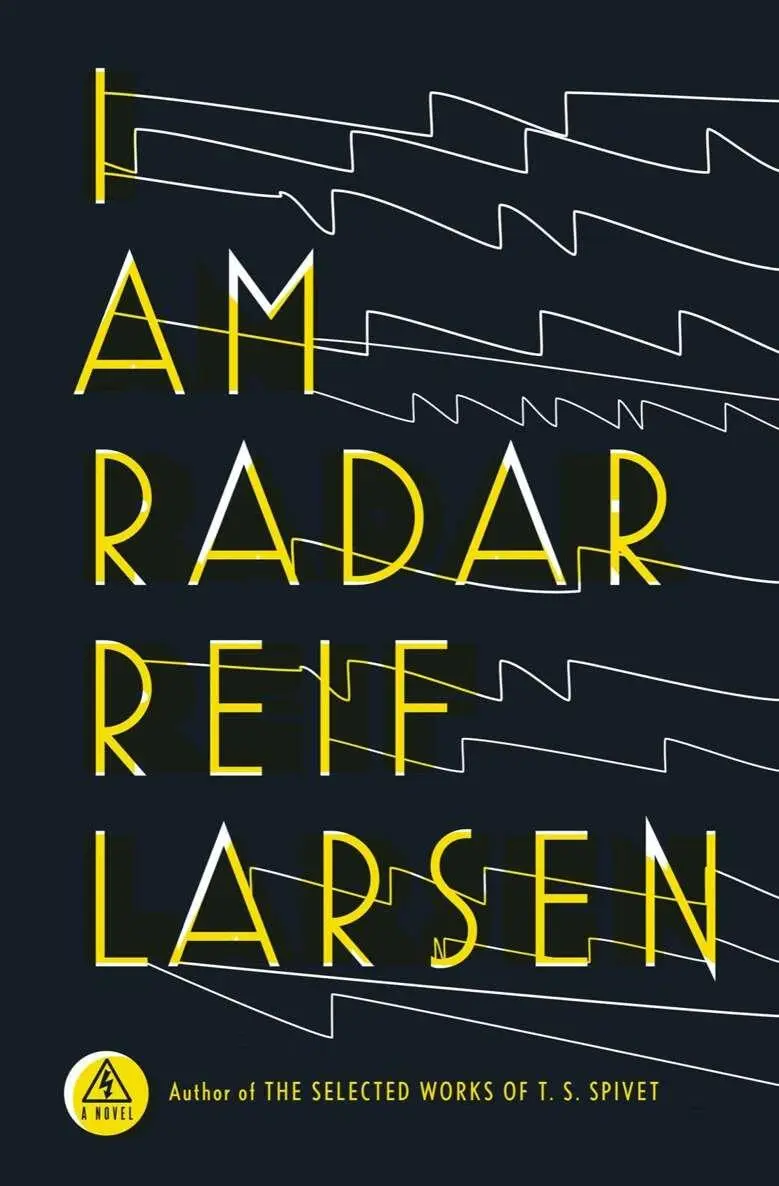
- Название:I Am Radar
- Автор:
- Издательство:Penguin Press
- Жанр:
- Год:2015
- ISBN:нет данных
- Рейтинг книги:3 / 5. Голосов: 1
-
Избранное:Добавить в избранное
- Отзывы:
-
Ваша оценка:
I Am Radar: краткое содержание, описание и аннотация
Предлагаем к чтению аннотацию, описание, краткое содержание или предисловие (зависит от того, что написал сам автор книги «I Am Radar»). Если вы не нашли необходимую информацию о книге — напишите в комментариях, мы постараемся отыскать её.
I Am Radar Deep in arctic Norway, a cadre of Norwegian schoolteachers is imprisoned during the Second World War. Founding a radical secret society that will hover on the margins of recorded history for decades to come, these schoolteachers steal radioactive material from a hidden Nazi nuclear reactor and use it to stage a surreal art performance on a frozen coastline. This strange society appears again in the aftermath of Cambodia’s murderous Khmer Rouge regime, when another secret performance takes place but goes horrifically wrong. Echoes of this disaster can be heard during the Yugoslavian wars, when an avant-garde puppeteer finds himself trapped inside Belgrade while his brother serves in the genocidal militia that attacks Srebrenica. Decades later, in the war-torn Congo, a disfigured literature professor assembles the largest library in the world even as the country around him collapses. All of these stories are linked by Radar — now a gifted radio operator living in the New Jersey Meadowlands — who struggles with love, a set of hapless parents,and a terrible medical affliction that he has only just begun to comprehend.
I Am Radar — читать онлайн бесплатно полную книгу (весь текст) целиком
Ниже представлен текст книги, разбитый по страницам. Система сохранения места последней прочитанной страницы, позволяет с удобством читать онлайн бесплатно книгу «I Am Radar», без необходимости каждый раз заново искать на чём Вы остановились. Поставьте закладку, и сможете в любой момент перейти на страницу, на которой закончили чтение.
Интервал:
Закладка:
“I’m sure it’s just stress,” he said. “How bad is it out there?”
“Well, for the most part, everyone’s helping each other out. But even in the last hour, it’s been getting worse. People were starting to act a little crazy. Like it was the end of the world. Who knew a simple power outage would cause such a panic?”
“It’s not just a simple power outage.”
“A policeman even tried to take my car. Can you believe it? But I told him, ‘No. No way — this is my baby.’ He even had the nerve to pull out his gun and tell me the roads were closed and that I had to give him the car, by law, but I didn’t fall for any of that crap.”
“So what did you do?”
“Well, I drove away. What was he going to do, shoot me?”
“A policeman pulled a gun on you and you just drove away?”
“They can’t just do whatever they want.”
“Uh, they declared martial law. They actually can do whatever they want.”
“ That’s my car. I was helping people. I wasn’t causing trouble,” she said. “I stuck by that car for thirty years; I should at least be able to keep it when the going gets a little rough.”
Radar smiled. “I never would’ve thought, Mom,” he said. “I didn’t know you still had it in you.”
“Just wait until I tell your father about all this. He probably didn’t think I had it in me, either. Where is the old man, by the way?”
Radar blinked.
“I bet he’s in a foul mood. Is his playpen in ruins?”
Radar felt his gears hiccup. Did she know?
“What do you mean?” he said.
“All those electronics he has out there! People were saying everything got fried. You’ve got to feel for the man.”
“Oh. Oh, yeah,” he said, relieved.
“How’s your station?”
“Same as everywhere. The pulse took out all the circuitry. We hadn’t protected it properly,” he said. “It’s my fault.”
“How were you supposed to know about something like this?” Charlene got up and started walking toward the backyard. “Well, I suppose I’ll have to talk him down myself.”
Radar leaped up. “Don’t!”
“What?” She looked surprised.
“He went out.”
“He did? Where?”
“I don’t know.”
“What do you mean, he went out ?”
“I mean, he just disappeared.”
She shook her head. “I’ll tell you what — that man. I love him, but that man will drive you nuts .”
Radar considered telling her everything. About the EMP. The birds. He opened his mouth but couldn’t bring himself to speak.
“Well, I for one am going to lie down,” she said. “When he comes back, tell him I’m upstairs and he’s responsible for dinner.”
“Dinner might be a problem. We might be facing a lot of problems.”
“I’m sure we will, but I’m going upstairs,” she said. “I’m going to take a Valium and put my feet up so that when the end of the world comes I’m at least feeling relaxed.”
• • •
RADAR DID NOT DRINK, but as day faded into night, as what was then faded into what will be, he pulled out a dusty bottle of his father’s šljivovica and poured a thumb or two into one of his old Star Wars glasses. As Mr. Neimann had said, now seemed like as good a time as any. And in some strange way, it felt as if he was lighting a homing beacon for his father, even though Kermin also rarely drank. The šljivovica was saved for only momentous occasions — births, deaths, graduations. Blackouts . He sipped the rakija , waiting for someone to walk through the front door. Kermin? The authorities? Surely any investigator with half a brain would be drawn to the house with the absurd, 119-foot antenna that towered above the entire neighborhood?
Yet the front door remained closed. Eventually, after two more thumbs of šljivovica, feeling the quiver of wire in his blood, he lit a dusty candle from their dining room table and headed out to the backyard again. Dusk had already descended on the neighborhood, leaving the houses oddly dark. A sound of sirens rushing a street or two over. He listened, but they did not stop in front of their house, instead Dopplering away to a distant disaster.
When Radar opened the door to the shack, he was again hit by that pungent odor of things burning and now burned. The bird bodies still hung above him; the light from the candle elongated their limbs into a latticework of ghoulish shadows.
He stepped over the detritus and made his way to his father’s cluttered desk. Tacked to the wall just above, two framed black-and-white photographs hung cockeyed. One showed a young Nikola Tesla, looking heavily eyebrowed and manic under the glare of a flashbulb of his own invention. The other was a grainy snapshot of Deda Dobroslav, posing triumphantly on some anonymous mountaintop in Bosnia during World War II with Vojvoda Dujic and a heavily bearded band of Chetniks in black sheepskin shubaras . He leaned in closer to the photograph. In the foreground, Dujic, their talismanic leader, was holding an absurdly long rifle in one hand. This picture must have been taken early on in the war, when hope still carried the day and weary warriors could pause in their day’s pursuit to taste the sun’s riches on the top of a mountain. Crouching beside the cluster of barbarian warriors, his grandfather was the only man without a beard, his face burned dark from the sun. Radar sensed an aura of innocence emanating from those eyes, no doubt enhanced by his giant radio backpack. The resident communications geek. Some things never changed. Though the photograph was blurry, Radar could just make out Dobroslav saying something into the mouthpiece of the radio. Was he actually communicating a message as the camera shutter clicked open? Or was he simply hamming it up for the photographer? Somehow, this picture had survived the war and then made it halfway across the world to America. The captured photons of that fall morning still held true, seventy years later, suspended in silver gelatin, framed above the desk of a radio shack in New Jersey.
It was as he had written once. Rule #48: History persists.
He walked back over to the pulse generator. Touched its hull. He was suddenly taken by a chill, a feeling of emptiness. He looked down and saw something lying on the ground. A little figure. A man, made of sticks and coiled twine. He picked it up, turning it over in his hands. He thought he had seen such a figure before, though he could not remember when.
In one corner of the room, Radar caught sight of a large metal trunk. He touched its side, confused at first, before he realized what it was: a Faraday cage. Of course. His father must have known the potential consequences of his machine, even if he was perhaps not quite aware of how wide-ranging those consequences would be. But he would have at least wanted to protect his own equipment.
Radar looked around the shack. It sure seemed as if he had left a lot out in the open, to simply be fried by the pulse. Maybe he hadn’t really known what he was doing. Certainly he hadn’t considered the role the giant antenna would play in broadcasting the pulse. But all of this — this explosion, this pulse — did not seem like his father’s behavior: his father did not affect things. His father simply was —observing, listening, grumbling. He was a passenger, not the driver. Maybe he had seized the wheel for one brief and terrible moment?
Radar unlatched the trunk and opened its lid. A little gasp. It was indeed a trunk full of riches. There were flashlights and radios and small televisions (apparently he had not thrown all of these out). Earphones. A calculator wristwatch. A cell phone (so his father did have a cell phone!). A Taser. An old IBM laptop. A digital camera.
Читать дальшеИнтервал:
Закладка:
Похожие книги на «I Am Radar»
Представляем Вашему вниманию похожие книги на «I Am Radar» списком для выбора. Мы отобрали схожую по названию и смыслу литературу в надежде предоставить читателям больше вариантов отыскать новые, интересные, ещё непрочитанные произведения.









Обсуждение, отзывы о книге «I Am Radar» и просто собственные мнения читателей. Оставьте ваши комментарии, напишите, что Вы думаете о произведении, его смысле или главных героях. Укажите что конкретно понравилось, а что нет, и почему Вы так считаете.