Reif Larsen - I Am Radar
Здесь есть возможность читать онлайн «Reif Larsen - I Am Radar» весь текст электронной книги совершенно бесплатно (целиком полную версию без сокращений). В некоторых случаях можно слушать аудио, скачать через торрент в формате fb2 и присутствует краткое содержание. Год выпуска: 2015, Издательство: Penguin Press, Жанр: Современная проза, на английском языке. Описание произведения, (предисловие) а так же отзывы посетителей доступны на портале библиотеки ЛибКат.
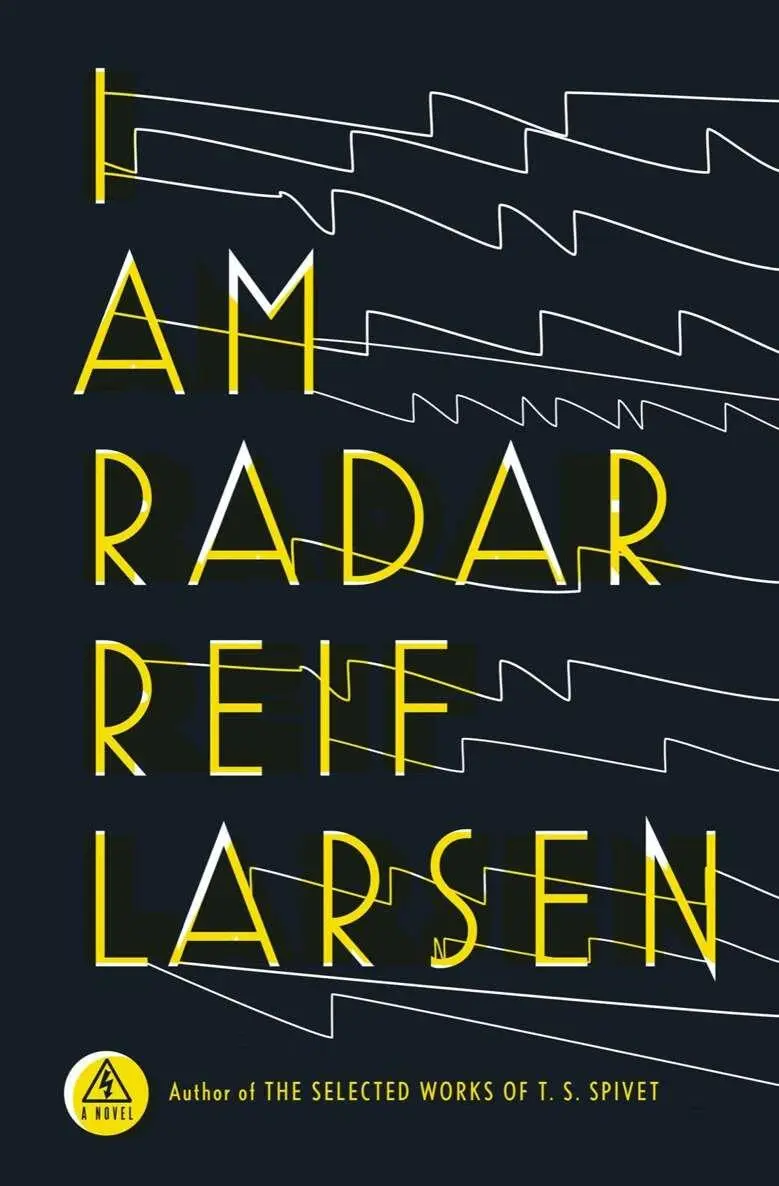
- Название:I Am Radar
- Автор:
- Издательство:Penguin Press
- Жанр:
- Год:2015
- ISBN:нет данных
- Рейтинг книги:3 / 5. Голосов: 1
-
Избранное:Добавить в избранное
- Отзывы:
-
Ваша оценка:
I Am Radar: краткое содержание, описание и аннотация
Предлагаем к чтению аннотацию, описание, краткое содержание или предисловие (зависит от того, что написал сам автор книги «I Am Radar»). Если вы не нашли необходимую информацию о книге — напишите в комментариях, мы постараемся отыскать её.
I Am Radar Deep in arctic Norway, a cadre of Norwegian schoolteachers is imprisoned during the Second World War. Founding a radical secret society that will hover on the margins of recorded history for decades to come, these schoolteachers steal radioactive material from a hidden Nazi nuclear reactor and use it to stage a surreal art performance on a frozen coastline. This strange society appears again in the aftermath of Cambodia’s murderous Khmer Rouge regime, when another secret performance takes place but goes horrifically wrong. Echoes of this disaster can be heard during the Yugoslavian wars, when an avant-garde puppeteer finds himself trapped inside Belgrade while his brother serves in the genocidal militia that attacks Srebrenica. Decades later, in the war-torn Congo, a disfigured literature professor assembles the largest library in the world even as the country around him collapses. All of these stories are linked by Radar — now a gifted radio operator living in the New Jersey Meadowlands — who struggles with love, a set of hapless parents,and a terrible medical affliction that he has only just begun to comprehend.
I Am Radar — читать онлайн бесплатно полную книгу (весь текст) целиком
Ниже представлен текст книги, разбитый по страницам. Система сохранения места последней прочитанной страницы, позволяет с удобством читать онлайн бесплатно книгу «I Am Radar», без необходимости каждый раз заново искать на чём Вы остановились. Поставьте закладку, и сможете в любой момент перейти на страницу, на которой закончили чтение.
Интервал:
Закладка:
“What do you think’s going to happen?” whispered Ana Cristina.
“I don’t know, but I don’t want anything to happen to you,” he said. “I’d do anything for you.”
She smiled. “You’re so cute.”
“I should go check on my dad.” He sighed. “He’s probably flipping out right now.”
“Can I meet him sometime?” she said. “I mean, if we get out of this?”
“Yeah,” he said. “He’s a little weird. Actually, just to warn you, both of my parents are kind of strange.”
“They made you, didn’t they? They can’t be that bad.”
He was caught again by her belief in him. She actually cared. This was something you could not fake.
“How should I get in touch with you?” he said.
“I don’t know, text me?” she said. “I’m gonna try to get a new phone. I feel, like, naked without it.” She flipped open the blank display.
“I will,” he said. I’ll do the text with you. “I think I’m gonna get my own cell phone, especially after this.”
“You are? Wow. Welcome to the twenty-first century, Radar.”
“I know, right?” he said. “See you soon?” Feeling bold, he leaned in and kissed her, and she kissed him back, and for a brief second, everything was right.
When he stood up, Javier was standing beside him.
“Oh, hi,” Radar said self-consciously. “I was just going. Everything okay up there?”
“He wanted some water. He was going to pay like twenty bucks for it, but I just gave it to him,” he said. He looked down at Ana Cristina. “Don’t tell the boss, okay?”
Radar walked with Javier to the doorway.
“She likes you,” said Javier.
“She does?” A crinkling in his chest. A great roaring in his ears.
Javier nodded. “She’s like the nicest girl I know, so don’t mess with her, okay?”
Radar realized that what he had seen before as a scowl was merely Javier’s look of concentration. Scrutinizing a world that was not inclined to like him.
“You’re a good man, Javier,” he said, offering his hand. “I’m sorry for misjudging you.”
“You and everyone,” said Javier. “My mama said I’m a good book with a bad cover.”
“Yeah,” said Radar. “Me, too.”
• • •
RADAR’S BLOCK WAS TYPICAL of the compressed suburbia you found in Kearny and its environs, where each house rested its chin on a cursory, heavily manicured front yard. On the Fourth of July, Halloween, and Christmas, these diminutive front plots became engulfed by blustery displays of patriotism or typhoons of cobwebs or animatronic Santas that rotated creepily at the waist.
Once upon a time, Kermin had been an eager subscriber to such pageantry.
“We are engaged in uspon. One day we will have in-ground pool,” he used to say, blinking Rudolph lawn ornament in hand.
The uspon . The great climb. Kearny and all the contiguous suburbs just west of the Meadowlands were on a subtle incline such that its residents were forever aware of their precious bodily fluids slowly draining into the swamps. The unspoken immigrant objective was to claw one’s way up to higher and higher elevations, until you eventually graduated to places like Montclair, Livingston, and Maplewood, places far away from the swamps, where one could live in landscaped, cul-de-sac bliss and dig a large, kidney-shaped hole for one’s turquoise-tiled swimming pool. Sinking your pool belowground was the ultimate sign that you had joined the buržoazija and reached the end of the road, baby. A true Amerikanac could command the earth itself.
But while Kermin might have at one point subscribed to the uspon, dreaming of diving boards and paying pool men to suck the scum from his tiled oasis, somewhere along the line to buržoasko blaženstvo, probably right around the time when he shuttered his repair shop for good and hermited himself from the world, the dream had stalled for the Radmanovics, leaving them stuck halfway up the hill, their fluids still draining into the marshes. They weren’t in the shit, but they weren’t that far from it, either. Kermin had signaled his surrender by abandoning first the yearly Rudolph lawn display and then the front-yard maintenance altogether. Oh, if only Deda Dobroslav could have seen this sad display of stalled momentum, this lingering proximity to the shit. To have fought so long against the Communists, the fascists, his own people; to have lost and lost again; to have escaped and fled across a continent and an ocean; to have come so far, only to die in a checkout line and deposit his legacy on the lip of these swamps, a toxic vortex whose centripetal forces would prove too powerful for his offspring to overcome.
Yet seeing Forest Street now, urged into fellowship by the sudden disappearance of electricity, Radar could not help but feel a sense of pride in his home. Why would you want to live anywhere else? The street resembled a collegial, if slightly disorganized, family reunion. Kids squealed in the middle of the road, letting slapshots ricochet against overturned trash cans. Bella and Milos, bedecked in sun hats and matching Hawaiians, presided over the ceremonies from their customary lawn chairs; the Andratti boys tossed a pigskin to their brother in the wheelchair; Genevieve paced worriedly among her gargantuan sunflowers. Mr. Neimann, their next-door neighbor, with his Gorbachev-like wine stain, was waving furiously at a smoking grill with a spatula.
“Rib eye?” he called as Radar went past. “We were saving it for a special occasion, but this seems like as good a time as any.”
“Maybe later,” said Radar. “Have you seen my father?”
“I haven’t seen him in weeks,” he said. “I did hear some kind of bang out behind your house, next to that tower of his. Loud as hell. I was going to go see if everyone was all right back there, but then the lights went out and I forgot all about it.”
“I’ll go check it out,” said Radar. “You heard any updates about the blackout?”
“Bob Deacon said they found out what made it happen.”
“What was it?”
“He didn’t know. He just said they figured it out.” Mr. Neimann lifted the lid of the grill and stabbed at the meat. “You sure you don’t want to take some of this home? It might cheer ol’ Kermin up. I worry about that man sometimes.”
“Thanks. I’ll go ask him.”
“God bless,” Mr. Neimann said. “Anything you need, you let Jean and me know. We’re here to help.”
He made an awkward salute with his spatula. Radar returned the gesture with equal ineptitude.
• • •
THE OLDSMOBILE WAS NOT out front. His father’s Buick was in the driveway, but Charlene was nowhere to be seen. Radar suddenly felt responsible for her. What if a band of hooligans had commandeered her Olds and she’d been left to wander the streets among the panicked mobs? He feared she would not fare well.
“Kermin!” Radar yelled as he opened the front door, though he knew his father was probably not in the main house.
“Kermin!”
He was already walking back through the kitchen, opening the sliding glass doors to the backyard and his father’s domain.
If undersize front yards were the superego, the mantle of decorum, a way to impress and reassure the viewing public that everything was under control, then backyards were the id, the palace of dreams, the impossible private oasis, a five-and-a-half-minute power ballad of whatever this homeowner would do if he or she had one thousand acres of good, clean American soil. The backyards of metro New Jersey contained patios and boat ports and decks and gardens and shrines and doghouses and water features and toolsheds and bocce pits and basketball courts and chicken coops and bonsai nurseries and ancient cannons and a pantheon of wonders that spring from the lavatic recesses of the soul.
Читать дальшеИнтервал:
Закладка:
Похожие книги на «I Am Radar»
Представляем Вашему вниманию похожие книги на «I Am Radar» списком для выбора. Мы отобрали схожую по названию и смыслу литературу в надежде предоставить читателям больше вариантов отыскать новые, интересные, ещё непрочитанные произведения.









Обсуждение, отзывы о книге «I Am Radar» и просто собственные мнения читателей. Оставьте ваши комментарии, напишите, что Вы думаете о произведении, его смысле или главных героях. Укажите что конкретно понравилось, а что нет, и почему Вы так считаете.