Reif Larsen - I Am Radar
Здесь есть возможность читать онлайн «Reif Larsen - I Am Radar» весь текст электронной книги совершенно бесплатно (целиком полную версию без сокращений). В некоторых случаях можно слушать аудио, скачать через торрент в формате fb2 и присутствует краткое содержание. Год выпуска: 2015, Издательство: Penguin Press, Жанр: Современная проза, на английском языке. Описание произведения, (предисловие) а так же отзывы посетителей доступны на портале библиотеки ЛибКат.
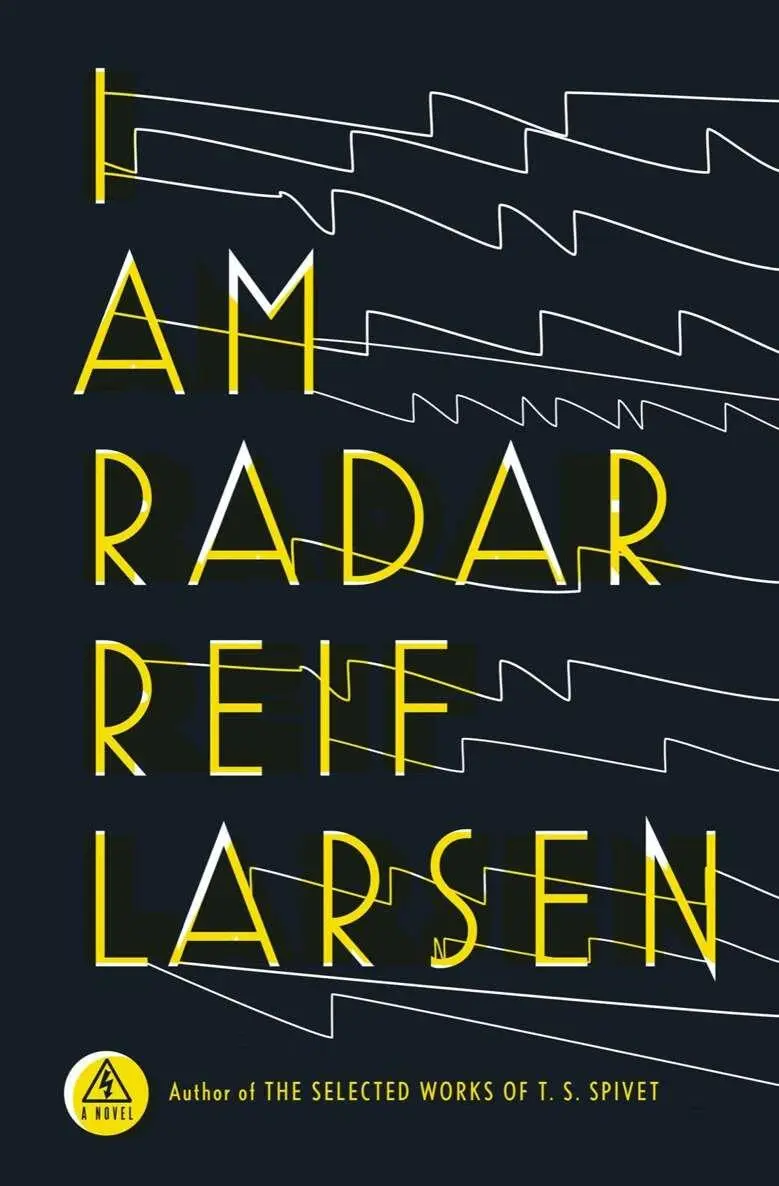
- Название:I Am Radar
- Автор:
- Издательство:Penguin Press
- Жанр:
- Год:2015
- ISBN:нет данных
- Рейтинг книги:3 / 5. Голосов: 1
-
Избранное:Добавить в избранное
- Отзывы:
-
Ваша оценка:
I Am Radar: краткое содержание, описание и аннотация
Предлагаем к чтению аннотацию, описание, краткое содержание или предисловие (зависит от того, что написал сам автор книги «I Am Radar»). Если вы не нашли необходимую информацию о книге — напишите в комментариях, мы постараемся отыскать её.
I Am Radar Deep in arctic Norway, a cadre of Norwegian schoolteachers is imprisoned during the Second World War. Founding a radical secret society that will hover on the margins of recorded history for decades to come, these schoolteachers steal radioactive material from a hidden Nazi nuclear reactor and use it to stage a surreal art performance on a frozen coastline. This strange society appears again in the aftermath of Cambodia’s murderous Khmer Rouge regime, when another secret performance takes place but goes horrifically wrong. Echoes of this disaster can be heard during the Yugoslavian wars, when an avant-garde puppeteer finds himself trapped inside Belgrade while his brother serves in the genocidal militia that attacks Srebrenica. Decades later, in the war-torn Congo, a disfigured literature professor assembles the largest library in the world even as the country around him collapses. All of these stories are linked by Radar — now a gifted radio operator living in the New Jersey Meadowlands — who struggles with love, a set of hapless parents,and a terrible medical affliction that he has only just begun to comprehend.
I Am Radar — читать онлайн бесплатно полную книгу (весь текст) целиком
Ниже представлен текст книги, разбитый по страницам. Система сохранения места последней прочитанной страницы, позволяет с удобством читать онлайн бесплатно книгу «I Am Radar», без необходимости каждый раз заново искать на чём Вы остановились. Поставьте закладку, и сможете в любой момент перейти на страницу, на которой закончили чтение.
Интервал:
Закладка:
Radar slowed. “You okay?” he asked. The man didn’t seem to hear him.
Schuyler Avenue was a mess. As soon as the threat of vehicles had been removed, the street quickly became the domain of the pedestrian. It felt like a carnival, except that people were wandering around, appearing alternately elated and terrified. An old man with a fierce underbite was warbling out “Amazing Grace” on a street corner, the hat in front of him overflowing with coins. Nearby, a policeman argued animatedly with a group of construction workers who were all holding their hard hats in their hands, as if they had stumbled into a funeral. Radar passed by the day care center and saw the children busy with their games in the playground, blissfully unaware as their teachers stood whispering in conference by the seesaw.
He made his way across town, weaving around more stalled cars. Perhaps seasoned from the blackout seven years ago, a number of storeowners had already set up grills in the street, and the air was filled with the heavy scent of cooking meat. And yet the mood now was decidedly different from 2003. Coming on the heels of 9/11, that blackout had felt like a paradise of good vibes and bonhomie as soon as people found out that the grid had failed not because of any attack but rather as the result of an accident. Imagine that: an accident! Such happenstance sounded a citywide time-out to the regularly scheduled grind and gave everyone permission to become everyone else’s best friend, lover, or a cappella partner singing early Guns N’ Roses ballads. But now, as Radar bicycled down Schuyler Avenue, he sensed a degree of collective worry he had not witnessed since the day the towers fell. This feeling of foreboding appeared fundamentally connected to the categoric failure of people’s smartphones, which many clutched tenderly, as if they were holding recently deceased pets. Others simply gazed at the sky.
Radar passed a restless crowd of people all staring in the same direction. He looked and saw that someone had smashed the front window of the liquor store. The pavement was covered in broken glass, and a few shattered bottles were strewn across the sidewalk. A policeman had his gun drawn and was standing over a man who was handcuffed and lying facedown on the pavement. Radar tried to catch a glimpse of the man’s face. Was he a crazy person? Or was he just a normal guy who had suddenly panicked and gone for the booze? There was a strange tension in the air. The crowd took a couple of steps forward and the policeman, sensing this, waved his gun above his head.
“Get back!” he said. Then he said something into his walkie talkie, but Radar could plainly see that it was not working, that the policeman was just doing this for effect. Somehow this posturing made the situation all the more scary. Even the police had to pretend they knew what was going on.
Soon we will all be lying on the ground in handcuffs, thought Radar. Either that or the police will be the ones on the ground.
With a shiver, he started to wheel away from the scene, but then he felt a hand on his shoulder. He nearly jumped. He turned around and saw a ponytailed man in an oversize AC/DC shirt.
“You want some ice cream?” the man asked.
“Ice cream?” Radar repeated. The question seemed at once preposterous and perfectly appropriate. He saw now that the man was towing a wagon filled with large buckets of ice cream, their sides perspiring in the summer heat.
“Think about it, man. It might be your last chance.”
“Uh, no thanks,” said Radar. “I’m good.”
This answer left the man looking incredibly distraught. Radar peeled away from the sad sight of the man tugging at his ice cream wagon and rode on. A couple of blocks later, he passed a car accident, slowing when he saw the swath of blood on the street.
“Can I help?” he asked a large woman in yellow. Her shirt was covered in bloodstains.
“They just took him to the hospital,” she said. “Some guy’s VW was still working, and they just put him in there and took him.”
“Was he okay?” Radar asked.
“I don’t know,” she said. She brought a hand to her face. She was shaking. “I don’t know.”
“Are you okay?” he asked.
“Does your phone work?”
“I don’t have a phone.”
“I don’t know what I’m going to do,” she said. “I want to call my daughter, but I can’t find a phone. I need to talk to her and tell her.” She started to cry. “I just need to hear her voice.”
“Everything’s going to be fine,” he said. His mother was right: sometimes a lie was better than the truth.
• • •
GIVEN THE CHAOS in the streets, he decided to take the back route to his mother’s office. This was a bit of a misnomer, for in the Meadowlands, there really was no front route. It was a land of back doors and frontage roads and side entrances. Radar first cut through the rail yards, passing a group of engineers circled around an inert locomotive. Then he zipped over the old plank bridge to the dirt service road that followed beneath the turnpike. The highway remained astonishingly silent except for a series of helicopters hovering overhead. This gave him hope. If these helicopters still worked, then maybe all was not lost.
At the padlocked gates of the power substation, which was no doubt powerless, he sliced across two abandoned lots, swerving around a scattering of hypodermic needles and a few gulls working at a dead muskrat carcass. He slipped through a peel hole in the NJ Transit fence, across another set of rail tracks, past the rusted shell of a Chevy Nova that he had named Cassiopeia — in honor of glimpsing that celestial cluster from this very spot one miraculously dark night — until he emerged out onto a road that wound lazily through an organized skirmish of industrial parks. A few cars were stalled on the side of the road. People were sitting on the closely mowed grass in front of the corporate parking lots. A few were walking away from the buildings carrying all of their belongings. One man was pushing his office chair, stacked high with boxes, his tie undone. He looked almost content.
Ahead loomed the great gleaming silver behemoth of the International Flavor and Aroma Corporation. A perfect box of a building. All mirrors and secrets. It was here that 60 percent of all flavors and smells in America — including the never released Chanel No. 7, the irresistible saccharine mortar filling for Oreos, and the curiously embedded maple syrup taste in McGriddles — were designed, carefully tested, and then mass-produced for taste buds and quivering olfactory epithelia all across the universe. Whenever you popped open a bag, chances are that first whiff, that first familiar sizzle of brackish powder on the tongue, had been sourced from a vat of clear somewhere inside of this magic mirror box.
The parking lot in front of the building was full of people milling about. Someone had brought out a portable grill and was poking at a large amount of meat that gave off a fruity kind of smell. Several half-empty cartons of anonymous soda lay on the pavement nearby. More boxes of cookies, crackers, and various condiments were scattered around. These had to be IFAC’s test products. In a blackout, they were deemed fair game for consumption.
A group of women in lab coats had set up a table and chairs and were busy playing what looked like gin rummy. Another woman, in a power suit, was sitting on the back of a pickup truck, crying hysterically as a shoeless, heavyset man tried to comfort her. The whole scene had the feeling of a birthday party for someone who was probably dying.
Radar stopped his bike.
“Have you seen Charlene?” he asked a black man picking at a paper plate full of sausage.
“Charlene?” he said. He pointed to an empty parking space. “She drove out of here.”
Читать дальшеИнтервал:
Закладка:
Похожие книги на «I Am Radar»
Представляем Вашему вниманию похожие книги на «I Am Radar» списком для выбора. Мы отобрали схожую по названию и смыслу литературу в надежде предоставить читателям больше вариантов отыскать новые, интересные, ещё непрочитанные произведения.









Обсуждение, отзывы о книге «I Am Radar» и просто собственные мнения читателей. Оставьте ваши комментарии, напишите, что Вы думаете о произведении, его смысле или главных героях. Укажите что конкретно понравилось, а что нет, и почему Вы так считаете.