Reif Larsen - I Am Radar
Здесь есть возможность читать онлайн «Reif Larsen - I Am Radar» весь текст электронной книги совершенно бесплатно (целиком полную версию без сокращений). В некоторых случаях можно слушать аудио, скачать через торрент в формате fb2 и присутствует краткое содержание. Год выпуска: 2015, Издательство: Penguin Press, Жанр: Современная проза, на английском языке. Описание произведения, (предисловие) а так же отзывы посетителей доступны на портале библиотеки ЛибКат.
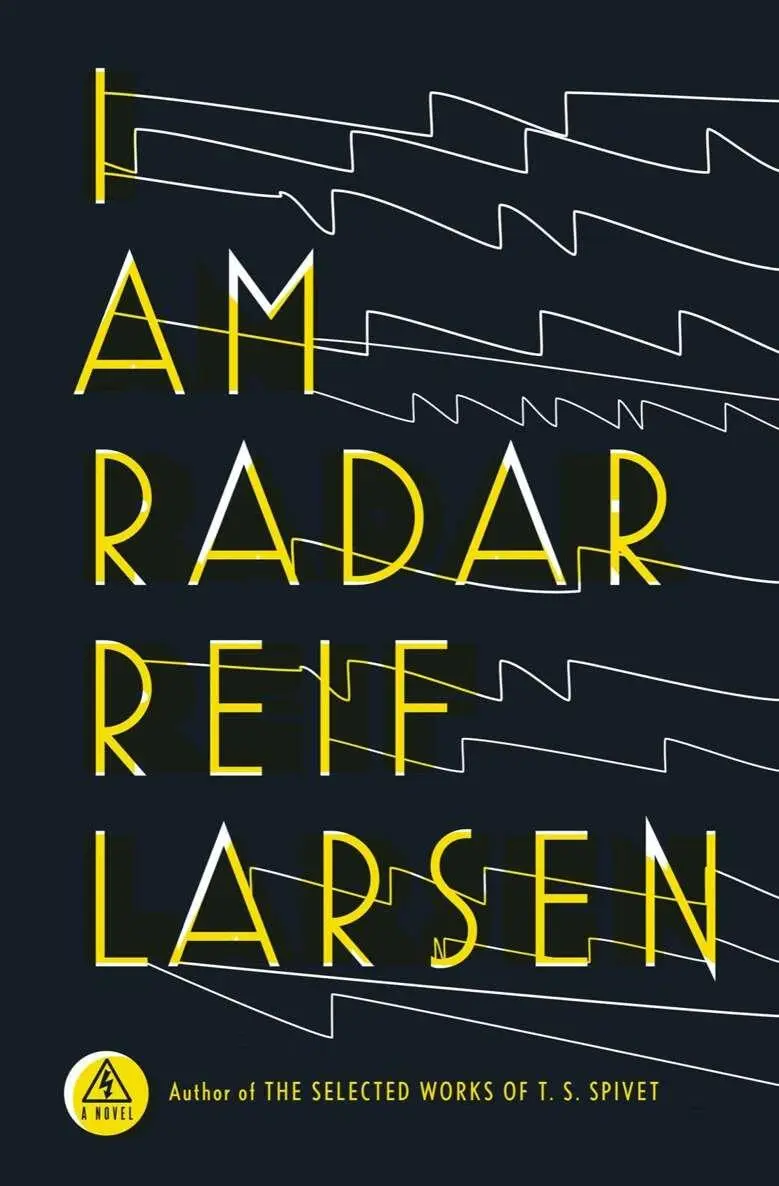
- Название:I Am Radar
- Автор:
- Издательство:Penguin Press
- Жанр:
- Год:2015
- ISBN:нет данных
- Рейтинг книги:3 / 5. Голосов: 1
-
Избранное:Добавить в избранное
- Отзывы:
-
Ваша оценка:
I Am Radar: краткое содержание, описание и аннотация
Предлагаем к чтению аннотацию, описание, краткое содержание или предисловие (зависит от того, что написал сам автор книги «I Am Radar»). Если вы не нашли необходимую информацию о книге — напишите в комментариях, мы постараемся отыскать её.
I Am Radar Deep in arctic Norway, a cadre of Norwegian schoolteachers is imprisoned during the Second World War. Founding a radical secret society that will hover on the margins of recorded history for decades to come, these schoolteachers steal radioactive material from a hidden Nazi nuclear reactor and use it to stage a surreal art performance on a frozen coastline. This strange society appears again in the aftermath of Cambodia’s murderous Khmer Rouge regime, when another secret performance takes place but goes horrifically wrong. Echoes of this disaster can be heard during the Yugoslavian wars, when an avant-garde puppeteer finds himself trapped inside Belgrade while his brother serves in the genocidal militia that attacks Srebrenica. Decades later, in the war-torn Congo, a disfigured literature professor assembles the largest library in the world even as the country around him collapses. All of these stories are linked by Radar — now a gifted radio operator living in the New Jersey Meadowlands — who struggles with love, a set of hapless parents,and a terrible medical affliction that he has only just begun to comprehend.
I Am Radar — читать онлайн бесплатно полную книгу (весь текст) целиком
Ниже представлен текст книги, разбитый по страницам. Система сохранения места последней прочитанной страницы, позволяет с удобством читать онлайн бесплатно книгу «I Am Radar», без необходимости каждый раз заново искать на чём Вы остановились. Поставьте закладку, и сможете в любой момент перейти на страницу, на которой закончили чтение.
Интервал:
Закладка:
Something was very wrong. This was no ordinary blackout.
Beneath the sagging catwalk, the marsh water was muddy and thick, covered in some kind of plush, aromatic slime. An iced tea bottle floated, half-submerged, its label bleached pinkish white by the sun. Like the flesh of a made-up cadaver. At the end of the catwalk, he startled a great blue heron into flight. He could hear the bird’s wings beat against the air as it circled him once, twice, before heading off east, across a calligraphy of islands.
There were only two scenarios that Radar could think of that would cause not just the electric grid to fail but all electronics to stop working instantaneously. Radar had written a paper in college on the first possibility: a huge coronal mass ejection (CME) from the sun, a solar flare so large that it could disrupt modern microprocessors. The last such major CME had occurred in 1859, when a series of solar flares precipitated an unprecedented geomagnetic solar storm, dubbed the Carrington Event, after British astronomer Richard Carrington, the first person to observe and describe the flares. The resulting storm caused havoc in telegraph systems throughout the world, disrupting messages and giving operators powerful electrical shocks. The aurora borealis was seen as far south as the Caribbean and was so bright that people could read newspapers by its light in the middle of the night.
There were all kinds of prediction models for what would happen to the modern-day electrical infrastructure in the event of a solar storm as massive as the Carrington Event — predictions that ranged from the vaguely inconvenient to the totally catastrophic. In truth, no one knew what would happen to a society so dependent upon the semiconductor if the sun unleashed its rage again. But there was just one problem with the solar flare explanation: they were currently in a low point of the eleven-year sunspot cycle, so it was even more highly unlikely that such a highly unlikely solar storm had occurred.
Which left the only other known explanation, a possibility so outrageous that Radar could barely comprehend it: a nuclear bomb had been detonated above the earth’s atmosphere, and New York had just experienced the devastating effects of its electromagnetic pulse.
“Jesus,” Radar said, his brain already making room for the impossible.
4
The world would be crippled. Food and water would instantly be in short supply, particularly around the metropolises, where on any given day, consumables kept on hand could support the populace for three days, maybe four, tops . An EMP was so devastating because it fried all electronic circuitry, and without electricity, the density of urban populations was a death sentence. Refrigeration and air conditioning would be gone. Water pumps gone. Communications gone. Most cars and trucks and planes and trains would be fried, too, as virtually every modern automobile depended on a microprocessor-driven computer system. Everything depended upon the microprocessor. He thought of Grandma Louise, stranded by herself in her little house in Trenton. Old people would be the first to go, along with the sick and the weak. People like him. .
Radar closed his eyes.
Calm down. Maybe he was wrong about all this. Maybe something funky had gone down at the station. Some weird surge of current. Maybe no one else was affected. No need to panic just yet.
First things first. If there had been a massive EMP, he needed to make sure his family was okay. His mother was probably still at work. His father would be in his radio shack at home as usual, no doubt having a conniption at the mass death of all his electronics. He would find his mother, and together they would head home. Yes . This seemed like a sensible plan. One thing at a time. He thought of Ana Cristina in the A&P and wondered if she was safe. He would check on her later.
He left a note for Moses on the off chance he came into his shift as usual, though he was fairly sure this would not happen. He had the feeling that nothing would be as usual ever again. He locked up the station and went out into the heat of the day. Already, refrigerators would be warming — millions of pounds of food slowly spoiling. Entropy would eventually reign supreme. It was the beginning of the end.
He fetched Houlihan from the shed. Sadly, just as he had feared, when he tried to coax one of her transceivers to life, he found that her onboard electronics hadn’t been spared.
“Rest in peace, Houlihan,” he murmured, observing a moment of silence at the handlebars.
Then he gripped the pedal with his crocodile skin boot, took a deep breath, and headed out into a changed world.
On Belleville Turnpike, he quickly came upon a tractor-trailer stopped in the middle of the road. Its driver had opened the hood of the cab, but he now stood off at some distance, smoking and staring out across the swamps.
“You’re the first person I seen come down here,” the man said. He looked tired and unshaven. “I never even looked at this place before. All kindsa birds.”
“Is your truck dead?”
“Everything’s out. Radio doesn’t work. CB. My cell phone won’t even turn on.” He held it up. “You know what’s going on here?”
“I think it was an EMP.”
“An EMP?”
“An electromagnetic pulse.”
“Okay,” the man said, scratching at his chin with his thumb. “How’s that?”
Radar took a deep breath. “It’s usually caused by a nuclear-powered bomb exploding above the atmosphere. Gamma rays from the blast hit atoms in the atmosphere, knocking out electrons, which causes a huge surge of energy directed toward the earth. It’s called the Compton effect. The pulse instantly overloads circuits and fries anything with a semiconductor. Including your truck. Including your cell phone. Including just about anything.”
The man nodded, absorbing this information with surprising calmness. Pulled at his cigarette. Squinted at the sky.
“So how come we still standing here if they nuked us?”
“An EMP bomb is detonated above the atmosphere. There’s no nuclear fallout or physical damage from the blast. The primary weapon is the pulse. Depending on where it was, how many there were — that kind of thing — the whole country could be paralyzed.”
He gestured at Radar’s bicycle. “You’re smart. At least that thing still works.”
“The human body isn’t affected by an EMP. At least, not directly.”
“Not directly?”
“There was some study that said eighty percent of the population would die within six months of a massive nuclear EMP.”
“Damn,” the man said. “Okay.”
“Sorry. I don’t mean to scare you, but this could be really serious.”
The man sighed, turning his phone over in his hand. “I’m guessing these things don’t come back to life, then?”
“I’m afraid not.”
“I’d like to call my wife. She’s gonna be worried.”
“I know what you mean. I’m trying to track down my parents.”
They stood, watching as a pair of house sparrows spun above them. The man sucked on the last of his cigarette and threw the stub to the ground. The ember skipped and rolled across the pavement like a furious insect.
“So how come I ain’t never even heard about this EMP?” the man said. “Seems kind of important to keep the citizens informed of that kinda thing.”
“The government’s report on an EMP attack came out the same day as the 9/11 Commission’s report.”
“Bad timing,” the man said, shaking his head. “You know, my niece was born on 9/11. Sweetest little thing. She still doesn’t know.”
• • •
RADAR PASSED three more cars stalled in the middle of the road, their drivers nowhere to be seen. A Jeep Cherokee had driven off into the reeds. Its front bumper was submerged in water. A man dressed in a Hawaiian T-shirt sat on the ground next to the Jeep, looking bewildered but otherwise unharmed.
Читать дальшеИнтервал:
Закладка:
Похожие книги на «I Am Radar»
Представляем Вашему вниманию похожие книги на «I Am Radar» списком для выбора. Мы отобрали схожую по названию и смыслу литературу в надежде предоставить читателям больше вариантов отыскать новые, интересные, ещё непрочитанные произведения.










Обсуждение, отзывы о книге «I Am Radar» и просто собственные мнения читателей. Оставьте ваши комментарии, напишите, что Вы думаете о произведении, его смысле или главных героях. Укажите что конкретно понравилось, а что нет, и почему Вы так считаете.