Shashi Tharoor - Show Business
Здесь есть возможность читать онлайн «Shashi Tharoor - Show Business» весь текст электронной книги совершенно бесплатно (целиком полную версию без сокращений). В некоторых случаях можно слушать аудио, скачать через торрент в формате fb2 и присутствует краткое содержание. Год выпуска: 2011, Издательство: Arcade Publishing, Жанр: Современная проза, на английском языке. Описание произведения, (предисловие) а так же отзывы посетителей доступны на портале библиотеки ЛибКат.
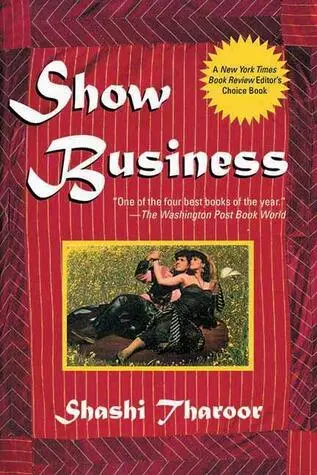
- Название:Show Business
- Автор:
- Издательство:Arcade Publishing
- Жанр:
- Год:2011
- ISBN:нет данных
- Рейтинг книги:3 / 5. Голосов: 1
-
Избранное:Добавить в избранное
- Отзывы:
-
Ваша оценка:
Show Business: краткое содержание, описание и аннотация
Предлагаем к чтению аннотацию, описание, краткое содержание или предисловие (зависит от того, что написал сам автор книги «Show Business»). Если вы не нашли необходимую информацию о книге — напишите в комментариях, мы постараемся отыскать её.
Show Business — читать онлайн бесплатно полную книгу (весь текст) целиком
Ниже представлен текст книги, разбитый по страницам. Система сохранения места последней прочитанной страницы, позволяет с удобством читать онлайн бесплатно книгу «Show Business», без необходимости каждый раз заново искать на чём Вы остановились. Поставьте закладку, и сможете в любой момент перейти на страницу, на которой закончили чтение.
Интервал:
Закладка:
Abha looks at her newfound son, her eyes brimming with hope and pride. “Pray that they have not moved him to another jail,” she says.
“Let’s go, Ma,” says the hero. The monkey hops excitedly about on Ashok’s shoulder as they walk on. The sound track reminds the audience that they must go on seeking.
“You may visit the prisoner,” the jail official tells Inspector Ashok. The young man, controlling his excitement with difficulty, walks to the cell. On a rough wooden stool sits Ramkumar, head bowed, wearing a prison uniform and a thick beard. He is a well-known character actor, a euphemism for someone who can act but isn’t as good-looking as the (invariably characterless) hero.
“Father,” breathes Ashok.
Ramkumar looks up dubiously. “What do you want?” he asks gruffly. “Who are you?”
Ashok grips the bars of the cell. “I am your son,” he beams.
“I have no son,” Ramkumar replies. “Stop torturing an old man. Go away.”
“B-but you have! Your wife, Abha, gave birth to twin sons while you were in jail!” Ashok exclaims. “My revered mother and brother died at the hands of the henchmen of Pranay Thakur, but I survived. Didn’t anyone tell you this?” He takes in the expression of growing astonishment and wonder on his father’s face and realizes that, of course, no one could have. “I’m sorry, Father.” He thrusts out his wrist. “Do you recognize this?”
“I gave it to your mother many years ago.” His voice breaking, Ramkumar gets up from his stool and walks warily toward the bars of the cell. “And I thought she had simply decided to abandon a jailbird.” He shakes his head, grieving. “How do I know you are telling the truth, that you didn’t just pick this talisman up somewhere? Why have you come to me only now?”
“Because I have only just found out about you and traced you to this jail,” Ashok says. He bends to touch his father’s feet through the bars. “If you don’t believe me, I’ll bring Raju-ji to you tomorrow. You remember Raju?”
“The servant? Yes, of course I do. But” — a blur covers his eyes, and in a single point of light at its center Ramkumar sees his wife, young again, arms outstretched to him as he is dragged away in handcuffs — “it won’t be necessary.” Ramkumar looks at Ashok still bent, and slowly, as if marveling at the moment, places a hand on his visitor’s head. “Bless you,” he says, “my son.”
“Father!” exclaims Ashok, rising. They embrace, despite the bars between them. (The filmmakers are unaware of prison regulations and they’ve never heard of the Jail Manual, but even if they were and had, they wouldn’t let realism come in the way of art. These men from Bombay belong to a purist school of aesthetics.)
“It breaks my heart to discover a son and to know that these bars will always remain between us, while that wretched killer who has reduced me to this goes free.”
“Father, I promise you will not have to remain in prison much longer. I will check every rule, explore every legal right you have, to get you out of here. I am a police officer. I can do it.”
“You give me hope, my son,” says Ramkumar, pride in his voice. “But — do not tell the police I am your father. They will hold it against you, my son, that your father is a convicted criminal. It may even make it more difficult for you to intervene to secure my release. After all these years, I can afford to wait a little longer if need be, but don’t take any risks.”
“You are right, Father,” Ashok agrees. “Very well, I shall keep our relationship a secret. But only until justice has been done and you are a free man again!”
Outside the prison Inspector Ashok walks on air, a starry look in his eyes. He whistles; he does a quick hop, skip, and jump. Startled passersby look at him askance. A lovely girl in a cotton salwar-kameez, books in her arms, hails him.
“Ashok!” calls Mehnaz. She is wearing outsize sunglasses, apparently to enhance the scholarly look she must sustain for the scene. “What are you doing in this uniform?”
Ashok blinks. “Do I know you?” he asks, though he is clearly not unhappy at being recognized by this exquisite stranger.
“Stop teasing me,” she says. “If the police catch you in this, you’ll really be in for it.”
“But I am the police,” Ashok protests.
“Very funny,” says Mehnaz. “But I must say, it looks good on you, Bhaiya. Is it part of the plan?”
“If you say so,” agrees Ashok, mystified.
“Anyway, I knew you wouldn’t let me walk alone to college,” Mehnaz says satisfiedly. “Having forced me to stay out of all your exciting plans and told me I had to finish my studies, I did think the least you could do was accompany me.”
“You bet,” confirms Ashok, who knows a good thing when he sees it and is, in his elation, game for anything.
“I suppose you think the uniform will frighten all the college dadas into behaving themselves,” Mehnaz goes on chattily.
“It should, shouldn’t it?” Ashok agrees.
“You’re talking funnily today, Ashok Bhaiya.” The girl giggles. They have reached a park that blooms conveniently on their way to the college. “You’re really speaking strangely.”
“Would you prefer me to sing, instead?” Ashok asks. Mehnaz laughs and runs toward a tree. Ashok bursts into playback:
Gulmohars, roses and the iris growing green,
You are more lovely than any flower I’ve seen;
Take off those glasses and put jasmine in your hair,
And let me watch you just — standing there.
Oooh, standing there.
(Mehnaz laughs, runs around the tree, then skips lightly over the grass and puts one foot on a park bench. She slips her glasses up her forehead and holds her chin in one hand, surveying Ashok in mock disapproval.)
Mountains, oceans, valleys around the tourist scene,
You are a better sight than any place I’ve been;
Turn off that frowning look and sit upon that chair,
And let me watch you just — sitting there.
Oooh, sitting there.
(Mehnaz sits on the park bench while Ashok dances around it, singing. He plucks a rose and gives it to her. She inhales its scent, then stretches languorously on the bench, coyly veiling herself and the rose with her thin gauze dupatta.)
Love-poems, sonnets and the words that I can glean,
You are more to me than any verse could mean;
Slip off that screen of cloth and leave your fragrance bare,
And let me watch you just — lying there.
Oooh, lying there.
He brings his face amorously close to hers. Mehnaz leaps off the bench and runs to the pathway, laughing. Ashok follows, catches up with her. She is panting: “Bhaiya, what has come over you? I’ve never known you to behave like this.”
“But you’ve never known me,” Ashok points out.
“Don’t be silly,” Mehnaz says. “The joke’s gone far enough. Hurry up, or I’ll be late for class.”
“Wait,” says Ashok, catching hold of her hand. She looks at his hand in hers, and the color mounts to her cheeks. “Who am I?”
“You’re Ashok, of course,” she responds impatiently.
“Fair enough. And how do you know me?”
“You’re my Bhaiya, aren’t you?” She is irritated now and pulls her hand away to walk on. Ashok stands still for a moment, scratching his head in puzzlement. “Am I?” He asks himself. Then he follows her.
“I’ll take you to college,” he says, “but there’s something really peculiar going on.”
“I’ll say,” agrees Mehnaz with spirit. “Are you sure you haven’t been drinking or something?”
Читать дальшеИнтервал:
Закладка:
Похожие книги на «Show Business»
Представляем Вашему вниманию похожие книги на «Show Business» списком для выбора. Мы отобрали схожую по названию и смыслу литературу в надежде предоставить читателям больше вариантов отыскать новые, интересные, ещё непрочитанные произведения.








Обсуждение, отзывы о книге «Show Business» и просто собственные мнения читателей. Оставьте ваши комментарии, напишите, что Вы думаете о произведении, его смысле или главных героях. Укажите что конкретно понравилось, а что нет, и почему Вы так считаете.