Shashi Tharoor - Show Business
Здесь есть возможность читать онлайн «Shashi Tharoor - Show Business» весь текст электронной книги совершенно бесплатно (целиком полную версию без сокращений). В некоторых случаях можно слушать аудио, скачать через торрент в формате fb2 и присутствует краткое содержание. Год выпуска: 2011, Издательство: Arcade Publishing, Жанр: Современная проза, на английском языке. Описание произведения, (предисловие) а так же отзывы посетителей доступны на портале библиотеки ЛибКат.
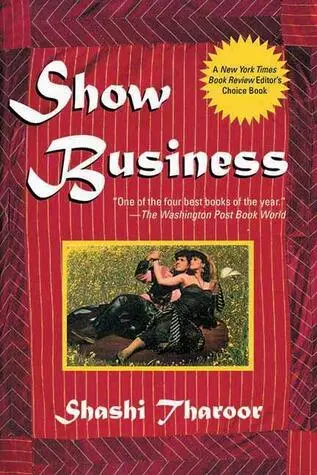
- Название:Show Business
- Автор:
- Издательство:Arcade Publishing
- Жанр:
- Год:2011
- ISBN:нет данных
- Рейтинг книги:3 / 5. Голосов: 1
-
Избранное:Добавить в избранное
- Отзывы:
-
Ваша оценка:
Show Business: краткое содержание, описание и аннотация
Предлагаем к чтению аннотацию, описание, краткое содержание или предисловие (зависит от того, что написал сам автор книги «Show Business»). Если вы не нашли необходимую информацию о книге — напишите в комментариях, мы постараемся отыскать её.
Show Business — читать онлайн бесплатно полную книгу (весь текст) целиком
Ниже представлен текст книги, разбитый по страницам. Система сохранения места последней прочитанной страницы, позволяет с удобством читать онлайн бесплатно книгу «Show Business», без необходимости каждый раз заново искать на чём Вы остановились. Поставьте закладку, и сможете в любой момент перейти на страницу, на которой закончили чтение.
Интервал:
Закладка:
Scene: Ashok the inspector goes from prison to prison, asking in vain about his father. In each frame the prison officials shake their heads too, out of tune with the insistent drumbeat of the sound track. The young policeman walks away, depressed but determined.
During both sequences the sound track swells with a plaintive lament:
Seeking —
We must go on seeking.
Must leave no stone unturned,
No candle of hope unburned,
No bit of truth unlearned —
Must go on seeking.
Seeking —
We must go on seeking.
Must keep our faith alive,
And never cease to strive,
Whatever we derive —
We must go on seeking.
Scene: Ashok, Mehnaz, and the monkey Thakur are at a village mela. Amid the colorful bustle of the fairground — painted animals and brightly dressed women, rusty carousels and lusty carousers, turbans and cotton candy in equally startling shades of pink — the trio continue their quest. They are seen receiving yet another negative shake of the head in response to Ashok’s extended wrist. Dispirited — indeed, none is more dejected than the monkey, who covers his eyes with his long fingers gloomily — they turn away.
“I’m beginning to think we’ll never find out about your amulet, Bhaiya,” says a weary Mehnaz, pretty in a yellow ghagra choli and pouting most attractively at her costar.
“We will, Mehnaz,” Ashok replies. “We must. I cannot rest until I have found out the truth about myself.”
Mehnaz looks as if she might be prepared to tell him a few truths herself, but further conversation is thwarted by a commotion in the village square beyond the fairground.
“What’s going on here?” asks Ashok.
“It’s the Old Woman,” says a villager. “Some people are angry with her and want to drive her away.”
“What Old Woman?”
“You haven’t heard of the Old Woman?” The villager looks at Ashok as a Bombayite might regard someone who thought stars could only be seen in the sky. “She is well known in these parts. She has been wandering around for years. At first she was with a hermit who had helped her in some way. She collected alms for him, fed him, and so on. Then the hermit died and she took to sitting under a banyan tree for days on end, praying. People think she is a holy woman of some sort and they give her food and water. But it never lasts for very long. In village after village she has been driven away because of her madness.”
“She is mad, then?”
“You wouldn’t think so at first. But every once in a while, when she sees a baby, she starts screaming that it is hers and tries to snatch it away from whoever is carrying it, accusing that person of having stolen her child. As you can imagine, people don’t take too kindly to that. So they drive her away, and she wanders off to another banyan tree in another village, until it happens all over again.”
“Sad story,” says Mehnaz.
“Yes, something terrible must have happened to her in the past,” the villager clucks. “It used to be said that she had had some accident and could remember nothing — not even her name or address, who she was, where she came from. So she is just called the Old Woman.”
“And a lot of other names, it seems,” says Ashok, heeding the voices raised offscreen. “Come, Thakur, let us see what they are doing to this poor Old Woman.” The monkey nods agreement, and they set off.
Not a moment too soon. There is a mob gathered near the banyan tree, and the mood is ugly. Voices are raised, and so are fists: one unpleasant extra has a chappal in his hand with which he is threatening to beat the old lady if she continues to impugn the parenthood of his baby.
In the center of this throng, her gray hair flowing wild about her, her body clad in shapeless white, her considerable bosom heaving and her face bathed in tears, is — you guessed it, audience! — Abha. Damsel no longer, but evidently in distress.
“Would you raise your filthy footwear against your own mother?” Ashok asks sharply if irrelevantly, shaming the chappal- wielder, and ultimately the crowd, into retreat. (The original screenplay had called for a fight scene here, with Ashok and his monkey bashing up the mob, but this was regretfully deleted by the director in an uncharacteristic burst of sensitivity.) Ashok puts a protective arm around the Old Woman. “Come, Mother,” he says, using the term out of respect rather than recognition, but giving the audience their twenty-five paise’s worth of irony in the bargain. “Come with us. We shall look after you.”
“Who are you, beta?” the Old Woman asks as her tormenters melt away, muttering. In the background the tune of “We must go on seeking” plays on, to alert the less attentive members of the audience.
“I am just a humble monkey-man, Mother,” admits our hero. “But I cannot bear to see you treated like this. I never had a mother myself, and it galls me to see those who have been able to take their mothers for granted behave in this way. Come with us, Mataji. We have a humble home which is yours as long as you want to stay.
“You are very kind,” Abha says gravely. “The blessings of Hanuman be upon you. And this girl?”
“She is my sister, or rather she is like a sister to me,” Ashok explains. “Her father recently passed away and I am looking after her, though a lot of the time I feel she is the one looking after me.”
“Bless you both.” Then suddenly, as Ashok moves his arm, there is a crash of cymbals on the background track. The camera zooms into a close-up amid the screeching of violins, and Abha’s eyes, wide with astonishment, take in the sight of the talisman dangling from her rescuer’s wrist.
“Where did you get that?” she screams, lunging for it. “You thief! You stole that! Give it to me.”
Ashok catches her raised hand in a firm grip as Mehnaz looks alarmed. “Please, Mother, is this any way to treat someone who has done you no harm? This talisman is mine.”
“Liar! How did you get it? Who gave it to you?”
“It has been with me since birth.”
(Another smash from the invisible percussionist.) “And who,” Abha asks with a catch in her voice, “are your parents?”
Ashok’s voice drops. “I don’t know, Mother. You see, as a baby I was found in a basket on the river.”
“My God!” says Abha and faints, a hand on her heart, as the refrain from “We must go on seeking” deafens the viewers. Before Ashok can prevent it, Abha has hit her head on the hard ground. The monkey, wincing, puts shocked hands to his ears as Ashok and Mehnaz look at each other in mutual bewilderment.
When Abha is revived, the knock on her head has, of course, affected only her amnesia. She now remembers everything, and at some cost to the patience of the viewers, remembers it garrulously. The reunion of mother and son is tearful and heartrending. So is the background music.
“Raju might still be working somewhere, in some factory in Bombay, and might know where your brother is,” Mehnaz points out.
“Do you know how many factories there are in Bombay?” Ashok asks. “That would be impossible. I pray that my brother is alive and well and that Fate will lead me to him. But first, there are more urgent things to do. I must find my real father and try to get him out of jail. And then I must deal with this evil uncle of mine.”
“But how can you get him out of jail?” Abha asks.
“Ma” (the use of the word brings tears to the actress’s eyes, not necessarily for the reasons intended in the script), “in the years that I have been a humble monkey-man I have made a number of friends who are on the wrong side of the law. We will find a way.”
Читать дальшеИнтервал:
Закладка:
Похожие книги на «Show Business»
Представляем Вашему вниманию похожие книги на «Show Business» списком для выбора. Мы отобрали схожую по названию и смыслу литературу в надежде предоставить читателям больше вариантов отыскать новые, интересные, ещё непрочитанные произведения.








Обсуждение, отзывы о книге «Show Business» и просто собственные мнения читателей. Оставьте ваши комментарии, напишите, что Вы думаете о произведении, его смысле или главных героях. Укажите что конкретно понравилось, а что нет, и почему Вы так считаете.