Pankaj Mishra - The Romantics
Здесь есть возможность читать онлайн «Pankaj Mishra - The Romantics» весь текст электронной книги совершенно бесплатно (целиком полную версию без сокращений). В некоторых случаях можно слушать аудио, скачать через торрент в формате fb2 и присутствует краткое содержание. Год выпуска: 2001, Издательство: Anchor Books, Жанр: Современная проза, на английском языке. Описание произведения, (предисловие) а так же отзывы посетителей доступны на портале библиотеки ЛибКат.
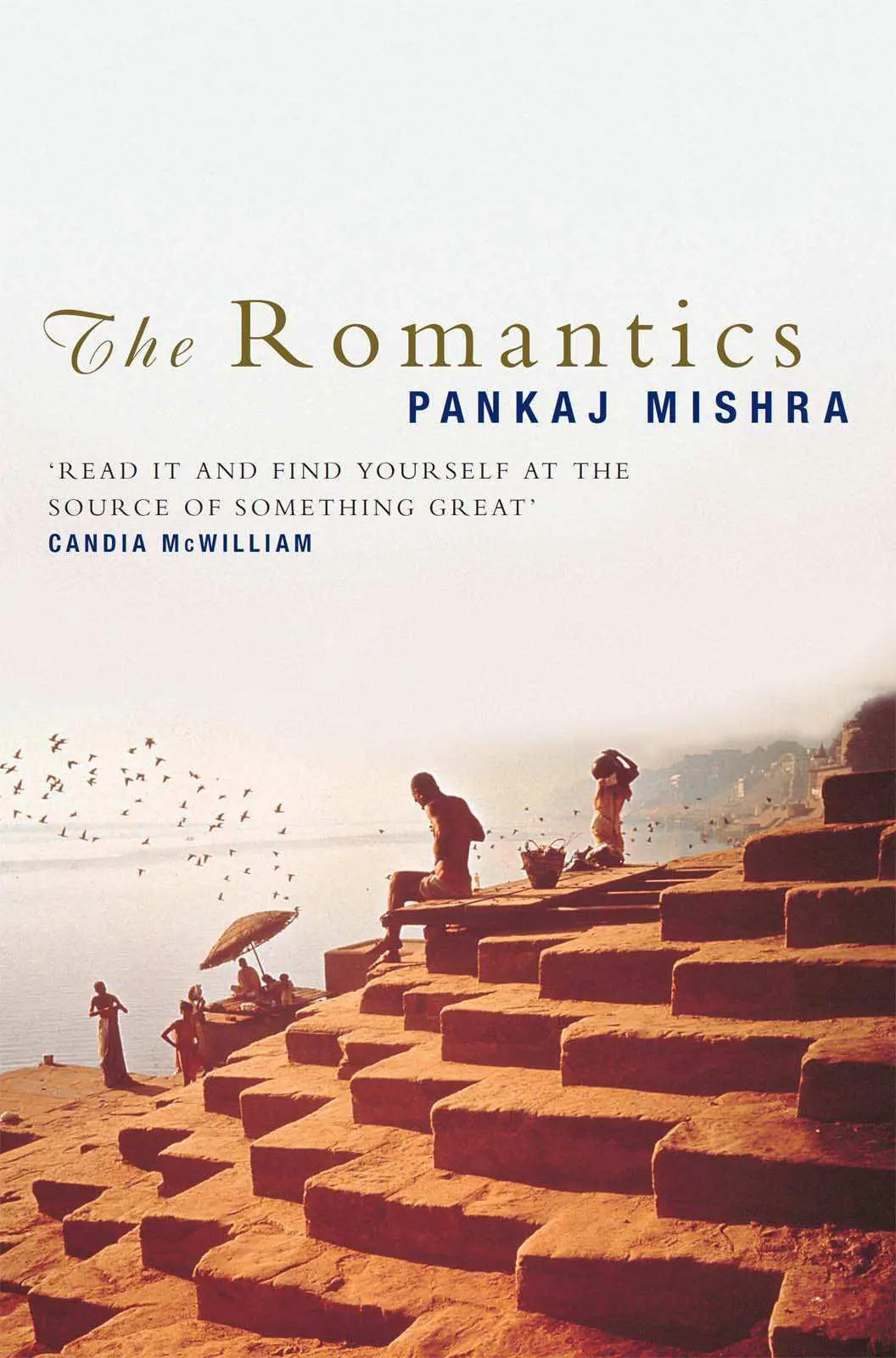
- Название:The Romantics
- Автор:
- Издательство:Anchor Books
- Жанр:
- Год:2001
- ISBN:нет данных
- Рейтинг книги:4 / 5. Голосов: 1
-
Избранное:Добавить в избранное
- Отзывы:
-
Ваша оценка:
The Romantics: краткое содержание, описание и аннотация
Предлагаем к чтению аннотацию, описание, краткое содержание или предисловие (зависит от того, что написал сам автор книги «The Romantics»). Если вы не нашли необходимую информацию о книге — напишите в комментариях, мы постараемся отыскать её.
The Romantics — читать онлайн бесплатно полную книгу (весь текст) целиком
Ниже представлен текст книги, разбитый по страницам. Система сохранения места последней прочитанной страницы, позволяет с удобством читать онлайн бесплатно книгу «The Romantics», без необходимости каждый раз заново искать на чём Вы остановились. Поставьте закладку, и сможете в любой момент перейти на страницу, на которой закончили чтение.
Интервал:
Закладка:
It was a big adventure for her, and she was awkward before me. I took her and her boyfriend to Harry’s Restaurant, where we had an uncomfortable tea, none of us saying much. The vulnerability she revealed in Pondicherry was even more pronounced now; so were the contradictory ambitions. She now told me that she wanted to be a social worker, but wanted to do an MBA first, in the United States. Then, changing her mind, she said she wanted to write poetry and be a writer.
An inquisitive Uma Devi sat behind the counter and gazed at us, trying to figure out my connection to the young couple.
Later, walking through the market, I spotted them at the video shack, laughing and joking with the Tibetan youth who ran it. They looked relaxed, restored to their natural everyday selves.
*
And then, one day in August, the school semester yet to begin, I was browsing through a shelf of expensive new arrivals at the bookshop and chatting about the pound— rupee exchange rate with the owner, a kindly old bespectacled Tibetan called Tenzing with a big black bump on his forehead, when I heard someone behind me say, ‘Guess what! A voice from the past!’
I turned back to see Mark, looming over me, grinning, his abundant hair falling over his ears. He had seen me come in just as he was about to go out; he said he had hung around and eavesdropped on my conversation with the bookseller in order to make sure that he wasn’t mistaken.
A slight paunch bulged out above the broad scuffed belt of his khakis, but he hadn’t lost his handyman’s tough good looks and friendly manner. He held in his hand a new book on Ayurveda medicine. But it turned out that he had given up his research. He had a new grant from some foundation but had turned it down. He had gone back to America for a few months in the summer and then had come straight up to Dharamshala, where he planned to spend a few weeks before returning to Benares. He said he had been coming to Dharamshala for the summer and monsoon months almost every year. He couldn’t stay away from India; it had become a routine that he couldn’t do without.
When I told him that I had been in Dharamshala for seven years, he gave a small whistle of disbelief. ‘It’s weird, you know,’ he said, ‘we should have bumped into each other by now.’
He was in a hurry, he said, but lingered on, talking about the Kangra valley, where he had just done a long trek.
And then he added, apropos of nothing, ‘Have you heard about Panditji? He and his wife died suddenly, within days of each other. People said there was something fishy about it; apparently they weren’t on great terms with their son, Arjun. .’
He was still speaking as he moved towards the door. ‘I’ve got to tell you about Miss West,’ he said, pushing out the door, ‘but it’ll have to wait until next time. Anyway, now that we are connected, let’s keep in touch. Drop in some time. I’ll tell you where you my house is. You go two blocks to the left. .’
A few days later, I found myself walking down the quiet cobblestone alley Mark had described. Hanging baskets of bougainvillea framed the front doors of the small houses and white prayer flags fluttered from the clothes lines stretched between roofs.
It had taken me some time to decide whether I should visit Mark, and I still wasn’t sure if it was a good idea. I had been surprised at first by the coldness with which I heard about the death of Panditji and his wife: the event seemed so distant, with so little relation to anything in my present life; it was like the events in the newspapers I occasionally picked up at the bookshop. But then, later, the news had worked on me in my solitude, had loosened another kind of memory of Benares: the memory of the serene days I had spent there, the afternoons at the library, the evenings at the ghats, the smoky blue twilights, all the eventless days with their restful vacancies. Something within me kept going back to it, wanted to stay with the pictures in my mind; it was what took me to Mark’s house that afternoon.
*
A bespectacled Indian girl wearing a chikan kurta opened the door, and for one moment I thought I had come to the wrong house. But then she said something, with an unmistakably American accent, the sun sparkling on her glasses, about Mark having gone out to the bazaar, and I knew I hadn’t.
She said, ‘You are welcome to hang out here if you want.’
Inside, there was the same assortment of ethnic knick-knacks I had once seen in Mark’s house by the river in Benares: Azamgarh dhurries, Himachali wall hangings, Gujarati lampshades, Tibetan tankas and various kinds of pots and pans.
The woman extended a small warm hand, introduced herself, and then sat down before me on the dhurrie. Her name was Rekha and she was in her final undergraduate year at Berkeley, California. That made her someone in her late teens. But she looked older; her glasses gave her a severe, studious look, and she spoke fast, with a kind of flatly emphatic tone and accent that sat oddly with her Indian face.
She said she was working as an intern for the rights of single-mother minority women in San Francisco. After graduation, she planned to get into law school and work permanently as a lawyer for the rights of single-mother minority women.
The conversation floundered on my side. She asked me no questions, and I wasn’t sure how to respond to her disclosures, which she seemed to make with complete sincerity and frankness; and when she got up to make some tea, I half wondered if I ought to offer to help her.
It was as she pottered about the kitchen, blindly reaching out for shelved jars and cups, that I remembered Debbie. Where was she now? I wondered, and sitting in the narrow, dimly lit room, surrounded by the clutter of Mark’s days in Benares, I had a sudden melancholy awareness of the large store of unrecalled and unreflected-on memories I carried within myself.
Mark came in soon after we finished our tea. He looked delighted to see me, and his news came out in a rush.
He said he had recently reached a momentous decision in his life; it was something he had agonized over for years now. He was going back to America. He was going back next year, and planned to settle down with Rekha in California. Yes, the time had come. He loved India deeply, particularly Benares, and it hurt simply to think about leaving it. But it had to be done. It was a now-or-never thing.
I kept waiting for him to move on to Miss West. I didn’t dare ask about her myself, for fear of being confronted with unsettling subjects. It was why I hadn’t had any news of Miss West for a long time. I had written to her from Pondicherry; she had replied with a postcard, one of whose innocuous sentences had leaped out and startled me: it said she was going to Paris for the summer to see some friends, including our mutual ones. I had received the postcard soon after I arrived in Dharamshala, and a sudden attack of dread had made me tear it up. I hadn’t written to her again.
Now, according to Mark, she too had made a ‘momentous’ decision in her life. She was still in Benares, but was planning to leave soon.
Mark said, ‘She has broken off her long-standing relationship with the guy in England. It wasn’t going to work out. It took her twenty-seven years to realize that, and I think she’s pretty devastated by it all, but she’s so English, she wouldn’t let on anything to anyone. All I know is that she has bought a house in East Anglia, somewhere in the country, and plans to live in it for the rest of her life. I’ve been there once; it’s very flat and damp. I can’t imagine why she wants to go there — I mean, she could move to California, or some place less depressing — but I think she has basically given up on the idea of waiting for this guy. She has to go somewhere, and I think she’s leaving Benares and India because it wasn’t going to work out for her. Too many memories, I guess. I guess she wants to be in some place she can call home.’
Читать дальшеИнтервал:
Закладка:
Похожие книги на «The Romantics»
Представляем Вашему вниманию похожие книги на «The Romantics» списком для выбора. Мы отобрали схожую по названию и смыслу литературу в надежде предоставить читателям больше вариантов отыскать новые, интересные, ещё непрочитанные произведения.










Обсуждение, отзывы о книге «The Romantics» и просто собственные мнения читателей. Оставьте ваши комментарии, напишите, что Вы думаете о произведении, его смысле или главных героях. Укажите что конкретно понравилось, а что нет, и почему Вы так считаете.