Pankaj Mishra - The Romantics
Здесь есть возможность читать онлайн «Pankaj Mishra - The Romantics» весь текст электронной книги совершенно бесплатно (целиком полную версию без сокращений). В некоторых случаях можно слушать аудио, скачать через торрент в формате fb2 и присутствует краткое содержание. Год выпуска: 2001, Издательство: Anchor Books, Жанр: Современная проза, на английском языке. Описание произведения, (предисловие) а так же отзывы посетителей доступны на портале библиотеки ЛибКат.
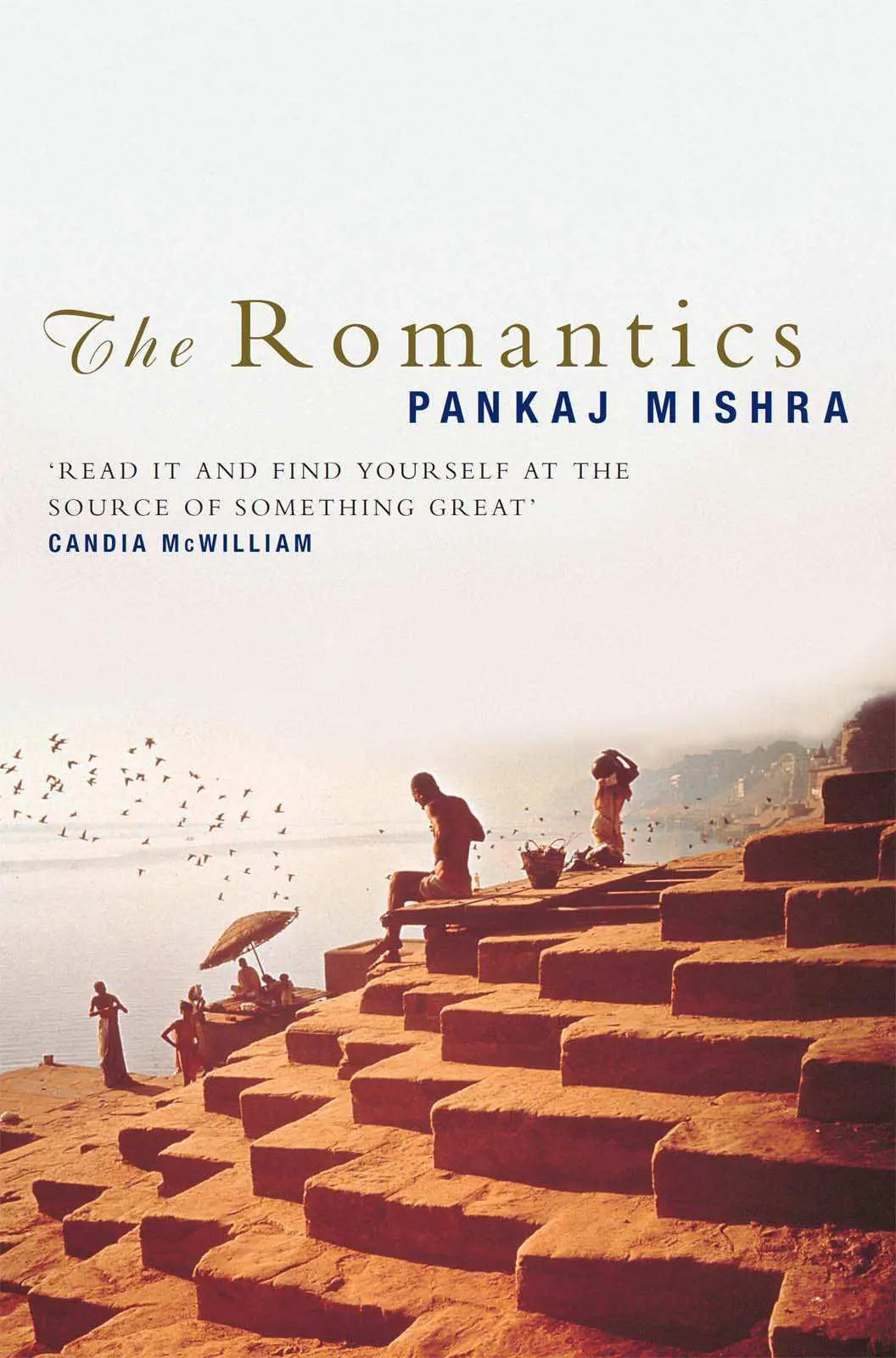
- Название:The Romantics
- Автор:
- Издательство:Anchor Books
- Жанр:
- Год:2001
- ISBN:нет данных
- Рейтинг книги:4 / 5. Голосов: 1
-
Избранное:Добавить в избранное
- Отзывы:
-
Ваша оценка:
The Romantics: краткое содержание, описание и аннотация
Предлагаем к чтению аннотацию, описание, краткое содержание или предисловие (зависит от того, что написал сам автор книги «The Romantics»). Если вы не нашли необходимую информацию о книге — напишите в комментариях, мы постараемся отыскать её.
The Romantics — читать онлайн бесплатно полную книгу (весь текст) целиком
Ниже представлен текст книги, разбитый по страницам. Система сохранения места последней прочитанной страницы, позволяет с удобством читать онлайн бесплатно книгу «The Romantics», без необходимости каждый раз заново искать на чём Вы остановились. Поставьте закладку, и сможете в любой момент перейти на страницу, на которой закончили чтение.
Интервал:
Закладка:
Something in me longed intensely for unfamiliar sights. But unfamiliarity couldn’t have, and didn’t, last long on the peculiar trails I took. In the weeks that followed my departure from Pondicherry, I came to know all too well the plangent cry of the speeding train in the night; the whine of the overused pneumatic door to an overcrowded waiting room where sleeping bodies lay swaddled in white sheets on the floor. It all came to be very predictable after so many journeys — the heat, the dust, the noise, the anxiety, the fatigue and the cold bucket-bath in a dismal flophouse at the end. Thrown into the chaos of a railway platform I could already anticipate the eerie silence that would descend after the train had gone. A sense of futility hovered above the long hours spent waiting at desolate mice-infested bus stops in the middle of nowhere, over the greasy late suppers among the coloured neon lights and throbbing speakers of all-night dhabas.
And as it turned out, the unfamiliar world I longed for proved to be disturbing in an unsuspected way. It was nowhere more so than in the towns I passed through, that had experienced Hindu — Muslim rioting over the then still standing Babri Masjid. In these places, I couldn’t walk a few yards away from my refuge for the night without encountering some conspicuous trace of recent violence: burned or scorched buildings, charred cars, buses and scooters, upturned carts with missing rubber tyres that, I would read in the papers, had been used as ‘flaming garlands’, looted shops showing the wretched brick behind the now destroyed panelling, shards of broken windows on empty roads and, here and there on the ground, faint grey stains of unwashed blood.
I saw all this — the clumsy brutality, the rage, the dereliction, the damage I had so far read about in the papers — and the great grief I felt was reduced gradually to wordless fear. I kept telling myself as consolation: this isn’t my world, I’ll soon be out of it.
Yet it was hard to deny that something in it matched my own state of mind. I knew I couldn’t get away from it by simply taking the next train out.
*
At this time of pain, and in the numb years that followed, there would often come to me the memory of the boy I had seen near Rajesh’s mother’s house: the boy with the cows whose sad melodious jingling I had heard that vacant afternoon in the mango grove, among the mute trees, the golden dust, the gnarled, humped roots.
The image came to me as if from a recurring dream, and it was always as unexpected during these travels, and had the same effect, as that sudden rent in the wall of rock streaking past train windows which reveals, for one brief second, sheep grazing quietly on a grassy meadow, around a pond whose still surface mirrors the clean blue sky.
The image with its perfect configuration of solitude, contentment and beauty was a kind of balm in those days of exhausting travel; it revived me by throwing me into daydreams of a simplified life and world — the kind of world where children herded cows all morning and returned home late in the afternoon to meals cooked on dung-cake fires.
It was pure fantasy, and I now recognize it as such. But we live by fantasies, and this one did then what, in retrospect, was a necessary thing: it created new hopes in order to offset the destruction of old ones. It diminished, however briefly, the feeling I had known after Pondicherry that I had been contaminated in some profound way. It made bearable my random travels, and made it possible for me to think that I had another chance.
And when that chance came — by luck much sooner than I could have expected — the fantasy not only survived but filled what appeared to me as the large and ominous void of the future.
In Dharamshala, where I arrived at the end of my travels to take up the job Deepa had arranged for me, I found new ways of being that weren’t far from my daydreams of that simple life.
*
Dharamshala was then, and has remained to a great extent, an unambitious little town. Its small population consisted mainly of Tibetans who had arrived in the 1960s as refugees from their homeland, and something of the private and incommunicable melancholy of permanent exile hung over its huddled houses and pinched streets. This effect was deepened when I arrived early one monsoon evening.
Stocky monks with tonsured heads, swirling robes and oddly garish socks scurried in and out of the fog swaddling the mountaintop town in grey vapour. Hollow television voices and pressure-cooker hisses escaped through curtained doors of tiny houses leaning into each other. Open iron-barred windows revealed cramped fluorescent-lit rooms where Tibetan women sat sewing, and in dimly lit shops, ageing men with broad, lined faces sat still and pensive behind jars of sticky sweets. They looked remote and abstracted even while talking to you, and you wondered what memories of lost homelands were decaying behind the piercing sadness of their stoic faces.
Part of my luck lay in finding the right house, and it began the very first night, when I saw a handwritten notice behind the receptionist’s desk at the hotel I was staying in. ‘Vacant,’ it said, ‘a two-bedroom house. Long-term tenants welcome. Contact Uma Devi at Harry’s Restaurant.’
I remember well going next morning to Harry’s Restaurant, and my first glimpse of the house I was to live in. I felt relatively calm that day; it was part of the minor satisfaction of travelling as I did, cheaply and randomly. To arrive at an unknown town after a long, exhausting bus ride; to squat under a vigorously flowing tap; to change into a freshly laundered shirt and pair of trousers and then step out, renewed, into the garish bustle of a bazaar — every one of these minor acts contained a brief but precious moment of well-being.
An aroma of ground coffee, and earnest, cigarette-punctuated conversations, hung in the small room that served as Harry’s Restaurant. In one corner, an auburn-robed young Tibetan monk kept erupting into head-turning shrieks of delight in response to whatever his companions, a middle-aged American couple, told him.
I asked for Uma Devi. I was expecting a local shopkeeping woman drowsing below framed pictures of the Dalai Lama. But Uma Devi turned out to be a slightly talkative, tonsured woman in her late thirties, from Bavaria, Germany; she had adopted the name after converting to Buddhism.
‘That was ten years ago,’ she said. ‘Now I feel like I was born with this name. . It’s beautiful , isn’t it?’ she asked, suddenly turning a liquid gaze upon me. ‘Anyway, did you say you wanted to see the house?’
Agilely she led me through first a litter of back alleys, where ruddy-cheeked Tibetan children in those days played hopscotch, their exuberant cries borne aloft by the moist air and left to linger above the town, and then up a steep rock-strewn trail into a dense cluster of pine trees. She complained all the time of pot-smoking tenants who had recently destroyed the peace of her house. I listened only fitfully, panting to keep up with her unrelenting pace.
We passed the debris of a large picnic on a sunny glade — green plastic bags, pickle-stained paper plates, bits of eggshell, apple peels, crushed and crumpled packets of Uncle Chipps and Frooti — to which Uma gestured and said: ‘These yuppies from Chandigarh. They think they own the fucking universe and can do whatever they feel like doing. By the way, what do you do?’
‘That’s great ,’ she said when I told her I was going to teach at the primary school.
We kept walking up the steep slope. Patches of sunlight trembled on the mossy ground littered with pine needles. A low lichened stone wall joined us on the left, petered out and then recovered. The trail looked as if it would level out soon, but didn’t. We kept going until Uma turned and pushed a wicket gate in the stone wall; she entered and then paused to wait for me, arresting the gate in mid-arc.
Читать дальшеИнтервал:
Закладка:
Похожие книги на «The Romantics»
Представляем Вашему вниманию похожие книги на «The Romantics» списком для выбора. Мы отобрали схожую по названию и смыслу литературу в надежде предоставить читателям больше вариантов отыскать новые, интересные, ещё непрочитанные произведения.










Обсуждение, отзывы о книге «The Romantics» и просто собственные мнения читателей. Оставьте ваши комментарии, напишите, что Вы думаете о произведении, его смысле или главных героях. Укажите что конкретно понравилось, а что нет, и почему Вы так считаете.