Pankaj Mishra - The Romantics
Здесь есть возможность читать онлайн «Pankaj Mishra - The Romantics» весь текст электронной книги совершенно бесплатно (целиком полную версию без сокращений). В некоторых случаях можно слушать аудио, скачать через торрент в формате fb2 и присутствует краткое содержание. Год выпуска: 2001, Издательство: Anchor Books, Жанр: Современная проза, на английском языке. Описание произведения, (предисловие) а так же отзывы посетителей доступны на портале библиотеки ЛибКат.
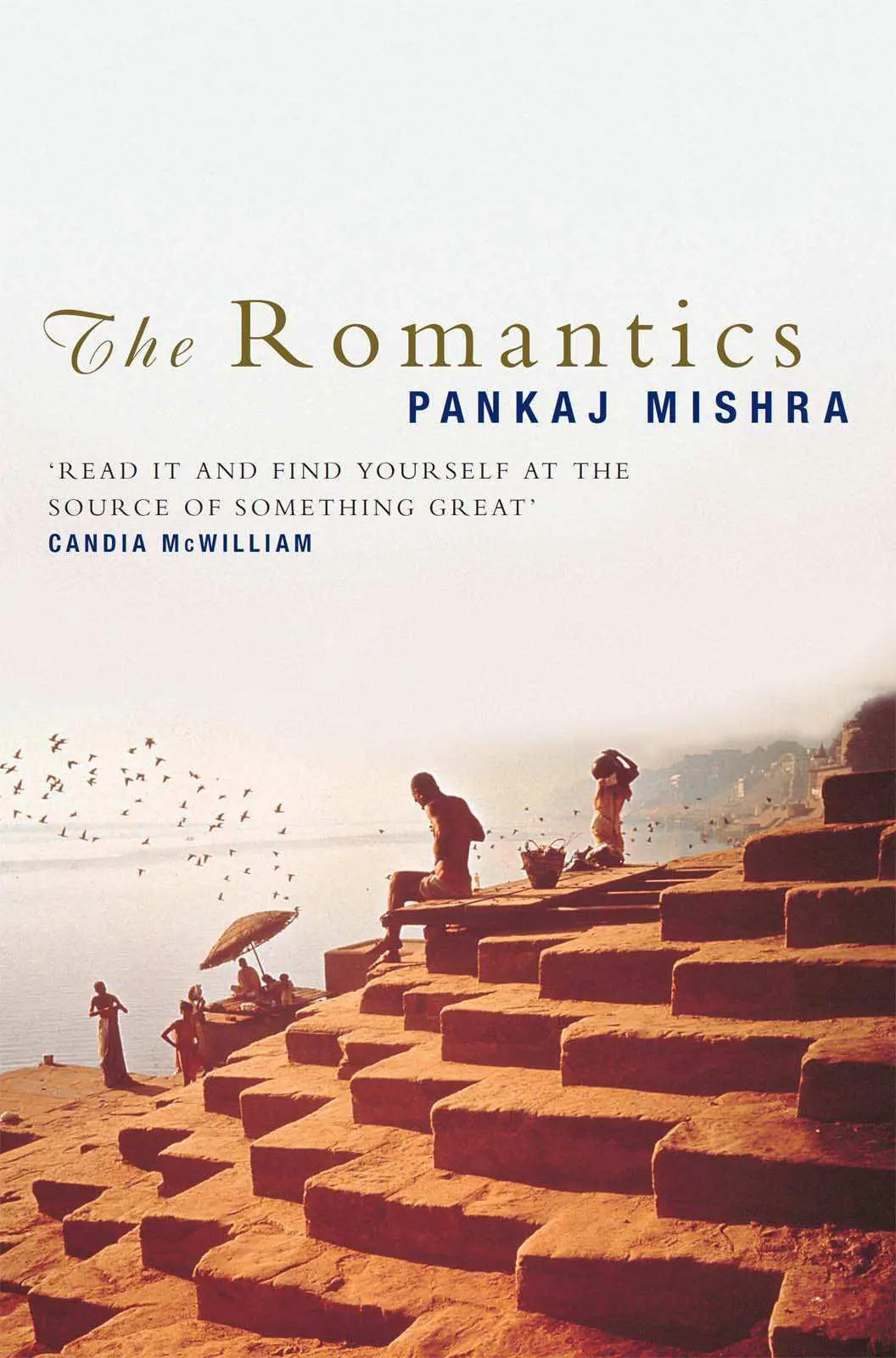
- Название:The Romantics
- Автор:
- Издательство:Anchor Books
- Жанр:
- Год:2001
- ISBN:нет данных
- Рейтинг книги:4 / 5. Голосов: 1
-
Избранное:Добавить в избранное
- Отзывы:
-
Ваша оценка:
The Romantics: краткое содержание, описание и аннотация
Предлагаем к чтению аннотацию, описание, краткое содержание или предисловие (зависит от того, что написал сам автор книги «The Romantics»). Если вы не нашли необходимую информацию о книге — напишите в комментариях, мы постараемся отыскать её.
The Romantics — читать онлайн бесплатно полную книгу (весь текст) целиком
Ниже представлен текст книги, разбитый по страницам. Система сохранения места последней прочитанной страницы, позволяет с удобством читать онлайн бесплатно книгу «The Romantics», без необходимости каждый раз заново искать на чём Вы остановились. Поставьте закладку, и сможете в любой момент перейти на страницу, на которой закончили чтение.
Интервал:
Закладка:
Quite out of breath by now, I clambered up the last of the rocky steps, went past the gate and looked up and had, at the very moment the gate creakingly swung back on its rusty hinges, the first of many invigorating sights of what was to be my home for the next seven years.
It stood in the middle of a grassy clearing on which the surrounding pine trees spread slender interlaced shadows, a single-storeyed red-roofed cottage, shyly hiding itself behind baskets streaming with bougainvillea. Inside, there were two large parquet-floored rooms whose clean-cut teak furniture gleamed in the austere white light filtered through muslin-curtained windows. There was a living room with a disused fireplace, a large-sized picture of the Dalai Lama on the mantelpiece and a faded flower-patterned carpet between wicker armchairs. A fly whined somewhere in the dank depths of the bathroom. The narrow kitchenette had a foggy window that looked out onto a tiny backyard, where one exotically coloured bird pecked at the muddy puddle left behind by the previous night’s rains.
*
It took little time to settle things with Uma Devi. She arranged for a maidservant to clean the house every week; she arranged for a boy to deliver dinner from her restaurant; she also helped in many other aspects of housekeeping. The only favour she wanted in return was for me not to take down the framed and garlanded picture of the Dalai Lama on the living-room mantelpiece.
It didn’t take me long to adjust to my new surroundings. I moved into the house and spread my few possessions around. I let the house retain its bareness, and equipped it with only the few items of furniture that were strictly necessary. I liked walking through its large empty rooms and listening to the echo of my footsteps on the wooden floor.
After many mornings of waking up in strange rooms to homesickness and heartache, I now opened my eyes to the white light coming through the muslin curtains, behind which I knew was the dewy lawn sparkling in the morning sun.
The days filled up once school started. My duties weren’t onerous: three classes a day, and occasionally a private session with a student. I wished for more responsibilities, but the school had its own peculiar ways of functioning.
It had been inaugurated some years back; the marble plaque marking the event mentioned the Dalai Lama and some other local dignitaries. But lacklustre management had led to swift decay. The principal — Mrs Sharma, Deepa’s friend, a highly strung woman in her mid-thirties — was hardly ever there; the sarcastic explanation offered by other teachers was that she was away ‘junketing’ around the world at various seminars on education and refugee problems. Her younger sister, Gita, a pretty plump woman with something unstable and fragile in her personality, looked after day-to-day administration. But she wasn’t very efficient, and the results of her inefficiency were visible all across the small compound. The hall with the corrugated-iron roof, where all five standards were accommodated, was littered with metal filing cabinets and expensive-looking projectors. New-looking furniture had been ordered but still lay under plastic wraps months after arrival; sports equipment was discernible under layers of dust in another corner. The electric voltage was too low for even ordinary heaters to work, and teachers had to resort to illegal log fires when the cold became unbearable.
I felt sympathy for Gita. She was resented by the other teachers, many of whom were much older than she was. Her own sister, on the few occasions she was present at the school, treated her with startling rudeness in public.
But I kept my distance from her problems. I did what was required of me — reciting the English alphabet three times a day, conducting spelling tests, setting homework — and went home. I exchanged little more than small talk with the other teachers, several of whom were people like myself, academic aspirants hoping to pick up some teaching experience. They stuck close together and thought me peculiar for keeping to myself; murmurs to this effect reached me at times, and I came to sense both curiosity and mockery in the excessive cordiality they displayed towards me.
With the children themselves, I had a working rapport. They came mostly from Tibetan homes, the first from their families to be sent to school, and they were eager and intelligent learners, particularly of my subject, English, which was their passport to the larger world. Among their parents, who ran the small businesses and shops in the town, there were many who constantly worried about the progress of their wards. They were the ones who stood outside school as I came out, tightly grasping their slightly embarrassed child by the hand, accosted me with simple, often naive, questions, and touchingly offered me special discounts at their shops.
There was still a lot of time left over from my teaching duties, and I filled that first semester with reading and long walks in the surrounding forests. In the market, I discovered a Tibetan bookseller. New kinds of books now appeared on the living-room mantelpiece, behind the picture of the Dalai Lama, where there had mostly been Penguin and Picador paperbacks. My reading tastes changed. I lost my passion for literature, and in fact developed a kind of fear about novels and the sprawling shapeless human lives they seemed to contain. Instead, I read books on wildlife and the environment; I learned to identify all the trees and birds and flowers in the area. I followed all the latest advances in science and astronomy. I also acquired a stereo system, and from a tiny shack tucked away in the back alleys I bought tapes of music that Miss West had once introduced me to: Schubert, Brahms, Mendelssohn, Beethoven, Sibelius. I made other good discoveries in the town: cheap restaurants, shops that sold good bread and cheese.
I grew to like the variety of people passing through Dharamshala, the artificial bustle they created in the town’s winding, narrow alleys. The town received a disproportionate number of visitors. Some were Indians, young affluent men in packed Marutis, the ‘yuppies’ Uma Devi disliked, and honeymooners who posed for pictures, gingerly perched on horseback, in heavy ethnic costumes and jewellery. But most of the visitors were Tibetophiles from the West. There were ageing hippies with pony-tails and beer bellies; European and American dowagers in crimson robes and necklaces with big brown beads; German tourists clutching paperback copies of Siddhartha . One dusky evening the Tibetan man at the shop from where I bought my provisions pointed out to me a famous Hollywood actor and his equally famous wife, a fashion model. In more conspicuous numbers, however, were the tourists without spiritual ambitions, the American teenagers and bronzed Israeli young men on leave from compulsory military service, who, late in the evening, crowded into dingy video shacks run by foppish Tibetan youth wearing fluorescent anoraks and earrings.
The liveliness of the bazaar was a welcome contrast to the peace and seclusion of my house, which I appreciated afresh every time I pushed the creaky wicket gate and went in after an unusually long and exhausting day at school. The natural serenity of the surroundings — the lawn in front, the shaded paths through the forest, the oaks and pines, beyond which slumbered the Kangra valley — brought me closer to the inner composure I so keenly sought in those early days. I’d never had a place I could call my own home, and as time went on I came to feel something close to a home-maker’s possessiveness and love for this house, which had given me, I felt, a new chance.
*
At the end of three months, my time at the school came to an end. But I wanted to stay on, and as I expected, the school was only too happy to grant me an extension. I wrote to my father, explaining my decision. He wrote back a short note saying I could do whatever I felt comfortable with at the present moment. He encouraged me to keep the ‘bigger picture’ in sight. He once again talked of Samskara .
Читать дальшеИнтервал:
Закладка:
Похожие книги на «The Romantics»
Представляем Вашему вниманию похожие книги на «The Romantics» списком для выбора. Мы отобрали схожую по названию и смыслу литературу в надежде предоставить читателям больше вариантов отыскать новые, интересные, ещё непрочитанные произведения.










Обсуждение, отзывы о книге «The Romantics» и просто собственные мнения читателей. Оставьте ваши комментарии, напишите, что Вы думаете о произведении, его смысле или главных героях. Укажите что конкретно понравилось, а что нет, и почему Вы так считаете.