Pankaj Mishra - The Romantics
Здесь есть возможность читать онлайн «Pankaj Mishra - The Romantics» весь текст электронной книги совершенно бесплатно (целиком полную версию без сокращений). В некоторых случаях можно слушать аудио, скачать через торрент в формате fb2 и присутствует краткое содержание. Год выпуска: 2001, Издательство: Anchor Books, Жанр: Современная проза, на английском языке. Описание произведения, (предисловие) а так же отзывы посетителей доступны на портале библиотеки ЛибКат.
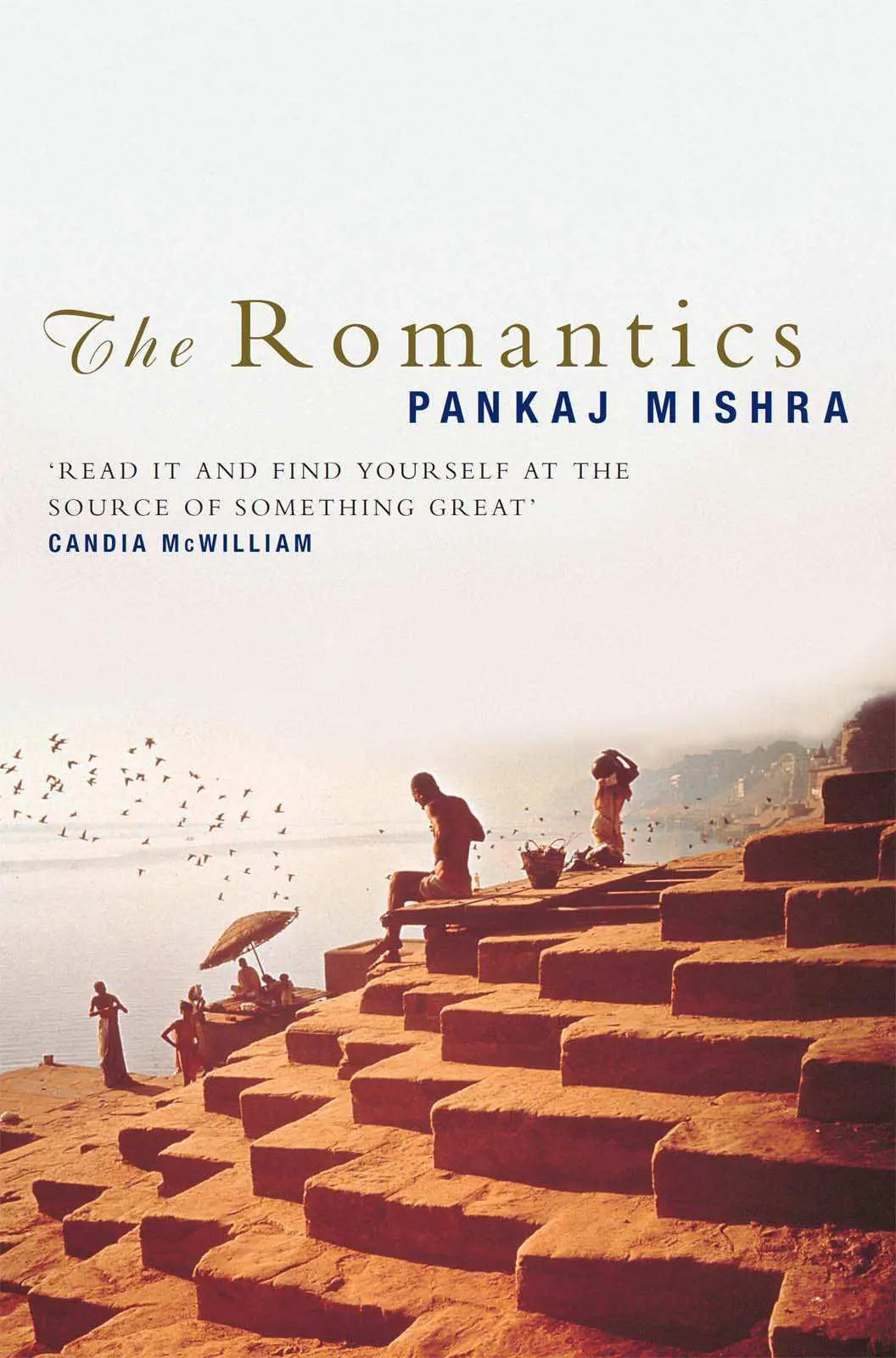
- Название:The Romantics
- Автор:
- Издательство:Anchor Books
- Жанр:
- Год:2001
- ISBN:нет данных
- Рейтинг книги:4 / 5. Голосов: 1
-
Избранное:Добавить в избранное
- Отзывы:
-
Ваша оценка:
The Romantics: краткое содержание, описание и аннотация
Предлагаем к чтению аннотацию, описание, краткое содержание или предисловие (зависит от того, что написал сам автор книги «The Romantics»). Если вы не нашли необходимую информацию о книге — напишите в комментариях, мы постараемся отыскать её.
The Romantics — читать онлайн бесплатно полную книгу (весь текст) целиком
Ниже представлен текст книги, разбитый по страницам. Система сохранения места последней прочитанной страницы, позволяет с удобством читать онлайн бесплатно книгу «The Romantics», без необходимости каждый раз заново искать на чём Вы остановились. Поставьте закладку, и сможете в любой момент перейти на страницу, на которой закончили чтение.
Интервал:
Закладка:
The monsoons turned into autumn. More visitors from the plains arrived. Dead leaves carpeted the path to my house. Then one night, fresh snow fell on the Dhauladhar ranges; the wind turned chilly; charcoal braziers and men with fur caps appeared in the alleys and the number of visitors abruptly thinned.
Winter came, and one night, as I slept, it snowed in Dharamshala. The light through the curtains when I woke up the next morning was dazzling; I parted them to find the world startlingly white. Icy breezes blew across the lawn, and on the veranda, under the dripping corrugated-iron roof, a stray cat lay curled up on my cane rocking chair.
The school closed for two months, but I stayed in Dharamshala and walked every morning through alleys slushy with melting snow to give special tuition to a Tibetan child. In the evening, the yearning melodies of Sibelius’s symphonies flowed through the bare rooms while clean rectangles of pale yellow light from the windows stretched across the snow-carpeted lawn outside.
Spring came, the school reopened and I fell back into the old routine.
When school closed again for the summer, I locked up the house and took a bus to the Lahaul valley, where I spent the next two months, trekking through vast landscapes of bleached snow-splattered rock, milky blue lakes and clear shallow streams.
The sun was hot, with scarcely a cloud in the sky. My skin quickly turned very dark; my lips were chapped; tiny spots danced before my unshaded eyes and I had to refresh myself after every hour from the cool streams where trout flicked over smooth pebbles. At the end of each day of walking, I would make for the nearest village, visible by the coils of smoke loitering above it, and find food and shelter for the night at the house of a potato farmer.
In the morning I would start again, with no trace of exhaustion at all. I felt renewed, and reaching a small summit after a day of clambering up steep rocky slopes, I would be suffused by a sense of well-being I had never known before. This was to me the new and exhilarating discovery of that time, during those long walks through the endless valley: the discovery that health lay not only with the whole mind, but with the robust body.
When school started again that monsoon, I put in an application for a long-term extension. I wrote to my father, saying that I wished to continue indefinitely at the school. There was no reply from him for some weeks, and then when the letter came, it was full of reproaches. He said that being a teacher in a primary school in a small town was justified only if you saw it as a step towards something much bigger. He said he had wanted to see me in a more prestigious academic position. He once again spoke of a sense of obligation to ancestors; he spoke of Samskara . His exasperation came through clearly in his concluding remarks: ‘It is your life,’ he said, ‘and you know best.’
I didn’t reply immediately, and when I did, I talked of other things. I wrote about the mythological significance of a nearby temple. I spoke insincerely about my wish to visit Pondicherry at the earliest.
In the meantime, my application was accepted by Mrs Sharma, back from one of her foreign tours. She also gave me an unexpected bonus. She had arranged Gita’s marriage to a Delhi-based businessman, and she now, in her brisk fidgety manner, promoted me to deputy principal. I was to remain a teacher but to have additional administrative duties.
The result was that my days at the school lengthened. The number of Tibetan parents waiting outside the school gate increased. I was greeted in the town’s alleys with new respect, and gifts of sweetboxes in shiny yellow cellophane wrappings appeared outside my door on Diwali morning.
That summer I went to the Spiti valley. I walked through flat grey plains of snow and rock, and into verdant valleys. I stayed in an ochre-coloured monastery to which a shopkeeper in the bazaar had recommended me. It was perched high on a treeless hill, and from my bare room I watched silver-grey twilights in the snow-muffled valley, oaks with scrawny limbs silhouetted silently against the white ground, the first lights cautiously appearing in the distant haze, the still air quivering with the sound of tinkling bells.
The following summer I travelled to Kinnaur, and every summer for the next seven years I went walking in some part or other of the Himalayas.
I made no other travels. The thought of the big world beyond the mountains filled me with apprehension. My father often wrote to renew his invitation to Pondicherry, and I had to find a fresh excuse each time.
2
WHEN YOU ARE in your twenties, seven years can seem like a long time — especially if you live a secluded life, if you know neither ambition nor love nor any of the other preoccupations of that age.
However, my time in Dharamshala passed swiftly, divided between unchanging routine and solitude; there were hardly any periods of restlessness or torpor. I did my work — reciting the alphabet and maintaining petty cash accounts — without feeling greatly committed to the school or the children. I read many books out of an old reflex. I listened to music for long hours. I went for walks. The years passed.
When, in later years, I watched the people in the bazaar — the honeymooning couples, the high-spirited young people, the sober spiritually minded Europeans — I watched them with a sense of strangeness and dread. The gratifications and torments of their personal lives, their desires, fears and insecurities, their interconnected roles in the large world they came from — I didn’t wish to know more about them than what I saw.
I still sensed something raw and incoherent within my own personality, and I remained vulnerable to those large vague longings, the urge to throw oneself into a grand and noble venture, into whatever could give coherence and shape to my own life. But these moments went by quickly, much to my relief. I did not resist the self-pity that inevitably followed them. I was more conscious than ever of how absurdly romantic and incongruous these longings were for me.
*
In the first few years in Dharamshala, I was still vulnerable to many memories from my time in Benares and Pondicherry — I had to train myself to see that past as dead. It became important, as a kind of mental discipline, not to think about it, or attempt to ferret out any meaning from it. It had taken much time and willpower before that past could settle in my mind as a time of confusion and loss, to which I no longer needed to return.
But then all of a sudden, and in quick succession, people from that very past appeared in Dharamshala, and I was forced to think about it again.
*
The first visitor was Priya, who showed up at my school at the end of a taxing day. The peon told me that a girl from Chandigarh had come to see me. I went out into the dusk and saw a diminutive figure standing under the crescent-shaped rusty signboard that had the school’s name painted on it.
She was as thin as I remembered her, with shorter hair and eyebrows whose earlier thickness had been stylishly plucked. She wasn’t alone; there was a tall young man with her, with smooth-shaven cheeks, blackheads around his sharp-edged nose and straight long hair that he kept wiping across his forehead in short nervous gestures.
I had been in touch with her after leaving Pondicherry. I had written her a brief note apologizing for the misunderstanding I had caused. She had written back a surprisingly mature letter, in whose tone and vocabulary I saw the hand of an older person, probably Deepa. She berated herself for her ‘childish impetuosity’ and proffered her own apologies.
From another, later postcard I had learned that she was living in nearby Chandigarh, attending the local university. And now she was here in Dharamshala, on an excursion to a hill station with, I soon recognized, her first ‘boyfriend’.
Читать дальшеИнтервал:
Закладка:
Похожие книги на «The Romantics»
Представляем Вашему вниманию похожие книги на «The Romantics» списком для выбора. Мы отобрали схожую по названию и смыслу литературу в надежде предоставить читателям больше вариантов отыскать новые, интересные, ещё непрочитанные произведения.










Обсуждение, отзывы о книге «The Romantics» и просто собственные мнения читателей. Оставьте ваши комментарии, напишите, что Вы думаете о произведении, его смысле или главных героях. Укажите что конкретно понравилось, а что нет, и почему Вы так считаете.