Pankaj Mishra - The Romantics
Здесь есть возможность читать онлайн «Pankaj Mishra - The Romantics» весь текст электронной книги совершенно бесплатно (целиком полную версию без сокращений). В некоторых случаях можно слушать аудио, скачать через торрент в формате fb2 и присутствует краткое содержание. Год выпуска: 2001, Издательство: Anchor Books, Жанр: Современная проза, на английском языке. Описание произведения, (предисловие) а так же отзывы посетителей доступны на портале библиотеки ЛибКат.
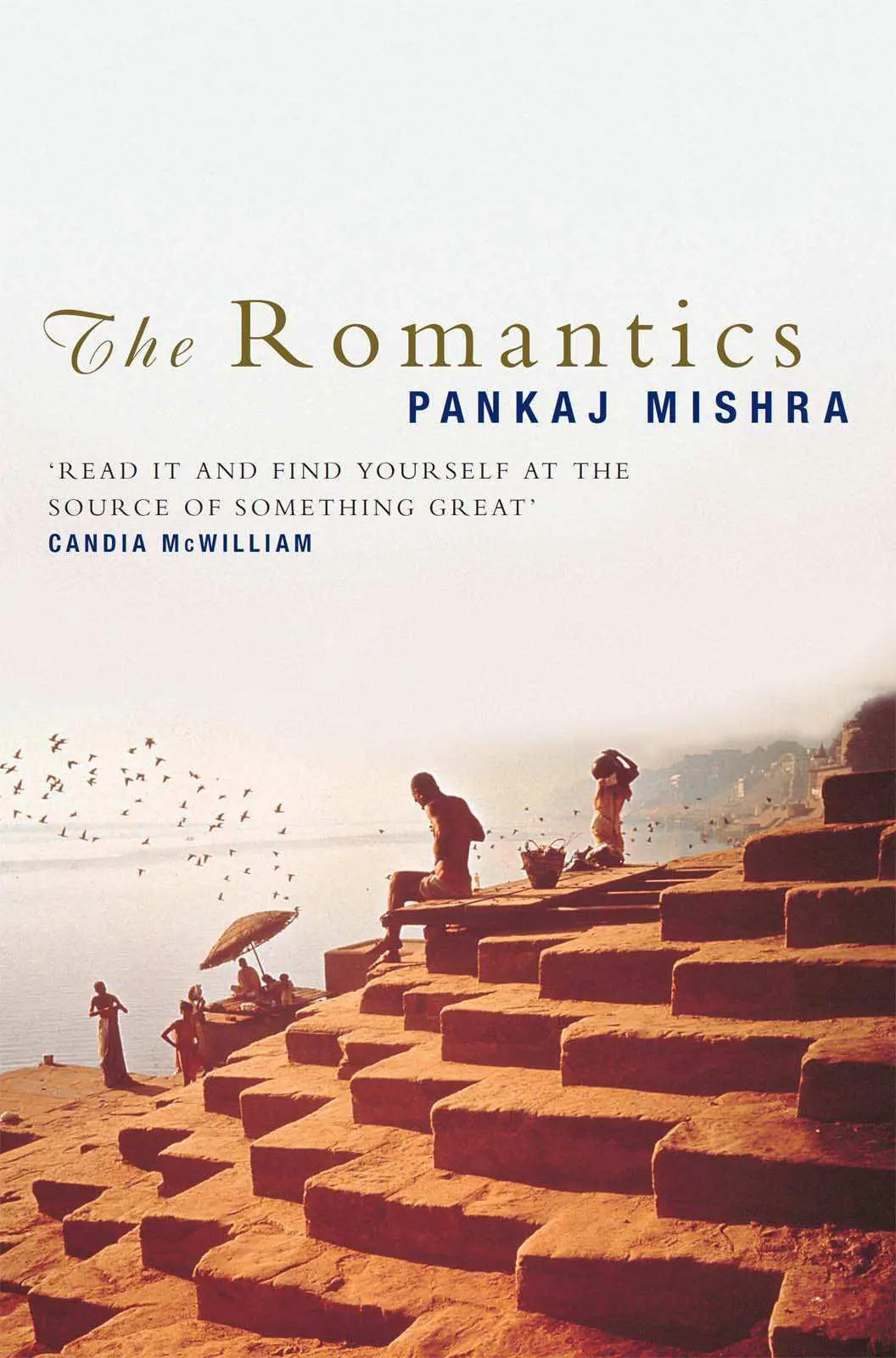
- Название:The Romantics
- Автор:
- Издательство:Anchor Books
- Жанр:
- Год:2001
- ISBN:нет данных
- Рейтинг книги:4 / 5. Голосов: 1
-
Избранное:Добавить в избранное
- Отзывы:
-
Ваша оценка:
The Romantics: краткое содержание, описание и аннотация
Предлагаем к чтению аннотацию, описание, краткое содержание или предисловие (зависит от того, что написал сам автор книги «The Romantics»). Если вы не нашли необходимую информацию о книге — напишите в комментариях, мы постараемся отыскать её.
The Romantics — читать онлайн бесплатно полную книгу (весь текст) целиком
Ниже представлен текст книги, разбитый по страницам. Система сохранения места последней прочитанной страницы, позволяет с удобством читать онлайн бесплатно книгу «The Romantics», без необходимости каждый раз заново искать на чём Вы остановились. Поставьте закладку, и сможете в любой момент перейти на страницу, на которой закончили чтение.
Интервал:
Закладка:
I had last seen Rajesh on the ghats on my last day, speaking to the terrified young student about the illusion and the void. I was full of other things then; I had kept my distance from him.
I now unwrapped the packet inside Miss West’s parcel to find the Penguin Classics paperback of Sentimental Education and the xerox copy of Wilson’s essay on Flaubert that I had once lent Rajesh.
That moment was the first time in years I had thought of Rajesh. I imagined he waited for me at the library, and then, after I failed to appear for several weeks, he must have gone to Panditji’s house to return the book and the essay. I wondered if he had met Miss West, and if he had, was he puzzled by her in the way I was years ago, when I saw her sitting out on the roof in the evening listening to music.
I put the book behind the framed and garlanded picture of the Dalai Lama with the row of novels that I no longer read. I almost threw away the essay after it had been lying on a side table for some time; it ended up in a file of xeroxed pages I rarely looked at.
Then one evening in the town, I went to a travel agency to arrange for a school excursion and ran into Pratap. He was one of Rajesh’s hangers-on from a nearby village, one of those students who used to sit under the giant banyan tree outside the university and gossip about prohibitive dowries and corrupt civil servants. Pratap had completed his several attempts at the Civil Service examination and was now a tour guide for Indian tourists. He travelled with them on buses across several states: a hard and poorly paid job and very remote from the dreams of power and affluence that he, along with many others, would have had in Benares.
He was wearing a floppy white cricket cap over a bright red windcheater, his imitation blue levis sat loose on his thin frame and his thick sneakers in fluorescent colours seemed too big on his feet. He was embarrassed when I recognized him, and it was out of this embarrassment that he began to speak of Rajesh. He hadn’t seen him for many months now, but he had news of him from other people. Rajesh was now more notorious than ever.
Why notorious, I wondered? I had always known about his connection to Vijay, the Allahabad student politician who had sent me to see him. I had seen the pistols in his room and wondered about his connection to the rioters and the strange people who came to visit him in the Ambassador with tinted windows. But I hadn’t thought of him as notorious.
Pratap looked at me with some puzzlement. He said he thought I knew all about Rajesh. I said I didn’t. The misunderstanding was to be soon cleared.
Pratap had seen me as an intimate friend of Rajesh’s, and now, as he spoke, he grew increasingly surprised at how little I knew of his life. He was surprised that I didn’t know while in Benares that Rajesh was a member of a criminal gang specializing in debt collection on behalf of a group of local moneylenders and businessmen.
Although I was taken aback, I realized that it did explain his long mysterious absences from Benares, the pistols in his room. I had attributed the absences to a secret mistress hidden away somewhere, but the pistols had unnerved me. I remembered, too, the sinister-looking Ambassador, and from this sudden rush of memories emerged one of Arjun, Panditji’s errant son, whom I had once seen badly injured. Rajesh had said that Arjun was trying to mortgage a house that didn’t belong to him, and he had asked me lots of questions about him. How did he know all this? Was Rajesh involved in beating Arjun?
I asked Pratap. He couldn’t remember at first, and then as his memory returned he looked amazed at my ignorance. He said that Rajesh had taken on the commission of roughing up Arjun basically to keep him from troubling me.
These commissions, Pratap went on, were a good steady business. Once confronted with the possibility of violence, people paid up very quickly, or did whatever you asked them to, without involving the police.
But then Rajesh had graduated to something riskier, and at this point, although shocked and bewildered by what I had already been told, I was not prepared for what I heard next.
Pratap saw the disbelief on my face. He seemed to be enjoying it as his voice grew more dramatic. At some stage, he said, pausing after every word, Rajesh had turned himself into a contract killer. It was an extremely well-paid profession, also a well-connected one. You worked for small-time contractors, who in turn worked for wealthy industrialists. These businessmen also did favours for local political bosses, who did not always rely on their own private armies.
Pratap went on, a strange excitement glistening on his face. You got to know everyone well after a few years in the business. But there were problems. You worked for all these important people, yet you were always on your own. The chances of survival weren’t very high. Sooner or later, the police came to hear of you. Fierce loyalties of caste and clan ensured that every murder would be avenged.
It was what would happen to Rajesh, he said. He could see now an ambush of the kind often reported in the local papers: Rajesh would be on his motorcycle when four men would surround him at a busy intersection in the old city and shoot him dead.
I was suddenly appalled by this turn in our conversation, by the prurient way in which Pratap imagined Rajesh’s fate.
He wanted to talk more, and was moving towards a tea stall, when I realized that I needed to be alone. Pratap couldn’t have told me anything significantly more about Rajesh, and given his overly excitable mood, I didn’t want to encourage him further.
I said I had to attend to some urgent work at the school, and slipped away so quickly that there was no time for Pratap even to suggest, as I knew he wished to, another meeting. He did appear a bit hurt by my sudden great desire to part from him, and I thought later that perhaps I had been unfair. There was nothing premeditated about his malice towards Rajesh. He was speaking out of his own frustrations, the sense of having reached a dead end in his own life.
It also occurred to me afterwards that I should have asked him about Rajesh’s current whereabouts, and I thought at the same time of the futility of the request, had I indeed made it. That part of my life was over. I did not plan to return to Benares.
I wondered if I should write to Rajesh, but simultaneously felt the incongruity of such a correspondence. What would I say? It was hard for me to think about Rajesh in a focused way even though he had been a major presence in the other life I lived at the university. It was hard, too, to disentangle him from the mass of suppressed memories.
Instead, I kept thinking about what Pratap had told me. My mind was filled with banal images I knew well from those Benares papers: they formed the usual pattern of daylight murder in the city. I kept seeing Rajesh at that busy crossing, trapped in the dense swarm of scooters, cycle rickshaws, bullock carts, cars, buses, trucks and bicycles, the four men converging upon him, producing pistols from their pockets. .
*
A few weeks passed. I kept thinking about Rajesh, and then one day wrote to Pratap to ask him his whereabouts. He replied almost immediately: a short note saying that he had just met Rajesh after many years. He had told Rajesh about his unexpected meeting with me in Dharamshala; he had also passed on my address to him and mentioned my desire to be in touch again.
And then one day a letter came from Rajesh himself. The envelope was postmarked Mirzapur, and did not have a return address. Inside there were a few paragraphs on a piece of lined paper.
Dear Brother,
It is one of the great mysteries of life that I should hear of you again after so many years. Pratap told me about you, the special path you have chosen, in which you appear to be content. I knew when I first met you that you’d somehow break out of the world we knew, that you would go on to do different things. That you have done so makes me very happy.
Читать дальшеИнтервал:
Закладка:
Похожие книги на «The Romantics»
Представляем Вашему вниманию похожие книги на «The Romantics» списком для выбора. Мы отобрали схожую по названию и смыслу литературу в надежде предоставить читателям больше вариантов отыскать новые, интересные, ещё непрочитанные произведения.










Обсуждение, отзывы о книге «The Romantics» и просто собственные мнения читателей. Оставьте ваши комментарии, напишите, что Вы думаете о произведении, его смысле или главных героях. Укажите что конкретно понравилось, а что нет, и почему Вы так считаете.