Pankaj Mishra - The Romantics
Здесь есть возможность читать онлайн «Pankaj Mishra - The Romantics» весь текст электронной книги совершенно бесплатно (целиком полную версию без сокращений). В некоторых случаях можно слушать аудио, скачать через торрент в формате fb2 и присутствует краткое содержание. Год выпуска: 2001, Издательство: Anchor Books, Жанр: Современная проза, на английском языке. Описание произведения, (предисловие) а так же отзывы посетителей доступны на портале библиотеки ЛибКат.
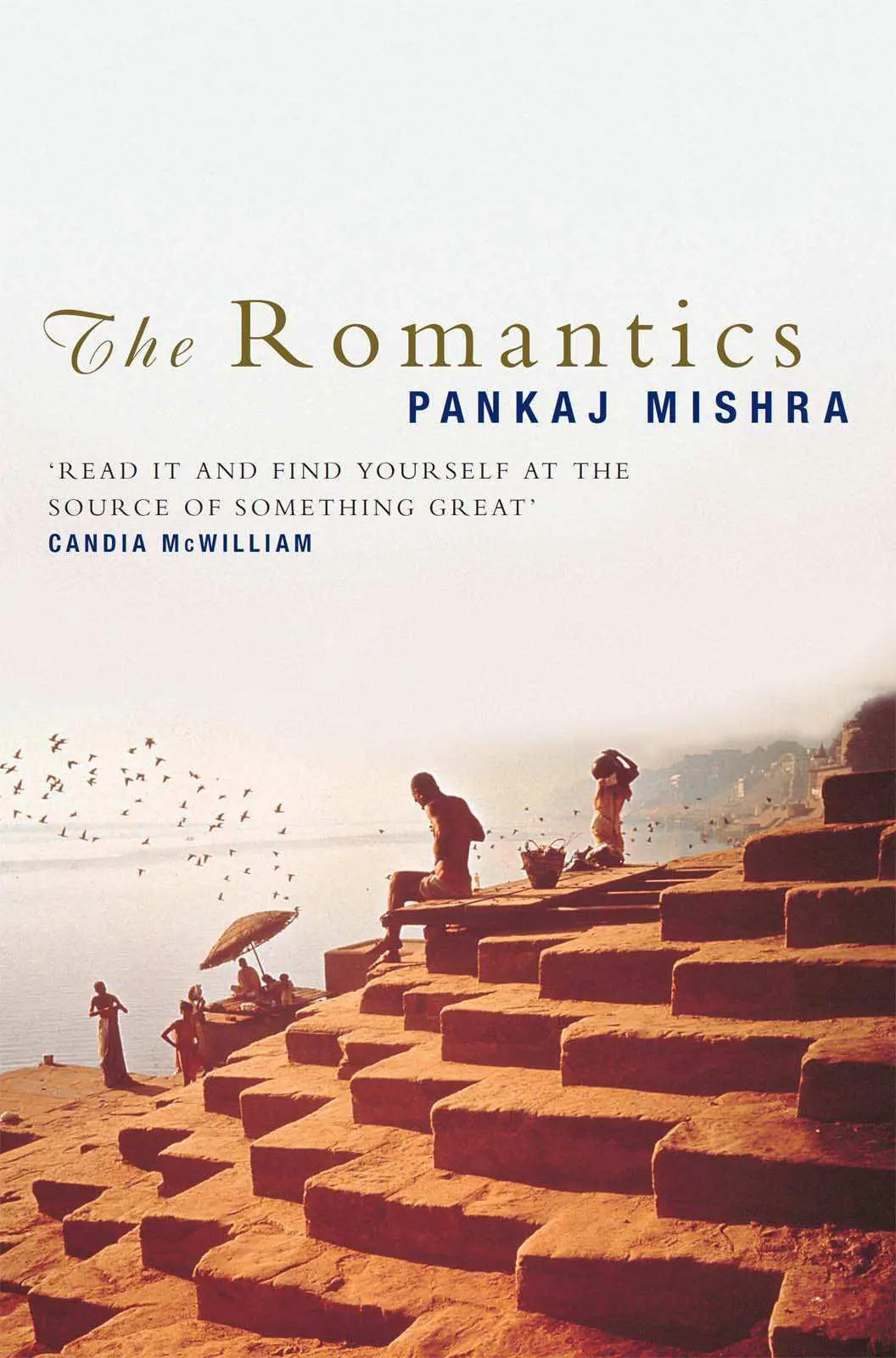
- Название:The Romantics
- Автор:
- Издательство:Anchor Books
- Жанр:
- Год:2001
- ISBN:нет данных
- Рейтинг книги:4 / 5. Голосов: 1
-
Избранное:Добавить в избранное
- Отзывы:
-
Ваша оценка:
The Romantics: краткое содержание, описание и аннотация
Предлагаем к чтению аннотацию, описание, краткое содержание или предисловие (зависит от того, что написал сам автор книги «The Romantics»). Если вы не нашли необходимую информацию о книге — напишите в комментариях, мы постараемся отыскать её.
The Romantics — читать онлайн бесплатно полную книгу (весь текст) целиком
Ниже представлен текст книги, разбитый по страницам. Система сохранения места последней прочитанной страницы, позволяет с удобством читать онлайн бесплатно книгу «The Romantics», без необходимости каждый раз заново искать на чём Вы остановились. Поставьте закладку, и сможете в любой момент перейти на страницу, на которой закончили чтение.
Интервал:
Закладка:
Then the hotel, revealed in the first few minutes as an assignation spot for local politicians, and the nervous receptionist, the man in the cubicle counting the rupee notes — that wasn’t anything I had expected.
I was alert, almost preternaturally so. I felt my senses on edge, but they had registered only strangeness as the rickshaw strained past the ‘fast-food’ parlours with dark glass windows, the white-painted hotels with multicoloured flags listless on their roofs, the banners advertising computer courses swaying across the roads, and now this hotel room, described by the receptionist as a ‘honeymoon suite,’ all done in pink, the walls cluttered with framed posters of tender-faced white children and garish Swiss landscapes with Christian homilies.
This wasn’t the city I knew; what I knew and remembered lay farther down the road, closer to the river and the ghats, the decaying palaces, the half-submerged temples. I began to feel I had made a mistake in allowing the rickshaw driver to take me to this hotel.
The moment of calm came later, when I woke up after a short nap. Light flooded the small room and created a radiant glow against the pink walls and upholstery and bedcovers; snatches of music and talk came in through the open windows.
The morning and anxiety of my arrival seemed far away as I stood at the window that opened out onto the forecourt. The street appeared different from this elevation. Brightly painted rickshaws stood in a queue before the hotel’s gates; a little boy pushed a vegetable stall on the empty road, hawking his wares in a surprisingly deep voice; a man in white flapping pyjamas hurled up the shutters of one of the grocery stores, and the Coca-Cola logo vanished with a brief rattle.
As I watched, a rickshaw suddenly swerved in from around the corner and thudded and jolted across a small pothole. The driver rang his jingling bells as if to protest against the shock, and the sound unfastened an old memory in the mind: the cold foggy mornings I woke up to during my first days in Benares, which I spent in bed, huddled under the Panditji’s thin quilts, trying to read The World as Will and Idea as rickshaws overloaded with children lurched down the potholed alleys and old Hindi melodies wafted out of unseen radios and jets of water from municipal taps cannonaded into plastic buckets, and a woman whom I could never see towel-dried her hair with that peculiar sneezing sound.
*
I showered, put on fresh clothes and went down to the empty restaurant in the lobby for a late and heavy lunch of parathas and pickle. Miss West wasn’t expecting me until later in the afternoon; there was nothing to do until then, and after lunch I went back to my room and played with the television set, switching channels randomly, moving swiftly from MTV to Santa Barbara to CNN and back.
It was the first time in seven years that I had sat before a television screen, and to confront the unfamiliar faces and speech — the anorexic MTV VJs with their bare midriffs and eyebrow rings and rapid-fire banter — was to feel as if I had arrived in an alien city.
I switched off the TV; I went and stood at the window and watched the street. I switched on the TV again, and immediately turned it off as a long wailing sound filled the room. I lay on the bed for a while. I felt a gentle restlessness. I wished to go out; I wished to be away from the hotel.
When I eventually went out into the mellow winter sunshine, things appeared to happen in an effortless daze.
I did not have to think before telling the rickshaw driver the name of the area where Panditji’s house stood; the words slipped out of my mouth as instinctively as they once had. Sitting on the rickshaw, feeling a cool breeze upon my face, passing through streets and alleys so familiar — the tattered kites trapped between power cables, the house with the tiny door that opened towards a large sunny loggia-like space where on crisp winter afternoons women sat on charpoys and oiled their thick black tresses, the men staring out vacantly from dark chai shops — I had the sensation of re-entering a dream.
*
It was damp as always in the alleys leading to Panditji’s house. But a small surprise awaited me at the house itself.
In my memory the main door leading in from the alley had always been open, revealing a small dark courtyard surrounded by the room where Panditji lay under layers of blankets and a bathroom with scars of green slime on the lower end of the walls. The door was now locked from the inside.
I knocked; I heard people talking: a man’s voice and then a woman’s.
Waiting for the door to be opened, I looked up at a strip of blue sky and noticed a woman staring down at me from the roof terrace of the adjoining house. Her face beneath her sari veil was fleshy and expressionless, and I wondered, with a pang of disappointment, if she was the one I had heard drying her hair.
The voices inside grew louder and stranger and then the door was yanked open.
A tall and skinny white man in a lungi and khaki waistcoat stood before me, his head and shoulders hunched under the short door frame. His hair was long and stringy; the skin on his long face was stretched tight over his cheekbones; on his bare pale forearms there were identical tattoos of the goddess Kali, her bright crimson tongue a dab of startling colour in the surrounding blackness.
His body filled the entire frame of the door, and he seemed to be concealing someone behind him. He stared at me with his mouth slightly open, and then said, ‘What do you want?’ His voice was gruff, and the accent was Israeli; I had come across it many times before in the alleys and shops of Dharamshala.
His manner softened when I mentioned Miss West.
‘Oh, I see. You want to talk to the English lady?’
I nodded.
‘She’s upstairs, on the roof,’ he said, and stepped away from the door.
I went in. I heard a shuffle of slippered feet, and the door to Panditji’s room banged shut immediately. I caught a flash of bare brown legs — a woman’s legs — and coils of cigarette smoke inside.
The Israeli man looked at me and smiled — a sheepish smile.
I trudged up the steep stairs, remembering how I used the brief exacting climb to prepare myself for the blank gazes of Mrs Pandey and Shyam sitting outside the kitchen.
But there was no one in the courtyard, which had been extensively renovated. The walls had been painted a bright yellow; the door leading to Mrs Pandey’s bedroom had new Diwali floral decorations on it; the place close to the kitchen door where she and Shyam once sat was now occupied by a sparkling white washbasin with a welter of exposed red rubber pipes underneath it.
But the room with the iron-barred door beside the kitchen still brimmed with darkness, and here, as my eyes adjusted to the dark, I thought I saw someone stir inside.
I went closer. It was a man. He was sitting on the floor, his legs drawn up against his torso. He was leaning against the wall facing the stairway; he would have seen me come up.
At first, I saw only his eyes, then the rest of his swarthy, stubbly face, and then the grimy khaki shorts from which his dark hairy legs stuck out; I realized that it was Shyam.
I was too shocked and unsettled to speak. I stared at him for a moment, and when I eventually managed to get the words out, I said my name. I asked him if he recognized me. I tried to speak in the local Hindi dialect I used with him and Mrs Pandey.
I could see his eyes clearly now; I felt something flicker in them. But no words came out.
I came closer and now held the smooth iron bars with my hands. A faint smell of urine met my nostrils.
I said my name again, a little louder this time. I told him that I had once lived in the room on the roof.
Читать дальшеИнтервал:
Закладка:
Похожие книги на «The Romantics»
Представляем Вашему вниманию похожие книги на «The Romantics» списком для выбора. Мы отобрали схожую по названию и смыслу литературу в надежде предоставить читателям больше вариантов отыскать новые, интересные, ещё непрочитанные произведения.











Обсуждение, отзывы о книге «The Romantics» и просто собственные мнения читателей. Оставьте ваши комментарии, напишите, что Вы думаете о произведении, его смысле или главных героях. Укажите что конкретно понравилось, а что нет, и почему Вы так считаете.