Pankaj Mishra - The Romantics
Здесь есть возможность читать онлайн «Pankaj Mishra - The Romantics» весь текст электронной книги совершенно бесплатно (целиком полную версию без сокращений). В некоторых случаях можно слушать аудио, скачать через торрент в формате fb2 и присутствует краткое содержание. Год выпуска: 2001, Издательство: Anchor Books, Жанр: Современная проза, на английском языке. Описание произведения, (предисловие) а так же отзывы посетителей доступны на портале библиотеки ЛибКат.
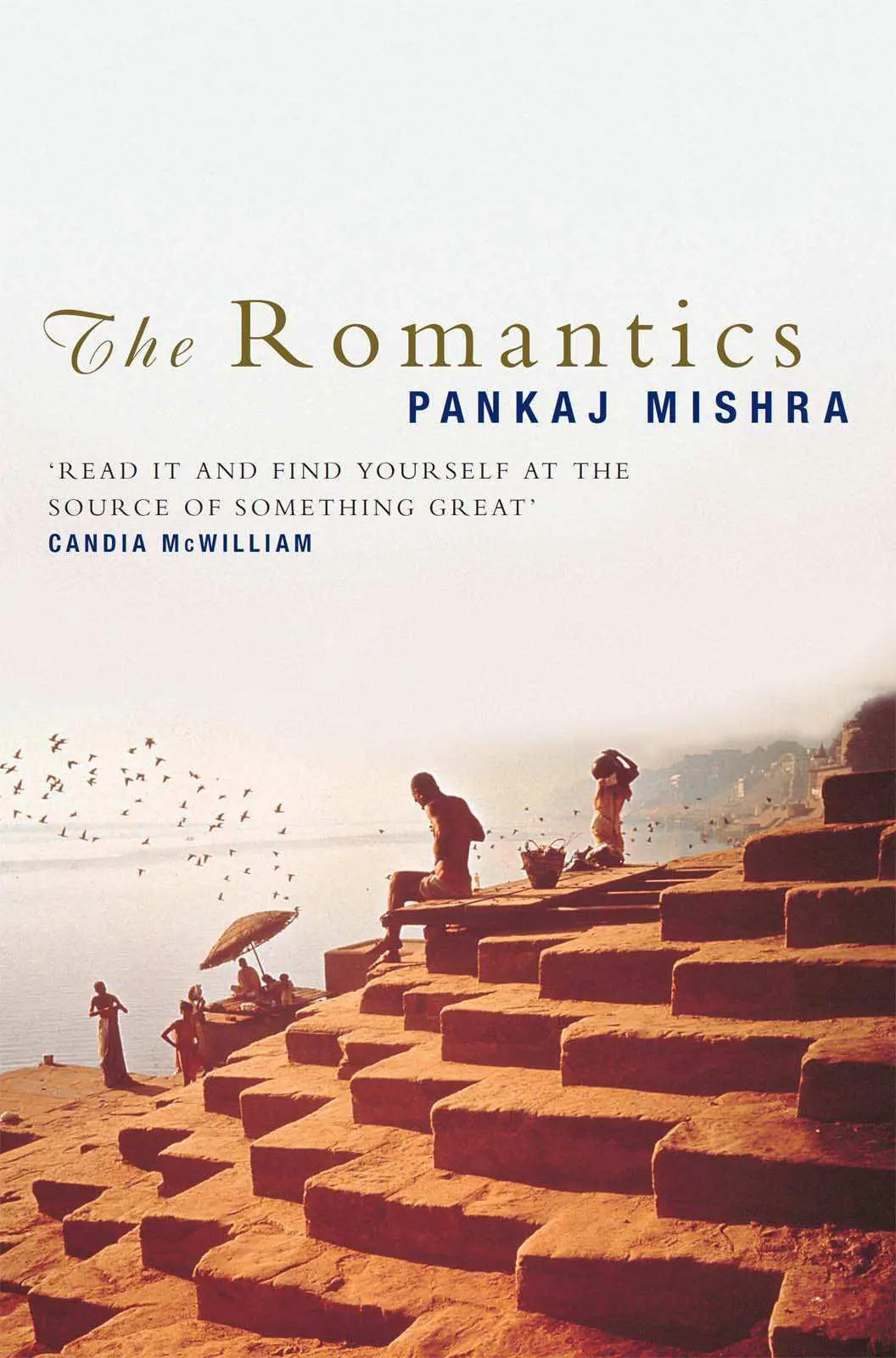
- Название:The Romantics
- Автор:
- Издательство:Anchor Books
- Жанр:
- Год:2001
- ISBN:нет данных
- Рейтинг книги:4 / 5. Голосов: 1
-
Избранное:Добавить в избранное
- Отзывы:
-
Ваша оценка:
The Romantics: краткое содержание, описание и аннотация
Предлагаем к чтению аннотацию, описание, краткое содержание или предисловие (зависит от того, что написал сам автор книги «The Romantics»). Если вы не нашли необходимую информацию о книге — напишите в комментариях, мы постараемся отыскать её.
The Romantics — читать онлайн бесплатно полную книгу (весь текст) целиком
Ниже представлен текст книги, разбитый по страницам. Система сохранения места последней прочитанной страницы, позволяет с удобством читать онлайн бесплатно книгу «The Romantics», без необходимости каждый раз заново искать на чём Вы остановились. Поставьте закладку, и сможете в любой момент перейти на страницу, на которой закончили чтение.
Интервал:
Закладка:
We were halfway to Dashashvamedh Ghat, its throng of bathing devotees partly visible behind the plume of black diesel smoke that one of the empty anchored boats breathed into the air. The boat slid forward in smoother bursts now. A small breeze blew in from the other side, ruffling the water and making Miss West, as she spoke, draw her shawl around her even more tightly.
She said, ‘I saw them together once in Paris. She had a little party; all her friends were there; she kept talking about Anand to her friends; he was her little trophy from India. Anand this, Anand that. Oh, look at him, isn’t he wonderful? But when I next went to Paris, he was gone. He had gone back to India. Catherine wouldn’t speak much about him; her mother, a rather tedious middle-class woman, complained to me about the water he spilled on her bathroom floor. Catherine was living with a new boyfriend, an Algerian, some sort of film-maker. I didn’t see her again.
‘She wrote a few times. Her boyfriends kept changing. The last time she wrote she was with some stockbroker; she said she was planning to marry him, raise a family. She felt secure with him. It was all very odd: she sounded so much like her mother; she wanted children, security, stability, all those middle-class things. All that bohemianism had gone.
‘I saw Anand in Delhi a couple of years ago. He plays for some radio orchestra in Delhi and lives in a dreadful slum east of the river — probably not a slum, most of Delhi, even the middle-class suburbs, looks like a slum to me. He looked completely wasted, even thinner. His sisters are still unmarried; his parents have almost disowned him. When I met him, it was four years after he came back from Paris and the poor man was still devastated, still pining for Catherine, hoping for some sort of miracle, writing long letters to her and getting shorter and shorter notes in return.
‘I had to be tough with him. I told him to stop thinking about her. I told him to move on, get married, work hard, lose himself in something. But I thought later that I was probably too harsh with him.
‘His love for Catherine, his time in Paris: this was the greatest thing that could ever happen to him. He had only this past and he was trapped by it. Catherine could move on, but he was stuck. She is drifting, too, poor girl, but she is supported by her father’s money, her culture, her background; they give her at least an idea of what she owes to herself.
‘Anand, people like him, they can’t afford such ideas; they don’t know who they are; they don’t know what they want; they are just trying hard not to sink into the misery and wretchedness they are born into. That’s what he is doing now.
‘But he was young when he first met Catherine. And when you are young you have these desires like everyone else; you’re greedy for love, you feel then that the world owes you your happiness; you feel you are entitled to it simply by being alive. .’
She stopped suddenly. We were about to reach Dashashvamedh Ghat. It was dark over the river now; a tangle of sounds from the city reached us. Broken reflections of the sodium lights on the ghat glimmered and trembled in the black water.
I couldn’t see Miss West’s face, and when she spoke again her voice seemed to come from the same faraway world she had been talking of. She said:
‘I have been going on for far too long. Now tell me about your own life. It’s been such a long time since you were here.’
Until now, as she was speaking, I had felt an old bitterness and anguish surge up within me. I had suddenly felt myself full of things to say. I had longed to speak, somehow or other to express the great turmoil in my heart.
But now the moment was dead, and Miss West’s question left me feeling drained. What could I have told her about my life? There were the broad details, and I tried to list them: the school, the job, the travels in the Himalayas. But the things that really mattered in it were all so private; they were like the events in Miss West’s own life. Where would I have started? How could I have confessed to her the circumstances that had driven me to a life so different from any I could have expected to lead when I first knew her in Benares? How could I have confessed that the larger world that I had once longed to enter had become a fearful place?
*
A thin drizzle had started by the time we got out of the boat. A stronger wind now blew in from the other shore; the anchored boats rocked and thudded into each other.
The glare of the sodium lamps outlined the thin slanting threads of rain as we went up the long wide steps to the top of the ghat. The concourse ahead was a sea of agitated black umbrellas and glistening plastic sheets, people everywhere running for cover, past the bright blurred gleams of the brassware and gift shops.
‘What a dreadful time to rain,’ Miss West said. ‘We’ll all get pneumonia.’
She added, ‘But look! There’s a rickshaw.’
She skipped and flounced towards it, the hand she had raised to point at the rickshaw still held up, and then she jumped in.
I followed her to the rickshaw and stood before it.
Miss West wiped the rickshaw seat with her handkerchief, and then in one swift movement pulled the tarpaulin hood over her head. There was a moment of uncertainty before she realized that I was not going to join her.
She extended a hand; it was cold and clammy to the touch.
She said, ‘I am going away in a couple of weeks. Back to England.’
I nodded, and she said nothing more. She hadn’t talked about leaving Benares to me. But she knew that I knew.
She kept her hand in mine for a few more wordless moments.
‘Goodbye,’ she said at last.
And then added, ‘Come and visit me in England. We shall. .’
She appeared to pause in mid sentence, but then said nothing more.
The rickshaw driver mounted his seat. I felt Miss West withdraw her hand. The roving headlight of a scooter illuminated her pale serene face for a brief instant, and then darkness moved in.
The rickshaw moved off with a brief jerk. I felt something well up inside me.
As I watched, the rickshaw lurched away and soon melted into the tumultuous traffic ahead. I was turning to go when I suddenly remembered that this was where I had once stood with Miss West in the middle of a festive afternoon, waiting anxiously for Catherine. I remembered how flustered I had been when Catherine finally appeared, how the freshness and grace of her face always came to me as a little shock each time. I turned back and there, between two white temples, was the entrance to the lane with the matt-haired sadhu and the house with the Ram-Sita mural, and I remembered how I would walk through the bustling ghats and alleys to Catherine’s home, with that anticipatory thrill in my heart, and it all came back to me in a rush: the empty days, the long smoky-blue twilights, the flickering fluorescent light and the pigeons in their neat rows, the voices from the alley floating up to the small room with the gleaming sitar in one corner, all that slow leisurely life of old Benares, and the furtive tender growth inside me; and I felt sad, and full of mourning for the past, for that pure time of desires and dreams I knew when I first came to Benares and lived in a crumbling old house by the river.
The rain suddenly grew intense. Heavy hard drops fell on the back of my neck. I turned around to look for another rickshaw; there was none in sight.
I ran towards an autorickshaw I saw standing in one corner, and then sat back, panting slightly as the driver plunged, weaving and pirouetting, into the swarming chaos of running pedestrians, rickshaws, cycles and scooters.
The rain flowed down the windscreen, which the driver kept wiping with a rag that lay on the dashboard. Gleamingly vivid for one moment, the streets dissolved into smudgy fluorescent colours the next. Passing scooters and autorickshaws kept spraying thick jets of muddy water from the waterlogged road into the back seat.
Читать дальшеИнтервал:
Закладка:
Похожие книги на «The Romantics»
Представляем Вашему вниманию похожие книги на «The Romantics» списком для выбора. Мы отобрали схожую по названию и смыслу литературу в надежде предоставить читателям больше вариантов отыскать новые, интересные, ещё непрочитанные произведения.







Обсуждение, отзывы о книге «The Romantics» и просто собственные мнения читателей. Оставьте ваши комментарии, напишите, что Вы думаете о произведении, его смысле или главных героях. Укажите что конкретно понравилось, а что нет, и почему Вы так считаете.