Pankaj Mishra - The Romantics
Здесь есть возможность читать онлайн «Pankaj Mishra - The Romantics» весь текст электронной книги совершенно бесплатно (целиком полную версию без сокращений). В некоторых случаях можно слушать аудио, скачать через торрент в формате fb2 и присутствует краткое содержание. Год выпуска: 2001, Издательство: Anchor Books, Жанр: Современная проза, на английском языке. Описание произведения, (предисловие) а так же отзывы посетителей доступны на портале библиотеки ЛибКат.
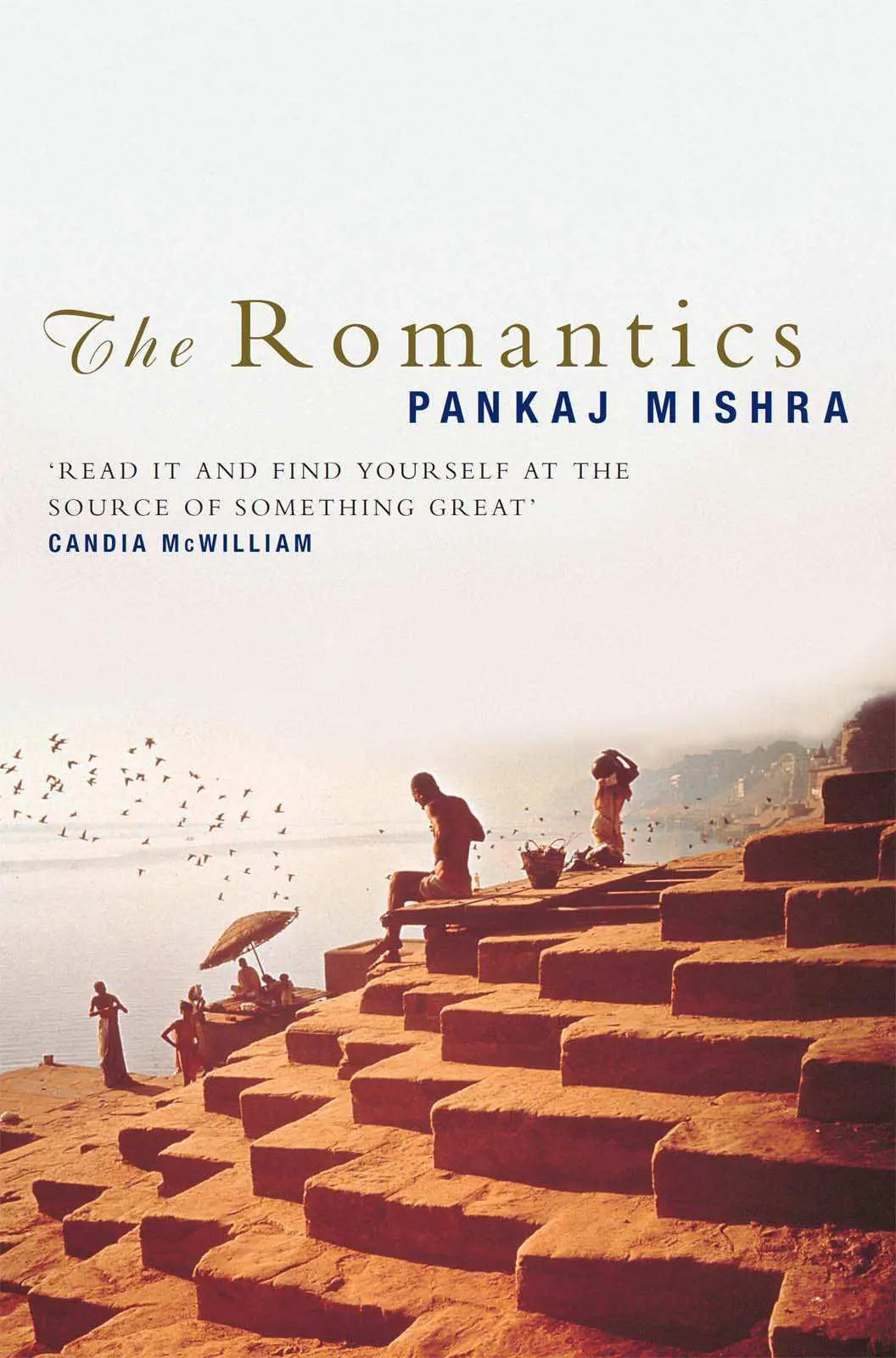
- Название:The Romantics
- Автор:
- Издательство:Anchor Books
- Жанр:
- Год:2001
- ISBN:нет данных
- Рейтинг книги:4 / 5. Голосов: 1
-
Избранное:Добавить в избранное
- Отзывы:
-
Ваша оценка:
The Romantics: краткое содержание, описание и аннотация
Предлагаем к чтению аннотацию, описание, краткое содержание или предисловие (зависит от того, что написал сам автор книги «The Romantics»). Если вы не нашли необходимую информацию о книге — напишите в комментариях, мы постараемся отыскать её.
The Romantics — читать онлайн бесплатно полную книгу (весь текст) целиком
Ниже представлен текст книги, разбитый по страницам. Система сохранения места последней прочитанной страницы, позволяет с удобством читать онлайн бесплатно книгу «The Romantics», без необходимости каждый раз заново искать на чём Вы остановились. Поставьте закладку, и сможете в любой момент перейти на страницу, на которой закончили чтение.
Интервал:
Закладка:
*
As my eyes adjusted to the dark, I saw more of her room, which looked much the same as before. An earthen pot damp with water sat beneath her bed; behind the flimsy curtain of the wardrobe lay the stacks of clothes; a row of paperbacks leaned on the window sill; the clunky music system still perched on the narrow wooden shelf nailed to the wall; her straw hat clung to the wall, hanging from an invisible nail.
The only new item appeared to be a glossy poster advertising performances of Mozart’s Marriage of Figaro at the Royal Opera House. The year on it was 1995 — which meant that she had been to England recently.
But the pictures on the wall were gone — the photographs from Miss West’s past, among others, of Christopher, the pictures that had once given me such a wounding sense of faraway unattainable worlds, that had stirred so many inadequacies and yearnings in me.
Miss West said, ‘I can’t give you tea, I’m afraid. But let’s go out. Let’s go for a boat ride. Let’s do the touristy thing. You would like that, wouldn’t you?’
‘Yes,’ I said, ‘yes.’
She snatched her straw hat from the wall; and then placed it back on the nail, which had suddenly looked exposed and vulnerable. ‘The weather looks dodgy out there, doesn’t it?’ she said, squinting into the grey day outside. ‘It might rain.’
We went out, down the stairs, through the gloomy shadowless alleys, past the little shrine to Hanuman, to the ghats. The grey placid river was pierced here and there by scimitar-like flashes of light. The birds on the ancient banyan tree chattered loudly. The sun still shone on the massive stone ramparts of Ramnagar Palace, but the city to the north cowered under an enormous pile of woolly dark clouds.
The stone steps on the ghat were slippery with wet mud. As we went down to the river Miss West once swayed a bit and seemed about to fall before recovering quickly. There were a few boatmen closer to the river, squatting on the ground in a circle, quietly smoking beedis and talking. They saw us, and one of them immediately detached himself from the group and began to walk towards where we were.
The man came closer; his hair was as white as snow above his dark-complexioned face.
‘Is that Ramchand?’ I asked, suddenly remembering the exceptionally handsome boatman who had come up to us the first time I went with Miss West on a boat ride.
‘No,’ Miss West said, her voice neutral, ‘Ramchand is back in his village; he has tuberculosis. This is his father.’
It was in the same indifferent tone — the boat freed from the bank, the ropes tossed off and the old boatman straining at the oars with small grimaces upon his bony face — that she began speaking of events and personalities from the past.
She spoke of the break-up between Mark and Debbie, who was now a graduate student at Indiana University. She also spoke of people I hadn’t known but she assumed I did. None of this was unfamiliar to me; it matched my memory of her. So much of her time in that room on the roof used to go into these extensive analyses of people she knew.
She barely noticed the city sliding past us, the ghats with their isolated groups of people and solitaries, the tattered beach umbrellas, the melancholy widows in white saris, the stray coils of smoke from funeral pyres at Harishchandra Ghat.
She spoke of a courtesan she had known for a long time.
‘In her time, when she was beautiful and attractive and all that, this woman had known practically every rich person in town. That’s what makes it so shocking and depressing. I heard this just today: she died recently in great poverty, and her neighbour had to go around to collect money to buy wood for her funeral pyre.’
A long-seeming boat appeared in the middle distance; it seemed to be approaching fast in our direction.
Miss West had appeared to stop but now she added, with a vehemence that made her voice sound cracked with emotion: ‘It’s all such a waste. Such a bloody waste.’
She was silent for a while, and in the silence I thought of the morning I had awakened to find her sitting on the roof and crying over something I couldn’t then understand. ‘Such a waste, such a bloody waste’: that’s what she had said then — the exact words — and she had bemused me by sounding so different, her tone so far from the assured intimacy and confidence that had made such an impression on me.
I used to think then that her solitude committed her to puzzling out the characters and lives of people she knew. It came to me now that her curiosity was dictated all along by her own complicated life, by the setbacks and disappointments she suffered in it.
Yellow flames flickered and glowered through the grey haze at Manikarnika Ghat. The peal of temple bells travelled in light wispy echoes across the river. The sky above was heavy and expectant with thick dark clouds.
It grieved me to look at the despair that had passed over Miss West’s face as she spoke, to have the sense, as I once had, of the density of memories, wounds, ambitions and regrets seething inside her.
And I was looking away, at the looming city, when I heard her saying, her voice abruptly bright: ‘But you would remember her, wouldn’t you?’
‘Who?’ I asked.
‘The courtesan I was talking about,’ Miss West replied. ‘The woman with the kohl-rimmed eyes. She sang that beautiful song about Krishna and Radha at that party we had when you first arrived in Benares, where Anand played the sitar and Catherine did her bit with the tanpura. You remember that, don’t you?’
The moment was inevitable. I knew it would come from the time I ran into Mark in Dharamshala. With such dread and curiosity had I anticipated it, and now, as an old suppressed vision arose before me, I knew again the familiar horrible clamour of memories, memories of that evening on the roof, the night at Kalpi, the evening in Pondicherry and so many other days — the poisoned past that for many years never left my side, that first clung to me on those aimless travels across the country, during sleepless nights in creaking, crackling train compartments, as relentless and futile as the circling shadows around me, the past that scratched old wounds on serene mornings in high mountain valleys and among the sullen ruins of remote monasteries, the past that long after I settled in Dharamshala and began to heal, pursued me into innumerable exhausting dreams.
Miss West was saying, ‘I suppose you haven’t heard about Catherine and Anand.’
The boat coming in from the opposite direction moved closer. Its four or five rowers frantically pushed at the oars, sending little ripples coursing through the water; their frenzy enhanced the stillness of the women with long sari veils and men in white kurtas, one of them holding a large gleaming brass urn.
Miss West said, ‘The whole thing collapsed not long after they got to Paris.’
The boat appeared to be heading directly towards us, and in the end passed us barely inches away. It was at that very moment that a strong wind suddenly came over the water. The veils of the women fluttered and were immediately tugged back into position. Little clouds of dust and sand loomed up on the other, empty side of the river and rolled for a little distance before abruptly fading.
Miss West said, ‘It collapsed once it became clear that Anand was no Ravi Shankar. I sort of knew it wouldn’t last long, but I was surprised by how quickly it folded. I remember just before she left Benares, Catherine was neurotic about him; she would go on about him to everyone she met. I thought she was totally insecure, almost pathetic in her insecurity. But she was right to be so, because when they got to Paris no one would give Anand a job, even those Indians who are in the cultural business in such places and do things for European consumption. Catherine’s parents were horrible to him, in their own subtle manner. Catherine defended him; she was good at that. She still went on about him, but in a different way.’
Читать дальшеИнтервал:
Закладка:
Похожие книги на «The Romantics»
Представляем Вашему вниманию похожие книги на «The Romantics» списком для выбора. Мы отобрали схожую по названию и смыслу литературу в надежде предоставить читателям больше вариантов отыскать новые, интересные, ещё непрочитанные произведения.







Обсуждение, отзывы о книге «The Romantics» и просто собственные мнения читателей. Оставьте ваши комментарии, напишите, что Вы думаете о произведении, его смысле или главных героях. Укажите что конкретно понравилось, а что нет, и почему Вы так считаете.