Pankaj Mishra - The Romantics
Здесь есть возможность читать онлайн «Pankaj Mishra - The Romantics» весь текст электронной книги совершенно бесплатно (целиком полную версию без сокращений). В некоторых случаях можно слушать аудио, скачать через торрент в формате fb2 и присутствует краткое содержание. Год выпуска: 2001, Издательство: Anchor Books, Жанр: Современная проза, на английском языке. Описание произведения, (предисловие) а так же отзывы посетителей доступны на портале библиотеки ЛибКат.
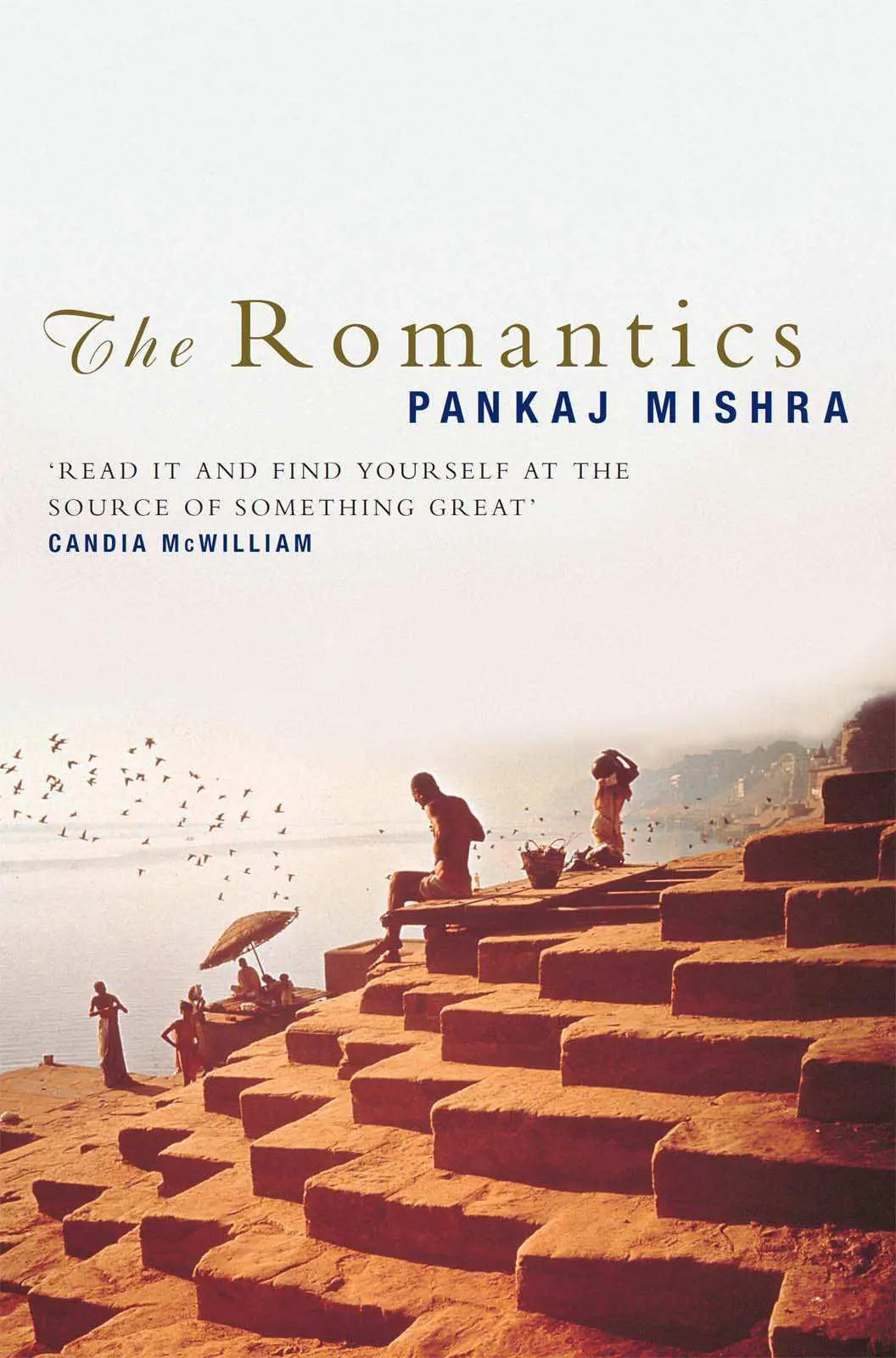
- Название:The Romantics
- Автор:
- Издательство:Anchor Books
- Жанр:
- Год:2001
- ISBN:нет данных
- Рейтинг книги:4 / 5. Голосов: 1
-
Избранное:Добавить в избранное
- Отзывы:
-
Ваша оценка:
The Romantics: краткое содержание, описание и аннотация
Предлагаем к чтению аннотацию, описание, краткое содержание или предисловие (зависит от того, что написал сам автор книги «The Romantics»). Если вы не нашли необходимую информацию о книге — напишите в комментариях, мы постараемся отыскать её.
The Romantics — читать онлайн бесплатно полную книгу (весь текст) целиком
Ниже представлен текст книги, разбитый по страницам. Система сохранения места последней прочитанной страницы, позволяет с удобством читать онлайн бесплатно книгу «The Romantics», без необходимости каждый раз заново искать на чём Вы остановились. Поставьте закладку, и сможете в любой момент перейти на страницу, на которой закончили чтение.
Интервал:
Закладка:
The idea attracted me, not for the reason my father had mentioned but for the proximity to the Himalayas it offered. Even as Deepa spoke, I felt a great longing to be back in the mountains, to know again some of the drama that, after Kalpi, had come to be attached to them in my imagination.
Images from my previous travels there occurred often in my daydreams. I remembered in particular my time in Darjeeling, the rain steadily drumming on the corrugated-iron roof while I sat myself before a vivacious log fire, and watched through large French windows the steam-engined toy train scuttling out of a thick wall of fog, triumphantly hooting, its greasy elbows frantically working. I remembered, too, the clear days, when I could see far in the distance where low arching clouds formed elegant awnings over the rumpled green silk of tea estates. There were many other mental pictures, and their suggestions of travel and new sights came as a release from the anxiety and restlessness I had come to feel in Pondicherry.
*
Deepa called her friends. As it happened, they did need an English teacher for the school semester beginning in three months’ time, and they were happy to accept me; they weren’t discouraged by my lack of formal qualifications. Working with remarkable speed, Deepa arranged my job in just two more phone calls.
I was asked to reach Dharamshala two weeks before school started in mid-July. In the meantime, there still remained many more weeks to kill. On the idle afternoons I spent in my darkened room, I daydreamed of travelling around India, as I had done the previous summer. Walking past the Alliance Française, I toyed with the idea of learning French: I imagined Catherine’s delighted response to my secret proficiency in the language. The day came to be broken up into these separate daydreams and reveries. I didn’t read much. I found my attention quickly drifting from even the newspapers and magazines I picked up at the reception. The bag full of books I had brought from Benares remained unopened in one corner of my room.
I lay in my bed for most of the morning, eyes never averted for too long from the wall clock under the portraits of Sri Aurobindo and the Mother. Punctually, at three o’clock every afternoon, I went down to the reception, where the stern-faced woman no longer said anything but simply shook her head on meeting my nervous gaze, and I would trudge back to my room, through the forecourt and up the stairs, in an agony of dejection, which would slowly subside through the rest of the day and night, only to turn into fresh expectancy the next morning.
Then one day Deepa said, ‘You must meet my niece, Priya. She is staying at your hotel and is also bored with Pondicherry. Maybe you two could spend some time together.’
I at once knew who she meant. I had seen her almost every evening as I came out of my room and stood on the balcony. She sat facing the sea, with her back to the exercising Germans, on the edge of a wooden bench, her hands in her lap. She couldn’t have been more than seventeen, touchingly thin and flat-chested in her ill-fitting kurta, her coarse frizzy hair massed over her narrow shoulders. I often saw her at the hotel laundry, and seen from close up her elongated face was pretty, with small delicate features and large black melancholy eyes.
Deepa said, ‘She has just finished school. She went to an exclusive Christian boarding school and came out completely westernized. Her parents are very devoted to the ashram and feel alienated from her. They sent her here to get some Indian culture. But I can’t do much with her. I hardly have any time.’
Time wasn’t so much a problem as the appropriateness of being with a girl who was only three years younger than me. But when I looked at my father, whom I expected be alert to this aspect, he was nodding his head in agreement. Deepa herself seemed quite keen, and arranged a meeting the very next day.
I had no experience of girls like Priya, and I was apprehensive at first. There was something confusing about such simplicity as she seemed to possess. I responded with caution to her eager and open ways. It took me time to realize that she was what she appeared to be, and as the days passed, I came to be grateful for her company.
The childlike enthusiasm with which she talked about her school, the nuns and friends she idolized, the books she read, all this was so remote from my own preoccupations that I could not but welcome the different associations and thoughts they created in my mind.
We went for walks on the promenade and often ran into my father and Deepa on their evening stroll. These encounters had a subduing effect on Priya. She had little to say to my father, who in turn had never been easy in the company of younger people. She held Deepa in great awe, and was tongue-tied before her: the reason lay in the family story she had heard from childhood, the story she once repeated to me, of how Deepa, as the sole owner of a vast business, had renounced everything in order to be at the ashram and work as a minor administrator.
Things improved when Deepa lent me a ramshackle but still operative moped, and Pondicherry and its environs opened up for me as places that could be explored and even enjoyed. Every day now, I went on the moped to Auroville, the international village a few miles outside Pondicherry. Most of the sprawling area was forested, with clusters of elegant buildings in small clearings. Its residents were mostly middle-aged or elderly Europeans and Indians who had been living there for a decade or more; something calm and contented lay behind their reserved demeanour and unhurried gait. They were part of the soothing bucolic nature of the place: the bullock carts trundling down long, somnolent roads, their passengers, colourfully dressed peasant women, solemnly staring as you attempted to pass them; the dirt paths meandering through dense woods of banyan trees; the crickets crepitating through long smoky twilights.
Priya often came with me to Auroville, riding pillion on the moped, her hair frequently flying into my face as she turned her head, one arm draped around my abdomen. There, in a café set in a shaded clearing between thick bamboo groves, we lingered for hours, drinking tea or nibbling at the walnut cake the place specialized in. I listened to Priya as she recounted the plot of The Scapegoat and Rebecca — she was devoted to Daphne du Maurier — in her vivacious sing-song voice, her head childishly drooping leftward, large eyes flickering to take in the fresh arrivals at the café, one hand habitually smoothing her unruly hair.
She often brought her notebook and wrote little haiku poems in it, wetting the tip of the pencil as she ruminated over a word. She never showed the poems to me.
‘You would laugh. Grown-ups are so cruel,’ she said.
I idly wondered about her life on the occasions she spoke about it. The schoolgirlish intimacies with other students, the crushes on male teachers and pop stars, the starry-eyed anticipation of the future — all of this seemed so remote from my own life and so embalmed in innocence.
It rained a lot in Auroville, especially in the afternoons; these monsoon showers, so heavy and furious, were consoling to me as we sat in the café, dry and safe. A light breeze carrying a fresh aroma of moist earth would be the first sign of approaching rain. Then the scattered black clouds would steadily blend into a vast, smooth canopy. A few outsized drops fell randomly at first and were immediately soaked up by the parched red earth. After a few minutes began a firm, regular pattering on the tarpaulin roof of the café’s veranda; the ground in front softened and then in a few seconds was scored with criss-crossing channels of water. Outlined against the dark foliage of mango trees and the brown corrugated-iron roof of the lavatory, the rain was all thick ropes at first and then, as it thinned, delicately fibrous.
Читать дальшеИнтервал:
Закладка:
Похожие книги на «The Romantics»
Представляем Вашему вниманию похожие книги на «The Romantics» списком для выбора. Мы отобрали схожую по названию и смыслу литературу в надежде предоставить читателям больше вариантов отыскать новые, интересные, ещё непрочитанные произведения.










Обсуждение, отзывы о книге «The Romantics» и просто собственные мнения читателей. Оставьте ваши комментарии, напишите, что Вы думаете о произведении, его смысле или главных героях. Укажите что конкретно понравилось, а что нет, и почему Вы так считаете.