Pankaj Mishra - The Romantics
Здесь есть возможность читать онлайн «Pankaj Mishra - The Romantics» весь текст электронной книги совершенно бесплатно (целиком полную версию без сокращений). В некоторых случаях можно слушать аудио, скачать через торрент в формате fb2 и присутствует краткое содержание. Год выпуска: 2001, Издательство: Anchor Books, Жанр: Современная проза, на английском языке. Описание произведения, (предисловие) а так же отзывы посетителей доступны на портале библиотеки ЛибКат.
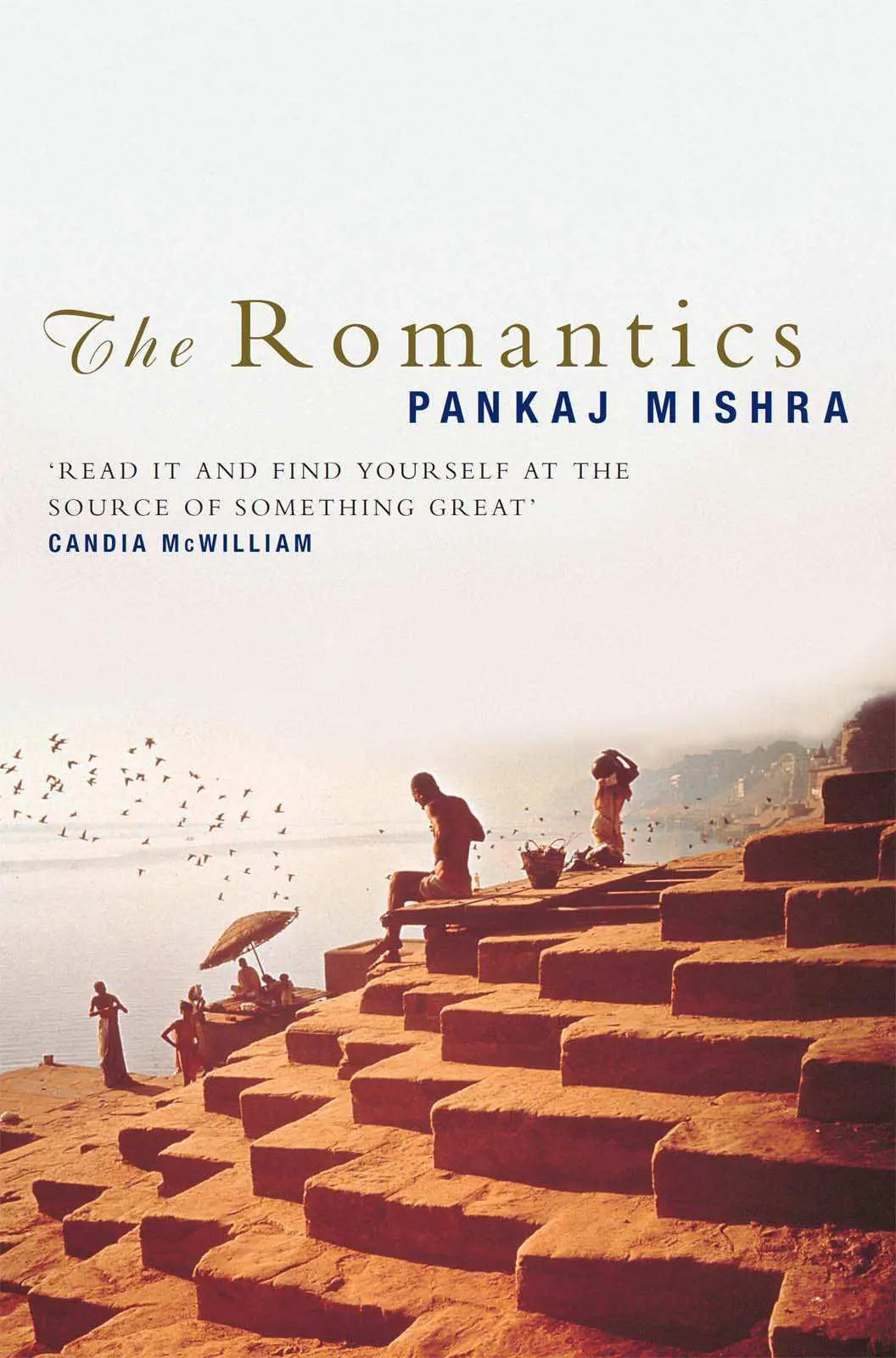
- Название:The Romantics
- Автор:
- Издательство:Anchor Books
- Жанр:
- Год:2001
- ISBN:нет данных
- Рейтинг книги:4 / 5. Голосов: 1
-
Избранное:Добавить в избранное
- Отзывы:
-
Ваша оценка:
The Romantics: краткое содержание, описание и аннотация
Предлагаем к чтению аннотацию, описание, краткое содержание или предисловие (зависит от того, что написал сам автор книги «The Romantics»). Если вы не нашли необходимую информацию о книге — напишите в комментариях, мы постараемся отыскать её.
The Romantics — читать онлайн бесплатно полную книгу (весь текст) целиком
Ниже представлен текст книги, разбитый по страницам. Система сохранения места последней прочитанной страницы, позволяет с удобством читать онлайн бесплатно книгу «The Romantics», без необходимости каждый раз заново искать на чём Вы остановились. Поставьте закладку, и сможете в любой момент перейти на страницу, на которой закончили чтение.
Интервал:
Закладка:
IT WAS RAINING in Pondicherry when I arrived, and it continued to rain with brief interruptions for the few weeks I was there.
After all my anxiety about him, it turned out that my father had had a minor stroke. And in the time that elapsed since the telegram had been sent to me his condition had improved dramatically. He had been discharged from the hospital; he was home now, attended by a full-time nurse and Deepa, the woman who had sent the telegram to me, and who I discovered had become my father’s constant companion.
I came to know all this from Deepa herself in the very first moment of my arrival late in the evening from Benares, after nearly twenty-four hours of continuous travel. She was a middle-aged woman with a bob of grey hair and a severe expression in her sharp-features. She smiled easily, though, and then an appealing shyness would emerge. Her first words to me were: ‘Your father is sleeping. You can see him tomorrow. He is all right. There is no cause for worry. He hasn’t been well looked after, that’s all.’
I wondered if she was alluding to my mother, and her decision to leave my father and live in Benares. But I didn’t ask her to elaborate. I was too exhausted, and eager to get to the hotel where my father had arranged for me to stay.
Deepa told me that the hotel was run by the Aurobindo ashram, and after I arrived, scampering through the rain, at a big whitewashed building at one end of the sea-facing promenade, my weary senses could register only the middle-aged ashram inmates in khaki shorts and white cotton saris who staffed the reception; and the garlanded portraits of Sri Aurobindo and his French companion, the Mother, that hung in my austerely furnished room.
I dropped straight away into sleep after checking in, and when I awoke many hours later, it was to a world of pure emptiness. The sea from my window was a broad sparkling band of silver foil — blinding after a long spell in my curtained room — which, later that afternoon, as dark clouds gathered, shaded into restless grey. The rain, when it came, briefly pockmarked the sea and then obliterated all sight in a steamy white mist. The long asphalt promenade was deserted now; but on some humid, rainless afternoons that followed, I would see a couple of toy sellers, their bright red and yellow balloons straining upwards against the silently heaving sea.
*
I saw my father the evening after I arrived. He looked frailer than when I had first noticed his advancing age, years ago at the ashram in Benares where my mother died, and where he disclosed to me his intention of retiring to Pondicherry.
But a strange peace had settled on his lined face underneath the shock of thick grey hair. The life of the ashram suited him; he surprisingly said as much to me — he who had never talked about anything except the most practical matters.
I saw him every day for dinner at the communal dining room run by the ashram. He was invariably escorted by Deepa, leaning on her shoulder in an intimate way that I found slightly embarrassing. We didn’t discuss his illness after the first time I asked him about it. He said he had been in a bad way, but he was much better now. It was a symptom of old age, he said, and his tone indicated that he didn’t want to talk more about his infirmities.
He was curious about my time in Benares. But I could tell him little. I told him about the house I had lived in; I told him about my visits to the library. To speak of Miss West or Catherine would have meant drawing upon a store of ease and frankness that had never existed in our relationship, and to my relief the subject of Benares soon dropped out of sight. Instead, each evening he punctiliously asked me about my activities during the day.
I replied as best I could. There wasn’t much to report. The rain and the heat kept me indoors for most of the day, in bed, unwilling to stir from under the fan. To walk for just a few minutes away from my room was enough to bring rivulets of sweat coursing down my body. The hotel was empty except for a few ageing Germans, whom I saw each evening contorted in yoga postures on the smooth green lawn of the landscaped garden below, and the restaurant was closed. For lunch I had to go to a nearby café for South Indian food, where restless flies collided head-on with the window panes and drowsy waiters sat slumped below furiously revolving fans.
Then, each afternoon at three o’clock I would venture out of my room after a failed attempt at a siesta. I would walk through the blazing forecourt to the reception where a stern-faced woman sitting behind a long, glass-topped desk would inform me every day in the same measured, gravelly tone that there were no letters for me.
But there must be! I would remonstrate to myself as I walked back to my room, past the forecourt and up three flights of stairs, and threw myself on my bed, picking up again from the side table the card Catherine had slipped into my hands at Benares railway station.
All three sides of the card were scribbled over with her tiny curly handwriting, the shape of each letter familiar to me by now. It said:
Dear Samar,
Perhaps this card will only make you more emotional, but I couldn’t resist the temptation to keep the line of communication still alive for a few moments, even after we have parted. I tell myself ‘detachment is the key’ and then even a few more minutes of unbroken attention mean so much to me! It has been such a joy first to see our proximity grow and then open up entire new fields of understanding, of affection and of ourselves as we are. I don’t express myself very precisely — English is only my second language as you know — but it is in itself such an impalpable feeling, this sense of communication with each other. It is such a relief to know that you have seen me naked, dejected and in moments of despair, because thanks to this I am not afraid now to tell you anything; there is just no need at all to pretend. What a freedom you have given me, a great gift indeed. I promise my next letters will be more factual and consequential, but I just wanted to say how much you mean to me. Such a friendship is a benediction, one of the things for which you feel worthy of living. And to think of the part I have played in your once secure life — what a mystery love is! Indeed, it will be exciting to tell each other the manifold meaning it shall acquire for both of us. For me, you have already been something of an earthquake, compelling me to rethink my relationship with Anand. How can I thank you if only for this. Let’s promise each other that this friendship will continue to be a source of help for one another, so that I can enrich you and you can, out of your loneliness, enlarge and protect our solitudes.
I’ll write again soon and send you an address once we have one.
A long kiss,
Catherine
*
I had read the letter for the first time on the train to Madras, Benares sliding past the window. I had read it in a hurried disconnected way, jumping from middle to end and back, and I had raised my wet eyes to meet the unblinking stares of the colonel and his family. I had read it several times since then, waiting for the bus to Pondicherry at Madras bus station, in the jolting bus to Pondicherry, in the taxi to my dark, curtained room at the hotel, and the growing exhilaration I felt then had tinged everything on my journey — the night light in its rattling cage as well as the colonel’s daughter reading her Archie comics on the train to Madras; the pinpoints of yellow light in the dark night outside the window; the bright paddy fields and coastal mountains in the morning; the bustle of Madras bus station; the muddy country road through dense coconut groves to Pondicherry; the schoolchildren in neat uniforms at village stops — with the kind of all-suffusing private joy that could redeem even the grimy interiors and surly waiters of the South Indian café where I usually had lunch.
Читать дальшеИнтервал:
Закладка:
Похожие книги на «The Romantics»
Представляем Вашему вниманию похожие книги на «The Romantics» списком для выбора. Мы отобрали схожую по названию и смыслу литературу в надежде предоставить читателям больше вариантов отыскать новые, интересные, ещё непрочитанные произведения.










Обсуждение, отзывы о книге «The Romantics» и просто собственные мнения читателей. Оставьте ваши комментарии, напишите, что Вы думаете о произведении, его смысле или главных героях. Укажите что конкретно понравилось, а что нет, и почему Вы так считаете.