Pankaj Mishra - The Romantics
Здесь есть возможность читать онлайн «Pankaj Mishra - The Romantics» весь текст электронной книги совершенно бесплатно (целиком полную версию без сокращений). В некоторых случаях можно слушать аудио, скачать через торрент в формате fb2 и присутствует краткое содержание. Год выпуска: 2001, Издательство: Anchor Books, Жанр: Современная проза, на английском языке. Описание произведения, (предисловие) а так же отзывы посетителей доступны на портале библиотеки ЛибКат.
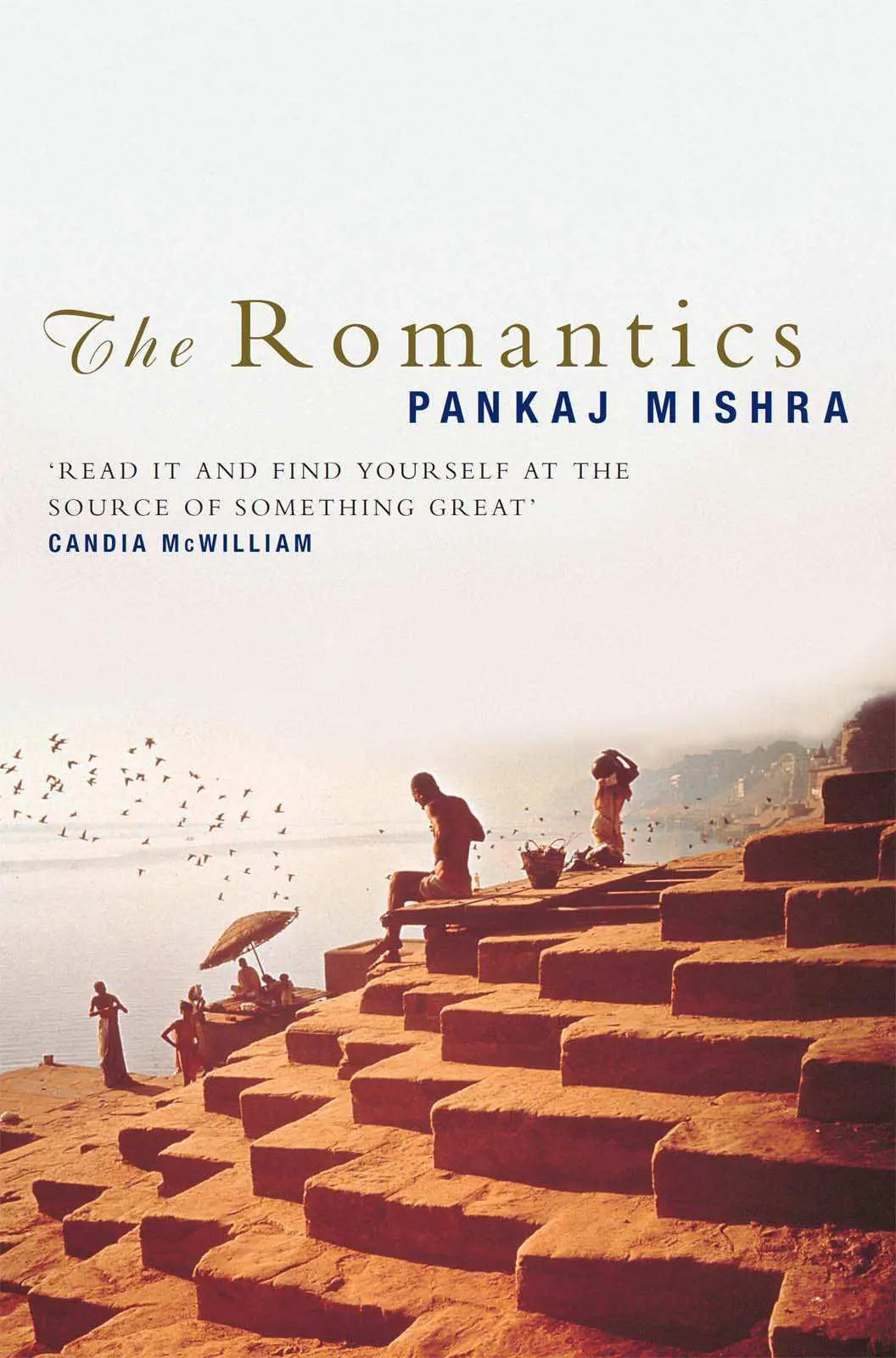
- Название:The Romantics
- Автор:
- Издательство:Anchor Books
- Жанр:
- Год:2001
- ISBN:нет данных
- Рейтинг книги:4 / 5. Голосов: 1
-
Избранное:Добавить в избранное
- Отзывы:
-
Ваша оценка:
The Romantics: краткое содержание, описание и аннотация
Предлагаем к чтению аннотацию, описание, краткое содержание или предисловие (зависит от того, что написал сам автор книги «The Romantics»). Если вы не нашли необходимую информацию о книге — напишите в комментариях, мы постараемся отыскать её.
The Romantics — читать онлайн бесплатно полную книгу (весь текст) целиком
Ниже представлен текст книги, разбитый по страницам. Система сохранения места последней прочитанной страницы, позволяет с удобством читать онлайн бесплатно книгу «The Romantics», без необходимости каждый раз заново искать на чём Вы остановились. Поставьте закладку, и сможете в любой момент перейти на страницу, на которой закончили чтение.
Интервал:
Закладка:
6
THE TELEGRAM WAS WAITING for me at the house when I got back from the railway station. It read, simply: YOUR FATHER SERIOUSLY ILL. COME SOON. It had been sent two days before, and it was signed by a woman named Deepa.
I had been looking forward to some kind of message from Catherine. We had planned to meet the next day; it was what I had been thinking about during the rickshaw ride to the house. But she hadn’t come to the house all day. Miss West told me this, her eyes as always inquisitive and searching my face for a drastic change of expression, and after this piercing disappointment my first reaction to the telegram was to keep it aside, as I had kept aside, and eventually failed to act on, the first letter informing me of my father’s illness.
But later that night, I woke up seized with guilt and fear. Had something irrevocable happened? Were the words ‘seriously ill’ a deliberate euphemism, as they often were, on the part of a cautious sender? Was he already dead? I stayed awake for quite some time, assailed by grim possibilities, thinking of that other death, that of my mother, when I had arrived too late.
It wasn’t an easy decision. I wasn’t sure how long I’d have to stay in Pondicherry. It seemed likely that I wouldn’t be able to return to Benares, and the strangely exciting life I had found there, for a very long time.
But in the morning, my mind was made up. I could no longer postpone leaving Benares, which, I now told myself, in any case would have lost much of its attraction for me after Catherine’s departure. It was time to go, and in my self-reproaching mood, I now told myself that it had been time to go when I received my father’s letter on the day I returned from Kalpi.
A sympathetic Miss West arranged rail tickets for the next day through her travel agent. There were no second-class tickets available. I had to go first-class air-conditioned. I hadn’t any money for it, and I had to make an awkward request to Miss West for a loan.
She was quick to oblige. ‘Don’t worry about it,’ she said. ‘Send it back whenever you can.’
There weren’t any last-minute urgencies. I took down the books from the niches, where once little clay vermilion-splattered idols of Ram and Krishna had rested, and wrapped them in newspaper and string; I brought in the clothes I had left to dry out on the roof. I swept the floor with a broom. I settled all outstanding accounts with Panditji’s wife. I packed all my possessions in two bags, and although I was ready to leave, I still had almost a whole day and night to kill.
I walked to the library and sat for a while at my desk, looking out over the patch of lawn and the dark luxuriant trees beyond it. Voices echoed loudly in the cavernous halls, which were full of men in stained blue overalls painting the walls. The students in the reading room quietly played gin rummy, elbows planted on the table, eyes fixed unwaveringly on the cards. The women were still leaning their cheeks on open palms and tracing their initials with long, painted fingernails on the wooden desktop.
I went walking on the ghats. I was in a strange mood. The thought — and it recurred very frequently now — of parting from Catherine caused a fresh wound each time, but a part of me also felt relieved to be going away, to be putting an end to a time of futility and unhappiness. I told myself that something new would now have to begin, and these mixed emotions of sadness and a somewhat forced optimism now obscured everything I saw around myself. The gossiping boatmen, the children playing hopscotch, the chess players, the old men gazing at the sparkling river and Benares looming in the misty distance with its palaces, temples and funeral pyres — I was already remote from them.
Later in the afternoon, I went back to the house. ‘No,’ Miss West said, as soon as she saw me, ‘Catherine hasn’t been here.’
Emptiness building up again, I took a rickshaw to Catherine’s house. On the way, I imagined running into Anand and worried about what I’d say to him. I wondered if I could ask Catherine in his presence for some time in private before I left.
But there was no one at the house. A rusty iron padlock hung over the door to the staircase. The sadhu with the matted locks gazed indifferently at me as I scribbled a message about my impending departure.
I walked back home through the ghats and unexpectedly saw Rajesh. I had seen him only the day before, but the visit to his house, and the peculiar memories from that day, already seemed to belong to a very old past. I hadn’t thought about him even once after reading the telegram from Pondicherry.
I saw him from the top of the stone steps leading to the river. He was wearing white kurta pyjamas; there was a vermilion tika on his forehead. I was wondering what he was doing there when I suddenly remembered that it was Tuesday, the day on which he fasted and offered prayers at a nearby Hanuman temple. He was with a young student, who looked familiar. He may have been one of the many who hung around him constantly.
I could overhear him from where I stood: it was one of the odd pedagogic monologues he offered to these students. I saw him pointing to the empty expanses of sand and scrubland across the river. ‘That,’ he was saying, bringing out each Sanskrit and Hindi syllable precisely, ‘is sunyata , the void. And this’ — he pointed at the teeming conglomeration of temples and houses towards the north of the city — ‘is maya , illusion. Do you know what our task is?’ The student shook his head. Rajesh continued, ‘Our task is to live somewhere in between.’
The student looked alternately bewildered and terrified. I thought of going up to them and then decided against it. Rajesh had always been an exacting companion, and I was in a state of mind where every encounter becomes a tremendous strain.
Back home, Panditji had just finished his evening lessons. After the room emptied, and the European and American students made their way to the roof to smoke opium, I told him that I was leaving. He was surprised and overwhelmed when I bent down to touch his feet. He blessed me by placing his hand over my head and reciting a Sanskrit hymn, and then I went upstairs to eat with Mrs Pandey and Shyam for the last time.
That evening they watched my face with unusual alertness, searching for signs of worry or grief. They lived without words, and felt only the most basic emotions; the watchfulness was their attempt at sympathy. As I realized that, I grew more self-consciously grave.
Catherine arrived as I went up to my room. She had just got my message, she said, and had come straight from her house to see me. Her face was flushed red from running up the stairs; she said she had been running around the cantonment with Anand all day, arranging for air tickets. They were to leave in a week’s time: another hasty departure.
She didn’t offer any excuses for not having arranged a meeting earlier in the day as promised. She said she was very sorry to hear about my father. Her eyes and manner indicated that she wanted to say more, but we were with Miss West, who had come over from her room to say hello to her. Catherine didn’t stay long; she said she had to rush back to meet the travel agent at her home. She said she would come to the station to see me off.
I spent another sleepless night with the same thoughts and feelings I had known since the arrival of the telegram from Pondicherry — thoughts and feelings that formed no pattern, led to no resolutions and simply seethed within me.
In the morning I said goodbye to Miss West. It was too early for her but she had insisted on seeing me off. She was still in her nightclothes, her hair tousled, and she didn’t come down to the rickshaw where my two bags had been placed by Shyam. ‘We’ll miss you,’ she said, hugging me, and I felt close to tears.
Читать дальшеИнтервал:
Закладка:
Похожие книги на «The Romantics»
Представляем Вашему вниманию похожие книги на «The Romantics» списком для выбора. Мы отобрали схожую по названию и смыслу литературу в надежде предоставить читателям больше вариантов отыскать новые, интересные, ещё непрочитанные произведения.










Обсуждение, отзывы о книге «The Romantics» и просто собственные мнения читателей. Оставьте ваши комментарии, напишите, что Вы думаете о произведении, его смысле или главных героях. Укажите что конкретно понравилось, а что нет, и почему Вы так считаете.