Pankaj Mishra - The Romantics
Здесь есть возможность читать онлайн «Pankaj Mishra - The Romantics» весь текст электронной книги совершенно бесплатно (целиком полную версию без сокращений). В некоторых случаях можно слушать аудио, скачать через торрент в формате fb2 и присутствует краткое содержание. Год выпуска: 2001, Издательство: Anchor Books, Жанр: Современная проза, на английском языке. Описание произведения, (предисловие) а так же отзывы посетителей доступны на портале библиотеки ЛибКат.
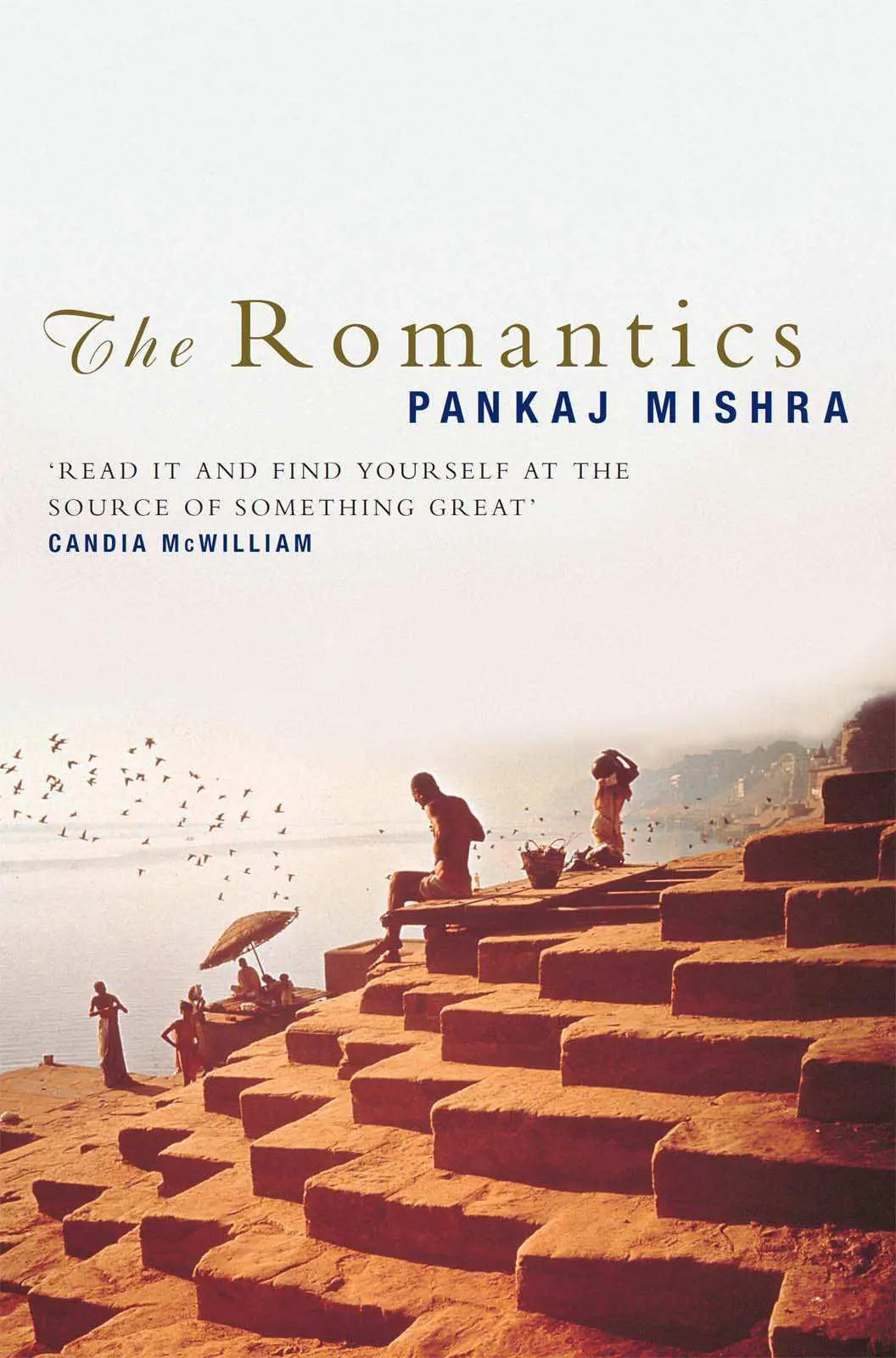
- Название:The Romantics
- Автор:
- Издательство:Anchor Books
- Жанр:
- Год:2001
- ISBN:нет данных
- Рейтинг книги:4 / 5. Голосов: 1
-
Избранное:Добавить в избранное
- Отзывы:
-
Ваша оценка:
The Romantics: краткое содержание, описание и аннотация
Предлагаем к чтению аннотацию, описание, краткое содержание или предисловие (зависит от того, что написал сам автор книги «The Romantics»). Если вы не нашли необходимую информацию о книге — напишите в комментариях, мы постараемся отыскать её.
The Romantics — читать онлайн бесплатно полную книгу (весь текст) целиком
Ниже представлен текст книги, разбитый по страницам. Система сохранения места последней прочитанной страницы, позволяет с удобством читать онлайн бесплатно книгу «The Romantics», без необходимости каждый раз заново искать на чём Вы остановились. Поставьте закладку, и сможете в любой момент перейти на страницу, на которой закончили чтение.
Интервал:
Закладка:
In recent days, I had come to read the letter more carefully, pausing over each word and sentence, turning them over, examining them for deeper sentiment and larger implications. I paused longest at the last sentence: I’ll write again soon and send you an address once we have one.
Such promise lay in those words, and it was why I felt so keenly the stab of disappointment every afternoon. I had gone to the local post office and inquired about the time it took for letters between France and Pondicherry. By my calculations, Catherine would have written by now, but the days slipped past and no letter came. She was supposed to have left for France six days after my own departure from Benares; I had more than once imagined her — Anand always absent from these mental pictures that came to me from films and books — at the airport in Delhi, where I had been once as a child, the brightly lit chaos of the terminal pressing on her from all sides, counters with Closed signs over them, empty telephone booths, shabbily dressed tourists squatting on luggage trolleys, forlorn bales of merchandise and anxious-looking Sikhs travelling to a better life in the West. I imagined the take-off into darkness, the brisk solicitude of remote, self-possessed air hostesses, the long stupor of stopovers and duty-free shops and then the arrival next morning in another world. I wondered if her parents came to the airport to meet her. What were her thoughts during the moment of arrival? What kind of house did she spend her first night in? Why hadn’t she written?
I imagined her letter as answering all these questions. I imagined it full of memories of our time together, of the kind of heartening messages I had found in the letter she had handed me in Benares, the few handwritten words on paper that had possessed such power as to cancel out the days of disquieting doubts and gloom I knew in Benares after my return from Kalpi. I no longer thought of those days, and the separation from Catherine felt less painful when I set it against the hopes for the future I now had, a future in which a quick and lasting reunion seemed a possibility.
There was no doubt in my mind that something of great significance had occurred in my life, and I was filled with a sense of wonder again at how the vague longings and expectations of childhood and adolescence had crystallized into a clear, sharp feeling for someone who was a stranger to me in so many ways, a foreigner I wouldn’t ever have known had I not gone to Benares. I had a growing conviction that I had all along been marked in some mysterious way, that after the dull, pointless years of drift, the long years of childhood and adolescence, the time during which I had increasingly felt myself homeless and unprotected and lost, I had been predestined for the moment when I met Catherine — the encounter in which some of the richness of life and the world were revealed to me.
I felt blessed and fortunate, and the desire to share this private certainty often came over me. But whom could I have shared it with? No one I knew could have followed me in my new life. Nevertheless, the desire to give it some public form made me start a letter. I had already written to Miss West, describing my days in Pondicherry and returning her the money I had borrowed for the rail ticket. I now began a letter to Catherine.
I wrote with some awkwardness; the peculiar vocabulary of intimacy that Catherine possessed so naturally and employed so fluently felt heavy in my hands. I wrote several drafts and threw away all of them. In the end I decided to wait for her own letter before writing about more personal things, and instead described Pondicherry’s French colonial connections at some length.
I also wrote about my father. She had been curious about him, and my own curiosity about him — which had not been aroused before when all I knew was the world he had brought me into, where he was an aloof, reticent parent — was provoked by his proximity to Deepa, who was rarely away from him. He turned to her very often for advice and support; he listened with great care to everything she said, his slightly droopy eyes alert and apprehensive. I remembered him as an aloof and self-contained father and husband. The softness in his manner when Deepa was around was odd and disconcerting.
He had changed considerably in the last year. I hadn’t forgotten what he told me soon after my mother died, one evening on the ghats in Benares. Freedom from all bonds was what he had desired: this harsh ascetic resolve had brought him to Pondicherry. The intimacy with Deepa now made me wonder about the life he had shared with my mother, the deprivations he had come to know in it, the special needs which Deepa appeared to fulfil.
Deepa herself was aware of this. She often dropped hints about her dissatisfaction with the way my father had led his life so far. These remarks, and the proprietory claim they appeared to make on my father, made me uncomfortable. I didn’t know how to respond. Hopeful thoughts of Catherine would usually banish the anxieties I felt about my father.
*
The days drifted past, and I began to feel a bit bored and restless. The hotel didn’t cost much and food in Pondicherry was cheap. But there was little reason to stay on. The heat, for one, was an extremely discouraging factor. All that had once struck me as somewhat interesting for its newness — the dazzling sea, the blinding white light, the geometrically straight boulevards stretching emptily into a trembling haze, the high grey walls of secluded houses and their knife-edged shadows — all that now seemed stale, and as I awakened every morning to the curtains fading slowly in the harsh light from the sea, I told myself: let Catherine’s letter arrive today, and I’ll pack my bags and leave tomorrow.
It was not possible to think beyond tomorrow. The future seemed such a large blank, and it seemed even larger when my father, in his new solicitous mood, wanted to know about my plans for the year ahead.
His health had improved hugely. He had resumed his normal routine. He no longer appeared on Deepa’s arm when he went into the dining room, and he often lectured me in the way he had in the past. He spoke of the need for a design in one’s life; he spoke of ancestral obligations; he spoke of samskara . ‘We all have something in us of our forebears; we must act true to their legacy.’ It was something I, as a child, had often heard him say, and it didn’t make any clearer sense to me now.
But I did feel myself on the spot when he asked specific questions. Among other things, he wanted to know if I had been preparing for the Civil Service exam during my time in Benares.
These probings of my father always jolted me out of my distraction. I couldn’t think of much to say and I gave vague replies to him. But once I was frank and focused enough to say that I was more interested in an academic career than in the Civil Service. I said I wanted to study at a university in Delhi for a Ph.D. degree. It surprised me to see how receptive he was to the idea.
He added that it would be a good idea for me to get some teaching experience in the months that remained before I could apply for admission to a university. He suggested I talk to Deepa; she knew friends in Dharamshala who ran a primary school for Tibetan children.
Deepa was in fact present on the occasion we had this discussion. She was wearing her usual uniform of white cotton sari, and walking alongside my father in her slow graceful manner. We had gone for a stroll along the promenade. It had just stopped drizzling and the sea looked lazily replete. The strong salty breeze made the white shirt of the ice-cream vendor in the deserted distance billow and flutter; gusts of steam rose from the drying asphalt and immediately vanished.
Deepa said, in her slightly high-pitched anxious voice, ‘If you want I’ll call my friends and ask them if they have a vacancy. They are always looking for new people. The salary isn’t much, but you’ll like Dharamshala.’
Читать дальшеИнтервал:
Закладка:
Похожие книги на «The Romantics»
Представляем Вашему вниманию похожие книги на «The Romantics» списком для выбора. Мы отобрали схожую по названию и смыслу литературу в надежде предоставить читателям больше вариантов отыскать новые, интересные, ещё непрочитанные произведения.









Обсуждение, отзывы о книге «The Romantics» и просто собственные мнения читателей. Оставьте ваши комментарии, напишите, что Вы думаете о произведении, его смысле или главных героях. Укажите что конкретно понравилось, а что нет, и почему Вы так считаете.