Pankaj Mishra - The Romantics
Здесь есть возможность читать онлайн «Pankaj Mishra - The Romantics» весь текст электронной книги совершенно бесплатно (целиком полную версию без сокращений). В некоторых случаях можно слушать аудио, скачать через торрент в формате fb2 и присутствует краткое содержание. Год выпуска: 2001, Издательство: Anchor Books, Жанр: Современная проза, на английском языке. Описание произведения, (предисловие) а так же отзывы посетителей доступны на портале библиотеки ЛибКат.
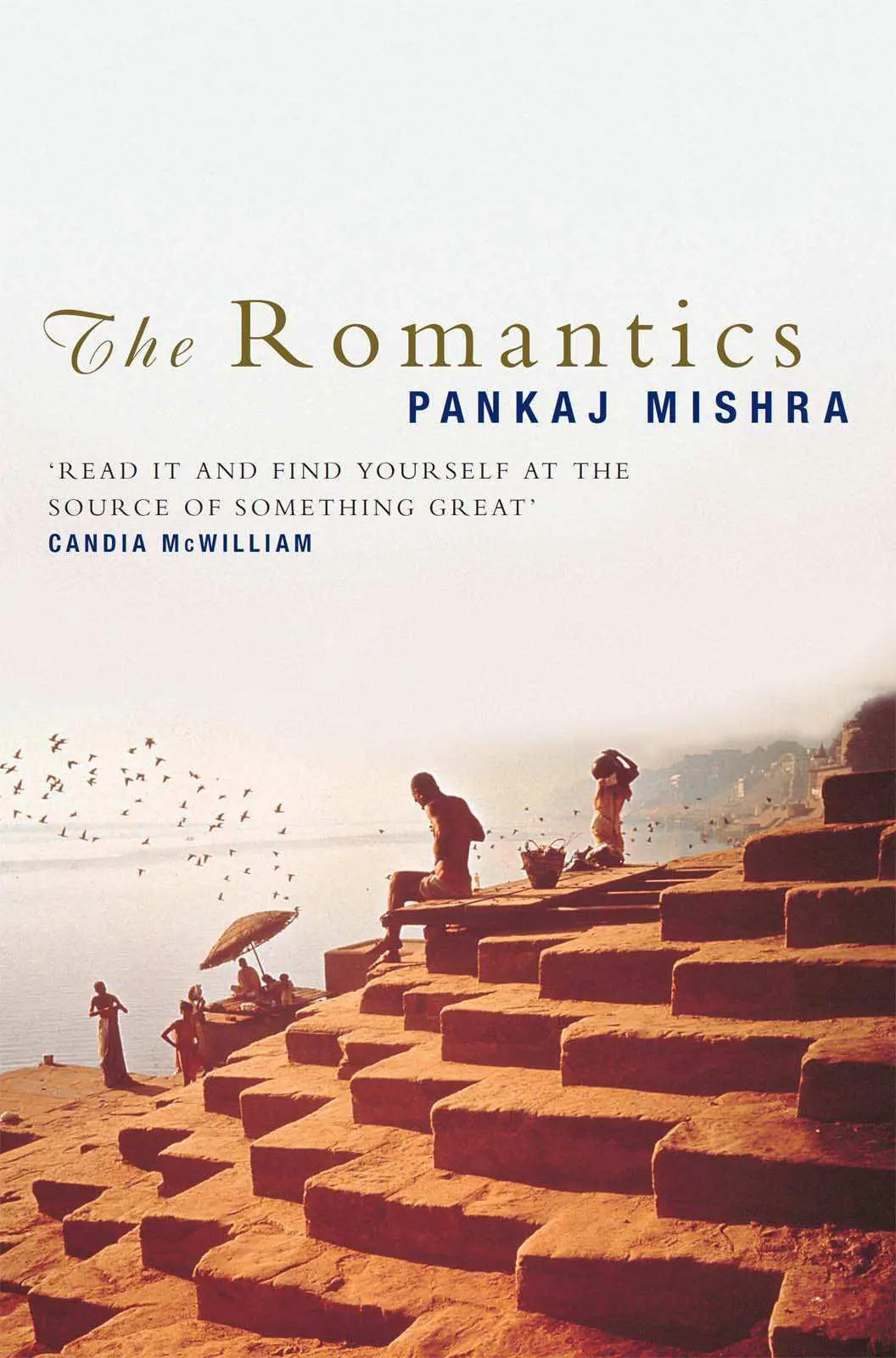
- Название:The Romantics
- Автор:
- Издательство:Anchor Books
- Жанр:
- Год:2001
- ISBN:нет данных
- Рейтинг книги:4 / 5. Голосов: 1
-
Избранное:Добавить в избранное
- Отзывы:
-
Ваша оценка:
The Romantics: краткое содержание, описание и аннотация
Предлагаем к чтению аннотацию, описание, краткое содержание или предисловие (зависит от того, что написал сам автор книги «The Romantics»). Если вы не нашли необходимую информацию о книге — напишите в комментариях, мы постараемся отыскать её.
The Romantics — читать онлайн бесплатно полную книгу (весь текст) целиком
Ниже представлен текст книги, разбитый по страницам. Система сохранения места последней прочитанной страницы, позволяет с удобством читать онлайн бесплатно книгу «The Romantics», без необходимости каждый раз заново искать на чём Вы остановились. Поставьте закладку, и сможете в любой момент перейти на страницу, на которой закончили чтение.
Интервал:
Закладка:
Catherine was silent all the way back to the house. Her earlier voluble mood had gone. Shrouded in a thick white blanket, the chokidar was waiting for us outside the living-room door. He had seen us at the hotel in the afternoon; now that he knew that we were guests of both Miss West and the maharaja, he was eager to please. He addressed Catherine as Memsahib, his teeth, when he smiled, gleaming in the darkness. He brought out chairs for us to sit on and then paced the lawn behind us in short assertive steps, sporadically slamming his lathi into the ground in the over-assertive manner of chokidars.
Down in the valley, the scattered points of light seemed to mingle with the stars in the vast arching sky overhead. A lone owl somewhere on the trees around the house hooted repeatedly at short intervals. The undergrowth was full of brief rustling anxious noises. A childhood memory stirred within me, of sleeping in the open on clear spring nights, curled up on cold velvety sheets under the mysteriously luminous sky.
Catherine said she was sad Miss West wasn’t with us to enjoy the view. It was the first time she had spoken since the cemetery; I was getting used to her long silences. ‘Poor woman,’ she said, ‘there are so many troubles she has to deal with.’
I wondered about this. Which troubles? But I did not get a chance to ask as Catherine quickly spoke again to ask me about the university. Did I enjoy my time there? I told her about the riot I had witnessed, the agitated students, the badly wounded policeman. She seemed shocked: it was far beyond anything she ever suspected on her trips there, she said. She asked me about the kind of life students at the university led. She had asked me that question before in Benares. I remembered because I had had problems with it. The life of the students at the university was the only one I knew, and I would have had to know other kinds of student lives to be able to define our lives properly.
This time I told her about Rajesh, without naming him. I described his room at the hostel; I mentioned the friends he hung out with. I told her about the Civil Service exam, and felt at that moment at least — sitting out under the night sky in the hills, so far away from Allahabad and Benares — immune to all the anxieties so normally associated with it.
*
It was later — after some talk of the day ahead, the chokidar now silently sitting behind us, the blackness and stillness of the night present almost like a solid substance around us — that she came back to Miss West. She said she had been reading a book about women who love too much. She said it reminded her of Miss West.
She said, ‘Diana has been involved with this man for a long time, almost twenty years: a married man, a man with school-age children. The man’s wife knows about the affair, but not his children. She pretends it doesn’t exist. It’s hardest for Diana, because she wanted to marry this man, have children and settle down. But he won’t leave his wife, and Diana can’t bring herself to leave him. It’s a hopeless situation for her. Of course, when she was young and beautiful she had many admirers; even now it wouldn’t be hard for her to find a good man to marry. But she won’t do it; she is completely in love with Christopher. They never see each other in England; they meet in Europe or India, spend a few days together. Christopher’s father was in the Indian Civil Service and stayed on for a while after independence; he’s been to India so many times, and it seemed natural for them to meet here. He doesn’t even come to Benares; he wants to keep it entirely secret. Diana goes along with him on this. It’s for his sake — he’s a senior corporate executive and may go into politics; he’s a public figure, and I think wants to avoid a scandal — so it’s really for his sake that she lives in India for most of the year, and she lives from meeting to meeting. .’
Christopher: the name struck a note in my memory, and even as I sat there absorbing Catherine’s words I remembered the captions to the photographs in Miss West’s room. He was the smiling man who featured in so many of the pictures.
Catherine went on and I sat there listening with a growing sense of unreality. So hard it was to connect her words to the person I had spoken to just this morning, to connect the image Catherine’s description gave me, the image of a life and personality so compromised by passion, to the confident, humorous voice on the phone: the voice that had always struck me as that of someone who knew what she wanted from life and the world and was capable of getting it. So enviable had Miss West been to me, her background, the seemingly untroubled self-knowledge, her quick ironical assessments of people and situations, which put her on equal terms with the maharajas of the world.
I had admired and envied these gifts — the gifts that I thought were of an easeful life, a life made comfortable by money and travel, the many-dimensional life I had glimpsed in the photographs on the wall of her room. The discovery that complete fulfilment still lay far beyond Miss West’s grasp confused the image I had had of her. I was troubled, because Miss West’s disappointments seemed to point at an even harsher fact: the cruel-seeming asymmetry between desire and satisfaction that could exist in the most privileged of lives.
Catherine had been speaking in a low soft voice so as not to let the chokidar hear anything. But it wasn’t hard to discern the restless mood she was in. The private disturbance that had earlier made her speak so obsessively of Anand had now made her disclose confidences Miss West had probably entrusted to her at an equally unguarded moment.
The mood explained the impulsive gesture that left me flustered as we went indoors, to the quiet, warmly humming house. Just as we were going to our separate bedrooms, Catherine paused in mid-step. I reflexively stopped too. ‘Goodnight,’ she said, and smiled. ‘Thank you for all your help,’ she added, and gave a tiny wave, and then suddenly reached forward and gave me a quick, light embrace. A rustling of clothes, the pressure of her arms and shoulders, a whiff of shampooed hair, and then she had withdrawn, and with a brief backward smile slipped away into her bedroom.
I slept badly that night. I missed the certainties of my life in Benares, the measured day, the focused mind. The long journey from Benares, the strangeness of my new surroundings, the hotel, the house, the maharaja, the manager, the Americans, the French tourists, the new complicated knowledge about Miss West’s past, Catherine’s unsettled and unsettling presence, her many alien, inscrutable emotions and preoccupations — I felt them beginning to work on me. Thoughts combined, interlocked, ramified. I felt tense, oddly exposed.
2
WE WOKE UP LATE the next morning and had to sprint down the hillside to the bus station. But the bus to Kalpi was already packed full by the time we reached it, with not an inch of sitting or standing space anywhere. The only vacancies were on top, and as other passengers — mostly peasants with sackloads of vegetables — gawked, Catherine and I clambered up to the tin-plated roof with our bags.
The bus started late and when it did I immediately felt the cold; the dry and bracing wind cut right through to the skin. I gradually took out all the woollen clothes I had brought with me. But I still shivered every time a fresh gust of wind blew across the roof.
As the bus groaned out of the ungainly clutter of downtown Mussoorie, wide unobstructed vistas opened up all around us: lushly forested foothills wreathed in early-morning blue mists; sharp-edged stripes of sunlight angled against the soft mulchy ground of pine groves; thin columns of smoke rising from the tiny houses with thatch or tin roofs scattered all across the hillsides and deep in the valley — the sallow gems of the previous night, now dwarfed by the huge immensities of space daylight had revealed; the vast landscape over which the snow-covered mountains to the north, resting on plinths of deep blue air, serenely presided, giant white mountains that often appeared in altered perspective and sometimes were obscured as the bus twisted and turned in tortuous loops, but which were always solidly, immutably present.
Читать дальшеИнтервал:
Закладка:
Похожие книги на «The Romantics»
Представляем Вашему вниманию похожие книги на «The Romantics» списком для выбора. Мы отобрали схожую по названию и смыслу литературу в надежде предоставить читателям больше вариантов отыскать новые, интересные, ещё непрочитанные произведения.








Обсуждение, отзывы о книге «The Romantics» и просто собственные мнения читателей. Оставьте ваши комментарии, напишите, что Вы думаете о произведении, его смысле или главных героях. Укажите что конкретно понравилось, а что нет, и почему Вы так считаете.