Pankaj Mishra - The Romantics
Здесь есть возможность читать онлайн «Pankaj Mishra - The Romantics» весь текст электронной книги совершенно бесплатно (целиком полную версию без сокращений). В некоторых случаях можно слушать аудио, скачать через торрент в формате fb2 и присутствует краткое содержание. Год выпуска: 2001, Издательство: Anchor Books, Жанр: Современная проза, на английском языке. Описание произведения, (предисловие) а так же отзывы посетителей доступны на портале библиотеки ЛибКат.
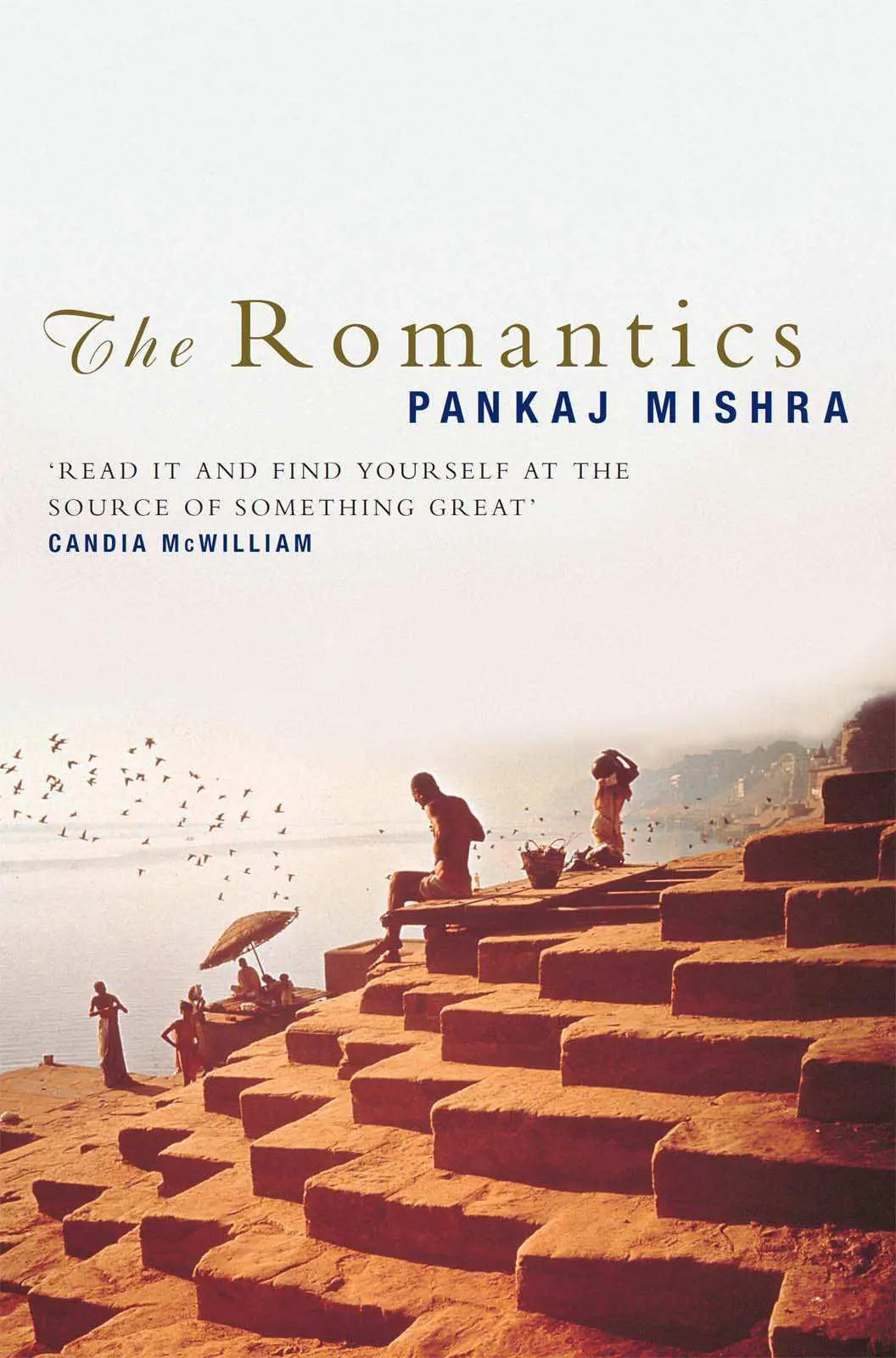
- Название:The Romantics
- Автор:
- Издательство:Anchor Books
- Жанр:
- Год:2001
- ISBN:нет данных
- Рейтинг книги:4 / 5. Голосов: 1
-
Избранное:Добавить в избранное
- Отзывы:
-
Ваша оценка:
The Romantics: краткое содержание, описание и аннотация
Предлагаем к чтению аннотацию, описание, краткое содержание или предисловие (зависит от того, что написал сам автор книги «The Romantics»). Если вы не нашли необходимую информацию о книге — напишите в комментариях, мы постараемся отыскать её.
The Romantics — читать онлайн бесплатно полную книгу (весь текст) целиком
Ниже представлен текст книги, разбитый по страницам. Система сохранения места последней прочитанной страницы, позволяет с удобством читать онлайн бесплатно книгу «The Romantics», без необходимости каждый раз заново искать на чём Вы остановились. Поставьте закладку, и сможете в любой момент перейти на страницу, на которой закончили чтение.
Интервал:
Закладка:
‘Why weird?’
She thought for a while and then said, ‘Well, maybe “weird” is not the right word. I don’t know. Not normal, perhaps. .’
She stopped. A few moments later she said, ‘But I liked the serious way you spoke to him and took an interest in his life.’
I said, ‘But it’s an interesting life.’
She immediately spoke up: ‘Not for me, not for me. I find it empty, hollow. There is no love in it. It’s a life without love. What’s interesting about it? Nothing.’
The sudden passion in her voice startled me. I turned to look at her. She was wearing her blue beret, which accentuated the paleness of the skin on her face and sharpened her profile against the night sky as she looked out over the river. Out of nowhere, as though from a forgotten life and world, and so foreign in this setting, the words of Miss West came back to me — how badly she wants to be loved — and I felt a strange sad feeling come over me.
I wasn’t prepared when she abruptly asked me, giving a bizarre turn to the conversation, ‘But have you been in love? Do you know what I mean?’
The question held an implicit challenge. It flustered and abashed me. What could I tell her? I had no ready-made answers; the truth was too complicated and I was shy about revealing it to anyone. I had lived so far away from human contact of the sort Catherine implied. I hadn’t known any women apart from those in my family. Of love and romance, the less regulated but natural order of things, I knew only from books, and I followed other people of my background in suspecting it of being not natural. In the world I had known, romantic love was looked down upon as a kind of sensual derangement that briefly affected insufficiently acculturated or Brahmanized youth, and then left them broken and disillusioned soon afterwards. In this world, men and women were ushered into marriage after their elders had matched horoscopes and convinced each other about their respective social and financial status. Love was supposed to follow marriage, not the other way round; and it mattered little if it didn’t.
Catherine said, ‘You are not saying anything, which means you haven’t.’ She suddenly laughed; it was her full-throated generous laugh. ‘Maybe you want to be like that sadhu back there, no? Is that your real ambition? To be a lifelong celibate? Admit it, come on, come on,’ she said, gently pummelling my back with tiny fists, her beaming face turned towards me.
Her new bantering manner defused the tense awkwardness I was beginning to feel. She mentioned one of her friends, a gay man, who had turned into a monk and then fallen in love with a fellow monk. She told more stories of his later defrocking; she became more and more voluble.
Later, once back in the room — she said she was too cold and wanted to be under a quilt — we lay propped on pillows, unopened books on our chests, looking up at the wooden beams on the ceiling, and desultorily talked late into the night.
It was she who did most of the talking. I listened and occasionally asked questions. She spoke of her life at the university; she spoke of her school friends; she spoke of a great attachment she had formed as an adolescent to a middle-aged man who never became aware of her feelings towards him; she spoke of other unfulfilled loves.
She recalled these with unsettling frankness — unsettling, because I hadn’t ever heard anyone speak of their past in so direct a manner. She spoke of these relationships as something in which she had invested much of herself. In them had existed all the possibilities she thought had been denied by an indifferent, over-intellectualized atmosphere at home. Different men at different times had seemed to offer an escape from the emotional sterility she thought she had grown up with, and time and again she had succumbed, only to find that she had made a mistake. She spoke of men courting her for her beauty alone; she spoke of being constantly misunderstood.
I listened, suddenly entranced, but also sad. I had known next to nothing about Catherine’s past. The officious father, the disapproving mother, that was all I knew. These stories now began to fill in her background, but I wasn’t so held by the plain knowledge they offered about it. The fascination lay elsewhere: it lay in the enormous longing for love Catherine seemed to have, the promise of a lasting fulfilment that shaped her life. That the longing seemed to cause a kind of perpetual discontent only added to its appeal. It made for empathy; it made me see how much Catherine’s struggles resembled my own.
Most of Catherine’s stories, even the happier ones about her university days, looked back to wasted endeavours, to a time irretrievably lost and rendered futile by later events. They suggested a larger continuing failure and drift. But it was something I knew, to a lesser extent, in my own life, existing as I did so very far from the richness of the world as I imagined it, with no means of getting closer. The sense of a life somehow not working out, a life whose true flowering had yet to come, was familiar to me, and it was by this feeling, suddenly renewed, that I felt myself deeply moved — as I had earlier in the evening beside the river, remembering Miss West’s words.
As she went on, Catherine’s tone grew more and more melancholy; her voice grew softer. She often fell silent and then for long stretches stared at the tall flickering shadows on the ceiling.
It was during those spells of silence that I felt her turn away from the ceiling and look at me with her sad and tentative hazel eyes, her soft curly hair falling over her face and spread across the pillow, gently ticklish where it touched the side of my neck.
It wasn’t a moment I had, or could have, anticipated; but suddenly now, in that cold damp room with the dingy rug and sour smells, the giant shadow of the candle’s flame restlessly licking the walls of the room, the world outside shut doors and windows reduced to a dim murmur of falling water, I wanted that moment of intimacy to stay.
3
LATER THAT NIGHT, during one of her spells of melancholy silence, Catherine reached out and kissed me. I responded, fumbling, but with an avidity that filled Catherine with mirth and left me feeling embarrassed.
It is hard for me to describe the physical aspect of what happened next. It was made memorable only by my incompetence in everything that followed upon Catherine’s first disencumbering kiss: the first nervous explorations, the fumbling with buttons and hooks, the awkward impasses and shameful lonely climaxes.
Even if I could describe it without being meretricious, I would still be false to my memory of the event, which matched at only a very crude level the usual adolescent fantasies I’d had about the savouring of unknown pleasures.
The revelation was of a different order, and in it lay all the sweetness of that moment — the moment I wanted to prolong indefinitely, for it had awakened a part of me I had never known. It came to me later, in a calm moment after the disorder of the physical act, as I lay next to Catherine, listening to her endearments, her declarations of love — the declarations she said she had long wanted to make to me, and which I reciprocated clumsily, making her laugh — watching her face, so tender and beautiful, in the candlelight, the vision reminding me of the first time I saw her, playing the tanpura, sitting very straight on the mat, her face bathed by the golden light from the flickering diyas.
I couldn’t get over the affinity that had so abruptly and spontaneously sprung up between us, this intimate proximity with someone who seemed until a few minutes ago a remote and unsettling stranger. Our nakedness; Catherine’s glowing face, which had never failed to hold me and which was now so close to mine that its features took on an unfamiliar cast; the infantile nature of our conversation; our quick easy laughter over silly things — it all appeared miraculous.
Читать дальшеИнтервал:
Закладка:
Похожие книги на «The Romantics»
Представляем Вашему вниманию похожие книги на «The Romantics» списком для выбора. Мы отобрали схожую по названию и смыслу литературу в надежде предоставить читателям больше вариантов отыскать новые, интересные, ещё непрочитанные произведения.






Обсуждение, отзывы о книге «The Romantics» и просто собственные мнения читателей. Оставьте ваши комментарии, напишите, что Вы думаете о произведении, его смысле или главных героях. Укажите что конкретно понравилось, а что нет, и почему Вы так считаете.