Pankaj Mishra - The Romantics
Здесь есть возможность читать онлайн «Pankaj Mishra - The Romantics» весь текст электронной книги совершенно бесплатно (целиком полную версию без сокращений). В некоторых случаях можно слушать аудио, скачать через торрент в формате fb2 и присутствует краткое содержание. Год выпуска: 2001, Издательство: Anchor Books, Жанр: Современная проза, на английском языке. Описание произведения, (предисловие) а так же отзывы посетителей доступны на портале библиотеки ЛибКат.
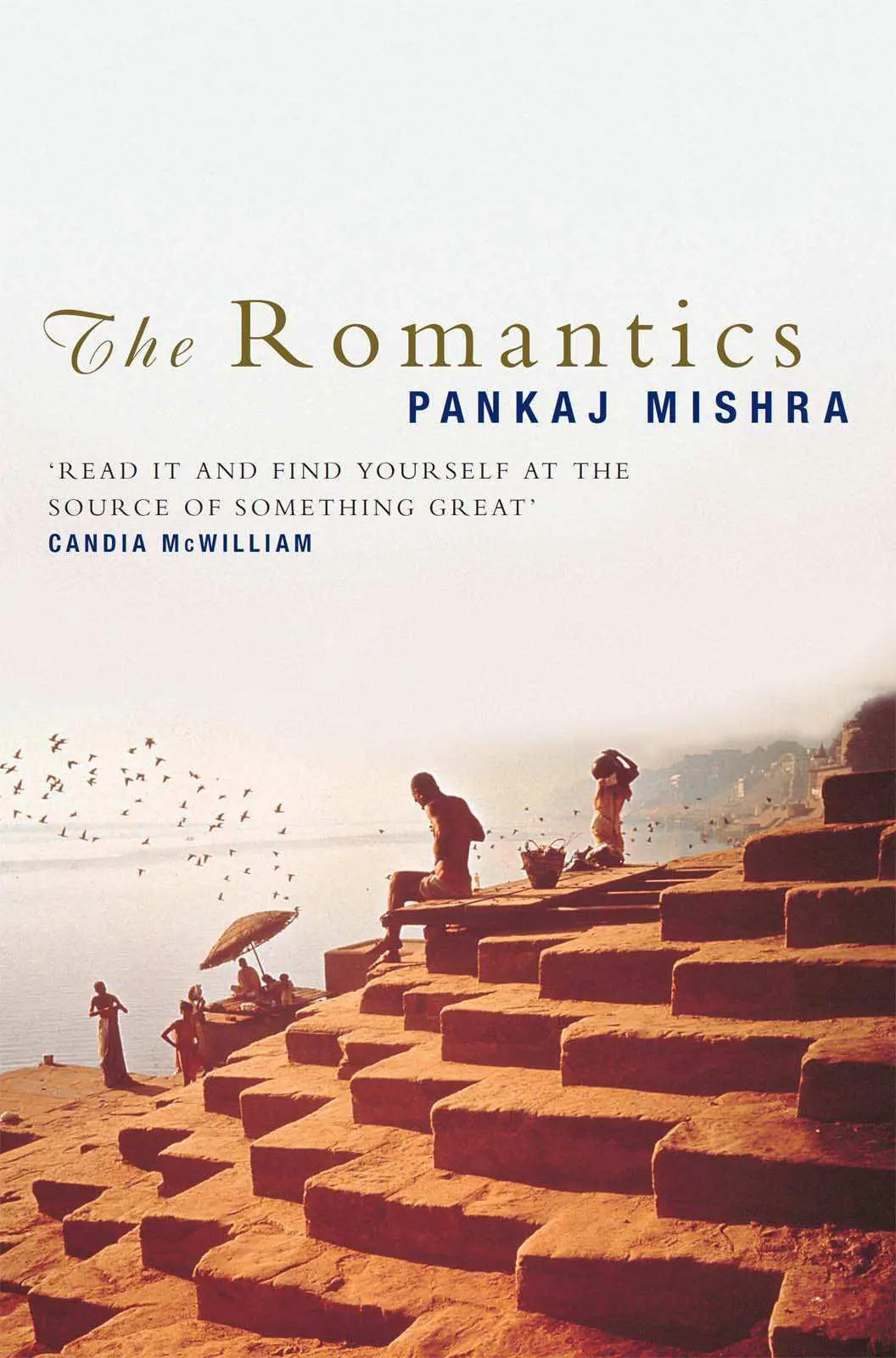
- Название:The Romantics
- Автор:
- Издательство:Anchor Books
- Жанр:
- Год:2001
- ISBN:нет данных
- Рейтинг книги:4 / 5. Голосов: 1
-
Избранное:Добавить в избранное
- Отзывы:
-
Ваша оценка:
The Romantics: краткое содержание, описание и аннотация
Предлагаем к чтению аннотацию, описание, краткое содержание или предисловие (зависит от того, что написал сам автор книги «The Romantics»). Если вы не нашли необходимую информацию о книге — напишите в комментариях, мы постараемся отыскать её.
The Romantics — читать онлайн бесплатно полную книгу (весь текст) целиком
Ниже представлен текст книги, разбитый по страницам. Система сохранения места последней прочитанной страницы, позволяет с удобством читать онлайн бесплатно книгу «The Romantics», без необходимости каждый раз заново искать на чём Вы остановились. Поставьте закладку, и сможете в любой момент перейти на страницу, на которой закончили чтение.
Интервал:
Закладка:
Even in the midst of her tears, it was heartening to me to be spoken of as an encumbering attachment. I tried to console her, and after some time, she stopped crying. I brought her water in a plastic cup from the river; she washed her tearstained face and wiped it with my handkerchief. She gave me a quick surreptitious kiss, complimented me on my gallantry. Some of her gloom appeared to recede.
*
But the pattern was set. Her moods kept changing; and by following them as anxiously as I did, I became a prisoner to them. My eyes didn’t stray far from her face. The few moments of pleasure on finding her calm would immediately be cancelled out when she collapsed into a fresh fit of remorse and self-pity.
There were more tears from Catherine on the bus — tears hastily concealed when inquisitive peasant eyes turned in our direction. The landscape so closely observed on the way to Kalpi — the villages teetering from high cliffs, the neat little flowerbeds in dung-paved courtyards of houses along the road, the ancient men with wizened faces smoking hookahs in chai shacks, the primly dressed schoolchildren, the hook-nosed shepherds with white dust on their beards, the clean blue sky overhead and the white mountaintops — all of this now slid past unseen in a blur.
At Hardwar — where we went intending to take a direct train to Benares — a tout at the bus station led us to a dungeon-like guest house in a lane crowded with garishly decorated sweetshops and vegetable stalls. We remained there all day, too exhausted from the bus journey to do much, and drifted in and out of sleep. People came and knocked randomly on the door and then went away. Tinny devotional music blared through the windows and a voice on a nearby loudspeaker kept announcing the numbers of lucky-dip winners.
Between spells of sleep, Catherine broke into fits of weeping. Once again, I tried to console her, but was helpless to do so. Her tears seemed to come from a source unknown to me and often moved me to tears myself; but they were also puzzling and filled me with every kind of fear and insecurity. They created a new physical awkwardness between us: lying close together on a narrow hard cot, under a ceiling fan with broad rusty blades, we didn’t kiss even once.
Hunger finally forced us out of the room, where mosquitoes had begun to collect in busy swarms. We went to a roadside dhaba. Catherine didn’t eat much; calmer now, she talked about her travels in South India, and drank glass after glass of mineral water, fetched by an agile waiter-boy, who sat at the next table when he wasn’t serving us and stared at us unblinkingly.
Afterwards, we walked through the brightly lit alleys and their crowd of pilgrims and cows to the ghat at Har-Ki-Pauri — Hardwar appearing a miniature version of Benares — and sat there watching the evening aarti.
Grey-haired pandits with wrinkled paunches stood before the idols dressed in shiny dolls’ clothes and waved large brass lamps, tracing great golden haloes in the fog of incense smoke. Tonsured young initiates blew hard into conch shells. Down below where we sat, the lights of the ghat glimmered in the blackish river, which, so gracefully serene in Benares, heedlessly rushed on here, cruelly overturning and extinguishing the diyas which devotees had so gingerly set afloat upon it.
Catherine asked me about my father: how did he live by himself in Pondicherry? What did he do all day? She said she was intrigued by the idea of retreat and renunciation. She said she wanted to visit him; she said that parents were often the key to understanding people you cared for.
‘But I am happy,’ she added, with a sudden giggle, ‘that you are not following in your father’s footsteps any more, that you are not a celibate Babaji any more.’
I smiled weakly, to fall in with her mood, but could not but feel the flippant remark as inappropriate, especially the casual reference to my father.
After the aarti ended, little boys with vermilion marks on their forehead went around with collection thalis; they sprinkled holy water on devotees, who warmed their palms and face on the camphor flame and dropped a coin into the thali. A couple of them came towards us. Catherine dropped several coins, and then caressed my face with her warm palms.
Disappointment awaited us at the railway station. There were no sleeper berths available on the train to Benares. My somewhat abject entreaties to a thick-jowled ticket conductor managed to obtain a single berth directly opposite the toilets. But the door to the toilets didn’t close, and a stench of urine and excrement kept wafting out all through the long insomniac night. The train languished interminably at morgue-like platforms strewn with slumbering white-shrouded bodies and then lurched off again, creaking and groaning, into the night. Far-off lights beckoned in the dark, and came nearer and nearer, only to swerve away at the last instant; the train would mourn each such abandonment with a heart-rending wail.
We took turns lying down on the narrow berth. Still sleepless, we sat side by side in the end, wordlessly watching the fleeing night through the open windows. Between spells of calm, Catherine cried quietly, and long after the journey I would remember how the dust blowing in through the window marked her wet pale cheeks with dark trails.
*
Morning brought Benares, huddled under a dark canopy of rain clouds; shuttered shops and broken roads and slime-covered drains and defecating men passed our weary eyes. At the railway station truculent coolies bargained with passengers driven to near-hysteria by the simple act of offloading family and luggage. Ragged urchins screeched ‘ Chai, chai ’ while cracked loudspeakers above droned out details of delayed arrivals and departures. Outside, rickshaw drivers with thin, unshaven, moustachioed faces and blood-red eyes jostled, harangued and taunted arriving visitors.
The world, held at bay for so long, was beginning to filter in, but my own gloom was yet to come.
It had drizzled for a brief while earlier that morning and the sky was still overcast. Muddy water ran down the broken pavements in narrow self-made channels. The streets were littered with tiny soaked slips of paper and rotting vegetables and cow dung, the profound silence cleft only by the slow grind of rickshaw wheels. The houses on both sides looked wretched and dark. Here and there on rickshaw seats lay slumbering bodies in cramped postures.
‘At least,’ Catherine said, as if reading my thoughts, ‘at least we have got another day together.’
She was referring to the fact that Anand was still in Bihar, visiting his parents.
It pleased me to hear that. I was beginning to long for some reassurance of her affection for me. I wanted to be alone with her again, and it was with a thumping heart that I ascended the staircase with the familiar mural of Rama and Sita.
Catherine leaned forward and kissed me lightly as she turned the key to her door. I followed her into the room to encounter, first, a chaos of sitars and tablas and discarded clothes and overflowing ashtrays, and then Anand, spread-eagled lifelessly on the floor — not dead, as I thought in one instant of great alarm, but sleeping.
*
All through the long journey from Kalpi, I had been more conscious of the little time I had alone with Catherine. I had known again and again the sharp, wounding realization that the hours we had between ourselves before we reached Benares were few and dwindling fast. To see Anand now was to be jolted into an awareness of the problems that lay ahead.
I felt a new kind of unease: it was the beginnings of the guilt I had not known until this moment. Watching him as he lay there, appearing so vulnerable and exposed in his deep slumber, was to have a dark, heavy sense of the relationship that now bound me to him.
Читать дальшеИнтервал:
Закладка:
Похожие книги на «The Romantics»
Представляем Вашему вниманию похожие книги на «The Romantics» списком для выбора. Мы отобрали схожую по названию и смыслу литературу в надежде предоставить читателям больше вариантов отыскать новые, интересные, ещё непрочитанные произведения.











Обсуждение, отзывы о книге «The Romantics» и просто собственные мнения читателей. Оставьте ваши комментарии, напишите, что Вы думаете о произведении, его смысле или главных героях. Укажите что конкретно понравилось, а что нет, и почему Вы так считаете.