Pankaj Mishra - The Romantics
Здесь есть возможность читать онлайн «Pankaj Mishra - The Romantics» весь текст электронной книги совершенно бесплатно (целиком полную версию без сокращений). В некоторых случаях можно слушать аудио, скачать через торрент в формате fb2 и присутствует краткое содержание. Год выпуска: 2001, Издательство: Anchor Books, Жанр: Современная проза, на английском языке. Описание произведения, (предисловие) а так же отзывы посетителей доступны на портале библиотеки ЛибКат.
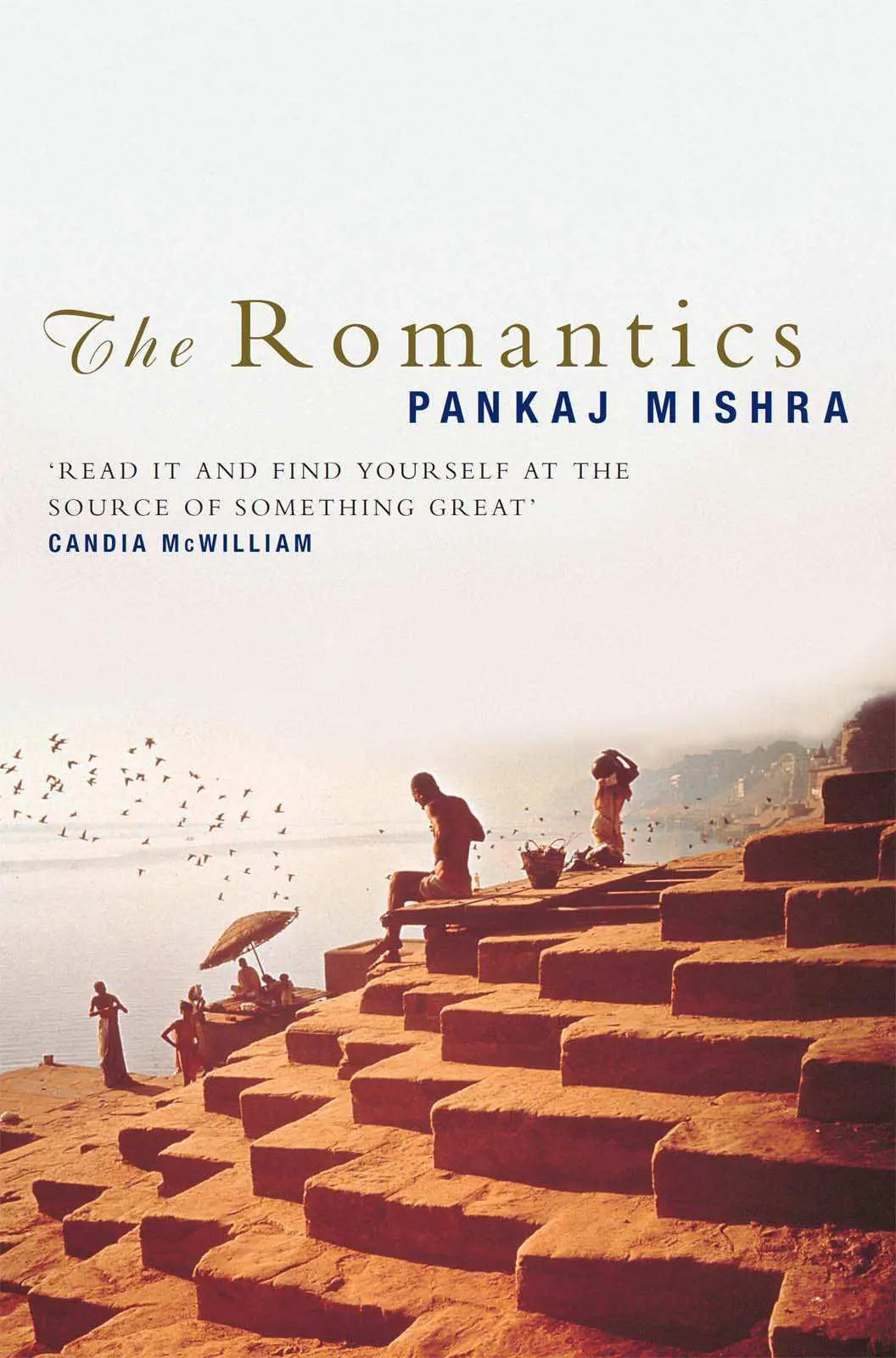
- Название:The Romantics
- Автор:
- Издательство:Anchor Books
- Жанр:
- Год:2001
- ISBN:нет данных
- Рейтинг книги:4 / 5. Голосов: 1
-
Избранное:Добавить в избранное
- Отзывы:
-
Ваша оценка:
The Romantics: краткое содержание, описание и аннотация
Предлагаем к чтению аннотацию, описание, краткое содержание или предисловие (зависит от того, что написал сам автор книги «The Romantics»). Если вы не нашли необходимую информацию о книге — напишите в комментариях, мы постараемся отыскать её.
The Romantics — читать онлайн бесплатно полную книгу (весь текст) целиком
Ниже представлен текст книги, разбитый по страницам. Система сохранения места последней прочитанной страницы, позволяет с удобством читать онлайн бесплатно книгу «The Romantics», без необходимости каждый раз заново искать на чём Вы остановились. Поставьте закладку, и сможете в любой момент перейти на страницу, на которой закончили чтение.
Интервал:
Закладка:
A part of me also wished, in some vague yet optimistic way, to talk about the future, about where we saw ourselves in the next few years. I could not bring it up myself. I feared being presumptuous, and I feared, too, the harsh truths such a line of thought might expose me to.
Catherine made scarcely any reference to what had happened between us; the terrible thought often came to me that the time in Kalpi, unforgettable for me, had already been forgotten by her. I wondered then if for her it had become yet another of the inconsequential experiences she had disclosed to me, a minor distraction that would soon be swallowed up by other memories from her long, eventful past.
Often, listening to her speak about Anand and her anxieties, I felt full of resentment. I felt with greater intensity what I had dimly recognized the first time I saw her with her friends: that her life previous to Benares had a greater claim on her, and the person with very ordinary concerns was more authentic and tangible than the person who had bestowed her gift of tenderness and happiness on me.
But then she would, in the midst of speaking of other matters, offer one of her endearments — French, but rendered quaint in English — her eyes suddenly full of concern for me and our ‘beautiful friendship’, as she called it, and my discontent would subside for some time.
But not for long. I imagined her going back to her house, through the crowded alleys, past the sadhu and the halwai, up the stairs with the mural, to the room where Anand lay half-propped on bolsters, and the thought of this other life of hers, with its greater, more significant intimacies, would once again plunge me into gloom.
I would make my own way back to Assi. I went through the ghats; I avoided the alleys, whose bright liveliness in the evening — the men playing cards or chess, the groups of loudly bantering men at tea shops, the snatches of sitar or sarod music floating out of open windows — depressed me. In my mind, I would keep thinking of things Catherine had said to me, turning them over, searching for signs of affection, and feeling more disappointed and saddened than before.
The hole in my stomach growing large, I loitered on the ghats until it was dark, among a mixed company of touts and drug pushers; washermen gathering clothes that had rested on the stone steps all afternoon, white and sparkling in the sun; groups of children playing hopscotch on the chalk-marked stone floor; a few late bathers, dressing and undressing under tattered beach umbrellas; and the groups of old men, silently gazing at the darkening river.
As I came back to the house, walking down the dark alley that led to it, I would be suffused by a strange sense of anticipation; the sense that there might be something, someone — a letter, a person, a telegram — waiting inside, who or which at one stroke would change my life for ever and, leaping across all the intermediate steps, transport me instantly into a world cleansed free of such exacting cares and anxieties.
Each time I would meet with a keener sense of disappointment as, after washing my hands downstairs in a tiny dark washroom, where the floor was slippery with slime and often caused Panditji’s students to fall, I would go up to the second floor, where Mrs Pandey and Shyam sat waiting, and settle down on the floor to eat the unvarying meal of dhal, chapati and sabzi.
Wearily each evening I watched Shyam garnish the dhal in his slow methodical way. He warmed the ghee in a small steel bowl, added some sliced onion and garlic and cumin and coriander seeds; he tilted back a bit, his eyes half-shut, his lips curled, as sparks of ghee and blackened cumin seeds flew out of the bowl with a loud fizz and crackle; then, after the fumes from the bowl began to grow steadily thicker and rise — filling the room with an aroma that was to be for ever associated in my mind with the restlessness of those days — after the onion and garlic turned a deep golden-brown, he would tremulously lift the bowl with a steel pincer and gently pour it into the brass tureen, where, after a brief noisy protest, the ghee would tamely spread across the watery surfaces of the dhal.
*
I now heard a special reproach in Shyam’s voice when he said, ‘Greed is the biggest evil, it destroys families, sunders son from parents, husband from wife. .’
Something of a cautionary message also came to me from a book I was reading at the time. There are certain books we read which, no matter how celebrated or acclaimed, make little or no impression on us. It is because, intellectually and emotionally, we aren’t ready for them; our experience and understanding of ourselves and the world isn’t rich and deep enough to match that of the writer.
I had first read Sentimental Education , a novel by Gustave Flaubert, a couple of years earlier. I had bought a secondhand 1950s edition of it for twenty rupees from a pavement seller in Allahabad. The name of the first owner and the red rubber stamp of the bookseller, Wheeler’s, were still legible on the flyleaf, and from the pages, when I opened them, fluttered out pressed rose petals. I had been attracted by the prestige of the writer’s name and that of the publishing imprint, Penguin Classics. But the novel had passed me by, like many other books at the time: it had struck me as flat and overly long. I did persevere to the very end, but it was with the bloody-mindedness with which a man might finish a marathon long after he has run out of energy. After that the book had mouldered on my shelf with some other conscientiously read but unabsorbed books.
Then, just before leaving for Mussoorie, I had come across an essay by Edmund Wilson on Flaubert’s politics. It talked about Sentimental Education in so lively a fashion as to make me think I had missed almost everything that was of value in the novel. I picked it up again. Unlike other books, which at this time I started and almost immediately dropped, I didn’t browse through it. I read it straight through, in a few sittings. And, amazingly, I now found this account of an ambitious provincial’s tryst with metropolitan glamour and disillusion full of subtle satisfactions. There were things in it I was particularly receptive to at this time. The protagonist, Frédéric Moreau, seemed to mirror my own self-image with his large, passionate, but imprecise longings, his indecisiveness, his aimlessness, his self-contempt. Also, the book — through its long, detailed descriptions, spread over many years, of love affairs that go nowhere, of artistic and literary ambitions that dwindle and then fade altogether, of lives that have to reconcile themselves to a slow, steady shrinking of horizons — held out a philosophical vision I couldn’t fail to recognize. Something of Hindu fatalism seemed to come off its pages, a sense of life as drift and futility and illusion, and to see it dramatized so compellingly through a wide range of human experience was to have, even at twenty, with so little experience of anything, a chilling intimation of the life ahead.
*
But the moment passed, as all such moments inevitably do; and my thoughts kept coming back, through familiar routes, to Catherine.
The situation at the university improved; the student leaders were arrested; the strike fizzled out. I started going to the library again, and tried hard to rediscover all my old satisfactions of habit, the kind of undistracted, single-minded pursuit of knowledge in which I had spent so many hours.
There were moments of panic now when I felt that my life had changed in some irrevocable manner, and that its old certainties had disappeared, with no purpose to replace them.
At other times, these uneasy reflections would be replaced by memories of Kalpi, from which I could still derive a heartening sense of well-being.
Читать дальшеИнтервал:
Закладка:
Похожие книги на «The Romantics»
Представляем Вашему вниманию похожие книги на «The Romantics» списком для выбора. Мы отобрали схожую по названию и смыслу литературу в надежде предоставить читателям больше вариантов отыскать новые, интересные, ещё непрочитанные произведения.









Обсуждение, отзывы о книге «The Romantics» и просто собственные мнения читателей. Оставьте ваши комментарии, напишите, что Вы думаете о произведении, его смысле или главных героях. Укажите что конкретно понравилось, а что нет, и почему Вы так считаете.