Pankaj Mishra - The Romantics
Здесь есть возможность читать онлайн «Pankaj Mishra - The Romantics» весь текст электронной книги совершенно бесплатно (целиком полную версию без сокращений). В некоторых случаях можно слушать аудио, скачать через торрент в формате fb2 и присутствует краткое содержание. Год выпуска: 2001, Издательство: Anchor Books, Жанр: Современная проза, на английском языке. Описание произведения, (предисловие) а так же отзывы посетителей доступны на портале библиотеки ЛибКат.
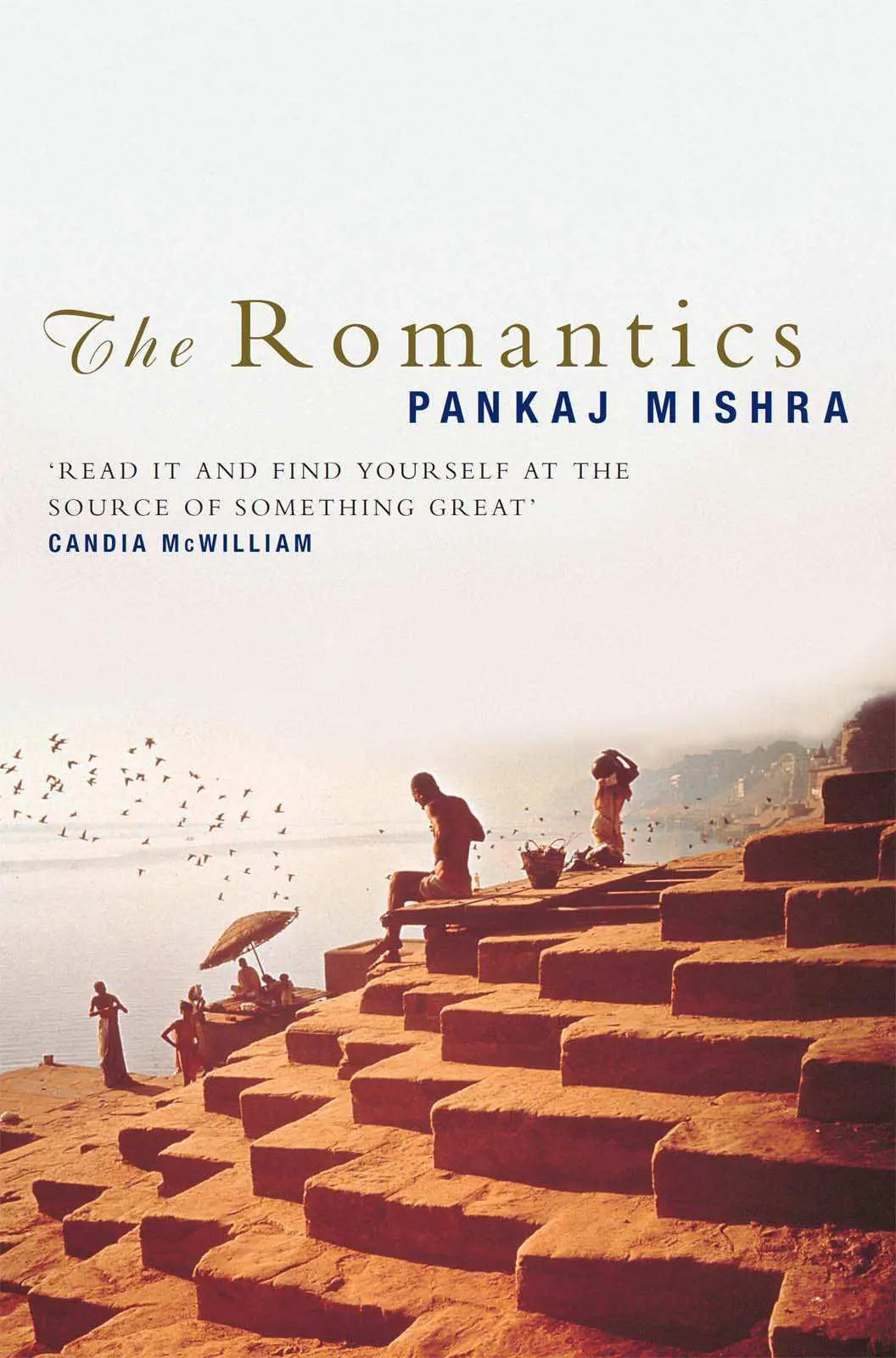
- Название:The Romantics
- Автор:
- Издательство:Anchor Books
- Жанр:
- Год:2001
- ISBN:нет данных
- Рейтинг книги:4 / 5. Голосов: 1
-
Избранное:Добавить в избранное
- Отзывы:
-
Ваша оценка:
The Romantics: краткое содержание, описание и аннотация
Предлагаем к чтению аннотацию, описание, краткое содержание или предисловие (зависит от того, что написал сам автор книги «The Romantics»). Если вы не нашли необходимую информацию о книге — напишите в комментариях, мы постараемся отыскать её.
The Romantics — читать онлайн бесплатно полную книгу (весь текст) целиком
Ниже представлен текст книги, разбитый по страницам. Система сохранения места последней прочитанной страницы, позволяет с удобством читать онлайн бесплатно книгу «The Romantics», без необходимости каждый раз заново искать на чём Вы остановились. Поставьте закладку, и сможете в любой момент перейти на страницу, на которой закончили чтение.
Интервал:
Закладка:
All morning, we circled down into a flat-bottomed valley, into the gigantic needlework of rice fields, where tiny bent human figures appeared as minute coloured stitches; then, as we descended farther, the bright red kerchiefs of the women and the water-soaked fields with their jagged reflections of the sky grew clearer. Another season, another kind of climate existed here; the air became less chilly. The bus stopped to let passengers off at little thatch-roofed tea shacks, where a smell of cooking oil and tobacco hung in the crisp air and ancient grey-bearded men in thick woollen vests sat coughing over hookahs, a pine-cone fire crackling away on the ground. Coming around a bend the bus would occasionally startle a party of hook-nosed Gujjars on their way to the high passes after the winter down in the foothills; with flailing arms and a stick they would herd their flocks, all curved horns and glittering eyes, to the side of the road and then, with wary red eyes, watch the bus sidle past.
At a raffish highway town, where we stopped to switch buses, Catherine was accosted by a young entrepreneur from Delhi. Thick-lipped, leonine-browed, with the beginnings of a paunch visible even under his bulbous warm jacket, he wore cowboy boots and levis and was standing at the paan shop combing his hair with rapid stylish flourishes. Hands dug deep in his jacket pockets, he sauntered over to where we stood waiting for the bus. He ignored me altogether as he spoke to Catherine. ‘You must be going to Kalpi,’ he said, ‘but it’s very inconvenient by bus. You can come in my car. It’s very comfortable, air-conditioned and all that.’ He gestured to the steel-grey Maruti parked before a paan shop.
Slightly taken aback, Catherine turned to me and rolled her eyes comically. She asked him, ‘Are you going to Kalpi, then?’
‘No,’ he said, ‘I am going back to Mussoorie. You see, I have big business there, hotel-restaurant, whatnot. I have many big businesses in this area,’ he added, taking one hand out of the jacket pocket and waving it around. ‘But I can drop you at Kalpi. No problem. Honestly, no problem.’
Catherine said, ‘Thank you, but I’d prefer to go by bus.’
He looked crushed. He stared wordlessly at her for an instant, his face drained of all its assurance.
Then, as he turned to go back to his car, he asked, ‘Which country are you from?’
Catherine, toying with him now, replied, ‘India.’
‘ India ?’ Suspicion darkened his countenance; his thick brows twitched. ‘Which state?’ he asked.
‘Rajasthan,’ Catherine replied, still straight-faced, and then added, ‘District Ajmer, have you been there?’
His confusion was complete. ‘No,’ he weakly replied. There was a brief moment before the truth of his situation dawned on him, when he stared uncertainly at Catherine. Then, face reddening fast, he turned and lumbered back to his car.
*
We turned out to be the only occupants of the bus to Kalpi, apart from a few grey sacks of mail tossed in behind the driver’s seat where leaking diesel oil had blended with dust to produce a black paste of sorts. The road began to curl up steeply minutes after we left the bus station. Soon, the snowy peaks, temporarily occluded by mist and clouds, came back into sight, grave and majestic against the deep blue sky; the frothy river we crossed on a jittery, jangling bridge turned into a winding silvery trail; the fields we had raced through knitted themselves back into elegant patchwork quilts.
There were more flocks of yak on the winding road here, each flock carrying its own little cloud of dust as it scampered to the side of the road. Tiny monkeys with red, hirsute faces crouched and gawked at the passing traffic. The sacks of mail were heaved out and thrown on to the ground before tiny red-painted post offices. Little hamlets lined the road, houses with slate roofs and neat dung-paved courtyards with rose bushes and tulsi plants. School-age children stood at ramshackle bus shelters painted with signs for Four Square cigarettes, their white shirts and blue shorts and skirts unexpectedly formal in this setting. When they saw us, wide smiles would break out across their ruddy cheeks and they would start waving at us with hectic energy. I once turned to see Catherine waving back delightedly, her hair blown back by the wind, the tip of her nose red, her eyes streaming, a smile of pure happiness on her face.
She saw me looking at her and shouted: ‘Wouldn’t it be nice to live here?’
‘Yes,’ I shouted back, ‘yes.’
The same thought had come to me; had, in fact, been with me from the time the bus left Mussoorie. It came out of the happiness I always felt among the Himalayas, a kind of private exhilaration that made the tensions of the previous days dissipate fast, made them seem part of another, not quite real or significant, life. It wasn’t just the beauty of these snow-carpeted mountains and broad green valleys and surging rivers — the beauty that could move even those with no aesthetic feeling. It was because so much of this landscape was marked for me; the peaks and valleys and rivers held so many associations. It was the first landscape I had known in my imagination, in the stories from the Mahabharata , where it was the setting for exile and renunciation. The Pandav brothers had walked on this ground, their presence commemorated by innumerable small temples across the ranges; great Hindu sages had made their home on the banks of its famous rivers. It was always oddly exalting to think that these secluded mountains and valleys were where, in unknown times, my own ancestors had wandered after long, fulfilled lives on the plains. They were linked to my vague but cherished sense of the past, my memories of Sunday mornings, rooms filled with the fragrant smoke of a sandalwood fire, my father meditating on his tiger-skin rug before a miniature temple, whose ascending spires, I knew even then, approximated the soaring peaks of the Himalayas.
Presently, the school appeared, to which all the children had been heading. It was perched between shimmering rice fields, a single small building on a flawlessly clean lawn, with a red corrugated-iron roof on which the school’s name had been painted in wavering white letters. A deep gorge appeared on our left, the river in it seemed to sneak shyly past all obstructions. The illusion was broken when, after an hour of travelling down into the gorge, the river appeared roughly parallel to the road, and all the bus’s relentless grumbling and rasping and clanking could not muffle the thunderous boom of thick white jets of water pummelling the huge white rocks squatting in its way. Away from the angrily frothing river, the thinner, humbler streams flowed into small quivering pools on whose banks grew delicate irises.
Slim, tall waterfalls draped the hillside in many places; old grimy snow lay in shaded gullies, from under which water leaked out in muddy trails. Overhead, the hills were all sheer rock, with young shepherds perched on the serrated slopes, sheep grazing on grassy narrow cornices. The gorge widened into a valley with dry riverbeds, smooth white boulders piled up on the side of the road. The bus rambled through forests of pine and oak, the river lost from sight, the sky reduced to a patch of blue pawed at by the tops of pine trees. More snowy peaks came into sight; the valley narrowed and the road rejoined the river and almost immediately deteriorated. Fine chalk-white dust rose into the air as the bus lurched across the rock-strewn flinty surface. Finally, at the end of the dusty track was Kalpi, a scattering of slate-roofed huts on a green meadow, deserted on this drowsy late afternoon, with long cold shadows creeping down from the snow-clad peaks towering above the raging river on both sides.
There wasn’t a single person in sight. With stiff legs and humming head, I followed Catherine over a rope bridge across the river and up to the only solid-seeming building in the vicinity. It was a forest bungalow, with wooden lattices in the veranda and a small patch of lawn, now covered with snow. The chokidar was asleep in one of the outbuildings, in a squalor of firewood logs, old smelly clothes and charcoal braziers. His eyes were red, his speech was blurred and he smelled of cheap rum. He said we were the first visitors of the year, and the bungalow wasn’t ready to be lived in yet, except for one room. The room that he unlocked for us contained the sullen chilly dampness of many airless months. The damp seemed to come off the walls and penetrate the several layers of woollen clothes we wore. There was no power. The mattress on the sole bed was bare; the coir rug on the floor gave off a sour smell of old dust. Stiff, tiny morsels of rice from the last dinner lay on the oilcloth top of the dining table. In the bathroom, with a skylight that framed the white peaks, the taps rattled and shook at first and then, after some noisy expostulations, settled down to produce a steady stream of muddy, hand-numbingly cold water.
Читать дальшеИнтервал:
Закладка:
Похожие книги на «The Romantics»
Представляем Вашему вниманию похожие книги на «The Romantics» списком для выбора. Мы отобрали схожую по названию и смыслу литературу в надежде предоставить читателям больше вариантов отыскать новые, интересные, ещё непрочитанные произведения.








Обсуждение, отзывы о книге «The Romantics» и просто собственные мнения читателей. Оставьте ваши комментарии, напишите, что Вы думаете о произведении, его смысле или главных героях. Укажите что конкретно понравилось, а что нет, и почему Вы так считаете.