Pankaj Mishra - The Romantics
Здесь есть возможность читать онлайн «Pankaj Mishra - The Romantics» весь текст электронной книги совершенно бесплатно (целиком полную версию без сокращений). В некоторых случаях можно слушать аудио, скачать через торрент в формате fb2 и присутствует краткое содержание. Год выпуска: 2001, Издательство: Anchor Books, Жанр: Современная проза, на английском языке. Описание произведения, (предисловие) а так же отзывы посетителей доступны на портале библиотеки ЛибКат.
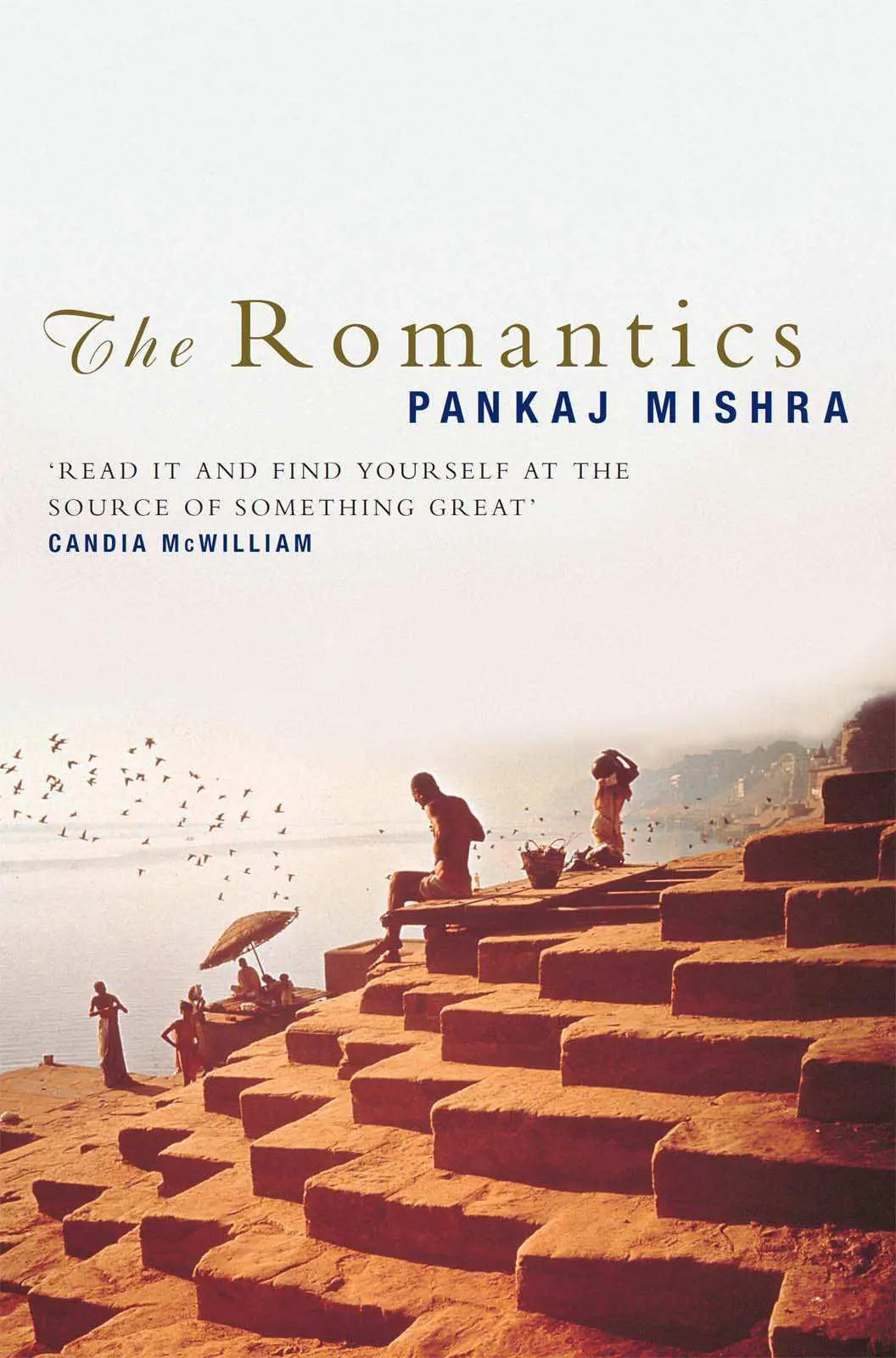
- Название:The Romantics
- Автор:
- Издательство:Anchor Books
- Жанр:
- Год:2001
- ISBN:нет данных
- Рейтинг книги:4 / 5. Голосов: 1
-
Избранное:Добавить в избранное
- Отзывы:
-
Ваша оценка:
The Romantics: краткое содержание, описание и аннотация
Предлагаем к чтению аннотацию, описание, краткое содержание или предисловие (зависит от того, что написал сам автор книги «The Romantics»). Если вы не нашли необходимую информацию о книге — напишите в комментариях, мы постараемся отыскать её.
The Romantics — читать онлайн бесплатно полную книгу (весь текст) целиком
Ниже представлен текст книги, разбитый по страницам. Система сохранения места последней прочитанной страницы, позволяет с удобством читать онлайн бесплатно книгу «The Romantics», без необходимости каждый раз заново искать на чём Вы остановились. Поставьте закладку, и сможете в любой момент перейти на страницу, на которой закончили чтение.
Интервал:
Закладка:
He did once mention Arjun, Mrs Pandey’s errant son. He already knew I lived in his mother’s house. He said, ‘That Arjun. Do you know what he tried to do?’
Puzzled, I said, ‘No.’
He continued, ‘He tried to mortgage the house you live in — a house which doesn’t belong to him.’
How and where had he acquired this piece of information? I didn’t say anything then, but rather thought I should speak to Mrs Pandey, who was forthright on the subject of her son’s misdemeanours and would have liked to know about any fresh instances.
But it slipped my mind each time I saw them. On those evenings when I did not visit Catherine’s house, I ate with Mrs Pandey and Shyam in their dark, windowless kitchen. Dinner was a quiet affair. Shyam kept dropping perfectly shaped chapatis into my brass thali, his face almost demoniacally intense in the glow from the chulha fire. Mrs Pandey watched, wordlessly, without a flicker of expression on her broad, large-featured face. Long shadows leaped over each other on the soot-encrusted walls, and bells and conch shells rang out from the adjacent temple courtyard, where a small group of devotees performed the evening aarti. From downstairs would come the faint twanging of sitars and the hollow beat of tablas — Panditji rounding up the last of his evening lessons for the American and European students, who often came up to the roof afterwards to smoke opium, much to Miss West’s annoyance. ‘Wretched addicts!’ she would exclaim. ‘I must have a word with Mrs Pandey about them.’
In fact, she had already complained to Mrs Pandey, but since she had only an elementary grasp of Hindi, she hadn’t understood when Mrs Pandey expressed her helplessness in the matter. The students were acquaintances of her son, Arjun, and they brought in much of Panditji’s income — his occasional singing at the temple paid a pittance; they couldn’t be antagonized.
Of Arjun I saw little. But I remember one incident well. One evening as I came up the stairs, I saw someone slumped on a string cot just outside the kitchen threshold where Mrs Pandey and Shyam were sitting. The figure stirred slightly and then raised himself up on his elbow, the cot creaking, and looked at me out of a black-eyed, swollen face. It was Arjun, almost unrecognizable at first, his thick lips chapped and bruised, his beard and balding head covered with bandages and bits of sticking plaster.
He squinted at me, figured out who I was, and then slowly sank back on to the cot.
I walked up the stairs. Later that evening, sitting before Mrs Pandey in the kitchem Arjun still slumped on the string cot outside, I asked her, ‘What happened to Arjun?’
‘Someone hit him,’ she said. Her tone was neutral. She might have been speaking of someone else’s son.
‘Who?’ I asked.
She nodded her head as if to say she didn’t know. Then, after a pause, she added, ‘It’s his own fault. He gets involved with unsavoury people; he gambles; he takes loans he can’t pay back. .’
She went on to enumerate more faults. Shyam kept nodding and saying, ‘Greed is the biggest evil. It eats away man, destroys families, sunders son from parents, husband from wife. .’
As he mumbled on, Rajesh’s words abruptly came back to me: he was trying to mortgage a house that didn’t belong to him .
I thought I should tell Mrs Pandey. There might have been a connection between what Rajesh had told me and Arjun’s present state. But the moment — Mrs Pandey denouncing her son as he lay outside groaning softly with pain — didn’t seem right then.
And when the moment passed it never came back. The story sunk into memory, where it remained until many years later.
TWO
1
FEBRUARY HAD JUST TURNED INTO MARCH, the afternoons steadily growing warmer, when abruptly one day Miss West announced her decision to go to Mussoorie for a few days (‘to the hills’, she said, in her old-fashioned way).
She told me that she had already discussed her plans with Catherine, who was to go with her.
‘Her interesting friends have gone travelling in different parts of the country,’ she said. ‘The poor girl wants to get out of Benares and do some travelling herself before she goes back to Paris.’
Miss West knew friends in Delhi — actually a former maharaja — who owned a house in a less crowded and touristy part of Mussoorie. She asked me if I wanted to come along. ‘There’ll still be snow on the ground,’ she said, her face shining with childlike excitement. ‘You would like that, wouldn’t you? And the views of the Doon valley from the house are absolutely gorgeous.’
My first thought was: can I afford it? I had to count the money I kept in an imitation-leather pouch in my room before I could say yes.
It was impressive, after that, to watch the speed with which a journey could be arranged, tickets bought, clothes packed: my parents used to plan for months before stepping out of the house for a short train journey.
But when we were almost ready to go, Miss West’s plan developed complications, and, as it turned out, was never to recover from them. She had to stop over in Delhi to complete certain very important formalities at the Foreigners’ Registration Bureau. She gave me all the details of the Mussoorie house and then left for Delhi by an earlier train, promising to join us in Mussoorie after a day’s delay.
So it was that Catherine and I came to travel together to Mussoorie.
Throughout the days leading up to our departure, I felt an odd growing excitement: it was the first time I would be travelling alone with a woman, and then there was the always redeemable promise of the Himalayas. Anand, on the other hand, looked morose, even depressed. I knew from Miss West that Catherine had asked her not to invite him to Mussoorie. Catherine had wanted to do this trip without him; it was meant to be a change from her usual life in Benares, a life recently grown more tense with the growing anxieties about her and Anand’s future in Paris.
Anand was parting from her for the first time since he came to know her. With me he had always been polite. In the past, he hadn’t seemed to mind being left out of the few conversations about books I had with Catherine. Practising his sitar in the next room while I talked to Catherine, he had appeared confident of his own special claim on her time and attention. But he didn’t like being excluded from the trip to Mussoorie, and there was now a new, appraising wariness and even a touch of antagonism in his attitude towards me.
He came to the railway station to see us off, looking slightly haggard with his unshaven face and crumpled kurta. He helped us store our bags on the overhead bunk, and then we all stood outside the coach. Around us seethed the usual mass of people and things: toy stalls blared Hindi film music; the waterless urinals gave off a strong stench of ammonia; pornographic magazines covered with crinkled yellow plastic lay in a prominent heap on the magazine stall; half-naked child beggars with stringy rust-brown hair tugged at people’s clothes and there were several men who kept running from one end of the platform to another for no apparent reason, their faces distorted with acute anxiety and weariness.
With a palpable air of disinterest, Anand went over his plans for the coming week with Catherine. He was to visit his parents in Bihar — they needed him for a family wedding. But before he left, he was to try again to arrange a studio recording with All India Radio, research cheap air tickets to France, chase up his passport application. He impatiently nodded when Catherine, who was in a contrastingly cheerful mood, reminded him of some further tasks he hadn’t mentioned.
Читать дальшеИнтервал:
Закладка:
Похожие книги на «The Romantics»
Представляем Вашему вниманию похожие книги на «The Romantics» списком для выбора. Мы отобрали схожую по названию и смыслу литературу в надежде предоставить читателям больше вариантов отыскать новые, интересные, ещё непрочитанные произведения.






Обсуждение, отзывы о книге «The Romantics» и просто собственные мнения читателей. Оставьте ваши комментарии, напишите, что Вы думаете о произведении, его смысле или главных героях. Укажите что конкретно понравилось, а что нет, и почему Вы так считаете.