Pankaj Mishra - The Romantics
Здесь есть возможность читать онлайн «Pankaj Mishra - The Romantics» весь текст электронной книги совершенно бесплатно (целиком полную версию без сокращений). В некоторых случаях можно слушать аудио, скачать через торрент в формате fb2 и присутствует краткое содержание. Год выпуска: 2001, Издательство: Anchor Books, Жанр: Современная проза, на английском языке. Описание произведения, (предисловие) а так же отзывы посетителей доступны на портале библиотеки ЛибКат.
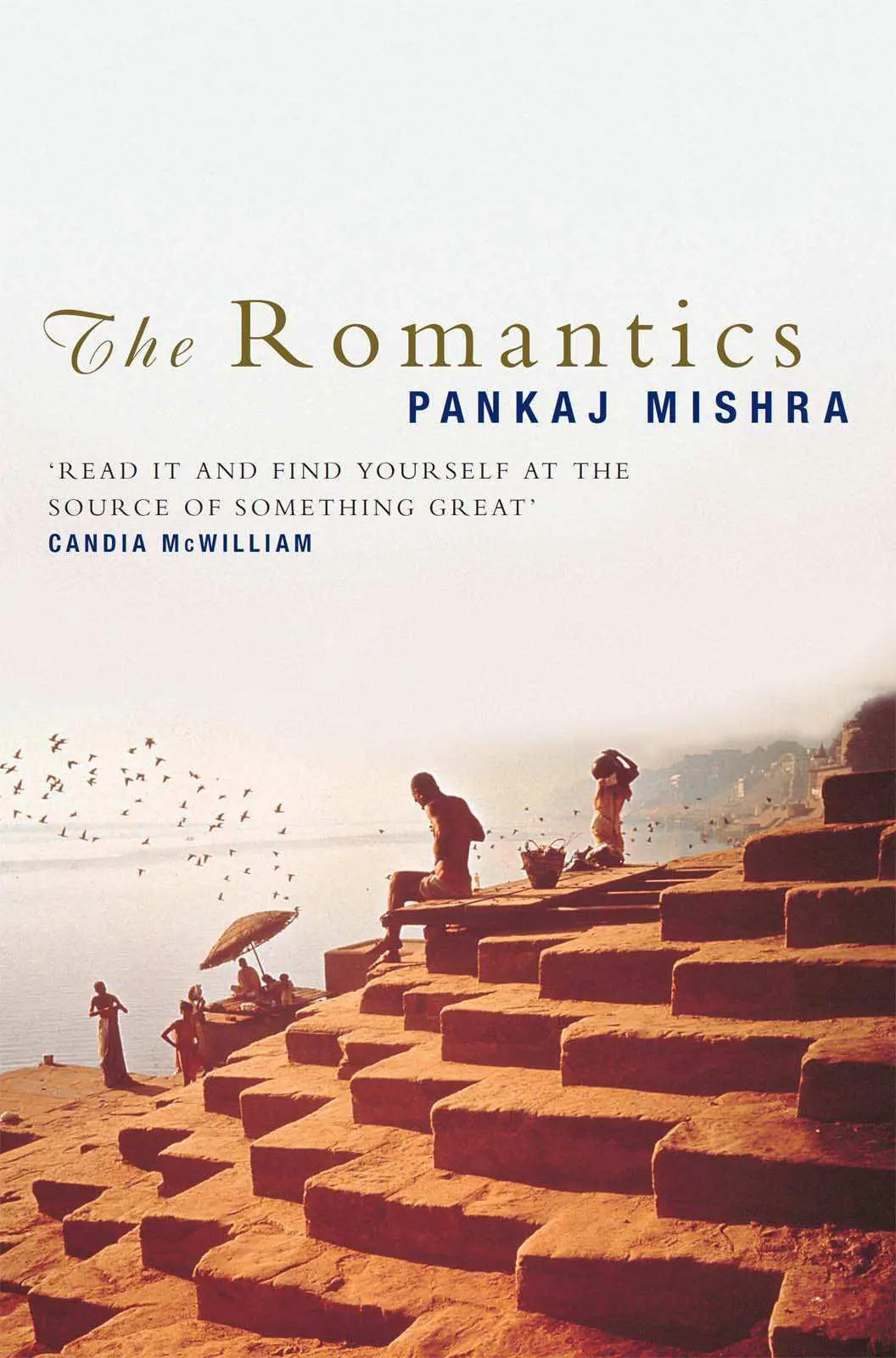
- Название:The Romantics
- Автор:
- Издательство:Anchor Books
- Жанр:
- Год:2001
- ISBN:нет данных
- Рейтинг книги:4 / 5. Голосов: 1
-
Избранное:Добавить в избранное
- Отзывы:
-
Ваша оценка:
The Romantics: краткое содержание, описание и аннотация
Предлагаем к чтению аннотацию, описание, краткое содержание или предисловие (зависит от того, что написал сам автор книги «The Romantics»). Если вы не нашли необходимую информацию о книге — напишите в комментариях, мы постараемся отыскать её.
The Romantics — читать онлайн бесплатно полную книгу (весь текст) целиком
Ниже представлен текст книги, разбитый по страницам. Система сохранения места последней прочитанной страницы, позволяет с удобством читать онлайн бесплатно книгу «The Romantics», без необходимости каждый раз заново искать на чём Вы остановились. Поставьте закладку, и сможете в любой момент перейти на страницу, на которой закончили чтение.
Интервал:
Закладка:
*
It was unsettling to see Catherine so quickly assume her place in this private circle of friends from her past — people whom I, despite her best attempts, couldn’t get to like. I was struck most by the casual intimacy with which she and her friends spoke of their own and other friends’ private affairs. I had never known anything like this kind of intimacy, which, I now recognize, must have developed during their university days, during night-long coffee-and-cigarette-aided confabulations in student digs. It explains the ease with which they disclosed their anxieties about their post-university future, the joviality and light melancholy with which they discussed their current and past romantic relationships.
With these friends around, I felt Catherine recede, grow less familiar. The house itself seemed to change, it created within me a different, more melancholy mood, with the intimations it now held of a richer, fuller life elsewhere — the glossy French magazines with their home-making advertisements and holiday offers, the wine bottles from the Dordogne, the catalogues of new exhibitions at the Louvre — the world she had known all her life, and to which, after this brief interlude in Benares, she would soon return.
The thought, every time it occurred, came to me with new force, and it brought with it little twinges of anguish. On evenings when I came back from Catherine’s house, my dishevelled room seemed a meaner and shabbier place in the low-voltage light from the exposed lightbulb.
Outwardly, nothing changed. My life remained fixed in routine. The day at the library passed off calmly, and anxiety and restlessness built up only towards the end of the day, when routine faltered.
I went to the library every day and stayed there until it closed at six. I often saw Rajesh there. I hadn’t thought of him as a frequenter of libraries. But he came quite regularly, apparently with no specific purpose in mind, and every time he came he would seek me out. He behaved with less formality towards me; the stiffness and awkwardness of our earlier meetings were gone. He would still look away in the middle of a conversation, his eyes suddenly clouded with uncertainty, his face unreadable, and I would wonder again about the other life he led, the life in which I suspected he was in league with the student rioters.
But he was now less difficult to be with. He knew where I sat, and would come and stand behind me, peering over my shoulder at my book.
‘Edmund Wilson!’ he would begin, always reminding me when he did so of Catherine’s friend Claire. ‘Why are you always reading the same man? What’s so special about him?’
I felt I couldn’t explain to him the circumstances in which Wilson had become an attractive and important figure for me: my semi-colonial education, which had led me to spend more time than was necessary on minor Victorian and Edwardian writers; my own confused self-education, which had seen me randomly read books without grasping the concrete social and historical backgrounds they had emerged from.
It was in my usual random manner that I had once chanced upon Wilson. I had read his book on the American Depression. In Benares, I found that the library had other books of his. I read them as well. They directed me to other books, and sent me back to those I had already read. That winter, Wilson became an indispensable literary and intellectual guide. He seemed sensitive to the artistry of great books. He could also place them in history and link them up with larger movements of men and ideas.
There was also the image of Wilson suggested by his various diverse endeavours: it was the image of a man wholly dedicated to the life of the mind, immersed in intellectual pursuits of the noblest kind; a man with a clear vision of the world, which new discoveries continually expanded — in short, the man I secretly longed to be.
I wasn’t completely unaware of the disparity between this ambition and the circumstances of my life. My anxieties about the future, kept at bay until I reached the eligible age for the Civil Service exam, were of a different order altogether. The future itself seemed so circumscribed — as much for me as for countless others at the university — no matter what we strove for in the present. A part of me knew I was aiming too high with the ambition to emulate Wilson. I was never far away from feeling absurd and embarrassed — which is what made me feel more abashed before Catherine’s friends.
But none of this, I felt, would make any sense to Rajesh. So, in response to his inquisitiveness, I would make a few general statements about the importance of Wilson. He wasn’t satisfied, however. Once he saw me reading To the Finland Station — Wilson’s book on the pre-Marxist and post-Marxist tradition of historical analysis — and demanded a summary of Trotsky’s ideas.
These demands could exhaust me and I would wonder, in a fit of irritation, why Rajesh, who seemed to read nothing apart from the local Hindi paper and Faiz and Iqbal, should be so interested in Trotsky or Wilson, people so far away from us, from Benares.
As if sensing this, he once brought to the library a notebook of thin, damp, double-lined pages, with a red-lipped Murphy Radio Baby on the cover. Inside, he had copied some of Wordsworth’s and Shelley’s poems. He had studied them as part of his undergraduate course: ‘The Solitary Reaper’ was his favourite among them. But, unlike the works of Faiz and Iqbal, Romantic poetry was something he only read, never recited. He said he had trouble pronouncing certain English words — he was working on it however, he said. One couldn’t get anywhere in India without a good knowledge of the language, and the poems helped him, he said. But when I asked him what exactly it was that he liked about the poems, he wouldn’t say anything. They seemed to exist in his head alone, as a kind of private music.
He would often join me at the fly-infested tea stall outside the library where I had lunch. Invariably, the students who hung around it at all times of the day recognized him, and within minutes a small crowd would gather around him to discuss the latest gossip, corruption and sleaze scandals: the size of a politician’s wealth, the imaginative ways in which the World Bank or some other rich development agency had been conned, the bridges that existed only on paper, the dual-carriage highways that had never been built.
When asked to respond to something, Rajesh would retreat into one of his long monologues. Some of his themes soon became familiar to me. Gandhi, he claimed, would have set a proper course for the country had he not been murdered so soon after independence. Though a good, well-intentioned man, Nehru had little understanding of India. He believed too much in imported formulas: industrialization for an agricultural country, state secularism for a religious people.
This was one theme. Another related to politicians and businessmen (he would refer to them as dukandaar , shopkeepers) who, together, had betrayed the country. The only hope, he would say, lay with honest civil servants.
And so it would go on until I slipped out of his small agog audience and would make my way back to my windowside desk at the library.
I occasionally speculated about his other friends. Who were they? What did they do? Once I saw him step out of a dark green Ambassador with tinted windows — a sure sign of dubious character. With him in the car were two paan-chewing, thickly moustachioed men dressed in the garb of local politicians: white khadi kurta and tight churidars. I wondered if he was planning to go into politics, if the students he patronized were part of a larger strategy to build up his electoral base in the university. But I couldn’t be sure of any of this — even after the riots in which I thought he had played a role. It did occur to me to ask him, but he never talked about anyone he knew at the university or outside it. I was sure that he would take the question badly, and the thought of how he might respond made me nervous.
Читать дальшеИнтервал:
Закладка:
Похожие книги на «The Romantics»
Представляем Вашему вниманию похожие книги на «The Romantics» списком для выбора. Мы отобрали схожую по названию и смыслу литературу в надежде предоставить читателям больше вариантов отыскать новые, интересные, ещё непрочитанные произведения.







Обсуждение, отзывы о книге «The Romantics» и просто собственные мнения читателей. Оставьте ваши комментарии, напишите, что Вы думаете о произведении, его смысле или главных героях. Укажите что конкретно понравилось, а что нет, и почему Вы так считаете.