Pankaj Mishra - The Romantics
Здесь есть возможность читать онлайн «Pankaj Mishra - The Romantics» весь текст электронной книги совершенно бесплатно (целиком полную версию без сокращений). В некоторых случаях можно слушать аудио, скачать через торрент в формате fb2 и присутствует краткое содержание. Год выпуска: 2001, Издательство: Anchor Books, Жанр: Современная проза, на английском языке. Описание произведения, (предисловие) а так же отзывы посетителей доступны на портале библиотеки ЛибКат.
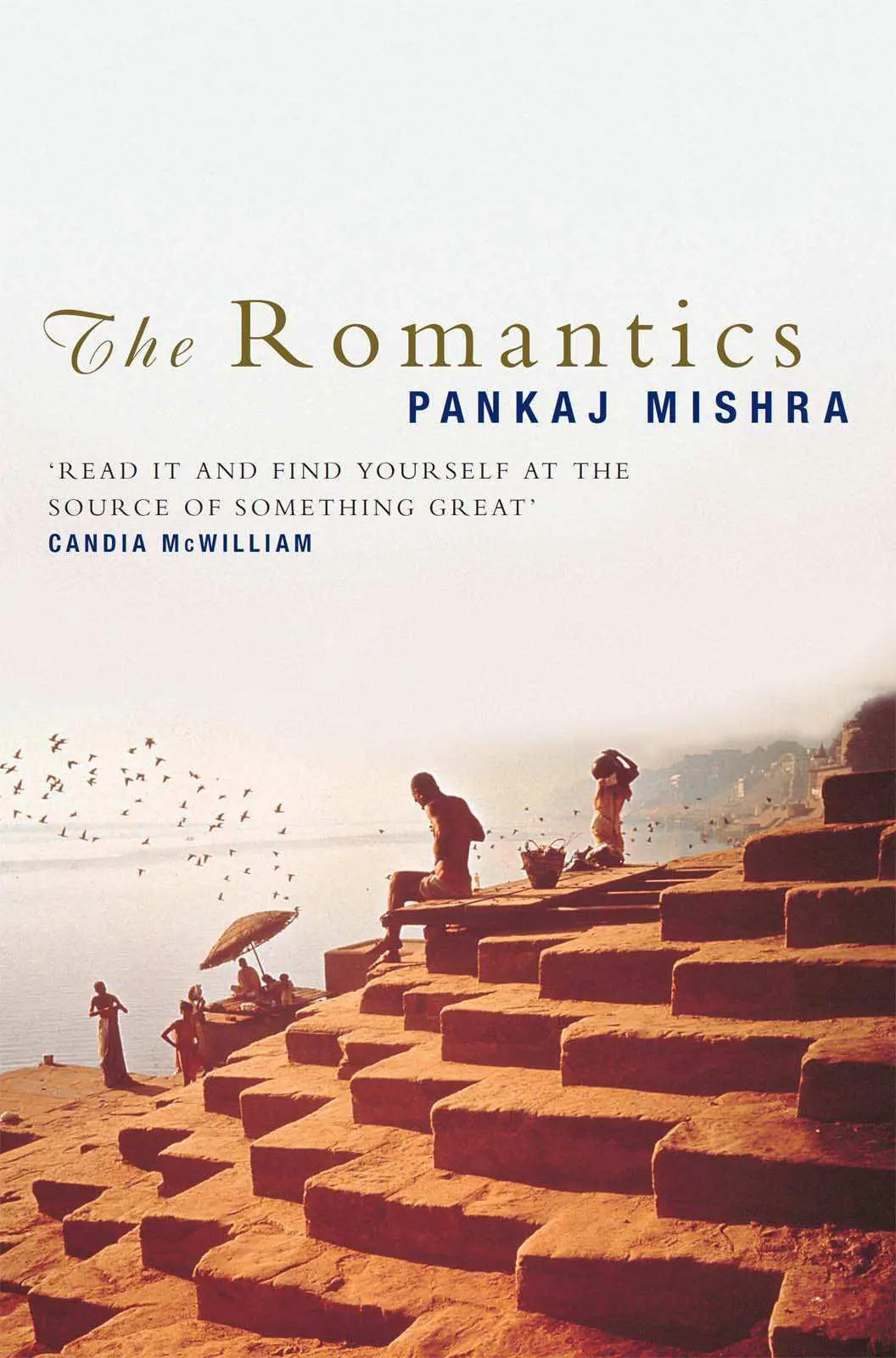
- Название:The Romantics
- Автор:
- Издательство:Anchor Books
- Жанр:
- Год:2001
- ISBN:нет данных
- Рейтинг книги:4 / 5. Голосов: 1
-
Избранное:Добавить в избранное
- Отзывы:
-
Ваша оценка:
The Romantics: краткое содержание, описание и аннотация
Предлагаем к чтению аннотацию, описание, краткое содержание или предисловие (зависит от того, что написал сам автор книги «The Romantics»). Если вы не нашли необходимую информацию о книге — напишите в комментариях, мы постараемся отыскать её.
The Romantics — читать онлайн бесплатно полную книгу (весь текст) целиком
Ниже представлен текст книги, разбитый по страницам. Система сохранения места последней прочитанной страницы, позволяет с удобством читать онлайн бесплатно книгу «The Romantics», без необходимости каждый раз заново искать на чём Вы остановились. Поставьте закладку, и сможете в любой момент перейти на страницу, на которой закончили чтение.
Интервал:
Закладка:
She had been to the university museum a few times, and had wandered about the campus: it was, she said, unlike anything she had seen in India or elsewhere.
I promptly read up on the university’s history the next time I was at the library. The university, built in the early years of the twentieth century, was the work of the pre-Gandhi generation of Indian nationalists, such leading figures as Madan Mohan Malaviya. You could see the statues erected to commemorate them at important traffic intersections in Benares — statues that were now forlorn, neglected, discoloured.
The larger aim these nationalists had, apart from independence, was the regeneration of India through direct and vigorous contact with the best of what was being thought and said in the Western world. The aspiration was shared not only among Indian nationalists, but many British men and women subscribed to it too. Among the inspirational figures behind the Benares Hindu University was Annie Besant, the English theosophist and Fabian socialist and friend of George Bernard Shaw. I remember reading this one afternoon in the library, sitting among the criminalish young men playing cards, the bored young women with long, painted fingernails, tracing their initials into the wooden desktop, and for a moment the internationally famous names seemed to make the university appear a more important place: a place designed for a noble cause, to which great men and women had devoted their time and energy.
But the moment didn’t last long, as the more I read, the more I felt that I was reading about another university in another world.
In this, the university resembled the one in Allahabad I had gone to for my undergraduate degree. The break with the past, whenever it had occurred, had been clean; the early years of idealism belonged to an unremembered time. You could get the details in books. As for the present, you had to figure it out for yourself. You had to know where you stood, and you had to be careful.
*
One morning, shortly after meeting Rajesh, I was walking to the library when my attention was diverted to a large and noisy crowd assembled outside the university museum. It was a building in the same Indo-Saracenic style, secluded from the road by a tall hedge and trees. Inside it, as a reminder of the university’s better days, were miniature paintings and sculpture of much distinction.
The crowd was growing every moment, students on foot and on bicycles, and even a couple of motorcycle riders, joining it from all directions. It had spilled out on to the road by the time I reached it. I heard the slogans as I came closer: VICE-CHANCELLOR HAI HAI!! VICE-CHANCELLOR MURDABAD!! DOWN WITH THE VICE-CHANCELLOR!!
I knew about the students’ hostility towards the vice-chancellor. I remembered, too, Rajesh’s recent warning about the possibility of student violence. I now wondered what fresh provocation had caused the large frenzied gathering.
When I asked a bystander standing alongside me, he barely looked at me as he replied, ‘The vice-chancellor is inside the museum.’
It seemed odd: what was the vice-chancellor doing inside the museum? And why were the students here?
I stood there for a while, wondering if I should move on, when in a sea of unfamiliar faces shining with excitement I suddenly spotted someone I knew.
It was Pratap, one of the young students I had met with Rajesh at the tea stall.
He, I remembered, had been particularly excited during the talk about the civil servant and his millions, such talk among poor students being part of a consoling fantasy about the future. His hair was cropped close to his skull — it was the kind of haircut many students had, from the roadside barber outside the campus gates, the bearded hunchbacked Muslim with the rusty hand mirror and rickety wooden chair. Pratap’s shoulders lay bunched under the thin shawl draped around them; his trousers, tied at the ankles, were of a shiny synthetic material.
He saw me looking at him and his large impassive face broke into a smile. He pushed his way through the crowd, provoking mild protests; then he was standing next to me and shaking my hand with great vigour — a gesture of friendliness that I felt owed much to my connection with Rajesh.
He explained that the vice-chancellor had come to garland a statue inside the museum, and some students had got wind of his presence there. They had surrounded the museum, refusing to let him leave until he revoked expulsion orders he had issued for three students. He had been trapped there now for almost an hour. In the meantime, the students had locked up his personal staff in the adjacent canteen and damaged his official car. Pratap pointed to the white Ambassador car that stood marooned among swirling groups of students. The front windscreen had been knocked out, giving it the appearance of an eyeless skull; the headlights had been smashed, the shattered glass on the ground glinting like tiny diamonds; wires stuck out forlornly from the hole on the roof where there had been a revolving blue light.
Pratap said, ‘Look over there: it’s Mohan!’
I looked and saw a student in a white khadi kurta and vest, his thick-rimmed glasses jutting out from his face. He was being held aloft by outstretched arms and then placed on someone’s shoulders. I didn’t know who he was, and when I asked Pratap, he was surprised that I didn’t know. Mohan was an old student, a member of the Communist student wing, and famous across the campus for his revolutionary poetry.
A loud voice appealed for quiet, and when the students had quietened down a bit, someone else announced in a dramatic tone that Mohan was to recite his poems.
All eyes were now on the poet, who started fumbling through the sheets of paper in his hand; someone guffawed, and a few protesting voices immediately rose up. A relative quiet briefly ensued as Mohan kept searching. He finally found the page he wanted and began.
The poem, recited in grave, admonitory tones, was about the need for a new freedom struggle and independence for India; the freedom that came in 1947 had turned out to be a fraud; it had merely replaced foreign oppressors with home-grown ones.
As Mohan went on, the crowd’s attention began to wander. He started on another poem. It was a poem about the Nazi siege of Leningrad. The crowd remained as distracted as before. Someone broke into a fit of giggles; a few other people followed.
The student who had giggled first now screamed: DOWN WITH LENINGRAD!! A ripple of frank laughter ran across the large crowd. Pratap whispered to me: ‘These are mostly men from the Hindu Pride party. They don’t like this Russia-China, Chou-Mao stuff.’
Mohan seemed totally unperturbed as he began his next poem. This was a Hindi translation of Pablo Neruda’s poem on the fall of Allende in Chile.
It went on for some time: the tenacious poet, a derisive audience. I was about to leave when a tremor of apprehension originating from the western end of the crowd reached me. An instant later, I heard the familiar siren; the students became very quiet and tense. A few of them even started to extricate themselves from the crowd. Mohan stopped midway through his poem; then, as if recalling his courage, began to recite again, his voice very clear in the sudden hushed silence.
Presently, a white Ambassador with a blue siren light came into view. It was followed by two jeeps, both crammed full of policemen with lathis and wire-mesh shields.
Heads turned towards the gate, where the car and jeeps stopped. Someone now took Mohan’s place and began in a loud voice to beseech the students not to leave the area. ‘It is our rightful struggle,’ he said, in broken English, even as the crowd parted to make way for the policemen striding towards the museum where the vice-chancellor was held captive.
Читать дальшеИнтервал:
Закладка:
Похожие книги на «The Romantics»
Представляем Вашему вниманию похожие книги на «The Romantics» списком для выбора. Мы отобрали схожую по названию и смыслу литературу в надежде предоставить читателям больше вариантов отыскать новые, интересные, ещё непрочитанные произведения.






Обсуждение, отзывы о книге «The Romantics» и просто собственные мнения читателей. Оставьте ваши комментарии, напишите, что Вы думаете о произведении, его смысле или главных героях. Укажите что конкретно понравилось, а что нет, и почему Вы так считаете.