Pankaj Mishra - The Romantics
Здесь есть возможность читать онлайн «Pankaj Mishra - The Romantics» весь текст электронной книги совершенно бесплатно (целиком полную версию без сокращений). В некоторых случаях можно слушать аудио, скачать через торрент в формате fb2 и присутствует краткое содержание. Год выпуска: 2001, Издательство: Anchor Books, Жанр: Современная проза, на английском языке. Описание произведения, (предисловие) а так же отзывы посетителей доступны на портале библиотеки ЛибКат.
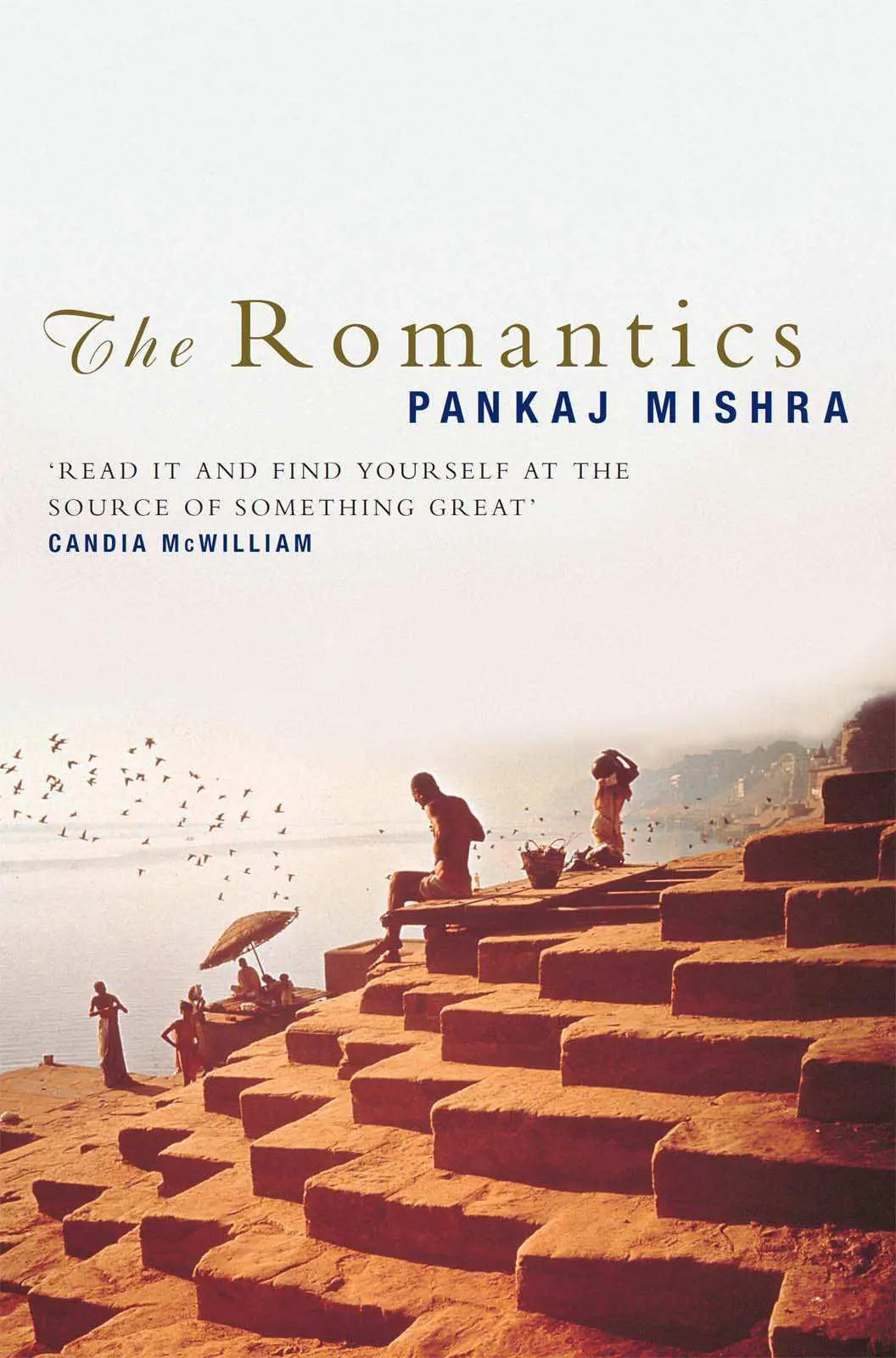
- Название:The Romantics
- Автор:
- Издательство:Anchor Books
- Жанр:
- Год:2001
- ISBN:нет данных
- Рейтинг книги:4 / 5. Голосов: 1
-
Избранное:Добавить в избранное
- Отзывы:
-
Ваша оценка:
The Romantics: краткое содержание, описание и аннотация
Предлагаем к чтению аннотацию, описание, краткое содержание или предисловие (зависит от того, что написал сам автор книги «The Romantics»). Если вы не нашли необходимую информацию о книге — напишите в комментариях, мы постараемся отыскать её.
The Romantics — читать онлайн бесплатно полную книгу (весь текст) целиком
Ниже представлен текст книги, разбитый по страницам. Система сохранения места последней прочитанной страницы, позволяет с удобством читать онлайн бесплатно книгу «The Romantics», без необходимости каждый раз заново искать на чём Вы остановились. Поставьте закладку, и сможете в любой момент перейти на страницу, на которой закончили чтение.
Интервал:
Закладка:
I knew the car with the blue siren belonged to the local superintendent of police. I even knew his name — I had seen it mentioned once or twice in the local newspapers. He was known as a dedicated campaigner against local mafias. I craned my neck to get a better glimpse of him as he passed us, surrounded by a posse of constables. He was a short, corpulent man, and the expression on his face was nervous and fidgety. His cap sat askew on his head, and he walked with the gait of a man with some muscular trouble in the groin.
The man who had replaced Mohan was still haranguing the students to stand firm and refuse to bow to police pressure.
Later everyone, even the local papers, would offer different versions. No one apparently was close enough to see what actually happened. Too many people pressed on to the SP and his men making their way through the crowd. But people did recall seeing the SP’s head suddenly capless; they would remember seeing him turn around angrily and slap the boy hard standing nearest to him; they would remember the boy throwing himself upon the SP with a mighty roar; they would remember the wrestling bodies sprawling into the crowd, which quickly receded and let them fall to the ground.
After that there was chaos.
The policemen left standing beside the jeeps and the white Ambassador panicked, and in their hurry to get to the commotion invisibly developing inside the crowd, they frantically swung their lathis to clear the congestion. In the restricted space allowed them, they couldn’t swing these weapons much. One student got hold of the other end of one of the lathis and snatched it away from the terrified policeman.
This encouraged the students. Angry voices rose in unison. The policemen were easily outnumbered. A few more lathis were snatched away, and even used, and the air was filled with the sickening thwack of wood crashing down on human bones, yelps of pain rising from the crowd.
And then I heard a big boom: it was the kind of noise a big Diwali firecracker makes, except that the sound came through slightly muffled. I turned towards the direction the noise had come from and saw a policeman — not more than twenty; tall and lean, with the beginnings of a faint moustache around his lips — totter forward, his face distorted with agony. He had been hit by something from the back, and as the crowd instinctively cleared behind him, I saw his attacker. It was a young student; his big-collared white shirt stuck to his emaciated torso like a second skin. I noticed his polyester bell-bottoms — seventies-style clothes passed down to him from someone much older in the family. His long, thin arms hanging at his sides, his feet well apart, he watched the policeman fall to the ground with a mixture of fascination and horror on his face.
As the policeman staggered and fell, almost as though in slow motion, watched by colleagues momentarily stunned into stillness, his back came into view; a mess of furrowed skin and blood. His khaki shirt had been torn to shreds, which stuck to red raw chunks of flesh that had been loosened from beneath the skin.
He had been hit by a hand grenade. I had seen the kind before: filled with little rusty nails, it was small enough to be concealed inside a fist and exploded on impact.
Two things happened simultaneously. The bystanders threw themselves to the ground — it was a reflex inspired by action films. And as we did so, there came to us the sound of a large motor vehicle. We looked up to see a large khaki-painted truck coming to a stop behind the parked jeeps. It was part of the original team of policemen, and had somehow arrived late.
The tables turned in an instant. The newly arrived policemen jumped down from the truck and charged into the crowd to rescue their beleaguered compatriots. It was the students’ turn to panic, and most of them simply abandoned the lathis and took to their heels. In seconds, the dense crowd dissolved into so many rapidly lengthening streams, the air suddenly full of the fast patter of leather shoes hitting the asphalt road.
I was one of the students running away fast from the museum, full of fear that my sandals would break and leave me barefoot and stranded. I ran wildly like everyone else. Not knowing where I was going, and concerned only to get as far away as I could from the museum, I ran deeper into the campus. It was after I was some distance away, the sickening sight of the wounded policeman finally out of my eyes, that I took stock of my situation. The police were certain to go after the students now. They would cordon off the area and raid every building in the vicinity of the museum, every building that seemed to harbour students. I wasn’t a student, but looked like one, and the policemen were indiscriminate in their vindictive fury.
I looked around me. I had run a fair distance from the museum; I had crossed the large cricket and football grounds — a handful of students were crossing them now, running towards where I stood. I realized I was very close to Rajesh’s hostel. From where I was I could see the tea stall where he had taken me, and the cupolas on the roof of the hostel. Things looked quieter around here: deserted roads, deserted hostel. It seemed unlikely that the police would come so far as this. It was to Rajesh’s hostel that I went.
He was in his room, but preparing to go out, to the Hanuman temple in the old city, he said, tightening the laces on his tennis sneakers — sneakers no longer muddy, but freshly washed and sparkling white. It was Tuesday, a day of fasting and prayers for him. I told him he couldn’t go, and when he looked at me quizzically I told him my news, panting a bit with excitement and breathlessness.
He listened to me attentively, without a shift in his expression at all. But when I stopped and he looked away, that uncertain look came back to his eyes.
He said nothing for a while. When he spoke it was with his face still averted. He said, ‘I had told you this would happen. Why didn’t you listen? You shouldn’t involve yourself with such people. You are a Brahmin, you are here to study, and that’s what you should do.’
That’s what he had said to me the first time I met him. It irritated me a bit now. I hadn’t involved myself with anyone or anything. I had simply been, like many other bystanders, caught up in the events of the morning. It was true that he had warned me. But I couldn’t have known how or when exactly the students would initiate the disturbances.
And the Brahmin bit didn’t make sense. It smacked of melodrama; it harked back to an India that had long ceased to exist, the India of classical times, where learning and the arts were the almost exclusive province of Brahmins.
But I couldn’t say that to him. Our relationship, so new and unsettled, couldn’t have permitted such frankness. I was still made nervous by him. They weren’t there now, but I hadn’t forgotten the pistols in his room. I didn’t know him at all well, and felt that he could so easily have been the student who attacked the policeman. I wondered if the grenade that was used came from sources known to Rajesh, whose foreknowledge of the events of the morning was one sign of his proximity to the rioters.
But instead of expressing any of these doubts and hunches, I said, ‘There were Communist students in the crowd; also, Hindu nationalists.’
He was unexpectedly quick in his response. ‘No,’ he began, his eyes fixed on me now. ‘No, these were just students. You can’t call them Communists or Hindu nationalists or Congresswallahs.’
He paused. ‘Never make that mistake, never.’ There was a new vehemence in his voice. ‘These were just students with nothing to do, nowhere to go, with no future, no prospects, nothing, nothing at all.’
He went silent again and sat there, his face turned away from me, his shoelaces pulled but still untied.
Читать дальшеИнтервал:
Закладка:
Похожие книги на «The Romantics»
Представляем Вашему вниманию похожие книги на «The Romantics» списком для выбора. Мы отобрали схожую по названию и смыслу литературу в надежде предоставить читателям больше вариантов отыскать новые, интересные, ещё непрочитанные произведения.





Обсуждение, отзывы о книге «The Romantics» и просто собственные мнения читателей. Оставьте ваши комментарии, напишите, что Вы думаете о произведении, его смысле или главных героях. Укажите что конкретно понравилось, а что нет, и почему Вы так считаете.