Pankaj Mishra - The Romantics
Здесь есть возможность читать онлайн «Pankaj Mishra - The Romantics» весь текст электронной книги совершенно бесплатно (целиком полную версию без сокращений). В некоторых случаях можно слушать аудио, скачать через торрент в формате fb2 и присутствует краткое содержание. Год выпуска: 2001, Издательство: Anchor Books, Жанр: Современная проза, на английском языке. Описание произведения, (предисловие) а так же отзывы посетителей доступны на портале библиотеки ЛибКат.
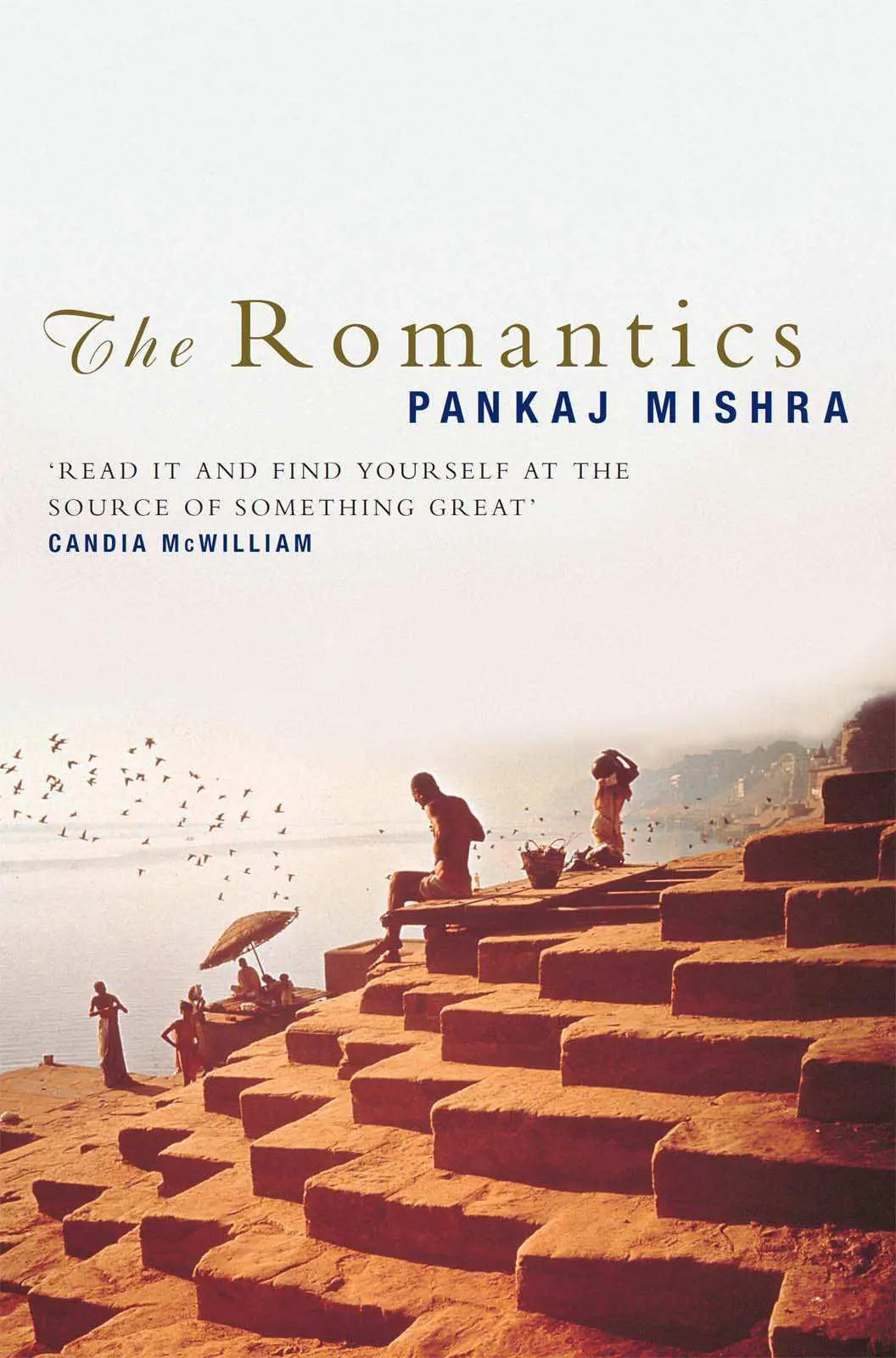
- Название:The Romantics
- Автор:
- Издательство:Anchor Books
- Жанр:
- Год:2001
- ISBN:нет данных
- Рейтинг книги:4 / 5. Голосов: 1
-
Избранное:Добавить в избранное
- Отзывы:
-
Ваша оценка:
The Romantics: краткое содержание, описание и аннотация
Предлагаем к чтению аннотацию, описание, краткое содержание или предисловие (зависит от того, что написал сам автор книги «The Romantics»). Если вы не нашли необходимую информацию о книге — напишите в комментариях, мы постараемся отыскать её.
The Romantics — читать онлайн бесплатно полную книгу (весь текст) целиком
Ниже представлен текст книги, разбитый по страницам. Система сохранения места последней прочитанной страницы, позволяет с удобством читать онлайн бесплатно книгу «The Romantics», без необходимости каждый раз заново искать на чём Вы остановились. Поставьте закладку, и сможете в любой момент перейти на страницу, на которой закончили чтение.
Интервал:
Закладка:
I remember one dappled afternoon — the last of its kind before summer — when I was sitting out on the courtyard of the ashram my father and I were staying at in Benares. I was trying to read when I looked up to see my father walking towards me. How infirm he looks, I suddenly thought with a twinge of pity, how old he was, half leaning on his stick, his hair and moustache a uniform grey, the sun highlighting his deeply lined face.
I stood up as he approached. He came closer, and then stopped and tilted his head sideways to peer at my book. I immediately held it out to him, but he waved it away and, looking me straight in the eye, asked me if I would go with him on a walk through the ghats.
There, amid the crowd of late-evening bathers, my father explained to me his plans for the future. He had decided to wind down his present life. He wanted to retire and move to the Aurobindo ashram in Pondicherry. It was where he had long wanted to go; if he didn’t go now, he would never be able to leave. As for me, he would make all possible arrangements. He had built no house to pass on to me, and there wasn’t much money. But he could set aside a small allowance that would see me through college. After that, it was up to me to make what I could of my life.
He then concluded these abrupt announcements with an even more uncharacteristic personal philosophical statement. He said he had never wanted to get married; his marriage was a mistake from the very beginning, and both he and my mother had suffered for it. Another mistake lay in joining the PWD. But there was no choice for him. It wasn’t anything he ever wanted to do, and he had ended up spending the best years of his life in joyless drudgery. But then, he didn’t have too many regrets about all that any more. Experience had taught him that of such mistakes were most lives compounded.
What he had always desired was freedom: freedom from all bonds that tie one down to the vanities of the world, freedom from all duties and responsibilities to other people. It had come to him at last in old age, with the death of his wife, when he could not take full advantage of it. He was going to make the most of it in the time left to him.
It took him a few more months to wind up his affairs. I was still in Allahabad, and didn’t see him leave for Pondicherry. He wouldn’t have liked that anyway; the sentimentality of goodbyes. He did ask me to visit him during my holidays. But I never went. I sensed the awkwardness of such a visit for both of us. I went instead to Kerala, Kashmir, Darjeeling and Shimla; I stayed in cheap hotels and travelled on buses. I wrote to him about my journeys. He seemed to approve of them in his replies. I wrote to him from Allahabad; my letters grew more brisk and confident.
It was in Allahabad that, amid all the disorder of the university, I was able to carve out my own life. It was a life I wished to continue in Benares when my three years in Allahabad came to an end. Benares was a choice by default. In Allahabad, I had developed no clear idea of what to do or where to go next. I rarely attended classes, and spent the long empty days in the cool arbours of Azad Park, where I would read and read for hours. Away from the chaos of the university there existed a different city of broad sleepy avenues and old colonial mansions peacefully crumbling behind overgrown hedges, and it was there I sought those peculiar delights of the solitary and the eccentric, and even managed to know happiness of a sort.
In my mind’s eye, I see Allahabad now as I often saw it from the top balcony of a high tower in the middle of the university campus, the crinkled green silk of its many trees held down here and there by domes and spires. The epicentre in this toytown of the imagination is the ramrod-straight street down Civil Lines, on which were located, in close proximity, Wheeler’s bookstore and the Palace Cinema. Wheeler’s, as it was called, was bigger and better stocked than the bookstores you would find in a small town. The books were well organized and arranged on long, dusty shelves, and the store was — unheard-of luxury! — air-conditioned. The Palace Cinema offered another, more readily accessible kind of haven for the imagination. It was there that I once watched James Bond cheerfully outwit a global cast of villains in Cuba, Berlin and Rajasthan. From this dizzying world tour I remember emerging through dark staircases not into drab reality, but into an enchanting night, transformed by an inaudible shower into a soft-focus, blurry glimmer, bright lights trembling behind the thin mist rising from puddle-smeared pavements, a lone bicycle rider imprinting a trail of tread marks on the gleaming wet road.
7
IN ALLAHABAD I had been on my own. I found my own byways and cloisters in the city. But in Benares, to which I came seeking little more than an extension of the idle, bookish life I had in Allahabad, I had found myself in a different world. I knew more people, and their presence in my life filled me with new emotions and alerted me to old inadequacies.
Restless and lonely in my room, I began to spend more and more time outside it. I spent the longest time at the university library. Many memories of my days inside its dark, cavernous echoing rooms have survived. The random browsing through the long row of shelves in the badly lit stacks, where students smoked foul-smelling beedis; the fly-infested rough wooden tea stall just outside the main gate, where I would eat, standing up, a hasty lunch of omelette and sticky-sweet tea; the view from my windowside desk of the patch of sunlight carpeting a lawn, the dewy grass ablaze but the neem trees bordering it luxuriantly dark and still; the images speak of a time of serenity and quiet fulfilment, and in so far as they do so, they are not false.
But they edit out a small but significant part of my experience. They do not quite convey the fact that this serenity was precarious, always under threat from the chaos that was the rule in the university in those days, the chaos that I frequently witnessed from close quarters but took for granted.
The university campus had been patterned on some design of the cosmos found in the Vedas; its sylvan seclusion owed much to the Hindu equation between students and hermits. The various departments lay on the diameter of the semicircular plan; behind them were the hostels and playgrounds.
Set in the middle of large lawns and gardens, the buildings looked like products of an extravagant imagination, the predominant style being Indo-Saracenic, a mishmash of neo-Victorian and Hindu-Islamic styles: cupolas, arcades, colonnaded balconies, castellated towers, classical porticoes, domes, minarets, all jumbled up together in stone.
Indo-Saracenic: I knew the name but I didn’t then have much of an idea about architecture. In Allahabad, I had lived among the very first buildings of the Indo-Saracenic style, but the fact had escaped me altogether. The buildings were much like the crumbling colonial mansions elsewhere in the city, sites of decay and ruin. India was full of such buildings. I saw them everywhere; they were too familiar; I asked no questions about them.
This wasn’t complacency, or lack of curiosity. I saw what I saw, but there was nothing to compare it with. Decay and ruin were so much a part of one’s environment that one took no notice of them. It was the visitor, the traveller from other lands, looking to figure out a new place and its people, who brought an inquisitive and trained eye to things one took for granted — as did Catherine, who once asked me about the Hindu University.
She often spoke of her tramps through Benares in a way that attached significance to the smallest things. Coming into the house from somewhere, she would remark on the quality of the light over the river; she would speak of the dappled effect of the water on the rooms of the riverside houses, or mention the fretwork on a particular balcony of a house on Narad Ghat. I was always struck by her great alertness to the world around her, which made her discover style and beauty in the most unexpected places. It made me want to see the city through her eyes, and always pretending to more knowledge than I possessed, I often adopted her opinions about something I knew nothing of.
Читать дальшеИнтервал:
Закладка:
Похожие книги на «The Romantics»
Представляем Вашему вниманию похожие книги на «The Romantics» списком для выбора. Мы отобрали схожую по названию и смыслу литературу в надежде предоставить читателям больше вариантов отыскать новые, интересные, ещё непрочитанные произведения.









Обсуждение, отзывы о книге «The Romantics» и просто собственные мнения читателей. Оставьте ваши комментарии, напишите, что Вы думаете о произведении, его смысле или главных героях. Укажите что конкретно понравилось, а что нет, и почему Вы так считаете.