Pankaj Mishra - The Romantics
Здесь есть возможность читать онлайн «Pankaj Mishra - The Romantics» весь текст электронной книги совершенно бесплатно (целиком полную версию без сокращений). В некоторых случаях можно слушать аудио, скачать через торрент в формате fb2 и присутствует краткое содержание. Год выпуска: 2001, Издательство: Anchor Books, Жанр: Современная проза, на английском языке. Описание произведения, (предисловие) а так же отзывы посетителей доступны на портале библиотеки ЛибКат.
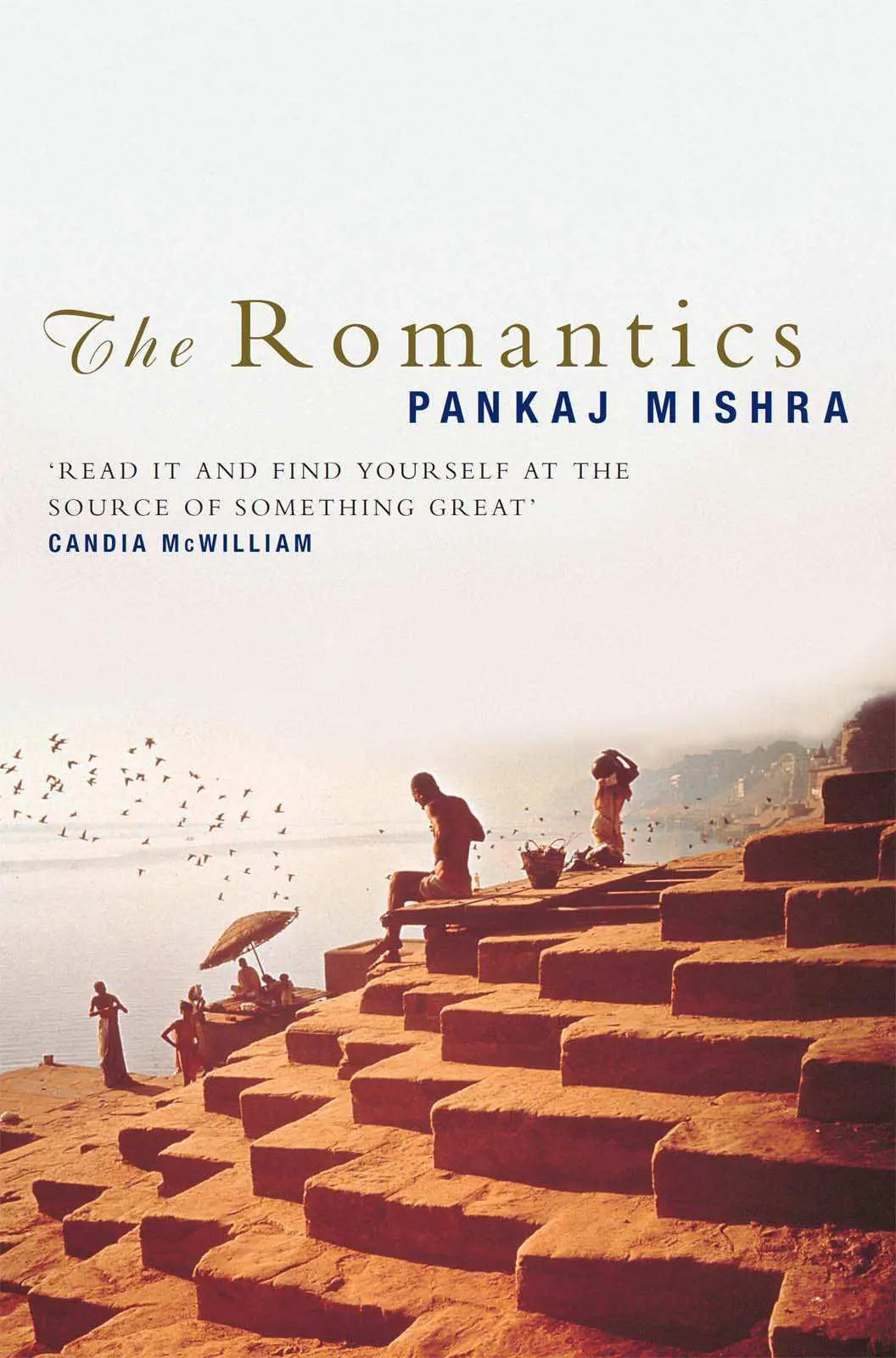
- Название:The Romantics
- Автор:
- Издательство:Anchor Books
- Жанр:
- Год:2001
- ISBN:нет данных
- Рейтинг книги:4 / 5. Голосов: 1
-
Избранное:Добавить в избранное
- Отзывы:
-
Ваша оценка:
The Romantics: краткое содержание, описание и аннотация
Предлагаем к чтению аннотацию, описание, краткое содержание или предисловие (зависит от того, что написал сам автор книги «The Romantics»). Если вы не нашли необходимую информацию о книге — напишите в комментариях, мы постараемся отыскать её.
The Romantics — читать онлайн бесплатно полную книгу (весь текст) целиком
Ниже представлен текст книги, разбитый по страницам. Система сохранения места последней прочитанной страницы, позволяет с удобством читать онлайн бесплатно книгу «The Romantics», без необходимости каждый раз заново искать на чём Вы остановились. Поставьте закладку, и сможете в любой момент перейти на страницу, на которой закончили чтение.
Интервал:
Закладка:
‘I don’t think it is a good idea to rank writers like that,’ Catherine said, a slight touch of reproof in her voice. ‘There are so many we don’t get to read.’ She paused and then added: ‘Personally, I like Kundera. He says serious things about contemporary life.’
I could also hear Miss West talking to Sarah and Mark about a new guru who had appeared in Lucknow and acquired a large following among European and American tourists — ‘seekers’, as Miss West usually called them, with a derisiveness she was now underplaying in deference, I surmised, to Sarah, who was a ‘seeker’ in her own way.
With these conversations humming in the background, my mind wandered to Rajesh, whom I had seen at the library earlier in the day. Surrounded by his hangers-on, he had talked about the possibility of student violence in the coming days. He had got the students worried; they had started to talk among themselves of leaving the university before they were caught up in the police crackdown that followed such student-inspired disturbances. I remembered briefly what they had said, and as I did so I remarked to myself at the same time about the great chasm between where I was — sitting here in Mark’s house, an expatriate corner of Benares, among foreigners who fascinated me endlessly — and the life I led at the university, whose problems from this remote distance appeared uninteresting and petty.
Catherine and Debbie were still talking about Kundera. Debbie was saying, with a combative tone in her voice, ‘The great thing about these European novels and films is that they have no inhibitions about sex and nudity. . It’s all presented so naturally, not like America, where you have these disgusting middle-class moralists like Jesse Helms. . and you end up distorting everything.’
‘But that’s not Kundera’s point,’ Catherine protested. She was suddenly aware that I was listening, and flashed a brief smile at me. ‘In fact, nudity for Kundera is partly this state of unbearable lightness. And actually the movie has been made by an American . It’s not a European film.’
‘I am not saying that that was the film’s point,’ Debbie retorted. ‘I mean it in the way the characters behave towards each other, towards their own bodies, being so unashamed about their desires. . I don’t know. .’
The conversation went on for some time, until Debbie said, ‘Oh, God, it’s getting cold,’ and went, much to my relief, to change into warmer clothes. Catherine glanced at me once or twice while talking, as if inviting me to say something. But I kept quiet. I hadn’t read the books or seen the films that were mentioned, and even if I had, the terms in which they were discussed were so unfamiliar to me that I wouldn’t have been able to say much with any degree of confidence.
*
Catherine seemed restless and troubled when I saw her together with Miss West towards the end of the visit. In that mood she was unexpectedly frank. Talking about the trouble with her parents, she digressed into a description of their marriage, which, from her account, wasn’t a particularly happy one. Catherine blamed her father for this. He was, she said, vain, arrogant, short-tempered. She herself had never got on well with him. She had rebelled early, and from that point she never sought his permission for anything. When she was sixteen, she one day declared her intention of going off to Germany for a few weeks. He said no. She ignored him altogether. He raged for days after she left. The same had happened when she came to India. He had now given up trying to control her life.
But she feared his reaction to Anand. Her mother, with whom she got on better, had barely accepted him; her father’s rejection was almost certain. He was a conservative man, a Catholic; he could still disapprove, in this day and age, of premarital sex. He could never approve of her relationship with a poor Indian.
And his approval was important. In a few weeks they were to go to live in France, where her life would have to be partly subsidized by him until Anand’s situation changed. And that’s why it was important that the concerts be arranged, that Anand have some kind of performance record and income.
But Anand, she said, had created more problems. He had lied to his parents about the sources of his livelihood in Benares. He had unwisely invented a fabulously well-paid sitar-playing career for himself. His parents had naturally demanded to know why hadn’t he, if he was so flush with money, sent some their way; why hadn’t he wanted to improve his sisters’ chances of early marriage? So now, in order to maintain this deception, Catherine had to send part of her own salary to Anand’s parents. She didn’t mind the money bit at all, she said with a dismissive shrug; it wasn’t much anyway. It was the lies she couldn’t deal with.
Miss West said, ‘I am so sorry to hear this, I really am. It shouldn’t happen this way. But this is not an ideal situation. These things are inevitable given the disparities, I mean the differences in terms of money and background, things like that. But I wouldn’t worry too much if I were you. I am sure it’ll work out in the end, one way or another.’
I listened, feeling embarrassed by Catherine’s disclosures, and said nothing.
I was walking home alone — Miss West having gone off to Godhulia on her own for some shopping — when it occurred to me that in some unconscious way Catherine may have been speaking for my benefit. It was a flattering supposition, and I almost dismissed it at first for that reason. But it seemed more plausible when I thought of my last visit to Catherine’s house. After all, Miss West already knew of the events of Anand’s past that Catherine spoke of so passionately; they were what she had had in common with Catherine since the time she had introduced her to Anand at one of her musical soirées. Catherine’s words were perhaps meant for me more than either of us realized, and I now felt I should have said something to her — even if it was little more than the slightly banal generalities Miss West uttered on such occasions.
I couldn’t see it then, but for Miss West, Anand’s welfare was a small private concern, which coexisted with the doubts about his artistic potential she had recently admitted to me. For Catherine, lonely and insecure in Benares, it was nothing less than a cause, and she seemed to want it to be shared, or at least known, by more people.
It was clear to me even on that evening in her house — listening to her quietly emotional voice in that darkening room, the fluorescent tube outside flickering away — that the stories about Anand’s childhood had affected her deeply. What wasn’t apparent to me then was that in telling them, she wanted to have their injustice acknowledged by others. She also wanted to protect Anand and keep him from further hurt.
This was her primary motivation, and now after the new complications created by her own and Anand’s parents, with these growing troubles, she needed to have it attested by others; she needed to know if she was doing the right thing.
*
Anand, when I next met him, was already looking forward to going to Paris; he spoke of this with the curious serenity that I had seen come over him, the serenity that came from his belief that with Catherine by his side, things could not but turn out well for him. Paris had become for him a locus of several desires. He spoke solemnly about the visit as expanding the narrow vision he had inherited from his rustic background; he spoke with childlike enthusiasm about the sold-out concerts he would give, the best-selling recordings he would make. I had already heard him speak at Miss West’s party of the school he wished to set up for talented and needy sitar players; he expanded on the subject now, speaking as though the school were already a reality.
Читать дальшеИнтервал:
Закладка:
Похожие книги на «The Romantics»
Представляем Вашему вниманию похожие книги на «The Romantics» списком для выбора. Мы отобрали схожую по названию и смыслу литературу в надежде предоставить читателям больше вариантов отыскать новые, интересные, ещё непрочитанные произведения.










Обсуждение, отзывы о книге «The Romantics» и просто собственные мнения читателей. Оставьте ваши комментарии, напишите, что Вы думаете о произведении, его смысле или главных героях. Укажите что конкретно понравилось, а что нет, и почему Вы так считаете.