Rabih Alameddine - The Hakawati
Здесь есть возможность читать онлайн «Rabih Alameddine - The Hakawati» весь текст электронной книги совершенно бесплатно (целиком полную версию без сокращений). В некоторых случаях можно слушать аудио, скачать через торрент в формате fb2 и присутствует краткое содержание. Год выпуска: 2009, Издательство: Anchor, Жанр: Современная проза, на английском языке. Описание произведения, (предисловие) а так же отзывы посетителей доступны на портале библиотеки ЛибКат.
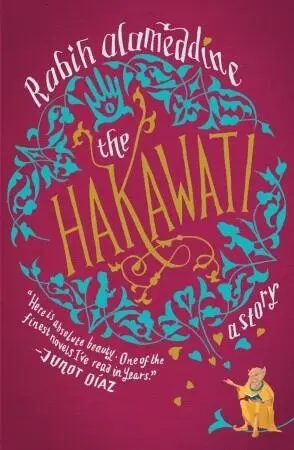
- Название:The Hakawati
- Автор:
- Издательство:Anchor
- Жанр:
- Год:2009
- ISBN:нет данных
- Рейтинг книги:4 / 5. Голосов: 1
-
Избранное:Добавить в избранное
- Отзывы:
-
Ваша оценка:
The Hakawati: краткое содержание, описание и аннотация
Предлагаем к чтению аннотацию, описание, краткое содержание или предисловие (зависит от того, что написал сам автор книги «The Hakawati»). Если вы не нашли необходимую информацию о книге — напишите в комментариях, мы постараемся отыскать её.
, or storyteller, and his bewitching tales are interwoven with classic stories of the Middle East. Here are Abraham and Isaac; Ishmael, father of the Arab tribes; the beautiful Fatima; Baybars, the slave prince who vanquished the Crusaders; and a host of mischievous imps. Through Osama, we also enter the world of the contemporary Lebanese men and women whose stories tell a larger, heartbreaking tale of seemingly endless war, conflicted identity, and survival. With
, Rabih Alameddine has given us an
for this century.
The Hakawati — читать онлайн бесплатно полную книгу (весь текст) целиком
Ниже представлен текст книги, разбитый по страницам. Система сохранения места последней прочитанной страницы, позволяет с удобством читать онлайн бесплатно книгу «The Hakawati», без необходимости каждый раз заново искать на чём Вы остановились. Поставьте закладку, и сможете в любой момент перейти на страницу, на которой закончили чтение.
Интервал:
Закладка:
After the king died, Shah Jamak assumed the throne and made his brothers viziers and declared that they would rule the land together. But his brothers plotted to kill him, because the twins, evil and envy, had taken root in their hearts. In the middle of the night, the brothers tied Jamak up while he slept and put him in a large bag. They gave the bag to a warrior slave and commanded him to carry it to the desert and stab it twenty-one times, until it was drenched in red.
The warrior followed orders. In the desert he took out his sword. The voice in the bag said, “Who are you?” to which the warrior replied, “I am your death.”
“That cannot be,” said Jamak, “for my death should be honorable and require to see its victim’s face.” The honest warrior felt shame. He let the king out of the bag. “I have never killed an unarmed man before,” he admitted.
“And you should not start now.” Jamak turned and walked into the desert.
Jamak walked and walked, across flatlands and hills, until, one day, not far from the city of Samarkand, he saw a lion attacking an old man on a horse. The old man called out for help, for he no longer had the strength to fight off the beast. Jamak said to the lion, “Come meet your conqueror.” Unarmed, Jamak held his ground as the lion veered toward him. Just when the beast was about to pounce, the old man, with his last remaining strength, threw his sword to the young savior. With one movement, Jamak caught the sword, drew it from its scabbard, struck the lion’s skull, and killed it. Jamak wiped the blood from the sword onto the lion’s red mane, returned the weapon to its master, and said, “You live another day, Father.”
The old man thanked Jamak and begged him to stay with him so he could honor him as his guest. The two men rode into Samarkand, and a large procession greeted them. Jamak realized he was sharing a horse with the city’s king. “My lord,” Jamak asked, “why were you riding alone when you could have had an army accompany you?”
And the king replied, “I was hunting with my friends, and I saw a doe and stalked it, but I could not get close enough. I followed it until I got lost, and that was when you showed up, at the perfect moment.” The king asked Jamak for his story. The old man admired the shah’s courage, nobility, and wherewithal. He made Jamak a vizier and married him to his daughter, Heather.
The king of Samarkand died, and Jamak ascended to the throne. He ruled justly and honored the heroes who in turn loved him and obeyed him. God blessed him with five sons, the youngest, Mahmoud, being his favorite. One day, the shah went to Friday prayers and saw his brothers, Talak and Lamak, begging outside the mosque. He called his servants and said, “Take these men to the baths, wash them, dress them in the finest clothes, and bring them back to me.” Back at the palace, when Jamak’s eyes fell upon his brothers, who now appeared as he remembered them, he hugged them. He sat them beside him and inquired after their health. The brothers said, “We are here because we missed you so much. We left our lands and lost everything trying to find you. We thank God that you are alive and safe and prosperous.” And Jamak welcomed them and made them viziers. Yet, before long, envy and evil grew even mightier in their hearts.
The brothers had fallen upon hard times. Once Jamak was out of the way, they had ruled the land with darkness and contempt. After much abuse, the people had rebelled and captured the two fake kings, intending to execute them. The brothers begged desperately and dishonorably for their lives. The people released them into exile and found an honest man to rule.
Now the brothers noticed how much Jamak loved Mahmoud, and they formed a plan. They would kidnap Mahmoud and demand the king’s treasury in return. During the night, the brothers tied up the young prince and rode away with him while everyone slept. When the shah discovered that his brothers had disappeared with his son, he cursed his brothers and berated himself for his foolishness. Queen Heather cried and dressed in mourning black.
The brothers took their nephew to a cave and kept him roped, intending to slay him after they received the ransom. They left Mahmoud by himself while they went out to hunt and forage for food. Once they were gone, the prince cried for help. A Persian dervish happened to be passing by, and he rescued the boy. The Persian decided to take Mahmoud to Bursa, where he could sell him for a good price. The prince grew very sick, and the Persian took him to the baths and sold him to a slave-trader who happened to be there because of the fine management of fate.
The king thanked the Uzbeks for their story. He turned to the prince and said, “My son Baybars, you are not a slave.” And Baybars said, “Praise be to the Almighty.”
And that was how Prince Baybars became a free man.

It was the first time I had seen Istez Camil since my grandfather’s funeral. He had shown up for the first day of condolences, but I had been at school. No music was played during the mourning period. Istez Camil seemed more jittery than normal, tired and haggard. He was dressed in a white shirt with moon-shaped sweat stains under his arms, and a pair of thin gray cotton slacks, short at the ankles and chafed at the knees.
Whatever I played seemed easy. Notes flowed from my fingers with a newfound skill. Istez Camil shook his head. His lips were pale, the whites of his eyes unusually flat. “You’re not getting it,” he huffed.
“Not getting what?” I stopped playing, stared at him. “I think I’m playing well, very well, no mistakes.”
“Cascade of grace, remember? This is a cascade of grace no more.” He wouldn’t look at me. “You’re hitting the right notes, but there’s more to this than that.”
“It, this, that,” I snapped. “I’m playing well.” I refused to look at him, too, now. Shocked at my fledgling audacity, I lowered my voice. “You say I’m not but won’t tell me exactly what it is you want, what it is I’m supposed to do. More feeling, more feeling. I’m feeling it now. How can you tell whether I’m playing with feeling or not?”
“I can tell,” he said slowly, “and you can tell.” He stood up, turned his back to me again, and stared out the picture window. “You have to be more honest with yourself. You have to.”
“I’m playing well,” I insisted. I whispered to my shoes, “This is who I am.”
The resumption of my oud lessons wasn’t enough for my sister. She waited for the day when my father began whistling again while shaving in the morning. That afternoon, she shut the door to her room and resumed blasting her insufferable music at full throttle , as my father called it. He would ask her to lower the volume, and she would for a few minutes, before reclaiming the air.
Except I no longer found the music insufferable. I began to discern its simple charms. I also began to discern Jimmy Page’s solos, to guess at Eric Clapton’s peculiar handiwork.
One afternoon, I opened her door without knocking, and found her experimenting with colored eyeliners. She glared at me through her vanity mirror. The space was pregnant with tension and the acidic scent of many perfumes. I lay on her bed and stared at the ceiling. She didn’t say anything. The rustle of my blood coursing through its veins echoed the rhythm of the base. My head buzzed. “Play something weird,” I said when the song ended.
“Kiss my ass, stupid,” she said over her shoulders. “Be like furniture and shut up.” When she stood, I noticed she was wearing tight mauve shorts that clung to her curves like a wet bathing suit.
“I don’t know if that’s a good idea.” My head was propped up on her pillows, and I followed her with my eyes. “You know your father won’t like it.”
Читать дальшеИнтервал:
Закладка:
Похожие книги на «The Hakawati»
Представляем Вашему вниманию похожие книги на «The Hakawati» списком для выбора. Мы отобрали схожую по названию и смыслу литературу в надежде предоставить читателям больше вариантов отыскать новые, интересные, ещё непрочитанные произведения.










Обсуждение, отзывы о книге «The Hakawati» и просто собственные мнения читателей. Оставьте ваши комментарии, напишите, что Вы думаете о произведении, его смысле или главных героях. Укажите что конкретно понравилось, а что нет, и почему Вы так считаете.