Rabih Alameddine - The Hakawati
Здесь есть возможность читать онлайн «Rabih Alameddine - The Hakawati» весь текст электронной книги совершенно бесплатно (целиком полную версию без сокращений). В некоторых случаях можно слушать аудио, скачать через торрент в формате fb2 и присутствует краткое содержание. Год выпуска: 2009, Издательство: Anchor, Жанр: Современная проза, на английском языке. Описание произведения, (предисловие) а так же отзывы посетителей доступны на портале библиотеки ЛибКат.
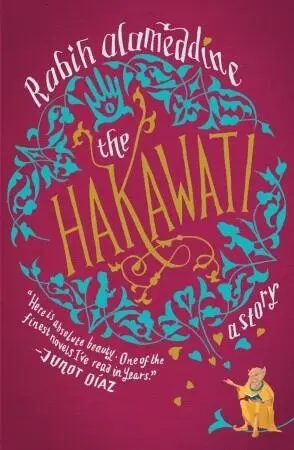
- Название:The Hakawati
- Автор:
- Издательство:Anchor
- Жанр:
- Год:2009
- ISBN:нет данных
- Рейтинг книги:4 / 5. Голосов: 1
-
Избранное:Добавить в избранное
- Отзывы:
-
Ваша оценка:
The Hakawati: краткое содержание, описание и аннотация
Предлагаем к чтению аннотацию, описание, краткое содержание или предисловие (зависит от того, что написал сам автор книги «The Hakawati»). Если вы не нашли необходимую информацию о книге — напишите в комментариях, мы постараемся отыскать её.
, or storyteller, and his bewitching tales are interwoven with classic stories of the Middle East. Here are Abraham and Isaac; Ishmael, father of the Arab tribes; the beautiful Fatima; Baybars, the slave prince who vanquished the Crusaders; and a host of mischievous imps. Through Osama, we also enter the world of the contemporary Lebanese men and women whose stories tell a larger, heartbreaking tale of seemingly endless war, conflicted identity, and survival. With
, Rabih Alameddine has given us an
for this century.
The Hakawati — читать онлайн бесплатно полную книгу (весь текст) целиком
Ниже представлен текст книги, разбитый по страницам. Система сохранения места последней прочитанной страницы, позволяет с удобством читать онлайн бесплатно книгу «The Hakawati», без необходимости каждый раз заново искать на чём Вы остановились. Поставьте закладку, и сможете в любой момент перейти на страницу, на которой закончили чтение.
Интервал:
Закладка:
My mother seemed lost and despondent. She slumped in her chair, back bent, head down, staring at her shoes. More of the ladies cried, and Aunt Samia wailed. The wail woke my mother up. She stood up straight, looked at me, then at Lina across the room, next to my father. She arched her eyebrows when she caught Lina’s eye. My mother wiped her mouth, and Lina took out a tissue and wiped her lipstick off hers. My mother walked over to my father and began whispering in his ear. He nodded once, twice. He shook his head no. He nodded again. And life revisited his face.
It wasn’t an accident that Aladdin was Chinese.
“Once, a long, long time ago, in the land of China,” my grandfather used to start his tale, “there was a mischievous boy called Ala  eddine.”
“Why China?” I would ask.
“The Druze and the Chinese are related,” he would reply.
I didn’t look Chinese. I once asked my father if it was true, and he dismissed it as one of my grandfather’s ramblings. So did my mother. “Well, you see,” my grandfather had said, “the Druze believe that when someone dies the soul instantly jumps into the body of a baby being born. So we’re supposed to be able to figure out who was reincarnated into whom. There aren’t that many Druze. The wise men of the Druze, and you know they’re not that wise, realized there was a problem. A Druze would die, and there’d be no one who was born at that same instant. They had to be born somewhere, you see. The dead were sometimes born in China, the land of a thousand dawns. The Chinese believe in reincarnation, which could mean they’re related to the Druze. And, most important, China is far enough away so that no one can check. The Chinese get born over here, and we’re reborn in China.”
When I repeated that to my mother, she thought it was ridiculous.
Yet, as we sat in the living room the day my grandfather died, Ghassan Arisseddine, one of my father’s older cousins, announced quietly to the room, “Lucky are the gentle people in China for receiving you in their midst at this hour.” Neither my mother nor my father flinched.
The family met at eight in the morning to accompany the coffin from the morgue to the village, to the bey’s mansion, where the funeral was being held. The hearse led a motorcade of thirty cars on an agonizingly slow drive up the mountain.
I sat behind my mother in our car — an unhurried, hushed, uphill ride. At a donkey’s pace, the journey’s markers strolled by unfamiliarly, the orange orchard, the three banana groves in a row, the unmarked turnoff, the protruding rock that looked like a detrunked elephant. The lush blue shore that should have danced only shimmied. The change from the green of pines to that of oaks took longer; the shades of ocher lingered, imprinted strange blends onto my retinas.
My mother broke the silence once. “It’s not a good idea to have an open casket.”
My father guided me toward a pavilion where the men gathered. Hundreds of white plastic chairs were set in rows facing another row of chairs with faded russet cushions. The bey, his brother, and his two sons approached our family; all exchanged kisses and condolences. My father had told me to reply with “May you be compensated with your health” to anything that was said to me. There was discussion and insincere protestation about seating arrangements. As the eldest male, Uncle Wajih had the main seat, and the bey sat next to him. Uncle Jihad took the end chair, and I the next one. My father maneuvered himself next to me. The bey’s brother ran up to my father and offered to exchange seats. My father begged off. “I’m sure the seating will be rearranged when others begin to arrive.”
And we sat in silence. My father didn’t bat an eyelash. He gazed at the rows of empty chairs facing him. Uncle Jihad stared to his right, down the hill, at the undulating olive orchards beneath us. A damp, cold gust brushed and licked my face. Uncle Jihad pulled his jacket across his chest. He wept silently. My father didn’t. “Are you warm enough?” Uncle Jihad asked me.
As if planned and coordinated, the residents of three villages arrived at the same time. The men and women separated at the gate of the bey’s mansion and marched up the delicate incline. The women nodded toward us as they ambled by. Before us, the men arranged themselves in a line, whose order, who stood where and next to whom, seemed predetermined. They covered their hearts with the palms of their hands, uttered in unison something I couldn’t understand. My father and uncle and all the men in our line made the same gesture and replied in a different incomprehensible sentence. Their line snaked toward ours; their hands shook our hands. Most of the men kissed the bey’s hand.
The Christian families didn’t perform the same ritual. Neither did the Muslims. All paid their respects. Friends kissed in greeting. Whenever a man of some import appeared, he was given a seat in the family line: You are family. The special men accepted condolences for a couple of rounds before moving into the anonymity of the guests. The Ajaweed, the Druze religious, sat in the first row facing us, fully decked in their traditional outfits.
The bey moved next to my father. He was much older than my father and looked it. He wore an English-cut suit and an awkward-looking fez. “My father loved yours,” he said, twirling his white mustache with thumb and forefinger. A man from a lost era.
“And for that,” my father replied, “we are eternally grateful.”
“If you need anything in these trying times, our family will do whatever it takes.”
“And your generosity is boundless,” my father said to the bey.
They both stood up to greet the new arrivals, the ritual beginning again. As if it were a magician’s trick, Uncle Jihad now sat next to the bey, and my father was on my other side.
“We were so happy to hear the news,” Uncle Jihad said, covering his eyes with dark sunglasses. “A worthy grandson at last. Our family was overjoyed for yours.”
“A birth is always happy news,” the bey said. He flushed, and his eyelashes fluttered spastically in my uncle’s direction.
“The birth made us happy,” my uncle said, “but it wasn’t what brought joy to our hearts. The miraculous news is that the boy looks exactly like you. God smiled upon us.”
The bey giggled and jiggled, tried to stifle his mirth. “Yes, the little bey takes after me.”
“And God raised the degree of difficulty for the ladies of his generation. How will they be able to resist the little rascal’s charms?”
The bey slapped his thigh, and his Jell-O-mold paunch shivered in glee. “How will they indeed?”
We stood up for the next batch. When we sat down, my father’s seat was empty. He sat between his two older brothers. Already bored, Anwar and Hafez elbowed each other. I spent my time counting suits, sports jackets, and religious Druze dress. I counted three fez hats, twenty-three Ajaweed hats, one Borsalino, and seventeen bald heads. The sky lowered, and a spring fog ascended. From the valley below, the thin mist rose languorously toward us, obstructing our view of Beirut. Normally, the whole city could be seen, the multistory buildings along the coast, the old Mediterranean houses, the airport with its crisscrossing beachfront runways. All went blank. I concentrated on the fog, now a translucent layer covering the olive groves. It would rise and cover, in order, the loquat trees, the lemons, the mulberries, and the fig trees. The fog made the village appear to be wobbly, wavering atop a precipice.
Upon seeing a skinny man in an ill-fitting suit walking to a jerrybuilt podium, the cliques of chatterers hushed. He began to recite poetry in a nasal voice, sang beautifully, like a goldfinch with a slight cold. The mood shifted. The poet recalled my grandfather, sang about his family and those left behind. When the poet brought up the years of service to the bey, he called my grandfather the bey’s friend, not his servant. The bey’s face molded into sad at the mention of his own deceased father’s name. A few seats away, Uncle Wajih coughed and cleared his throat in an unsubtle attempt at disguising tears. My father remained stoic.
Читать дальшеИнтервал:
Закладка:
Похожие книги на «The Hakawati»
Представляем Вашему вниманию похожие книги на «The Hakawati» списком для выбора. Мы отобрали схожую по названию и смыслу литературу в надежде предоставить читателям больше вариантов отыскать новые, интересные, ещё непрочитанные произведения.








Обсуждение, отзывы о книге «The Hakawati» и просто собственные мнения читателей. Оставьте ваши комментарии, напишите, что Вы думаете о произведении, его смысле или главных героях. Укажите что конкретно понравилось, а что нет, и почему Вы так считаете.