Rabih Alameddine - The Hakawati
Здесь есть возможность читать онлайн «Rabih Alameddine - The Hakawati» весь текст электронной книги совершенно бесплатно (целиком полную версию без сокращений). В некоторых случаях можно слушать аудио, скачать через торрент в формате fb2 и присутствует краткое содержание. Год выпуска: 2009, Издательство: Anchor, Жанр: Современная проза, на английском языке. Описание произведения, (предисловие) а так же отзывы посетителей доступны на портале библиотеки ЛибКат.
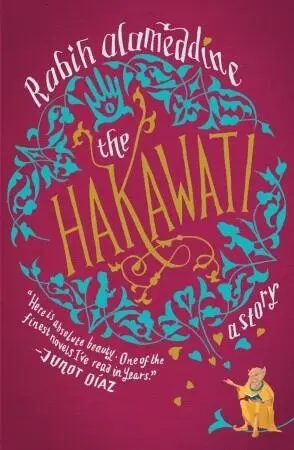
- Название:The Hakawati
- Автор:
- Издательство:Anchor
- Жанр:
- Год:2009
- ISBN:нет данных
- Рейтинг книги:4 / 5. Голосов: 1
-
Избранное:Добавить в избранное
- Отзывы:
-
Ваша оценка:
The Hakawati: краткое содержание, описание и аннотация
Предлагаем к чтению аннотацию, описание, краткое содержание или предисловие (зависит от того, что написал сам автор книги «The Hakawati»). Если вы не нашли необходимую информацию о книге — напишите в комментариях, мы постараемся отыскать её.
, or storyteller, and his bewitching tales are interwoven with classic stories of the Middle East. Here are Abraham and Isaac; Ishmael, father of the Arab tribes; the beautiful Fatima; Baybars, the slave prince who vanquished the Crusaders; and a host of mischievous imps. Through Osama, we also enter the world of the contemporary Lebanese men and women whose stories tell a larger, heartbreaking tale of seemingly endless war, conflicted identity, and survival. With
, Rabih Alameddine has given us an
for this century.
The Hakawati — читать онлайн бесплатно полную книгу (весь текст) целиком
Ниже представлен текст книги, разбитый по страницам. Система сохранения места последней прочитанной страницы, позволяет с удобством читать онлайн бесплатно книгу «The Hakawati», без необходимости каждый раз заново искать на чём Вы остановились. Поставьте закладку, и сможете в любой момент перейти на страницу, на которой закончили чтение.
Интервал:
Закладка:
“I’m not going to wear this to school. It’ll be all right.”
I didn’t argue. She walked to the closet. For the previous few years, it seemed to me she had been growing taller with each step she took. I remained uncomfortable with the size and shape of her shorts, which made her look unnatural and unfamily. On the floor, next to her feet (in laced-up knee-high black boots), was an album with the face of a man wearing more makeup than she was. “Play that,” I said.
“Shut up,” she replied. “If you want to be in here, you can’t talk.”
The next afternoon, I was back on her bed. She played David Bowie. I was like furniture.
The October War started a few months later. We were winning, yet few seemed to believe it. The Syrians and the Egyptians surprised the Israelis. Radios once again unequivocally blared the Arab victory. “Wait,” my father said. “The Americans won’t let this happen.”
At school, the Palestinian boys beamed, a manifest bounce in their step. They believed it. The student council called for a strike in support of the war. There were supposed to be speeches, but I went home. I saw Lina smoking a cigarette at the mouth of the building’s garage. Elie straddled his idle motorcycle and talked to her. I wondered whether the mauve shorts were to impress him. From afar, Elie, like the Palestinian boys, looked as if he believed.
I lay on Lina’s bed and listened to Deep Purple. She arrived angry, carrying a guitar. “I need you to learn to play.”
“There’s a war going on,” I replied because I had to say something.
“Who cares?” she said. She handed me the guitar as she stormed to her album rack. “You have to play, and you have to play well, and you have to make it look easy, and you have to do it by Saturday night. We have two days. Two days to figure out what you’re going to play and how you’re going to play it impeccably.” She rifled through her collection and picked out Abbey Road . She scratched the Deep Purple album as she quickly removed it from the turntable without replacing it in its cover. “This is what you have to learn. It’s impressive.”
The opening notes of “Here Comes the Sun.”
I had to take the guitar to school. While various student leaders gave speeches, I played in a corner of the cafeteria’s outdoor terrace. Oblivious to anything else, I didn’t hear the Israeli plane until it was right above me, flying low, its noise deafening.
Two seniors sat on the floor next to me, startling me. “Don’t mind us,” one of them said. I knew of him, but never imagined that he’d talk to me. He was the son of a Lebanese woman and a Kuwaiti prince, although he didn’t look it. He was never seen in anything but dirty T-shirts, sweats, and jeans. He had only one pair of sneakers. I guess he desperately wanted to look more like an American than an Arab prince. He didn’t smell as awful as his friend, though.
“Go on,” his friend said. “We can listen.”
“Better than those dumb speeches,” the first added.
I replayed the opening. The Kuwaiti started to sing, and his friend joined him. I was surprised, since I hadn’t considered vocals. I had memorized the song, but hadn’t thought of actually singing it. I wasn’t sure I wanted the song enunciated. I stopped playing. The Kuwaiti raised his eyebrow. “I’m not very good yet,” I said. “I’m just learning.”
“I can tell,” he said. I paused. “That’s not a guitar pick.”
“It’s for the oud. That’s what I play.”
“The oud is for old-fashioned Arabs,” he said. I no longer wished to be an old-fashioned Arab. He extended his hand toward my modern guitar. “Here, let me play.”
He didn’t use a pick, sang a folk song in an American or Australian accent. His playing was bad, and his friend shook his head to an inconsistent beat. The Kuwaiti prince asked me if I liked the song as he handed me the guitar. I told him I did, and his face relaxed, looked grateful.
“I wonder if the speeches are done,” his friend said as they stood up.
“Can you imagine what would happen if we win a war?”
“We almost won. Maybe next time we will.”
I didn’t think they believed. I resumed playing.
• • •
On Saturday, I played “Here Comes the Sun” for Lina. She was impressed, though not as surprised as I thought she’d be. “Aren’t you going to sing?” she asked. I told her that would require more practice, since I had never sung before. She didn’t seem to mind.
That afternoon, we left home sans guitar. Lina wore wild makeup and her mauve shorts. She looked like she’d fit better on Carnaby Street than in Beirut. We rode the bus four stops, and ended up at a coterie of buildings similar to ours, but much more upscale, seven buildings of nothing but marble and glass. She led me into one whose lobby was enclosed, air-conditioned, and stark. In the elevator she suggested that I not talk too much.
A girl my sister’s age opened the door. She had two pigtails that began at the top of her head and descended ungracefully to her shoulders. “You brought your little brother?” The left corner of her mouth crunched up to meet her eye. “Yes,” my sister replied and walked by her into the apartment. I hurriedly followed. I didn’t need to be told that Pigtail Girl was the reason I had to play the guitar, that she had done something to offend Lina.
A dozen boys and girls milled about the large glass-enclosed balcony, chatting noisily and ignoring the rock music. “Try this,” Lina said, pointing to an orange beanbag, and she joined two other girls.
All the teenagers ignored me. They seemed preoccupied with looking modern, cool, and Western. I concentrated on the music, helped myself to a bottle of Pepsi. My sister kept throwing glances at a tall blond boy across the room from her. He seemed too sure of himself, used to being the center of attention, and welcomed it with a modicum of disdain. With Lina, there was no modicum; her disdain was unequivocal and unfettered. Her glances grew less subtle and more hateful. I wondered where he fit in the unfolding drama. I didn’t wonder for long.
Pigtail Girl walked into the room with a guitar. The instant the blond guy saw her, he lifted his arms as if warding off evil. “You have to play for us,” she said, turning the music off.
“No, no,” he said. “I don’t want to ruin the mood.”
“Please,” the girl insisted. “For me.”
My sister struck as quickly as a famished cobra. She snatched the guitar out of Pigtail’s hand. “He doesn’t have to,” she said, as she walked toward me. “The little shrimp here can play. He’s not bad.” She handed me the instrument and plopped herself next to me on the beanbag. “Play,” she ordered, nudging me with her elbow.
I played. My sister began to sing. Her two girlfriends joined in after the second verse. I didn’t look up from the guitar, too nervous. The singing wasn’t very good, but by the last verse, half the company had unleashed their voices.
“That was great,” one of the girls said. “Let’s do it again.”
My sister wouldn’t have been able to contain her glee had she cared to. She looked as if she’d eaten a whole jar of fresh honey. She wasn’t the only one; her two friends were laughing.
“Let’s not,” Pigtail said. “Let’s go back to real music now.”
“Let’s have your boyfriend try to play,” Lina said.
“No,” he snapped.
“Play another song,” one of Lina’s friends shouted to me. “You’re good.”
“I’m learning how to play,” I said quietly. “I don’t know many songs.”
“Another song, please.”
“It’s okay,” my sister said. “One song is enough for now.”
“I can play another song if you can sing it,” I told her. She looked puzzled. I opened “Something.” Her eyes grew wide and their whites glimmered. She began to sing, too loudly, too happily.
Читать дальшеИнтервал:
Закладка:
Похожие книги на «The Hakawati»
Представляем Вашему вниманию похожие книги на «The Hakawati» списком для выбора. Мы отобрали схожую по названию и смыслу литературу в надежде предоставить читателям больше вариантов отыскать новые, интересные, ещё непрочитанные произведения.










Обсуждение, отзывы о книге «The Hakawati» и просто собственные мнения читателей. Оставьте ваши комментарии, напишите, что Вы думаете о произведении, его смысле или главных героях. Укажите что конкретно понравилось, а что нет, и почему Вы так считаете.