Rabih Alameddine - The Hakawati
Здесь есть возможность читать онлайн «Rabih Alameddine - The Hakawati» весь текст электронной книги совершенно бесплатно (целиком полную версию без сокращений). В некоторых случаях можно слушать аудио, скачать через торрент в формате fb2 и присутствует краткое содержание. Год выпуска: 2009, Издательство: Anchor, Жанр: Современная проза, на английском языке. Описание произведения, (предисловие) а так же отзывы посетителей доступны на портале библиотеки ЛибКат.
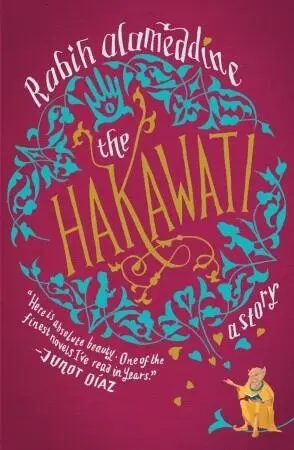
- Название:The Hakawati
- Автор:
- Издательство:Anchor
- Жанр:
- Год:2009
- ISBN:нет данных
- Рейтинг книги:4 / 5. Голосов: 1
-
Избранное:Добавить в избранное
- Отзывы:
-
Ваша оценка:
The Hakawati: краткое содержание, описание и аннотация
Предлагаем к чтению аннотацию, описание, краткое содержание или предисловие (зависит от того, что написал сам автор книги «The Hakawati»). Если вы не нашли необходимую информацию о книге — напишите в комментариях, мы постараемся отыскать её.
, or storyteller, and his bewitching tales are interwoven with classic stories of the Middle East. Here are Abraham and Isaac; Ishmael, father of the Arab tribes; the beautiful Fatima; Baybars, the slave prince who vanquished the Crusaders; and a host of mischievous imps. Through Osama, we also enter the world of the contemporary Lebanese men and women whose stories tell a larger, heartbreaking tale of seemingly endless war, conflicted identity, and survival. With
, Rabih Alameddine has given us an
for this century.
The Hakawati — читать онлайн бесплатно полную книгу (весь текст) целиком
Ниже представлен текст книги, разбитый по страницам. Система сохранения места последней прочитанной страницы, позволяет с удобством читать онлайн бесплатно книгу «The Hakawati», без необходимости каждый раз заново искать на чём Вы остановились. Поставьте закладку, и сможете в любой момент перейти на страницу, на которой закончили чтение.
Интервал:
Закладка:
The poet paused, took a deep breath, and lowered his eyes. The air bristled with a tense silence. The poet began a new verse, raised his voice to the proud skies. He stepped off the podium, and all the men stood up. I felt Uncle Jihad’s hand on my back, guiding me. The family men marched behind the song, and the remaining male mourners followed us. Into the house we went, without a pause in the incandescent song.
The women, all in black with white mandeels, sat in a semicircle around the open coffin, rows and rows. My grandfather looked like a wax model sculpted by an incompetent artist. His hair was combed, forced under control for the first time. His face looked like a composite drawing. The model hadn’t sat for the artist.
The women wailed. Aunt Samia called upon her brothers to resuscitate her father, to breathe the fire of life into his lungs. Village women bemoaned the bey’s misfortune. My sister could only look shocked and dumbfounded. My mother stared at the floor. Behind her sat a silent Mrs. Farouk. The poet sang of my grandfather’s sense of humor. The men stroked the coffin. Uncle Jihad closed his eyes and mouthed words of piety. I placed my palm on the wood, and the coffin shook as if in anger, rejecting my touch. I clasped my hands behind my back. My cousins looked petrified. My mother tried to catch my eye. Calm down, her hands mimed.
The women began their ultimate laments. “Who will replace him?” “How will we live with such sorrow?” “O Lord, be gentle with his journey.” Aunt Nazek draped herself across the coffin, shouting, “Don’t take him away.” Aunt Samia cleared a path for herself by moving two men aside. She held her father’s face with her hands, but withdrew them quickly upon first touch. “You can’t go without me.” She lifted her left leg off the floor and raised her knee, but it wouldn’t reach the coffin. She tried pushing herself up with her trembling arms. “I’m going with you,” she announced.
The men lifted the coffin, raised it above their shoulders. It floated out of the hall. And after prayers, the men carried it to the cemetery. I watched the coffin drown, sink into the mist.
“Are you feeling bad?” asked Uncle Jihad. “Was it the funeral?”
“Why did everybody have to shout so much?” I asked. Tulip lay at my feet, and I used her body as a footstool, the way she liked. “Aren’t we Druze supposed to have silent funerals?”
He sipped his drink slowly, seemed to be having a conversation with the ceiling and not me. “In principle, but not in practice, for how will the dead know that we love them?” he said. “You know, darling, funerals used to be much more dramatic when I was your age. Believe it or not, they are quieter now, more sedate.” He hummed, took another sip. “Why, I can just imagine what they’ll be like when you’re my age now. Probably no one will show up. Bang, bang, bang, and it’s over. Mourners will arrive only if alcohol is being served, like at Irish funerals.” He ran a washrag over his head. “It’s only the funeral, my sweet. You know, some people flagellate themselves on the first day, the third day, the week, and the fortieth. It’s a never-ending process. We have crazy funerals, and that’s it. We’re much more sane, don’t you think?” I assumed the question was rhetorical. “You’re not buying any of this, are you?” I shook my head. “Well, listen. A long, long time ago,” he began, “when the Mongol hordes ran amok in our world, when Genghis Khan scorched the deserts of China and plundered the rest of the world, after the barbarian king had burned Baghdad to its final ember, after he massacred one hundred thousand in Damascus and watched the city’s streets covered in rivers of blood, after the Mongol general descended upon our fertile lands, my story begins. The general’s brother Tu Khan was bored.”
“Tu Khan?” I asked. “That’s a bad pun. That’s not even Syrian good.”
“Don’t interrupt, my boy,” he replied. His eyes, aloft still, were wide-set, dark, and revivified. “I’m on a roll. Tu Khan was bored.”
“Bored, not bird.”
“Acch, now, that’s bad. Listen. Tu Khan decided to have a feast. He brought the seven best cooks in the region and demanded that they create the greatest meal that had ever been served. The cooks toiled and slaved and came up with seven courses. The first course was exquisite, one oyster on a bed of lemon purée. Tu Khan ate it in one bite and wept, for the taste was glorious. To ensure that no one else would share the taste and thereby dilute his experience, Tu Khan had the cook beheaded. The second course was soup, a pork-and-apple consommé. So thin, so clear, so delectable, and its creator was beheaded. Third was sautéed sand dabs, fourth was grilled pheasant, fifth was filet mignon. Off with all their heads. The sixth was rack of lamb, of course. Tu Khan could not believe his tongue. His jaws extended farther, moved toward the plate. Within minutes, his mouth was a hand’s width in front of his face.”
“Ah, Tu Khan,” I said.
“Precisely,” Uncle Jihad went on. “And we kill the penultimate cook. Now, the seventh cook was Beiruti. He was no fool and was in no mood to be killed. He made crème brûlée, using the milk of cows that had drunk their water from the Litani River. Tu Khan had his first bite and wept again. Creamy, smooth, impeccable. But before his second bite, his stomach rumbled. He licked the spoon and his stomach yiked. He had a bowel movement before the third bite, and it wouldn’t relent, the never-ending stool. Plop, plop, diarrhea, dysentery, Tu Khan didn’t have time to move; he soiled his pants and the glorious paisley-infected textile he’d been sitting on. ‘I’m quite all right,’ Tu Khan said, but he really wasn’t. He lost five kilos within the first hour, three more in the second, and another three in the third. Rumble, rumble, his stomach wouldn’t stop self-evacuating. He refused to sleep sitting up and had his slaves place him on the edge of his bed with his ankles in stirrups, so his stool could fire out unencumbered. Boom, boom, all night; his diarrhea was so explosive he was hitting the wall across the room, painting an abstract-expressionist mural. Nothing great, mind you, mediocre painting informed by Lee Krasner. By morning, Tu Khan was dead, wasted away into a stick man.
“The bereaved Genghis refused to have his brother buried in exile, for his soul would remain on earth, eternally searching for home. Genghis would bury him among their ancestors. Grief, sadness, sorrow. A Mongol funeral march began. But grief, sadness, and sorrow weren’t enough to commemorate a man as great as Tu Khan.” And my uncle’s voice grew deeper, more serious. “No. It wasn’t enough. Along the way, the funeral procession killed every living thing it encountered: entire villages, cities; men, women, children, generations of babies not yet born; animals, birds, trees, shrubs, flowers, forests. Everything was smashed along the path, from Beirut to Ulan Bator, a viscous trail of death and devastation to mark the funereal journey.”
He gulped the rest of his scotch. I waited for him to say something.
“I guess we have it better now,” I said. He smiled, nodded. I laughed, nervously. “So when did he marry Rita Hayworth?”
“Stop that.” My uncle laughed. “That’s another story.”
“Now you’re telling me that Genghis Khan destroyed Beirut as well? I thought it was Hulagu who conquered the Middle East. Should I trust you?”
“Never trust the teller,” he said. “Trust the tale.”

The Uzbeks began to tell the king Baybars’s story:
Baybars’s grandfather had three sons, Talak, Lamak, and Jamak. He was old and wanted to test his sons and assess who was fit to succeed him as king. He sat Talak on the throne and told him to rule for one day. That evening, the king asked his eldest how he ruled, and the prince replied, “I was a fierce leopard, and my subjects were sheep.” The second day was Lamak’s turn, and he told his father, “I was a ferocious hawk, and the people were pigeons.” At the end of the third day, the youngest said, “I decided fairly between parties. I helped the persecuted against the persecutors. I tried my best to rule such that when it came time for me to meet God I would not feel a twinge of guilt or remorse.” Much to the consternation of his older sons, the king declared Jamak his heir.
Читать дальшеИнтервал:
Закладка:
Похожие книги на «The Hakawati»
Представляем Вашему вниманию похожие книги на «The Hakawati» списком для выбора. Мы отобрали схожую по названию и смыслу литературу в надежде предоставить читателям больше вариантов отыскать новые, интересные, ещё непрочитанные произведения.








Обсуждение, отзывы о книге «The Hakawati» и просто собственные мнения читателей. Оставьте ваши комментарии, напишите, что Вы думаете о произведении, его смысле или главных героях. Укажите что конкретно понравилось, а что нет, и почему Вы так считаете.