Rabih Alameddine - The Hakawati
Здесь есть возможность читать онлайн «Rabih Alameddine - The Hakawati» весь текст электронной книги совершенно бесплатно (целиком полную версию без сокращений). В некоторых случаях можно слушать аудио, скачать через торрент в формате fb2 и присутствует краткое содержание. Год выпуска: 2009, Издательство: Anchor, Жанр: Современная проза, на английском языке. Описание произведения, (предисловие) а так же отзывы посетителей доступны на портале библиотеки ЛибКат.
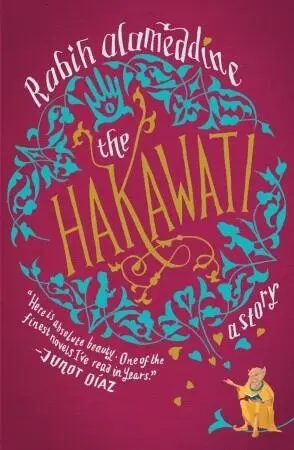
- Название:The Hakawati
- Автор:
- Издательство:Anchor
- Жанр:
- Год:2009
- ISBN:нет данных
- Рейтинг книги:4 / 5. Голосов: 1
-
Избранное:Добавить в избранное
- Отзывы:
-
Ваша оценка:
The Hakawati: краткое содержание, описание и аннотация
Предлагаем к чтению аннотацию, описание, краткое содержание или предисловие (зависит от того, что написал сам автор книги «The Hakawati»). Если вы не нашли необходимую информацию о книге — напишите в комментариях, мы постараемся отыскать её.
, or storyteller, and his bewitching tales are interwoven with classic stories of the Middle East. Here are Abraham and Isaac; Ishmael, father of the Arab tribes; the beautiful Fatima; Baybars, the slave prince who vanquished the Crusaders; and a host of mischievous imps. Through Osama, we also enter the world of the contemporary Lebanese men and women whose stories tell a larger, heartbreaking tale of seemingly endless war, conflicted identity, and survival. With
, Rabih Alameddine has given us an
for this century.
The Hakawati — читать онлайн бесплатно полную книгу (весь текст) целиком
Ниже представлен текст книги, разбитый по страницам. Система сохранения места последней прочитанной страницы, позволяет с удобством читать онлайн бесплатно книгу «The Hakawati», без необходимости каждый раз заново искать на чём Вы остановились. Поставьте закладку, и сможете в любой момент перейти на страницу, на которой закончили чтение.
Интервал:
Закладка:
I stopped my oud lessons.
Eight
And they all believed in fate. Do you think my grandmother would have married my grandfather were it not for fate? Do you not wonder how he won her?
It was destined. The tale was already told. Everything had been written.
He first saw her at the end of the Great War, in 1918, during the plagues, the lean times, when the infantilizing French occupation replaced the malicious Ottoman one. My grandmother was walking to school with a cousin. Najla wore a mandeel, but she didn’t cover her features. She draped it upon her delicate shoulders. There was a lot of talk at the time about mandeels, sheer or opaque, and whether women should wear them, but I don’t think she was making a statement. She enjoyed showing her face, her luxuriant hair, and my grandfather was lucky enough to catch sight of her. He was besotted. She was a mere fourteen. He was eighteen. He had seen pretty girls before. Yet she was beautiful and ever so graceful. He asked himself how he could make her remember him, and he thought, English. She was walking to the missionary school in the village. He said, in English, mind you, “Hello, my beautiful princess.”
She laughed and said she was a sheikha, not a princess, and the cheeky boy should have known that. She left him standing bewildered on the hilly path. She had said “cheeky” in English, and he had no idea what it meant. He didn’t know whom to ask. Because of his father, the doctor, he could speak some English, but because of the doctor’s wife, he couldn’t read that cursed language. He considered asking the bey, but my grandfather couldn’t risk embarrassing him if he didn’t know. He had to find an Englishman.
There were two of them trying to convert the village. My grandfather hung around the missionary school for two hours before he saw a foreigner exiting a building. My grandfather was polite but insistent. He said, “Pardon me, sir,” over and over, but the man paid no attention; the English never listened. Finally, he shouted, and the missionary stopped. My grandfather asked him what the word meant, and the missionary shooed him away.
Waiting for Najla the next morning, my grandfather sat on a rise above the street, for he did not wish to appear improper. When she approached, he confessed, in Lebanese Druze dialect, “I don’t know what the word ‘cheeky’ means. I don’t think my English is very good.”
My grandmother’s cousin kept pulling at her sleeve, trying to get her to move along. My grandmother replied, looking at her feet, “I don’t speak it well, either. I don’t know what that word means. Last week, they taught us a story about the problem of cheeky boys talking to nice girls in the city of London.”
And he knew she was the one for him.
You’d think there was no way. You might say, granted, this man was the bey’s hakawati, and the bey loved him, but he had no family. The story of his origins was murky. People knew that he was born in some village in the Matn, but no one had heard of the Kharrats. The discovery that the Kharrats didn’t exist wouldn’t happen till much later. How would my grandfather be able to marry a nice Druze girl — a sheikha, no less? Why would a respected family consent to such a marriage?
Well, my grandmother was not as nice as she appeared. Her family had issues.
You know that my father’s paternal grandfather was an English doctor, a missionary, and his paternal grandmother was the missionary’s Armenian servant. My father’s maternal grandparents were almost a carbon copy. My great-grandfather was a Druze doctor who many believed had become an English missionary, and my great-grandmother was his Albanian servant. Yes, it’s true.
Settle down. There are differences, and that’s what makes for a good story.

At five in the morning three days after my arrival, I received the dreaded call. Lina said my father was critical and I should come straight to the hospital. I was shocked and unnerved by the call, but not surprised. My father’s condition had been worsening. Yet, when the phone rang in the dark and I answered, the bed felt much too big.
My sister and her daughter stood weeping in the doorway, their arms intertwined. A multitude of doctors, interns, and nurses hovered above my father in his bed. They looked like seagulls hovering above food. I craned my head to look in, but a seagull closed the door. My sister gasped. One of the flimsy hospital fluorescents hiccupped. Salwa nudged me gently and pointed to the gurney along the corridor. I guided my sister to it and sat her down. Lina stared at an imaginary spot on the opposite wall. My feet felt unmoored, and the ground beneath felt soft. And yet I couldn’t move from my spot leaning against the gurney. I had to remain motionless, as if my soul could get seasick. “They think his lungs might have collapsed.” Lina wasn’t talking to me. She was staring ahead, speaking softly, as if in confession. Her priest, I didn’t look at her, either. “He had trouble breathing the whole night.” She sighed. “It got worse, until he couldn’t get any air in. He looked so scared. He’s probably terrified out of his mind right now.” The groans of a patient two doors away marked time. They were oddly comforting; I imagined their slow pace calming the frantic doctors behind the closed door. With every breath, fear seared my lungs.
Around the year 1880, the sultan pasha left Istanbul on the advice of his viziers. The effete Ottoman Empire had been gasping and wheezing for breath, and it was thought that a goodwill tour of his lands might remind his no longer so loyal subjects to pay their taxes promptly. During his stay in Lebanon, he spent one night in my great-grandfather’s village as the guest of the bey. The sultan was so impressed with the bey’s generosity that he decided to offer his host a remarkable gift, one of his own servants.
“Why is that brother of a whore offering me a maid?” the bey yelled the next morning. “Does he mean my service was lacking? Is he saying my mansion needs cleaning? And he expects me to send someone all the way to Tripoli to get her.” He fumed throughout the morning open-house. The daily visitors and supplicants drank their Turkish coffee in silence, too afraid to speak. It was at that inauspicious moment that my great-grandfather, the young Sheikh Mahdallah Arisseddine, arrived to pay his respects. The bey greeted him with “And you, my boy, will reward my faith by going to Tripoli and bringing me this girl.”
Mahdallah came from a titled family of sheikhs, not princes or beys, not even important sheikhs, but, still, an eminent, respected family of some consequence. He was the youngest of seven, and the first in the family, the first in the entire village, to attend university. His father, not well off to begin with, couldn’t afford to pay for Mahdallah’s college education after raising seven offspring. Wanting to have a Druze doctor in the village, the bey had stepped in. At the time that my great-grandfather was unceremoniously dispatched to fetch the servant, he was one year away from a medical degree from the Syrian Protestant College. He lived in a small hellhole of a room in Beirut; he visited his family — and paid his respects to the bey — in the mountain village whenever he had the chance.
There were many other reasons for the bey to fend for the Arisseddine family. The beys, in all their history and incarnations, were never altruistic. It was obvious while my great-grandfather was still in school with the missionaries that he was brighter than the other village boys. The bey wanted the most intelligent man beholden to him, so he paid for his medical schooling. The bey also hated the fact that someone was smarter than he was, which was why he never tired of having the young man run menial errands for him.
Читать дальшеИнтервал:
Закладка:
Похожие книги на «The Hakawati»
Представляем Вашему вниманию похожие книги на «The Hakawati» списком для выбора. Мы отобрали схожую по названию и смыслу литературу в надежде предоставить читателям больше вариантов отыскать новые, интересные, ещё непрочитанные произведения.










Обсуждение, отзывы о книге «The Hakawati» и просто собственные мнения читателей. Оставьте ваши комментарии, напишите, что Вы думаете о произведении, его смысле или главных героях. Укажите что конкретно понравилось, а что нет, и почему Вы так считаете.