Rabih Alameddine - The Hakawati
Здесь есть возможность читать онлайн «Rabih Alameddine - The Hakawati» весь текст электронной книги совершенно бесплатно (целиком полную версию без сокращений). В некоторых случаях можно слушать аудио, скачать через торрент в формате fb2 и присутствует краткое содержание. Год выпуска: 2009, Издательство: Anchor, Жанр: Современная проза, на английском языке. Описание произведения, (предисловие) а так же отзывы посетителей доступны на портале библиотеки ЛибКат.
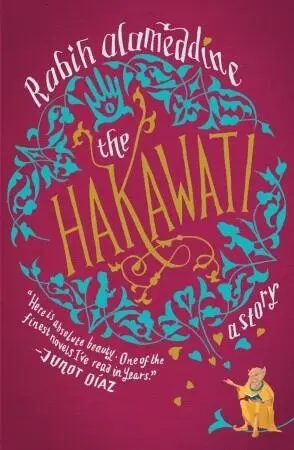
- Название:The Hakawati
- Автор:
- Издательство:Anchor
- Жанр:
- Год:2009
- ISBN:нет данных
- Рейтинг книги:4 / 5. Голосов: 1
-
Избранное:Добавить в избранное
- Отзывы:
-
Ваша оценка:
The Hakawati: краткое содержание, описание и аннотация
Предлагаем к чтению аннотацию, описание, краткое содержание или предисловие (зависит от того, что написал сам автор книги «The Hakawati»). Если вы не нашли необходимую информацию о книге — напишите в комментариях, мы постараемся отыскать её.
, or storyteller, and his bewitching tales are interwoven with classic stories of the Middle East. Here are Abraham and Isaac; Ishmael, father of the Arab tribes; the beautiful Fatima; Baybars, the slave prince who vanquished the Crusaders; and a host of mischievous imps. Through Osama, we also enter the world of the contemporary Lebanese men and women whose stories tell a larger, heartbreaking tale of seemingly endless war, conflicted identity, and survival. With
, Rabih Alameddine has given us an
for this century.
The Hakawati — читать онлайн бесплатно полную книгу (весь текст) целиком
Ниже представлен текст книги, разбитый по страницам. Система сохранения места последней прочитанной страницы, позволяет с удобством читать онлайн бесплатно книгу «The Hakawati», без необходимости каждый раз заново искать на чём Вы остановились. Поставьте закладку, и сможете в любой момент перейти на страницу, на которой закончили чтение.
Интервал:
Закладка:
Then there was the evil Sitt Hawwar.
Upon deciding to return to the village of his birth, Mahdallah, while he was still in London, commissioned the village builder, a man by the name of Hawwar, to put up a house. Hawwar charged the young doctor an exorbitant amount of money. One of Mahdallah’s brothers was supposed to oversee the building and its financing, but he must have been distracted, for when the young doctor returned, he found a windowless skeleton of a house with patchy cement floors and only an undercoat of paint.
Mahdallah complained. Hawwar promised to finish the job quickly, before the winter snows. Mahdallah and his family could wait out the house at his parents’. But the wife, the harem girl, the Albanian, insisted the bare-bones house was her home. She moved her family in, shaming the builder into working harder and faster.
That was a mistake. And she compounded the mistake. She didn’t know any better — she was a foreigner. Mona Arisseddine told her neighbors the truth. She said they could have built three houses for what they paid. She mentioned how much her husband paid for each material. The stove wasn’t even new: you could see it was used. “Look,” she kept saying, “look.”
Sitt Hawwar, the builder’s much younger wife, became Mona Arisseddine’s enemy.
Mona Arisseddine told people the builder was a crook.
Sitt Hawwar told people the doctor was a Christian.
Three Druze men showed up at Mahdallah’s clinic one morning to kill the good doctor. The only thing that saved him was a heavy patient load that day. The men walked into the clinic and asked to see him. They were told they would be next. A parent with a sick child entered, and the men decided to let the doctor help the child before they murdered him. Then came an elderly woman, a man with a broken foot, another sick child, and so on. At the end of the day, the sister-in-law of one of the would-be slayers arrived with her ill daughter. She asked her relative what he was doing there, and he replied that he was waiting to exterminate the doctor.
“Are you crazy?” she yelled. “This man is treating my daughter and you want to kill him? Why don’t you go kill a government official or something?”
The three embarrassed killers left, and a village story was born. And the bey warned that he would personally torture and kill anyone who attempted to injure the Druze doctor.
“If that woman hadn’t shown up,” my grandfather said, “you kids wouldn’t be here. Think about that. It was fate. Mahdallah had converted, so he had insulted their faith. Neighbors had killed neighbors before. Why wasn’t your great-grandfather killed? You ask me and I’ll tell you. It was because I was meant to marry your grandmother, of course. Do you see that?”
“No,” I said. The other kids didn’t even hear him. Anwar was too busy pummeling Hafez. Lina, who had been sitting next to me, had disappeared with my other cousins. Little Mona was in Aunt Samia’s arms, fidgeting.
“Stop it, Baba,” Aunt Samia said. “It’s Eid al-Adha, no time for your crazy stories. You’ve no idea what a bad example you set.” She stood up, put her daughter down. “And you,” she admonished me, “why do you just sit there and listen? Why don’t you get into a fight with your cousins? You want people to think you’re a coward? Get in there and smack one of them.”
I jumped off the sofa and ran out of the room, looking for my mother. She wasn’t in the dining room, where the rest of the family was yelling. I sprinted to the terrace. Every apartment in the building had a large balcony, but Aunt Samia’s penthouse had a terrace encircling it. I envied Anwar and Hafez for being able to run around whenever they felt like it.
My father said Aunt Samia got the biggest apartment because she was the eldest.
My mother said Aunt Samia got it by whining for ten whole days that she deserved it because she was married to the most helpless man in the world.
I ran almost all the way around the terrace before I found my mother leaning against a wall, smoking a cigarette. My father was talking, gazing warily at her. She stared out toward Beirut’s dappled rooftops, distracted, as if counting the tines of each television antenna on every roof in the city.
“You’ve been spending too much time alone,” my father said, “and that makes it harder for you to tolerate other people. It’s a family get-together, Layla. You can’t leave before lunch.”
After each drag on her cigarette, my mother moved her hand to cup the bun at the back of her head, as if doubting its existence. The smoke would circle the bun for an instant before dying.
“If those children were mine,” she said, “I would short-circuit them. Poof. Clack. Everything tumbles. The motor sputters, rumble-rumble, dies. No more noise.”
My father’s face tightened in shock. “That’s an awful thing to say, even for you. How could you?”
My mother noticed me. Her lips curled into a smile. “Osama, I don’t want you hanging around your cousins too much. Too many bad habits.”
I knew she’d want me to ask this now, at this moment. “Is it true they kill Christians in the village?”
My father looked at me in horror. “Of course it’s not true. Who told you that?”
“Grandfather said the village men almost killed your grandfather because he was a Christian.”
“How many times have I told you not to believe any of my father’s stories? He’s a hakawati. He makes things up. My grandfather wasn’t Christian. He was a Druze. You know that. If anyone tried to kill him, it was about something else.”
“Yes,” my mother said. The sun struck her face, and she looked brighter. “It was probably about something like an elevator. You know how the Druze are. They’re hospitable, and they take care of their own. Mind your seventh neighbor and all that.”
“Don’t do this,” my father said. “The old man’s tales are more than enough. Let’s not confuse the boy with more, I beg you.”
My mother straightened. “You’re right.” Her crisp voice melded with the sound of approaching steps. “No one tried to kill any Christians in the village. Your grandfather makes things up.”
Lina turned the corner, followed by Anwar, who was always trying to engage her in some convoluted game. “They kill Christians in the village?” she asked.
“No,” my father said. “No, they don’t.” He turned around and faced the railing.
“If it’s true,” Anwar told Lina, “I’ll have to slit your throat with a knife.”
“And before you do,” Lina replied without missing a beat, “I’ll take that knife and shove it up a place that will surprise you.”
Anwar gasped. My parents both yelled Lina’s name. “I have to go talk to that loon,” my father said. “Things can’t go on like this. He’s a menace.”
“Don’t.” My mother held out her hand. “You’ll only upset yourself, and you’ll regret it later. Let it go. Nothing can be done. Not now. Not here.” He took her hand. “Family,” she said, and pulled him to her. She dropped her spent cigarette.
“Oh, no,” Anwar said. “Mother gets upset if anyone leaves cigarettes on the terrace.”
“I’m sure she does.” My mother stepped on the cigarette with her stiletto heel, her calf tensing. She twisted the ball of her foot to the right, to the left, to the right. She took my father’s arm and walked away, leaving a trivial stain of ash, mashed filter, and loose tobacco in her wake.
About the elevator. When Mahdallah returned from London, he was asked by the villagers what he had seen in the great land of abroad.
Many wonders. Strange inhabitants. There were buildings in London where people did not use stairs. A room moved, carried passengers from floor to floor. Moved up and down. Buildings had many floors. Visitors didn’t have to tire themselves by walking up stairs. Why, in the great city of New York, buildings were even higher. Twenty stories or more.
Читать дальшеИнтервал:
Закладка:
Похожие книги на «The Hakawati»
Представляем Вашему вниманию похожие книги на «The Hakawati» списком для выбора. Мы отобрали схожую по названию и смыслу литературу в надежде предоставить читателям больше вариантов отыскать новые, интересные, ещё непрочитанные произведения.










Обсуждение, отзывы о книге «The Hakawati» и просто собственные мнения читателей. Оставьте ваши комментарии, напишите, что Вы думаете о произведении, его смысле или главных героях. Укажите что конкретно понравилось, а что нет, и почему Вы так считаете.