Rabih Alameddine - The Hakawati
Здесь есть возможность читать онлайн «Rabih Alameddine - The Hakawati» весь текст электронной книги совершенно бесплатно (целиком полную версию без сокращений). В некоторых случаях можно слушать аудио, скачать через торрент в формате fb2 и присутствует краткое содержание. Год выпуска: 2009, Издательство: Anchor, Жанр: Современная проза, на английском языке. Описание произведения, (предисловие) а так же отзывы посетителей доступны на портале библиотеки ЛибКат.
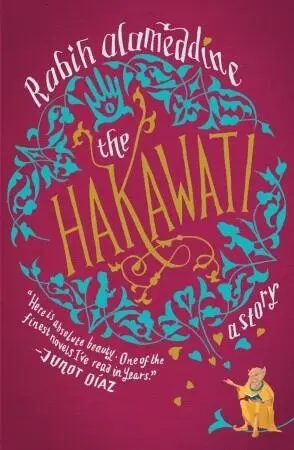
- Название:The Hakawati
- Автор:
- Издательство:Anchor
- Жанр:
- Год:2009
- ISBN:нет данных
- Рейтинг книги:4 / 5. Голосов: 1
-
Избранное:Добавить в избранное
- Отзывы:
-
Ваша оценка:
The Hakawati: краткое содержание, описание и аннотация
Предлагаем к чтению аннотацию, описание, краткое содержание или предисловие (зависит от того, что написал сам автор книги «The Hakawati»). Если вы не нашли необходимую информацию о книге — напишите в комментариях, мы постараемся отыскать её.
, or storyteller, and his bewitching tales are interwoven with classic stories of the Middle East. Here are Abraham and Isaac; Ishmael, father of the Arab tribes; the beautiful Fatima; Baybars, the slave prince who vanquished the Crusaders; and a host of mischievous imps. Through Osama, we also enter the world of the contemporary Lebanese men and women whose stories tell a larger, heartbreaking tale of seemingly endless war, conflicted identity, and survival. With
, Rabih Alameddine has given us an
for this century.
The Hakawati — читать онлайн бесплатно полную книгу (весь текст) целиком
Ниже представлен текст книги, разбитый по страницам. Система сохранения места последней прочитанной страницы, позволяет с удобством читать онлайн бесплатно книгу «The Hakawati», без необходимости каждый раз заново искать на чём Вы остановились. Поставьте закладку, и сможете в любой момент перейти на страницу, на которой закончили чтение.
Интервал:
Закладка:
“But it’s not my family.” Uncle Akram looked to my father for support.
“You always resort to that, don’t you? Whenever I need you, you hide.” She took a deep breath, raised her voice. “Uncle Jalal was called a bastard. What are you going to do about it?”
“But he’s not my uncle,” her husband said.
“And he is a bastard,” Uncle Halim said, snickering.
“No,” Aunt Samia said. “No, no, no.” Her daughter began to pout and whimper.
Lina grinned. My mother looked at her and winked. Uncle Jihad, who was sitting on the corner couch, entered the winking fest. Then he nodded at my mother, as if agreeing to something, and threw his contribution into the ring.
“Osama,” he called loudly, “what happened to the money you borrowed from me?” I didn’t understand. “Did you spend all of it?” His voice didn’t match his face. My mother was trying to catch his attention. She nodded to Little Mona and raised her eyebrows. “Samia, my dear,” he said, “why don’t you give me the precious darling?” Aunt Samia, still staring at Uncle Halim, handed her daughter over distractedly. With the little girl in his arms, Uncle Jihad returned to me. “Did you think I’d forget the money, Osama?” He waited a few breaths before adding, “Did you waste the money”—breath—”or did you hide”—breath—”the money?”
My mother grinned, shook her head slowly from side to side in admiration, as if telling Uncle Jihad she was in awe. He shrugged, as if replying it was nothing.
You could count. One. Two. And the jinn of hell broke their chains.
“You stole my money,” Aunt Samia shouted at Uncle Halim, who recoiled visibly. Her face was as red as if dunked in tomato paste, and her eyes were as white and wide as saucers.
“Samia, no,” my father yelled, but she was off in her outraged world.
“It was my money. It was mine. My mother wanted to give it to me. To me. My money.”
“Samia,” my grandfather pleaded, “stop it.”
“The neighbors, Samia,” my father added. “The neighbors will hear.”
Anwar and Hafez pushed all the way back in their chairs. Lina sat forward. Uncle Jihad seemed to have lost interest. He tried to distract Little Mona, who was staring at her livid mother.
“You hate Jalal because he wanted you to give the money back to Mama. But you hid it. He isn’t the bastard. You are. You’re a lowlife.”
“If it weren’t for the children,” Uncle Halim yelled back, “I’d smack you from here to the village, you big-mouthed idiot.” Aunt Nazek moved closer to him, tried to calm him, but he stood up. “I returned the money. I didn’t hide it. You’re a big fat liar.” He shook his finger at her. “You’re lucky the children are here.”
“This is unreal,” my grandfather said.
“I’m not a liar. You hid it. You hid the money.”
My father stood up. From the look on his face, you could see it was over. He seethed. “Everybody just eat shit and shut up,” he screamed. Quiet. My father sighed. “Samia. He was eight years old. You were — what? — twelve? What’s the matter with you? You were children. What the hell does it matter what he did then? How much did he hide? Was it one quarter or two?”
“I don’t care,” she said, but we all heard the defeated whine creep back into her voice. “He stole my money.” Her rapid breathing slowed. “He stole my money again. I can prove it.”
“Eight?” my mother asked Uncle Jihad.
“Yes.” He nodded, stroked Little Mona’s hair. “I was about as old as this one here. I was traumatized, I tell you.” He blinked once, twice. Looked up to the ceiling in mock sorrow. “That incident scarred my life.”
“And you.” My father turned to his. “Why do you keep telling my kids these stories?”
“They’re not just your kids,” my grandfather replied. “And don’t blame me for this one. I was telling how I married your mother. An old man has a right to reminisce, and children need to know where they came from.” He refused to look at my father.
“Every time you tell one of your stories, something horrible happens.”
“There’s nothing wrong with the story of how I met your mother.”
My mother sat up, stretched lazily, smiled beatifically at my grandfather. “You know, Uncle Ismail, the story might not be appropriate for the children. You see, if you tell the story, they’ll grow up believing that the whole family, almost everyone in this room, wouldn’t be here if it weren’t for the bey.”
“That’s not true,” both my father and grandfather said.
“And we wouldn’t want that, would we?” she asked.

The hospital kept to a Mediterranean schedule: visiting hours after siesta were from four till eight. Evening had blued the room. I was tired, yet an orderly was just beginning the dinner round. He wouldn’t enter my father’s room. I nestled next to Fatima on the recliner; her arm swallowed me up. “I’m scared,” I whispered.
“You know, grief feels very much like fear, almost interchangeable,” she said. “You’d think we’d get used to grief, but we never do.” She stroked my hair gently, scratched my hair, clicked her fingernails together. We called that “cleaning lice.” Fatima’s Italian mother used to do that. I’d loved it as a child, and I loved it now.
Lina trudged into the room, looking like she was about to disintegrate — eyes puffy, skin dark beneath them. She acknowledged Fatima and me but went directly to my father’s bed.
“Have they all left?” Fatima asked. My sister nodded in between heaves and tears. Fatima waited. “What about Salwa?”
“Hovik took her home,” Lina replied.
“Good. She looked exhausted. Not as exhausted as you, though. You’re going home. Sleep in your bed tonight.”
“No. It’s quite all right. I’ll stay here.”
“No, I’ll stay. You go home. You can’t keep sleeping on the recliner. I’ll take over.”
“I’m not going home,” my sister said. “He wants me here. I’m used to the recliner. If he wakes up and doesn’t see me here, he freaks. I have to.”
The sound of the machine — inhale, exhale — echoed inside my skull. Aspiration, beep, beep, expiration. My head seemed to melt upon itself. I heard myself say, “No, you both go home. I’m staying.” They gawked as if I were a poltergeist. “I need time with him, and you need the rest.”
Fatima blew kisses my way. She hurriedly collected my sister’s belongings.
Lina wouldn’t take her eyes from mine. I blinked. “You sure?” she asked.
Fatima picked up my sister’s overnight bag, kissed me, and dragged my sister toward the door. Lina disentangled herself and came over. “Go to the nurses’ desk and they’ll give you a pillow and blanket.” She hugged me. “Call me if anything happens.” She squeezed me tight. “It was always just you and me, stupid. Always was, always will be.” And she kissed the top of my head. The sound of the kiss echoed in my skull.
When my grandfather discovered he’d been rejected, he pleaded his case to the bey. This was the girl for him, he said. He loved her. No other would do. If Najla wouldn’t marry him, who else would? Could the bey intercede on his behalf? And the bey did. He called Jalal Arisseddine, asked him to reconsider. The hakawati was his protégé, a decent fellow. The bey himself would make sure the girl was taken care of. The girl wouldn’t find a better husband, after all. She was an orphan of impure parentage, and had a disreputable deceased brother — three strikes.
Читать дальшеИнтервал:
Закладка:
Похожие книги на «The Hakawati»
Представляем Вашему вниманию похожие книги на «The Hakawati» списком для выбора. Мы отобрали схожую по названию и смыслу литературу в надежде предоставить читателям больше вариантов отыскать новые, интересные, ещё непрочитанные произведения.










Обсуждение, отзывы о книге «The Hakawati» и просто собственные мнения читателей. Оставьте ваши комментарии, напишите, что Вы думаете о произведении, его смысле или главных героях. Укажите что конкретно понравилось, а что нет, и почему Вы так считаете.