Rabih Alameddine - The Hakawati
Здесь есть возможность читать онлайн «Rabih Alameddine - The Hakawati» весь текст электронной книги совершенно бесплатно (целиком полную версию без сокращений). В некоторых случаях можно слушать аудио, скачать через торрент в формате fb2 и присутствует краткое содержание. Год выпуска: 2009, Издательство: Anchor, Жанр: Современная проза, на английском языке. Описание произведения, (предисловие) а так же отзывы посетителей доступны на портале библиотеки ЛибКат.
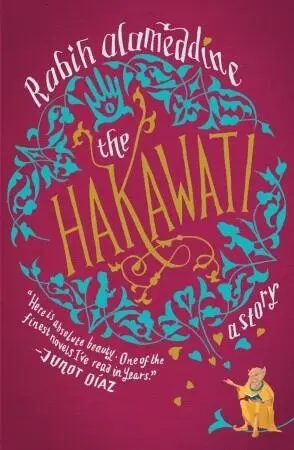
- Название:The Hakawati
- Автор:
- Издательство:Anchor
- Жанр:
- Год:2009
- ISBN:нет данных
- Рейтинг книги:4 / 5. Голосов: 1
-
Избранное:Добавить в избранное
- Отзывы:
-
Ваша оценка:
The Hakawati: краткое содержание, описание и аннотация
Предлагаем к чтению аннотацию, описание, краткое содержание или предисловие (зависит от того, что написал сам автор книги «The Hakawati»). Если вы не нашли необходимую информацию о книге — напишите в комментариях, мы постараемся отыскать её.
, or storyteller, and his bewitching tales are interwoven with classic stories of the Middle East. Here are Abraham and Isaac; Ishmael, father of the Arab tribes; the beautiful Fatima; Baybars, the slave prince who vanquished the Crusaders; and a host of mischievous imps. Through Osama, we also enter the world of the contemporary Lebanese men and women whose stories tell a larger, heartbreaking tale of seemingly endless war, conflicted identity, and survival. With
, Rabih Alameddine has given us an
for this century.
The Hakawati — читать онлайн бесплатно полную книгу (весь текст) целиком
Ниже представлен текст книги, разбитый по страницам. Система сохранения места последней прочитанной страницы, позволяет с удобством читать онлайн бесплатно книгу «The Hakawati», без необходимости каждый раз заново искать на чём Вы остановились. Поставьте закладку, и сможете в любой момент перейти на страницу, на которой закончили чтение.
Интервал:
Закладка:
And so it was. Two neighbors, one superior and one inferior, but equals in honor and pride, became one family, and lived long to take pleasure in their children.
And Mahdallah Arisseddine worked hard. He became a well-respected doctor in the region. Patients arrived from all over. Yet he couldn’t increase the size of his family by much.
Finally, ten years after his third son was born, Mona got pregnant again. This time, everyone knew it was a girl. They had waited long enough. The eldest, Aref, was already twenty-one years old. When Mona was in her eighth month, the doctor was asked to trek to Aleppo to heal a man from the al-Atrash family, a prince from Jabal al-Druze in Syria who had fallen gravely ill while traveling. Mona objected, but Mahdallah said he would be back before she gave birth. She said she didn’t believe him. He said he had never lied to her. She let him go.
Her last words to him were “I’m calling her Najla, after my mother.”
For, although the doctor healed the prince, the doctor died. He spent his last few days away from his family, wasting away in a strange bed, trying to medicate himself, alone, in a city farther north than Tripoli, where he met his wife, a much longer journey.
Like my great-grandmother Lucine Guiragossian, my great-grandfather Mahdallah Arisseddine died of amoebic dysentery. His death in 1904 came four years after hers; his was in the city of Aleppo, a little bit farther south than Urfa, the city where she died.
He died a Druze, but he was buried in a Christian cemetery, since there were no Druze cemeteries in Aleppo. God rest his soul.
This would not be Mona’s only tragedy. My great-uncle Aref was a wild young man. While his father was still alive, he managed to keep himself under some semblance of control. His father’s influence was such that the boy graduated at the top of his class and enrolled in medical school at his father’s alma mater. Mahdallah rented him a small room in Beirut. Aref studied hard, but he also played hard. Rumors of his mad conquests trickled to the village.
To his impressionable teenage brother, Jalal, he said, “All women are different. A Druze woman tastes like half-cooked lamb with rosemary and peppers, a Maronite tastes like beef marinated in olive oil, a Sunni girl like calf’s liver cooked in white wine, a Shiite like chicken in vinegar with pine nuts, an Orthodox like fish in tahini sauce, a Jewish woman like baked kibbeh, a Melchite like semolina stew, a Protestant like chicken soup, and an Alawite like okra in beef stock.”
And Aref tasted them all and more. He wanted a bite of each sect of his land, and that desire developed into a gastronomical obsession. The Sunni (university girl), Maronite (housewife in Sinn el-Fil), Orthodox (housewife in Ain el-Rumaneh), and Druze (maid in Beiteddine) were not difficult to obtain. The Jewish wife of Mr. Salim Kuhin wasn’t hard, either; he met her outside the downtown synagogue. For the Melchite, he had to travel all the way to the Bekaa Valley, to Zahlé, and find Mrs. Ballat, the manager of the pension where he stayed. The Shiite was difficult. He traveled to the south and met a number of girls, but Sidon didn’t open its gates for him. Tyre resisted him as it did Alexander the Great. He had Alexander’s moxie and cunning, but he lacked Two-Horned’s patience and resources. Tyre defeated Aref. He was lucky enough to find a Shiite prostitute in a nightclub near the port of Beirut.
Three days after Aref’s twenty-first birthday, his father died. Aref shook off whatever constraints he may have had. The Protestant was his biology professor, an Englishwoman, but then he decided that, as a nonnational, she wasn’t a representative morsel of the delicious sectarian spectrum. He had to search for three months, fail one class, and barely pass another before he found an appropriate Lebanese Protestant. He rode the train north to Tripoli to savor an Alawite, had to live there for two months before the seduction was complete. He made love to an Armenian in Bourj Hammoud on the way back to Beirut.
When he finished the entire menu, he celebrated with a drunken, boastful evening with friends, and then he returned to the village for a few days, his medical education all but forgotten. Those days dragged into a few more, and those into a few more still, as he grew fond of a married woman, Sitt Yasmine, whose husband was a farmhand for the bey.
Every morning, Aref hid behind the village’s great oak tree, waiting for the farmhand to leave. Then my great-uncle would ride his horse to the house, tie the reins to the window shutter, and entertain himself with Sitt Yasmine. If only he had tied the horse to the back window. The neighbors told the husband he was being cuckolded, but he didn’t believe at first. One morning, a friend took the farmhand by the arm and brought him back to his house. “See,” his friend said, “there’s the horse.” The farmhand yelled, screamed, “O Sheikh, get out of my house now or I will commit murder.” Aref escaped out the back. The farmhand and his friend gave chase, intending to do him harm with a rake, a hoe, and an empty bucket between them. Aref laughed, tried to tie his belt while running. He reached a cascade of olive orchards, the silver-green trees in rows that stretched to the bottom of the hill. He jumped across into the lower orchard, landed on the soft earth, ran a little more, and jumped again, but this time his foot caught in an olive branch. He spun in midair like a tetherball and shot headfirst to the ground. He died on impact.
The farmhand returned the horse to my great-grandmother. She must have opened the door for him with my grandmother Najla in her arms.
Miraculously, Sitt Yasmine remained unharmed. It is said the farmhand was so shocked by witnessing the demise of a sheikh that he forgot his wife’s betrayal and didn’t remember to beat her.
• • •
When my grandfather decided he wanted my grandmother for a wife, he sent word to her brother Jalal, already a respected family man at twenty-seven. Jalal had left the confines of the village for a more cosmopolitan life in Beirut. Since Ismail al-Kharrat didn’t have a family to represent him, he sent one of his admirers, a charming but not very gifted fellow, a sheikh himself, and the first cousin of the bey on his mother’s side. My great-uncle received him as a good host should, but when the guest requested his sister’s hand for the hakawati, Jalal said a simple no. My great-uncle would have laughed, but, as an Arab intellectual, he lacked a sense of humor.
“And that bastard just said no,” my grandfather said. “He didn’t elaborate, felt no need to explain his position. I had my guy prepared with all kinds of wonderful things to say about me and why I’d make a good husband for your grandmother, but the bastard didn’t have the courtesy to let my guy speak. Just no.”
“You can’t call him a bastard, Baba,” Aunt Samia said. “He’s my uncle. He’s the children’s great-uncle. You can’t just curse him like that.”
“The man was a bastard,” Uncle Halim insisted. Already drunk, he sipped his arak delicately. He took another sip and then gulped down the rest. “It’s not like Baba is adding anything new to the equation.”
“You’re taking his side?” Aunt Samia said. She stood up, handed Little Mona to her bewildered husband. “Of all people, you have the gall to say something like that?” Uncle Akram held the girl with his arms straight and outstretched, as if she were smelly locker-room laundry. “In my house?” Mona’s legs dangled in midair. Her father turned his head left and right, hoping someone would rescue him. “You choose to do this in front of all these kids? Do you care if they all grow up to be gypsies with no morals? Maybe you want them to grow up to be Kurds?” She walked toward the kitchen, pivoted, returned to take her daughter. “And you,” she admonished her husband, “you sit here and listen to him insult the family and you do nothing.”
Читать дальшеИнтервал:
Закладка:
Похожие книги на «The Hakawati»
Представляем Вашему вниманию похожие книги на «The Hakawati» списком для выбора. Мы отобрали схожую по названию и смыслу литературу в надежде предоставить читателям больше вариантов отыскать новые, интересные, ещё непрочитанные произведения.










Обсуждение, отзывы о книге «The Hakawati» и просто собственные мнения читателей. Оставьте ваши комментарии, напишите, что Вы думаете о произведении, его смысле или главных героях. Укажите что конкретно понравилось, а что нет, и почему Вы так считаете.