Rabih Alameddine - The Hakawati
Здесь есть возможность читать онлайн «Rabih Alameddine - The Hakawati» весь текст электронной книги совершенно бесплатно (целиком полную версию без сокращений). В некоторых случаях можно слушать аудио, скачать через торрент в формате fb2 и присутствует краткое содержание. Год выпуска: 2009, Издательство: Anchor, Жанр: Современная проза, на английском языке. Описание произведения, (предисловие) а так же отзывы посетителей доступны на портале библиотеки ЛибКат.
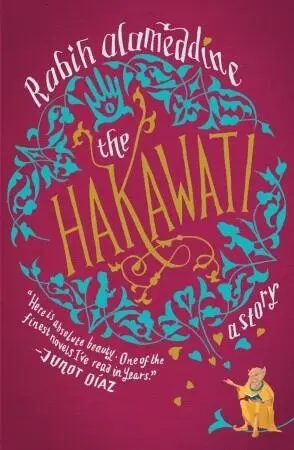
- Название:The Hakawati
- Автор:
- Издательство:Anchor
- Жанр:
- Год:2009
- ISBN:нет данных
- Рейтинг книги:4 / 5. Голосов: 1
-
Избранное:Добавить в избранное
- Отзывы:
-
Ваша оценка:
The Hakawati: краткое содержание, описание и аннотация
Предлагаем к чтению аннотацию, описание, краткое содержание или предисловие (зависит от того, что написал сам автор книги «The Hakawati»). Если вы не нашли необходимую информацию о книге — напишите в комментариях, мы постараемся отыскать её.
, or storyteller, and his bewitching tales are interwoven with classic stories of the Middle East. Here are Abraham and Isaac; Ishmael, father of the Arab tribes; the beautiful Fatima; Baybars, the slave prince who vanquished the Crusaders; and a host of mischievous imps. Through Osama, we also enter the world of the contemporary Lebanese men and women whose stories tell a larger, heartbreaking tale of seemingly endless war, conflicted identity, and survival. With
, Rabih Alameddine has given us an
for this century.
The Hakawati — читать онлайн бесплатно полную книгу (весь текст) целиком
Ниже представлен текст книги, разбитый по страницам. Система сохранения места последней прочитанной страницы, позволяет с удобством читать онлайн бесплатно книгу «The Hakawati», без необходимости каждый раз заново искать на чём Вы остановились. Поставьте закладку, и сможете в любой момент перейти на страницу, на которой закончили чтение.
Интервал:
Закладка:
The villagers went away shaking their heads. Should such a foolish man be allowed to walk the streets of the village? Was he dangerous? Should a madman be allowed to mingle with the innocent? A committee was sent to interview the doctor subtly. Luckily for our family, Mona was there. The committee said some villagers had the notion that buildings in the land of the foreign had mobile rooms within them. How exactly did Londoners move between floors?
Before the doctor could reply, his wife jumped in. Why, they ascended and descended stairs, of course. Climbed the stairs when they wanted to go up. Most stairs were made of cement and stone, some of wood, and the latter were often rickety. The doctor stared at his wife, uncomprehending. The committee waited for him to add something. There were great banisters, he said. Beautifully carved. Some staircases were marvelously ornate. Some buildings had a flight of imposing stairs on each side, complete with balustrades and carved mythical animals.
The committee apologized to the doctor. The villagers were simple folk, they said. They always misheard or misunderstood what was being said. The committee begged forgiveness and left the well-grounded doctor to his own devices.
Finally, my great-grandparents had their second child. Jalal Arisseddine was born in 1891. His brother, Aref, was eight then. Mona might have hoped that with Jalal’s arrival people would stop referring to her as the harem girl, since she was now the mother of two sheikhs.
Jalal would grow up to be an important personality in Lebanese history. He was an attorney, a keen student of letters, possessor of a piercing intellect, a man worthy of admiration. Even his critics, and he had many because of his writings rejecting pan-Arabism, respected him. He was jailed three times by the French colonial government. His last internment coincided with the end of Vichy rule in Lebanon. He was released in November 1943, on Independence Day.
Every day he spent in prison, his aged mother brought him food, though she fasted in protest. She could barely walk, but she refused to have anyone carry the meals for her. She waited outside the prison doors on the day of his release.
He came out a hero. She remained that harem girl.
My great-uncle Ma  an Arisseddine was born in 1894. My father loved him deeply, for he was the man who gave him his early breaks. In the grand scheme of stories, he was nothing, almost an unmentionable, for he was not an odd character or an interesting one. He was a thread, one of many, without which the tapestry would crumble, the yarn fray, and the tale unravel.
But I know of another thread.
Even though the evil Sitt Hawwar loathed my great-grandmother, or probably because of it, she showed up to congratulate the new mother when baby Ma an was born. She dragged along her husband, the builder, who was wearing a robe of Chinese silk. She made her husband walk around the small living room. The villagers oohed and aahed, admiring their first view of foreign silk, ignoring the newborn. Now, the proverb was that one should look after one’s seventh neighbor, and Sitt Hawwar was Mona Arisseddine’s second neighbor on the right, so Mona should have treated her even better, or at least been more circumspect. But, then, there was history. And Mona Arisseddine asked her neighbor how much that robe cost.
This story about neighbors arrives from far away, so listen. The parable is Iraqi, all the way from the ancient city of Baghdad; it flew here on waves of air, needing to alight in cavernous ears. Long ago, in a time long past, there lived an honorable Bedouin who was so hospitable and charitable that he was known as Abou al-Karam, Father of Generosity. One day, a poor man raised his tent pole next to the Bedouin’s, and of course Abou al-Karam made sure his neighbor lacked nothing, offering him food, water, and clothing. For seven years, whenever the tribe traveled, their tents remained adjacent. The neighbor became known as Bin al-Kareem, Son of the Generous One. After each of the tribe’s raids, Abou al-Karam would share the spoils with his neighbor: horses, mares, camels, food, slaves, the enemy tribe’s possessions.
By the end of those seven years, Bin al-Kareem and his sons had become wealthy. By the end of those seven years, Abou al-Karam’s youngest daughter had become a desert beauty, lithe and tall as a poplar, graceful as a doe. And Bin al-Kareem’s younger son wanted her. He courted her. He sang verses for her, followed her when she went to the well, knelt outside her tent when she tried to sleep, whispering endearments. The beautiful girl refused him. He stalked her wherever she went, made it impossible for her to move freely. And the girl told her father, who said, “One night more and you will not have to worry about this nefarious boy.”
That night, when the girl went to bed, the boy appeared outside her tent and began whispering to her. “Wait but one more night,” she said, “and you shall receive your just reward.”
At dawn, Abou al-Karam gave the order to break camp. Later that morning, the camels and pack animals were laden and the tribe began to march. For all of the previous seven years, wherever Abou al-Karam pitched his tent in a new camp, Bin al-Kareem pitched his right next to it. That day, arriving at a suitable pasture, Abou al-Karam searched until he found a spot next to a teeming anthill. There he made his home. When Bin al-Kareem arrived to pitch his tent, he said, “O dear neighbor, there is an anthill on my site.”
“So there is,” replied Abou al-Karam, “and God’s earth is wide.”
Bin al-Kareem said nothing further. He drove his family and his belongings away from the tribe, up north, far away from his once-beloved neighbor. But his heart ached, and his mind was troubled. He relived the insult over and over in his head. Why? he asked himself. Why did his friend betray him? One night, he had a dream. He saw Abou al-Karam’s daughter walking in the desert, followed by wisps of clouds, and he divined what might have happened. The next morning, while hunting with his elder son, he said, “What a shame we had to leave our good neighbor. And that daughter. What a beautiful girl. Our family is inferior to hers and there was no hope of matrimony between us, but, still, what a gorgeous lass. A shame we left before you had a chance with her.”
“Shame?” the son yelled. “You call that a shame? Shame on you for uttering such words. Was she not my sister? Did we not eat of the same food? Did we not share the same honor for seven years? Only sons of whores and sons of shame would consider what you’re thinking.”
“Forgive me, my son,” the father said. “The sorrow of parting must have clouded my judgment. Let us return to our tent and forget we had this conversation.”
The next day, while hunting, Bin al-Kareem said to his younger son, “What a shame about that adorable girl.”
“Shame?” sighed the boy. “One night more, Father, and she would have been mine. One night more.”
And the father unsheathed his sword and cut off his son’s head.
And the father wound woolen thread around his son’s head, and wound, and wound, until he had a large ball of yarn. He waited until he met a traveler heading south, and he asked, “Will you carry this gift to my friend Abou al-Karam?”
When the traveler arrived at Abou al-Karam’s camp, he found him in his tent, sitting with guests. The traveler placed the gift before Abou al-Karam, who asked, “Who sends this gift?”
“A man who called you his friend and brother,” said the traveler.
Abou al-Karam summoned his slaves to unwind the yarn. As they unraveled it, they uncovered the son’s head. And Abou al-Karam beat his chest in sorrow, sighed the breath of remorse. He understood that his neighbor of seven years was as true as a brother and as jealous of his name. The guests demanded the tale, and Abou al-Karam told it. The guests all said in one voice that he must marry his daughter to his neighbor’s elder son, which would make Abou al-Karam and Bin al-Kareem brothers.
Читать дальшеИнтервал:
Закладка:
Похожие книги на «The Hakawati»
Представляем Вашему вниманию похожие книги на «The Hakawati» списком для выбора. Мы отобрали схожую по названию и смыслу литературу в надежде предоставить читателям больше вариантов отыскать новые, интересные, ещё непрочитанные произведения.










Обсуждение, отзывы о книге «The Hakawati» и просто собственные мнения читателей. Оставьте ваши комментарии, напишите, что Вы думаете о произведении, его смысле или главных героях. Укажите что конкретно понравилось, а что нет, и почему Вы так считаете.