Rabih Alameddine - The Hakawati
Здесь есть возможность читать онлайн «Rabih Alameddine - The Hakawati» весь текст электронной книги совершенно бесплатно (целиком полную версию без сокращений). В некоторых случаях можно слушать аудио, скачать через торрент в формате fb2 и присутствует краткое содержание. Год выпуска: 2009, Издательство: Anchor, Жанр: Современная проза, на английском языке. Описание произведения, (предисловие) а так же отзывы посетителей доступны на портале библиотеки ЛибКат.
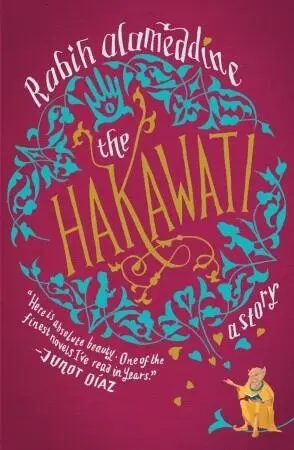
- Название:The Hakawati
- Автор:
- Издательство:Anchor
- Жанр:
- Год:2009
- ISBN:нет данных
- Рейтинг книги:4 / 5. Голосов: 1
-
Избранное:Добавить в избранное
- Отзывы:
-
Ваша оценка:
The Hakawati: краткое содержание, описание и аннотация
Предлагаем к чтению аннотацию, описание, краткое содержание или предисловие (зависит от того, что написал сам автор книги «The Hakawati»). Если вы не нашли необходимую информацию о книге — напишите в комментариях, мы постараемся отыскать её.
, or storyteller, and his bewitching tales are interwoven with classic stories of the Middle East. Here are Abraham and Isaac; Ishmael, father of the Arab tribes; the beautiful Fatima; Baybars, the slave prince who vanquished the Crusaders; and a host of mischievous imps. Through Osama, we also enter the world of the contemporary Lebanese men and women whose stories tell a larger, heartbreaking tale of seemingly endless war, conflicted identity, and survival. With
, Rabih Alameddine has given us an
for this century.
The Hakawati — читать онлайн бесплатно полную книгу (весь текст) целиком
Ниже представлен текст книги, разбитый по страницам. Система сохранения места последней прочитанной страницы, позволяет с удобством читать онлайн бесплатно книгу «The Hakawati», без необходимости каждый раз заново искать на чём Вы остановились. Поставьте закладку, и сможете в любой момент перейти на страницу, на которой закончили чтение.
Интервал:
Закладка:
The girl’s brother agreed to marry her to the bey’s hakawati. The girl’s mother did not.
And the bey called Mona Arisseddine. She put on her mandeel and trudged up the hill to the mansion. The bey gave her the same spiel, and she said no. He repeated the same words, and she said no again. He repeated them once more, and she rejected his offer a third time. She left the befuddled bey and returned home.
The bey called his mother. His mother said, “I am ashamed to have raised such a fool.”
And the bey’s mother put on her mandeel and trudged down to visit Mona Arisseddine in her home. The mothers discussed the hakawati. Mona said he had no family. The bey’s mother reminded Mona that she didn’t, either, and she’d turned out to be a wonderful mother. Mona said the man was an entertainer. The bey’s mother ruminated on how quickly we forgot.
Could he make her happy? The bey’s mother told Mona to ask her daughter.
The mothers asked Najla if she thought the hakawati could make her happy.
Najla looked at both women and said he made her laugh.
Wedding torches would flare.
Mountain weddings were known for many things: the feast and the accompanying feeding frenzy; the dancing, the Lebanese dabké and the dances of the swords and shields; the rites of riding to collect the bride; and most of all the zajal, the poetry duels.
At weddings, poets competed in praising the bride, the groom, luminaries attending the wedding, and matrimonial traditions in general. They also dueled, entertained the crowds by engaging in boasts and insults, composing verses on the spot. A poet was guaranteed an invitation to every wedding. A good one was even paid. At some weddings, amateurs joined in, tried their luck in verse. My grandparents’ wedding became famous for a verse.
A tasteless, reprehensible quatrain uttered by none other than the evil Sitt Hawwar.
A groom with a huge mouth filled with many needless words ,
Yet no incisor and no molar ,
Married a girl with a bigger mouth ,
Whose teeth entered a room before her .
I followed the aromas emanating from the kitchen, but knew better than to go in. I stopped in the prep room. Aunt Samia was complaining to someone, most probably Aunt Nazek. “I can’t take it anymore,” she was saying. I grabbed a piece of bread from the table and bit into it. “I don’t know why she thinks she needs to keep her nose so high up in the air,” I heard her say. “It’s not like she produced a bushel of sons, just a toad of a girl and a gnat of a boy.” I bit into the bread again and again.
My grandfather came up from behind and covered my eyes. I knew it was him because of his smell, but I couldn’t tell him I knew, because my mouth was too full. “It’s only me,” he said, chuckling. “And don’t eat the bread by itself when there’s so much food around.”
As noiselessly as possible, he moved a chair next to the table, motioned for me to stand on it. He uncovered a deep bowl in the middle of the table, moved it closer. I could see the stew inside. “The secret,” he whispered. He tilted his head, and I did the same. I saw soft steam churning upon itself, imagining a porcelain cover no longer there. “The bowl has lips,” he said, “and can tell you stories, if only you allow your ears to hear or your nose to smell.”
“Or my lips to kiss,” I said softly. I bent, and the steam caressed my lashes, licked my lips. I stuck out my tongue and licked right back.
Aunt Samia walked in. “Put that filthy tongue back where it came from.”
I jumped off the chair and ran out as fast as I could. I heard her ask, “How could you let him do that, Baba?” but I didn’t hear his response.
He found me on the terrace, leaning over the railing, staring at the rosebushes in the gated garden below. “That was fun,” he said. “I bet you don’t know what was in the pot. I know you think it’s chicken stew, but it most certainly is not. It’s imp stew. You have to catch those little devils, no bigger than chickens but very hard to trap. Killing the imps is never easy. You have to find them at the right time of the year and freeze them. That’s how you do it. Not easy.”
“Oh, come on.”
“It’s true. And you have to blanch them to get rid of their red color, so no one can tell that it’s imp stew. You don’t want your guests to throw up, now, do you?”
“But the guests would taste them.”
“Oh, no, imps taste like chicken. Samia is just trying to trick us.”
I didn’t say anything. I heard his breath.
“Does your father still like his meat?” my grandfather asked.
“Ask him,” I said.
“He’s not here, is he? So — I’m asking you. Does he still sneak into the kitchen and eat the aliyeh when no one is looking?”
“What’s aliyeh?”
“It’s the fried lamb and onions and garlic and salt and pepper. What you need to prepare to add flavor to the stew. When your grandmother would cook, she’d have the best aliyeh — well, she had the best everything. She was the best cook ever to walk this cursed earth.”
“Our cook is probably better. That’s what everyone says.”
“Don’t be ridiculous. No one will ever be as good as your grandmother. Her cooking woke the dead and the gods. Where was I? Your father. Well, your devious father would crawl into the kitchen on his hands and knees, holding a piece of bread between his teeth so it wouldn’t touch the floor. He’d get to the stove, stand up quickly, and dip his bread into the aliyeh while it was still frying, pick up as much as he could in that morsel, and run out before his mother caught him. He’d run, blowing on the food in his hand to cool it. Blow, and duck to avoid your grandmother, who ran after him. It was a game they played, and he had to stuff the bread in his mouth or she’d take it from him. He must have been your age, or maybe a little older. We couldn’t afford much meat when he was younger. We couldn’t afford imps, either.”
Nine
Below, in the underworld, Fatima said, “I must rise.”
“Why?” said Afreet-Jehanam. “You should deliver here.”
“My child shall be born aboveground. He will master this world but must be a citizen of the one above.”
“You do treat me like a plaything,” her lover harrumphed. “I am the father. I should have some say.”
“But you do, dear, you do. Now, get me a carpet, please. I must be going. I do not wish my water to break in midair.”
In the castle, the emir’s wife felt her first pain the same instant Fatima felt hers in the underworld. She held her stomach, smiled at her husband.
“Should I stop the story?” the emir asked. “Should I call someone? Should I boil water? Where’s the midwife? What—”
“No, husband, go on. This Othman fellow begins to amuse me. Just help me with more pillows.” She pushed her body farther up on the bed and adjusted herself with a groan. “The troublemaker comes,” she said. “Pray continue, husband. Distract me.”

Prince Baybars, Othman, the Africans, and the Uzbeks attended Friday prayers at the mosque. The faithful eyed Othman with a mixture of awe, concern, and fear. Othman yelled, “Stop the staring. I have repented to God, who forgives all sins, and now I pray like you do.” The faithful welcomed him to their bosom. Leaving the mosque after prayers, the group heard a barker announcing the availability of the house of Prince Ahmad al-Sabaki, which ran the length of the farmers’ market on one side to the dyers’ market on the other. Baybars asked who owned the house, and the barker answered that it was the four granddaughters of Prince Ahmad.
Читать дальшеИнтервал:
Закладка:
Похожие книги на «The Hakawati»
Представляем Вашему вниманию похожие книги на «The Hakawati» списком для выбора. Мы отобрали схожую по названию и смыслу литературу в надежде предоставить читателям больше вариантов отыскать новые, интересные, ещё непрочитанные произведения.










Обсуждение, отзывы о книге «The Hakawati» и просто собственные мнения читателей. Оставьте ваши комментарии, напишите, что Вы думаете о произведении, его смысле или главных героях. Укажите что конкретно понравилось, а что нет, и почему Вы так считаете.