Rabih Alameddine - The Hakawati
Здесь есть возможность читать онлайн «Rabih Alameddine - The Hakawati» весь текст электронной книги совершенно бесплатно (целиком полную версию без сокращений). В некоторых случаях можно слушать аудио, скачать через торрент в формате fb2 и присутствует краткое содержание. Год выпуска: 2009, Издательство: Anchor, Жанр: Современная проза, на английском языке. Описание произведения, (предисловие) а так же отзывы посетителей доступны на портале библиотеки ЛибКат.
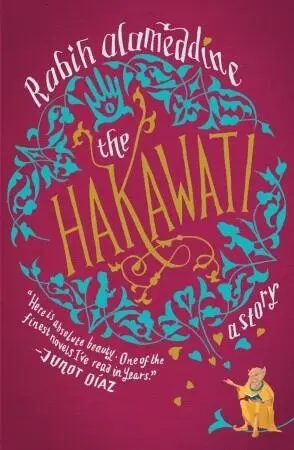
- Название:The Hakawati
- Автор:
- Издательство:Anchor
- Жанр:
- Год:2009
- ISBN:нет данных
- Рейтинг книги:4 / 5. Голосов: 1
-
Избранное:Добавить в избранное
- Отзывы:
-
Ваша оценка:
The Hakawati: краткое содержание, описание и аннотация
Предлагаем к чтению аннотацию, описание, краткое содержание или предисловие (зависит от того, что написал сам автор книги «The Hakawati»). Если вы не нашли необходимую информацию о книге — напишите в комментариях, мы постараемся отыскать её.
, or storyteller, and his bewitching tales are interwoven with classic stories of the Middle East. Here are Abraham and Isaac; Ishmael, father of the Arab tribes; the beautiful Fatima; Baybars, the slave prince who vanquished the Crusaders; and a host of mischievous imps. Through Osama, we also enter the world of the contemporary Lebanese men and women whose stories tell a larger, heartbreaking tale of seemingly endless war, conflicted identity, and survival. With
, Rabih Alameddine has given us an
for this century.
The Hakawati — читать онлайн бесплатно полную книгу (весь текст) целиком
Ниже представлен текст книги, разбитый по страницам. Система сохранения места последней прочитанной страницы, позволяет с удобством читать онлайн бесплатно книгу «The Hakawati», без необходимости каждый раз заново искать на чём Вы остановились. Поставьте закладку, и сможете в любой момент перейти на страницу, на которой закончили чтение.
Интервал:
Закладка:
“Oh, Harhash,” Othman said, “have times been so tough that you have resorted to playing with fire?” And Harhash replied, “Be not cruel, friend. Do you think me impious enough to commit a dastardly crime with the Lady so close were I not forced to? That these warriors stand here to protect this neighborhood is the only proof I need that the Lady still watches. Now I will never taste the fruits of paradise.”
And Othman joined Harhash in weeping. He sat down on the ground and said, “Oh, Harhash, you are not damned. If you repent before the Lady, as I did, God will listen and forgive.” Harhash and his men gave up their wayward ways and swore allegiance to God. Othman said, “Now you and your men can work for me,” and one of the Uzbeks said, “But you are a servant yourself.” And Othman replied, “True, but I am moving up in the world. Soon Harhash here will be able to afford his own servants. It is an ever-shifting multilevel process.”

Fatima’s room was across the hall from the royal chambers, and the second stab of pain forced a sigh that echoed that of the emir’s wife. Fatima asked her attendants to leave her, but when she was alone, she no longer wanted to be.
“Ishmael,” she said, “come.” And Ishmael popped up next to her in bed. “What an awful-looking room,” he said. “You want your child to grow up to be a scholar?”
“Do something, then.”
“With pleasure,” Ishmael replied gleefully.
“Hold on,” said a materializing Isaac.
“I will do it,” said Elijah. “You have no taste.”
“Go home,” said Ishmael. “She asked me to do it.”
His seven brothers ignored him. Adam turned the drapes violet and Noah changed them to blue. Ezra and Elijah had a wrestling match over the carpet. Fatima’s bedspread had four competing pattern designs. By the time she yelled, “Stop,” the room was a disaster, clashing gaudiness in every corner. She looked around. “This is truly awful. I love it.”
Aunt Samia loved and idolized her mother. For her, my grandmother could do no wrong. God, in all His great bounty, created the world in six days, and on the seventh, He concentrated on Najla. She was the most virtuous woman who had ever lived, the most devout, the most intelligent, the most fill-in-the-blank-with-an-ideal-trait. My poor, poor grandmother Najla, born an orphan, married to a ne’er-do-well hakawati, still managed to raise the perfect family and provide her children with a loving environment. Aunt Samia mimicked her mother’s every movement, modeled her entire personality after her. She learned to cook the same meals, weave the same textiles, cross-stitch the same patterns. Whenever she remembered, Aunt Samia pronounced her “s” the same way my grandmother did, spitting saliva upon the listener. Luckily, she didn’t often remember, and she never did it after her mother passed away.
And Aunt Samia had the same adversary as my grandmother and my great-grandmother: none other than the evil Sitt Hawwar, the builder’s wife, who would commit the most egregious of acts against her. Aunt Samia had thought that she would end up spending her life with her mother, since she remained a spinster long past marriageable age.
“We’ll grow old together,” she used to say to Grandmother.
“No, we won’t,” Najla would reply. “You will get married.”
In the morning, the mayor and his men rode into Lady Zainab’s neighborhood. Surprised to find it still standing, the mayor asked the first shopkeeper if he had seen or heard anything during the night. The shopkeeper replied that he had not, because he had turned off the lanterns and fallen asleep. The mayor yelled, “It is against the law to extinguish the lamps,” and he had his men take the shopkeeper out and beat him. He moved to the next shop and asked that shopkeeper if he had had his lamp extinguished last night. The man replied that Othman had ordered him to, which angered the mayor even more, and he had his men beat the second shopkeeper. The mayor went into the next shop, a perfumery, and told the shopkeeper, “Show me your dried carnations.” The perfumer opened a box, and the mayor said, “This carnation is crooked.” The puzzled shopkeeper said, “Find me a carnation that is not,” and received a terrible thrashing for his insolence. The mayor then asked the dairyman, “Why is cow’s milk white but your butter is yellow?” and he replied, “It is always so,” and he, too, received a whipping. The mayor moved from one store to the next, meting out severe beatings.
The shopkeepers sought Othman, who said, “I will solve your problem, but you must pay me.” The men asked what he wanted, and Othman said, “A tub of your yellowest butter and one crooked carnation and one lamb sandwich and one cup of coffee and one comb of honey.”
The shopkeepers laughed and said, “You help us with the mayor and we will give you two of each.” And Othman added, “Oh, and a dessert as well. One must have sweets. And tomorrow, if anyone sees the mayor in the neighborhood, he must shout, ‘Baklava, baklava,’ to remind me of my sweet reward.”
When the oil merchant saw the mayor at his shop the following day, he yelled, “Baklava, baklava,” and every boy in the neighborhood followed suit. The other shopkeepers began to yell, “Baklava, baklava,” as well. The confused mayor asked, “Who wants sweets at an oil shop?” and he heard the voice of Othman say, “A man like you should think only of bitters, never sweets.” Othman, Harhash, and the warriors surrounded the mayor and his men, disarmed them, and relieved them of their clothes, leaving them all utterly naked. The mayor said, “I am going to arrest you and throw away the key.” Othman laughed. “You cannot arrest me. I work for a prince now. If the king knew what you were up to, he would throw you in jail.”
The warriors carried the naked mayor to the tanner and dunked him in a vat of black dye. “Now he is darker than I,” said one of the Africans. They put the naked mayor on his horse backward and rode him out of town. The neighborhood boys ran after him, jeering and whistling.
And the mayor swore revenge against Othman and Baybars. He had his men buy him a coffin, take him to the diwan in it, and inform the king that Othman had killed him.
Upon seeing his murdered mayor, the king called for Baybars and Othman and asked them what happened. Othman said, “I wish I had killed him, but I did not. Had I not sworn to follow the righteous path, I would surely have slain him.” The king asked him to elaborate, and Othman did, calling his witnesses: the shopkeepers, the warriors, and Harhash.
And Arbusto said, “But you beat up a government official, and here he lies in his coffin before us. This is murder, and you deserve death for it.”
Othman said, “No, I do not. If I am to be killed for killing him, then I should at least have had the pleasure of doing the deed. Now that I think of it, I do not believe God would mind if I killed a dead man anyway.” Othman drew his sword and stabbed the mayor in his coffin. The mayor sat up and died again. “Lazarus?” Othman exclaimed.
The angry king said, “This man was not dead. It was a ruse. My own mayor attempted to deceive his king. It is a good thing he is well and truly deceased. I call on you, honest Baybars, to wear the mayor’s suit.”
And that was how Baybars became mayor of the great city of Cairo.
Интервал:
Закладка:
Похожие книги на «The Hakawati»
Представляем Вашему вниманию похожие книги на «The Hakawati» списком для выбора. Мы отобрали схожую по названию и смыслу литературу в надежде предоставить читателям больше вариантов отыскать новые, интересные, ещё непрочитанные произведения.











Обсуждение, отзывы о книге «The Hakawati» и просто собственные мнения читателей. Оставьте ваши комментарии, напишите, что Вы думаете о произведении, его смысле или главных героях. Укажите что конкретно понравилось, а что нет, и почему Вы так считаете.