Rabih Alameddine - The Hakawati
Здесь есть возможность читать онлайн «Rabih Alameddine - The Hakawati» весь текст электронной книги совершенно бесплатно (целиком полную версию без сокращений). В некоторых случаях можно слушать аудио, скачать через торрент в формате fb2 и присутствует краткое содержание. Год выпуска: 2009, Издательство: Anchor, Жанр: Современная проза, на английском языке. Описание произведения, (предисловие) а так же отзывы посетителей доступны на портале библиотеки ЛибКат.
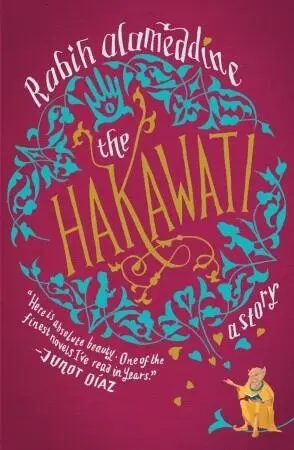
- Название:The Hakawati
- Автор:
- Издательство:Anchor
- Жанр:
- Год:2009
- ISBN:нет данных
- Рейтинг книги:4 / 5. Голосов: 1
-
Избранное:Добавить в избранное
- Отзывы:
-
Ваша оценка:
The Hakawati: краткое содержание, описание и аннотация
Предлагаем к чтению аннотацию, описание, краткое содержание или предисловие (зависит от того, что написал сам автор книги «The Hakawati»). Если вы не нашли необходимую информацию о книге — напишите в комментариях, мы постараемся отыскать её.
, or storyteller, and his bewitching tales are interwoven with classic stories of the Middle East. Here are Abraham and Isaac; Ishmael, father of the Arab tribes; the beautiful Fatima; Baybars, the slave prince who vanquished the Crusaders; and a host of mischievous imps. Through Osama, we also enter the world of the contemporary Lebanese men and women whose stories tell a larger, heartbreaking tale of seemingly endless war, conflicted identity, and survival. With
, Rabih Alameddine has given us an
for this century.
The Hakawati — читать онлайн бесплатно полную книгу (весь текст) целиком
Ниже представлен текст книги, разбитый по страницам. Система сохранения места последней прочитанной страницы, позволяет с удобством читать онлайн бесплатно книгу «The Hakawati», без необходимости каждый раз заново искать на чём Вы остановились. Поставьте закладку, и сможете в любой момент перейти на страницу, на которой закончили чтение.
Интервал:
Закладка:

Three nights after his meeting with Khanjar, Baybars played host to him; the chief of the gates was to introduce all of Cairo’s thieves and criminals. “Shall we begin the introductions?” Baybars said. “Othman, bring in the first cadre.” Into the hall walked thirty black-robed women, each with her manservant. All bowed before Baybars. “Commander,” Baybars asked, “who are these women?”
“They are the cadre of savage doves, pretty and lethal. They live in all the neighborhoods of Cairo. They approach men and persuade them to join them at their houses. The savage dove plies her victim with wine until he is drunk, and then the manservant covers the man’s face with a pillow and sits on it until the man loses his breath. They confiscate his possessions, bury the body in the yard, and start over again.”
Othman led that group out into a different hall and brought in another, twenty brown-robed women. “This is the cadre of roaming doves,” the commander said. “They are docile and timid until a foolish man believes he has a willing victim. When the man invites the woman to his house, she asks to share some wine. Then she laces his cup with opium, strips him of his wealth, and leaves him unconscious.”
The third group of women wore robes of red. “These are the luscious doves, the most beautiful doves of all, and the most proficient; they trick men into assuming compromising positions and proceed to purloin the house’s belongings as their powerless prey watch. Every man wishes to drink from a luscious dove’s beauty cup, even when he knows it could be lethal.” The fourth group was ten white-robed women. “The cooing doves,” the commander said. “Pickpockets and shoplifters.” The fifth group was twenty-five boys. “The baby porcupines are thieves.” The sixth was ten younger boys. “The hedgehogs are specialized pickpockets. A hedgehog works with a baby porcupine. When they see a possible victim, the porcupine hits the hedgehog, who runs to the man and begs to be saved. While the man comforts the hedgehog, his pockets get emptied.” The seventh cadre was the old doves. “These crones pretend to be sages, seers, and fortune-tellers. They are invited into houses and rarely leave empty-handed.” The eighth, ninth, tenth, and eleventh cadres were all porcupines: the burglars, the gamblers, the highway robbers, and the murderers.
“The twelfth?” Baybars asked, and the commander replied, “That would be me.”
Baybars left Khanjar in the hall and sought out the assembled horde of criminals. He faced them with Othman and said, “I command you to give up your wicked ways and seek solace in God’s love. Vow to live an honest life and swear not to sin again. He who makes the vow will be set free, but he who does not will be enchained.” And the women said, “But how can we live an honest life if we owe money to the commander? He forces us to work in order to pay him.”
Baybars said, “If you make the vow to God, your debts will be forgiven. Is there anyone here who will not make the vow and give up the life of crime?” There were no raised hands.
Othman lit a fire and with a branding iron marked the left wrist of every reformed criminal, dove, porcupine, and hedgehog in the room. Right after he branded one of the luscious doves, she whispered, “I know thirty-seven distinctly different pleasurable ways of using this branding iron,” causing Othman to flush and blush and rush to the next.
“If anyone wearing this brand is caught committing a crime, the penalty of death will be imposed,” Baybars said. “So it shall be.”
And Baybars returned to Khanjar and said, “My father, I have turned your workers into honest men and women. I will place the children in schools. It is now your turn. You are over eighty years old. Have you not worshipped God in all this time? Have you not prayed or fasted?”
Khanjar replied, “I have never set foot in a mosque. For seventy years, I have stolen from men, betrayed them, and killed them. Do you think I am as easy to convert as my minions? You are a fool, a little mind and a light head.” And he unsheathed his sword and struck, but Baybars’s sword parried the commander’s blow with one smooth motion, its hilt knocking him out. Othman tied him up and dragged the commander to jail, where he spent the rest of his life.
A quawk here, said the parrot Isaac, and a quawk there.
And the hakawati parrot began telling the lovely wife this story:
Four men — a tailor, a jeweler, a carpenter, and a dervish — traveled together on a long journey. They camped for the night and took turns guarding their belongings. The carpenter stood guard first, while the others slept. He saw a big log lying on the ground, and to pass the time he carved a statue of a beautiful woman out of it. The tailor woke up, and as the rest snored, he admired the lovely form and decided to sew a glorious outfit for the lady. Out of divine cloth, he fashioned raiment fit for a queen. It was the jeweler’s turn next, and he created wonderful adornments for the statue with the most precious of gems. And the dervish saw the creation and was so enamored that he prayed to God with all his heart to make her real. When light rose, the four men beheld a breathing woman of such comeliness their hearts were infatuated. Each man claimed her as his wife. They fought, they argued, but they could not arrive at a mutually acceptable decision.
Finally, they saw a Bedouin riding by on his camel and asked him to arbitrate.
“I sculpted her out of wood,” the carpenter said.
“I clothed her.”
“I gave her brilliance.”
“And I gave her breath,” said the dervish.
The Bedouin said, “All four of you have a rightful claim, and I see no way of dividing this woman. I therefore claim her for myself. She was created in the desert, and these are my lands. She will be my wife.”
The five men quarreled and quarreled, but could find no solution to their dilemma. They rode into town, and asked the first policeman they came across to be arbiter. After each man laid his claim, the policeman said, “Each of you has a point, and I cannot decide for any of you, so I claim this charming woman as my own.”
The six men went to a judge and regaled him with their stories. The judge said, “We have a problem here. For the sake of fairness and impartiality, I claim this woman myself. She will be my wife so you can cease your fighting.”
The men squabbled into the night. Finally, the dervish said, “We can come to no resolution, because no man can arbitrate. None can resist the charm of our beloved. We must resort to an inhuman referee, the Tree of Knowledge.”
The seven suitors and the woman marched to the wise tree in the center of town. As soon as they approached the giant oak, its bark split open and the woman ran inside and the trunk closed back upon itself. The Tree of Knowledge said, “Everything returns to its first principles,” and the seven men were shamed.
Aunt Samia was twelve when Uncle Jihad was born. She attended the English missionary school in the mornings and helped her mother with household chores in the afternoon. Since my grandmother was busy with her newborn, Aunt Samia took a daily walk to the bakery of the neighboring Christian village, which the family felt was superior to the one in ours. The baker’s daughter was my aunt’s age, and they struck up a friendship. My aunt began to take the bread walk a bit earlier, visit with the baker’s daughter, and chat. My aunt taught her a song she’d learned at school, “There’s a Beautiful Land Far, Far Away,” and her friend taught her the “Marseillaise.” One day, after spending a week in song, Aunt Samia felt feverish and had problems urinating. My grandmother took her to a doctor in Beirut, and she spent two nights in the hospital. It was a minor infection. She returned to the village and spent a fortnight in enforced bedrest. She lost track of the baker’s daughter.
Читать дальшеИнтервал:
Закладка:
Похожие книги на «The Hakawati»
Представляем Вашему вниманию похожие книги на «The Hakawati» списком для выбора. Мы отобрали схожую по названию и смыслу литературу в надежде предоставить читателям больше вариантов отыскать новые, интересные, ещё непрочитанные произведения.











Обсуждение, отзывы о книге «The Hakawati» и просто собственные мнения читателей. Оставьте ваши комментарии, напишите, что Вы думаете о произведении, его смысле или главных героях. Укажите что конкретно понравилось, а что нет, и почему Вы так считаете.