Rabih Alameddine - The Hakawati
Здесь есть возможность читать онлайн «Rabih Alameddine - The Hakawati» весь текст электронной книги совершенно бесплатно (целиком полную версию без сокращений). В некоторых случаях можно слушать аудио, скачать через торрент в формате fb2 и присутствует краткое содержание. Год выпуска: 2009, Издательство: Anchor, Жанр: Современная проза, на английском языке. Описание произведения, (предисловие) а так же отзывы посетителей доступны на портале библиотеки ЛибКат.
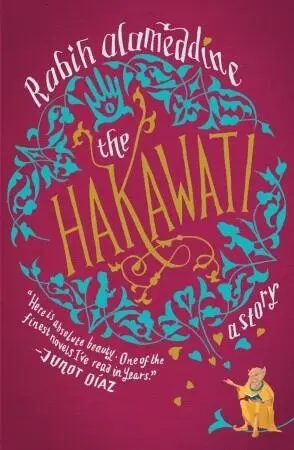
- Название:The Hakawati
- Автор:
- Издательство:Anchor
- Жанр:
- Год:2009
- ISBN:нет данных
- Рейтинг книги:4 / 5. Голосов: 1
-
Избранное:Добавить в избранное
- Отзывы:
-
Ваша оценка:
The Hakawati: краткое содержание, описание и аннотация
Предлагаем к чтению аннотацию, описание, краткое содержание или предисловие (зависит от того, что написал сам автор книги «The Hakawati»). Если вы не нашли необходимую информацию о книге — напишите в комментариях, мы постараемся отыскать её.
, or storyteller, and his bewitching tales are interwoven with classic stories of the Middle East. Here are Abraham and Isaac; Ishmael, father of the Arab tribes; the beautiful Fatima; Baybars, the slave prince who vanquished the Crusaders; and a host of mischievous imps. Through Osama, we also enter the world of the contemporary Lebanese men and women whose stories tell a larger, heartbreaking tale of seemingly endless war, conflicted identity, and survival. With
, Rabih Alameddine has given us an
for this century.
The Hakawati — читать онлайн бесплатно полную книгу (весь текст) целиком
Ниже представлен текст книги, разбитый по страницам. Система сохранения места последней прочитанной страницы, позволяет с удобством читать онлайн бесплатно книгу «The Hakawati», без необходимости каждый раз заново искать на чём Вы остановились. Поставьте закладку, и сможете в любой момент перейти на страницу, на которой закончили чтение.
Интервал:
Закладка:
The parrot Adam said, “I would have told the story of Abraham entering cursed Egypt, how he hid his beautiful Sarah in a chest.”
“Behold the wonder,” said the parrot Elijah. “The master comes.”
“No,” said Fatima, “I have time. Finish.”
“The parrot tells ninety tales,” said Ishmael.
“Maybe more,” said Isaac, “maybe less. And the merchant finally returns home. He notices that the magpie is no more and asks the parrot what happened. The parrot tells him about the prince, about his wife, and about the stories.”
Jacob said, “The merchant, in a fit of temper, slays his wife for her duplicity, and wrings the parrot’s neck for being a witness to his shame.”
“Ooof,” said Fatima.
“Observe the marvel,” said the parrot Job.
“Behold the wonder,” said the parrot Elijah.
“The lord arrives,” said the parrot Isaac.
“Tremble,” said the parrot Ishmael.
“Aiee,” said Fatima.
BOOK THREE
And as to poets, those who go astray follow them.
KoranIf you cannot climb a tree that your father has climbed, at least place your hands upon its trunk.
Ahmadou Kourouma, Waiting for the Wild Beasts to VoteA life in which the gods are not invited is not worth living.
Roberto Calasso, The Marriage of Cadmus and HarmonyTen
The Los Angeles Times announced that Elvis was dead. Below the main headline, NEW FLOODS BATTER DESERT, stood a smaller one, ELVIS PRESLEY DIES AT 42; LEGEND OF ROCK ’N’ ROLL ERA. I was reading the paper of the man standing before me in the customs line at the Los Angeles airport. The line was moving quickly as the customs official gave passports a cursory glance and let everyone through. When it was my turn, he didn’t even look at mine, but directed me to two other customs officials, a man and woman, who stood behind a gleaming metal table. The man, a red-haired, mustached guy with an uncanny resemblance to Porky Pig, demanded that I put my bags on the table. The woman, more obese than her partner, pointed to my carry-on. I smiled, careful not to show my teeth. My two front teeth did not match. Porky began poking through my belongings, sniffing around. I wanted to joke that I had no food in there, but I didn’t think he’d find it funny.
“What’s the purpose of your visit?” the female agent asked.
“Just a vacation. I’ve never been to America before.” Anticipating the next question, I answered it. “I’ll be here for ten days.” I hated lying.
Porky was jumbling up what my mother had meticulously packed. Another fat customs official approached with a German shepherd at his side. The dog began sniffing me. He reminded me of my Tulip, who had recently died of a heart attack. I bent down to pet him. “Don’t touch the dog,” Porky snapped from behind the table. “Please put your bags back on the cart and follow me.”
My left eyelid fluttered sporadically. I discreetly covered it with my left hand and followed Porky to a small, windowless office with only a metal table and a wooden chair. The customs official with the leashed dog followed us. The German shepherd sniffed my bags.
“I don’t have anything to declare,” I said nervously as Porky closed the door. “I swear.” I shifted my weight from one foot to the other. The back of my shirt was wet. The white walls had cement gray showing through the many chips in the paint.
“Please empty your pockets on the table,” Porky said harshly. He used the word “please” often, but his tone suggested otherwise. My hands shook. Out came a packet of cigarettes, a lighter, my wallet, my keys to our apartment in Beirut, two guitar picks, and some Chiclets gum. The German shepherd sniffed my crotch. His owner stood back, lips curled. “Please take off your jacket,” Porky said, taking me by surprise. I handed him my brown leather jacket. He squeezed it and had the dog smell it. “Take off your shoes, please.”
“They’re boots,” I said, “not shoes.” The distinction was important. They were cowboy boots I had bought expressly for this trip. Handmade boots, no less. Handmade in Texas, it said on the tag. I bought them for seventy-five dollars from a street vendor in Beirut. The boots were brown and had a serpent sewn in blue thread. I didn’t want just any old shoes for living in America.
“Please take off your shirt,” he said. Sweat dripped down my chest. I wished that I were bigger, that my chest were more impressive. “And your pants.” Porky and his compatriot went through my jeans, turning out the front pockets, feeling into the back ones, fingering the coin pocket. The dog sniffed the jeans. “Please turn around and face the wall.” I put my hands on the wall and spread my legs as if Starsky and Hutch were arresting me. “No, you don’t have to do that. Just pull down your underwear.” Porky’s tone was nicer all of a sudden. His voice had a touch of discomfort. “Could you please spread your cheeks?”
It took me a minute to realize what he meant by “cheeks.” I figured it out, but I was embarrassed that I hadn’t known that use of the word. I sensed his face approach my anus.
“Thank you,” Porky said, his tone now hesitant. “You can get dressed now.”
Outside, I looked for a taxi. The early-evening light was even, the sky mildly cloudy. The air was heavy, particle-filled. I took shallow breaths as the taxi driver loaded my bags into the trunk. His left hand was darker than his right, and the tops of his ears were sunburned. He drove me on my first American freeway, the 405. I noticed the roads were wet.
We exited on Wilshire Boulevard, straight into heavy traffic. The cabbie cursed. I looked at the car next to me, a black Alfa Romeo Spider with the top down. The driver, in a colorful shirt and Porsche sunglasses, was singing along loudly to the Beatles’ “Oh! Darling,” bopping his head up and down, drumming on the steering wheel. “Please believe me,” I sang along, regretting that I hadn’t brought my guitar.
I wasn’t some hick from the mountains. I had seen hotels before. I had stayed at the Plaza Athénée in Paris and the Dorchester in London, but neither had prepared me for the extravagent sumptuousness of the Beverly Wilshire. The desk clerk, a boy not much older than I, stood behind the counter, with hair the color of desert sand and a glint in his blue eyes, smiling, showing his excellent teeth. “My name is Osama al-Kharrat,” I said. “My father’s already here.”
“Ah, Mr. al-Kharrat. We’ve been expecting you.” His voice was sweet, confident. “Your father left a message saying his party will be back around nine.”
The “party” was my father and Uncle Jihad, who had both wanted to try gambling in Las Vegas. They had decided I should meet them in Los Angeles, where I could look for a school to attend. Beirut was becoming more harrowing. The civil war that everyone had thought would last only a few months had been going on for a couple of years, with no end in sight.
The desk clerk handed me the keys. “Don’t you want to see my passport?” I asked.
“No, I trust you.” His smile widened. “If you’re not Mr. al-Kharrat, then I’ll be in big trouble.” He wore a dark suit and a white shirt, but his tie was bright yellow, with tiny Daffy Ducks running all over the place.
I grinned back at him. “I am who I said I am.”
“The suite is two floors,” the bellboy said, opening the door. I walked in ahead of him, trying my best not to appear overwhelmed. “There are two bedrooms on this floor, and a master bedroom below.” He carried my bags to one of the rooms. I stood by the banister and stared down at the living room. A spherical crystal chandelier hung from the cathedral ceiling to the lower level. The drapes, as heavy as theater curtains, covering windows two stories high, were the same color and pattern as the wallpaper, gold with stylized metallic gray-blue paisley peacocks. The wall-to-wall carpeting was inches deep and avocado green. I was taking it all in when I noticed that the bellboy was still waiting behind me.
Читать дальшеИнтервал:
Закладка:
Похожие книги на «The Hakawati»
Представляем Вашему вниманию похожие книги на «The Hakawati» списком для выбора. Мы отобрали схожую по названию и смыслу литературу в надежде предоставить читателям больше вариантов отыскать новые, интересные, ещё непрочитанные произведения.









Обсуждение, отзывы о книге «The Hakawati» и просто собственные мнения читателей. Оставьте ваши комментарии, напишите, что Вы думаете о произведении, его смысле или главных героях. Укажите что конкретно понравилось, а что нет, и почему Вы так считаете.