Rabih Alameddine - The Hakawati
Здесь есть возможность читать онлайн «Rabih Alameddine - The Hakawati» весь текст электронной книги совершенно бесплатно (целиком полную версию без сокращений). В некоторых случаях можно слушать аудио, скачать через торрент в формате fb2 и присутствует краткое содержание. Год выпуска: 2009, Издательство: Anchor, Жанр: Современная проза, на английском языке. Описание произведения, (предисловие) а так же отзывы посетителей доступны на портале библиотеки ЛибКат.
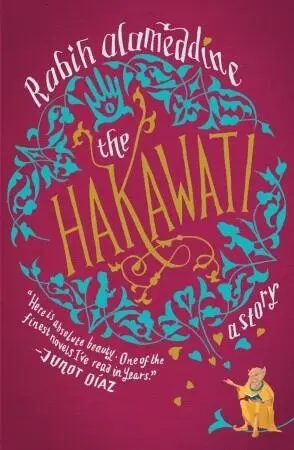
- Название:The Hakawati
- Автор:
- Издательство:Anchor
- Жанр:
- Год:2009
- ISBN:нет данных
- Рейтинг книги:4 / 5. Голосов: 1
-
Избранное:Добавить в избранное
- Отзывы:
-
Ваша оценка:
The Hakawati: краткое содержание, описание и аннотация
Предлагаем к чтению аннотацию, описание, краткое содержание или предисловие (зависит от того, что написал сам автор книги «The Hakawati»). Если вы не нашли необходимую информацию о книге — напишите в комментариях, мы постараемся отыскать её.
, or storyteller, and his bewitching tales are interwoven with classic stories of the Middle East. Here are Abraham and Isaac; Ishmael, father of the Arab tribes; the beautiful Fatima; Baybars, the slave prince who vanquished the Crusaders; and a host of mischievous imps. Through Osama, we also enter the world of the contemporary Lebanese men and women whose stories tell a larger, heartbreaking tale of seemingly endless war, conflicted identity, and survival. With
, Rabih Alameddine has given us an
for this century.
The Hakawati — читать онлайн бесплатно полную книгу (весь текст) целиком
Ниже представлен текст книги, разбитый по страницам. Система сохранения места последней прочитанной страницы, позволяет с удобством читать онлайн бесплатно книгу «The Hakawati», без необходимости каждый раз заново искать на чём Вы остановились. Поставьте закладку, и сможете в любой момент перейти на страницу, на которой закончили чтение.
Интервал:
Закладка:
Unbeknownst to the family at the time, evil Sitt Hawwar started a rumor that my aunt had to have her uterus removed and that she could no longer bear children. Evil Sitt Hawwar didn’t exactly say that my aunt had had an abortion, but she left the suggestion dangling. Not one suitor approached when my aunt matured to marriageable age. As time passed, when a family or a man would ask about my aunt, the rumor would surface. She waited and waited for someone to choose her, wondered what was so awful about her that not one was willing to test a fish hook in her waters. She would not get married for a long, long time: not till three of her younger brothers had married, not till she had to live the ignominy of being a spinster, not till she was thirty-eight and had been lying about her age for some while, not till my grandfather finally intervened and found her the most inappropriate husband in history.
My aunt didn’t tell anyone about her friendship with the baker’s daughter for years. It seemed that, since the timing of her friendship and the ugly rumors seemed to coincide, she felt they were intimately related. She believed she was being made to pay for the crime of fraternizing outside of the alliance of family. She finally came clean to her youngest brother, Jihad, on a night in early 1976, when the war still raged but hadn’t yet forced the family to abandon the building. She confessed in the garage, which acted as our shelter when missiles cried havoc in our skies. Uncle Jihad tried to tell her that what she’d done was not a sin. He said that what happened to her was simply a common medical condition, and that she was a victim of the nastiness and naïveté of mountain people.
“Do you really think you’re being punished for singing songs with a nice girl?”
“It wasn’t about singing.”
“What? Did you do something else — maybe something inappropriate?”
“Of course not. How dare you? She was just my friend. We talked.”
“How’s that wrong? What did you talk about?”
“I don’t remember. We talked about our families, about our villages. We talked about the French and whether they would leave. I don’t really remember specifics.”
“You think you’re being punished with a horrible life because you talked to a girl for a week? That’s irrational and naïve. It doesn’t make sense.”
“You don’t understand.”
Uncle Jihad did not. After trying to reassure her for about a month, he called in the cavalry, my mother. At first, Aunt Samia was horrified that her secret was out. My mother told her she was being silly, something my mother told her on a regular basis. “How can you think that making friends with someone is wrong?” my mother said. “What happened to you was the work of a sinister woman and had nothing to do with any sins. Sitt Hawwar was an evil, despicable person. It wasn’t your fault. And look at you. You life isn’t miserable. You’re rich, you’re the matriarch of a great family, and, most important, your mother would be proud of you if she saw how successful you are. And you know who was punished? Don’t you remember how horribly Sitt Hawwar died? Who was at her bedside when she left this world? No one. Her children were nowhere to be found. Don’t you remember the gossip? She was in the hospital, and guests would pay a visit, and there were no family members around. Could there be a life worse than that? She died alone, and no one cared. Samia, you stupid, stupid girl. Sitt Hawwar lost. Her soul left this world unlamented.”
Aunt Samia felt better. After that day, she began to wear higher heels.

And when the hakawati parrot’s tale was over, Ezra the parrot said, the merchant’s wife retired to her chambers for the night, because it was too late to meet the prince. The following evening, she put on her best robe and demanded the parrot’s permission to leave. Let me tell you a story, the parrot said.
Once, in a land far away, there lived an old king who was terrified of dying. He sequestered himself in his chambers, refusing to see his viziers. He neglected affairs of state. His subjects worried. His attendants wept in private. The viziers had exhausted all options and plans to entice their king out of bed. The king’s glorious parrot spread his emerald wings and flew up to the skies. Higher and higher, into the heavens he soared. He reached paradise and descended into its garden. He picked a fruit that had fallen from the Tree of Immortality. He returned to his master and said, “Take the seed of this fruit and plant it in fertile earth. Feed it love and wisdom and the sapling will turn into a fruit-bearing tree. Old age will forsake whoever eats from the tree’s fruit, and vigor will revisit him.” And the king’s servants were surprised when their master called: “Plant this fruit’s seed in my garden. I wish to glimpse its crop in my lifetime.”
The sagacious bird said, “Remember the legend of the wise King Solomon and the Fount of Immortality. He refused to quench his thirst, for he wished not to outlive his loved ones.”
“Bah!” uttered the king. Life coursed through his veins, hope revived him, and he woke every morning to witness the incremental growth of his tree. “Love it more,” he told his gardeners. “Faster, quicker, it must rise.” The tree grew, and buds burst into flowers, from which small fruit appeared. Finally, the day arrived when the fruit was ripe and ready. “Pick that one,” the vivacious king said. “It looks the most succulent.”
The gardener carried a small ladder to the tree. At the same instant, an eagle high in the clouds saw a slithering snake not too far from the king’s garden. The eagle lunged and clutched the snake, lifting it into the skies. With its final breath, the snake spat out its venom, and one drop fell upon the fruit as it was being presented to the king.
“Bring me an old fakir,” the king demanded. When his servants found one, the king commanded that he taste the fruit. The fakir took one bite, keeled over, and died.
The king raged. “Is that horrible parrot trying to hasten my demise?” He seized the bird by the feet, twirled the parrot above his head, and threw him against the tree. The parrot broke his neck and met his end. The tree became known as the Tree of Poison, and none approached it.
As hope left him, the king grew sickly. He retired to his chambers once more and spent his time cursing the tree from his window. Soon he saw the specter of death approaching.
While things were thus, a vicious young wife quarreled with her old mother-in-law. The girl raised her voice at her elder and cursed. Shocked, the mother-in-law informed her son, and the ingrate took his wife’s side. His mother was so livid and distraught that she resolved to kill herself so her son would be blamed for her death. She sought the garden, bit into a fruit from the Tree of Poison, and was instantly transformed into a youthful beauty.
“What miracle is this?” the lovely girl asked.
The king witnessed the transformation from his window. “How guilty am I?” he said to himself. “I have killed a true friend.” He called his servants in a faint voice. “Pick me a fruit,” he whispered. But wicked death reached him before the picking.
Pictures from Uncle Wajih’s wedding show a young, somewhat distraught Aunt Samia. She didn’t particularly approve of her brother’s marriage to Aunt Wasila. She had on a ridiculous dress, bad makeup; her hair fell long and straight to the shoulder. At Uncle Halim’s wedding, she looked older and not unhappy. At my parents’ wedding, she looked miserable, the effects of Lebanese spinsterhood. One day, my grandfather seemed to wake up from a stupor and realize that his thirty-eight-year-old daughter was still unmarried. My father denied the veracity of this version of the story. He said that the whole family discussed the lack of suitors for my aunt’s hand all the time. My grandmother must have talked to my grandfather about it often, but my grandfather said he’d never paid attention, he was too busy, until, one day, the scales fell from his eyes. “If no man has shown up at our door,” he told my grandmother, “then we must find one.”
Читать дальшеИнтервал:
Закладка:
Похожие книги на «The Hakawati»
Представляем Вашему вниманию похожие книги на «The Hakawati» списком для выбора. Мы отобрали схожую по названию и смыслу литературу в надежде предоставить читателям больше вариантов отыскать новые, интересные, ещё непрочитанные произведения.










Обсуждение, отзывы о книге «The Hakawati» и просто собственные мнения читателей. Оставьте ваши комментарии, напишите, что Вы думаете о произведении, его смысле или главных героях. Укажите что конкретно понравилось, а что нет, и почему Вы так считаете.