Rabih Alameddine - The Hakawati
Здесь есть возможность читать онлайн «Rabih Alameddine - The Hakawati» весь текст электронной книги совершенно бесплатно (целиком полную версию без сокращений). В некоторых случаях можно слушать аудио, скачать через торрент в формате fb2 и присутствует краткое содержание. Год выпуска: 2009, Издательство: Anchor, Жанр: Современная проза, на английском языке. Описание произведения, (предисловие) а так же отзывы посетителей доступны на портале библиотеки ЛибКат.
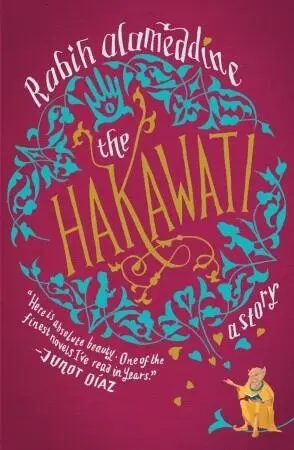
- Название:The Hakawati
- Автор:
- Издательство:Anchor
- Жанр:
- Год:2009
- ISBN:нет данных
- Рейтинг книги:4 / 5. Голосов: 1
-
Избранное:Добавить в избранное
- Отзывы:
-
Ваша оценка:
The Hakawati: краткое содержание, описание и аннотация
Предлагаем к чтению аннотацию, описание, краткое содержание или предисловие (зависит от того, что написал сам автор книги «The Hakawati»). Если вы не нашли необходимую информацию о книге — напишите в комментариях, мы постараемся отыскать её.
, or storyteller, and his bewitching tales are interwoven with classic stories of the Middle East. Here are Abraham and Isaac; Ishmael, father of the Arab tribes; the beautiful Fatima; Baybars, the slave prince who vanquished the Crusaders; and a host of mischievous imps. Through Osama, we also enter the world of the contemporary Lebanese men and women whose stories tell a larger, heartbreaking tale of seemingly endless war, conflicted identity, and survival. With
, Rabih Alameddine has given us an
for this century.
The Hakawati — читать онлайн бесплатно полную книгу (весь текст) целиком
Ниже представлен текст книги, разбитый по страницам. Система сохранения места последней прочитанной страницы, позволяет с удобством читать онлайн бесплатно книгу «The Hakawati», без необходимости каждый раз заново искать на чём Вы остановились. Поставьте закладку, и сможете в любой момент перейти на страницу, на которой закончили чтение.
Интервал:
Закладка:
From that moment of epiphany onward, my grandfather divided men into two categories: possible future sons-in-law and not. Into the former fell only one man, barely.
Uncle Akram was another entertainer hired by the bey, a percussionist, to be precise. He played the Lebanese derbakeh, and he played it well. But it wasn’t his drumming talent that earned him a job with the bey. After all, percussionists were as common as asses in the mountains. Uncle Akram’s real talent was his narcolepsy, which the bey found comical. The takht — an oud, a violin, maybe a recorder, and the derbakeh — would be playing, someone might be singing, and in the middle of the song, the beat would stop. Uncle Akram’s head would drop to his chest, and he would swim in his sea of dreams. The band would either stop playing or go on without him, taking their cue from the bey’s mood and his level of sobriety. But whether they stopped or not, when Uncle Akram came to, he would pick up the exact beat he had been playing as he fell asleep. That never ceased to send the bey into a fit of laughter. Uncle Akram never figured out he was the object of a joke, and the bey forbade anyone to enlighten him.
My grandfather approached Uncle Akram and asked him to marry Aunt Samia, who was much older than he. My grandfather sweetened the deal by promising to talk to his son Farid about a possible job: my father had just opened the car dealership. My grandfather suggested drumming was not a profession that provided consistent earnings.
My grandmother didn’t think Uncle Akram was a good match for her daughter. Neither did her daughter nor any of my uncles. Yet they all agreed that Uncle Akram was a decent man.
By the time I came along, Uncle Akram had been employed at the dealership for years, and Aunt Samia was nothing like the down-to-earth, austere, hardworking housewives I associated with the mountains. None of my aunts were. I always wondered when the transformation occurred. When did my aunts shed their dry mountain skins and evolve into shiny Beirutis, albeit rough around the edges? None of them had finished high school, and they didn’t read books, so I assumed that money or location was the catalyst of the metamorphosis, but sometimes I wondered if it was just their singular personalities.
In 1985, my father had to be flown to London for an emergency triple bypass. My mother and sister accompanied him, of course, and I flew in from Los Angeles, where I was living. My mother rented an apartment on South Street, off Park Lane. Deciding that neither of my father’s women could care for him — or me, for that matter — Aunt Samia insisted on coming along to take care of all of us. “What will Layla do without her maids? She can’t cook, she can’t clean. She doesn’t know a frying pan from a Crock-Pot. Her daughter is worse. How’s she going to take care of my brother? Balance his books?”
She didn’t understand any language but Lebanese and had completely forgotten what few English songs and words she’d learned in school. This was her first trip outside the Arab world. Yet, when she arrived in London, all she asked of me was to write down the apartment’s address on a piece of paper so she could show the taxi driver where she needed to go.
She was a robust, well-shod, plump sixty-five at the time. The first forty-eight hours, while my father was being prepped for surgery, she stocked the kitchen. She found a supermarket, bought everything we needed all on her own. “There was a butcher in the middle of the market,” she said, telling my father of her first shopping expedition, “but everything was packaged. I couldn’t buy plastic meats. I whistled to get the butcher’s attention, but I didn’t know how to say lamb, so I went, ‘Baa, baa,’ and he understood. I held up one finger and said, ‘Kilo.’ But then he cut a nice piece of meat and covered it as if I were some dog going to chew it. I told him, ‘No, no,’ and gestured with both hands that I wanted it in smaller pieces. He asked, ‘Chop?’ and showed me his knife. I smiled at him, and he chopped the kilo into smaller pieces, but he didn’t understand that it was for cooking. So I call him and say, ‘Chop, chop, chop, chop, chop, chop, chop, chop,’ and his brains finally worked, and I got my finely chopped lamb. They don’t understand cooking over here.”
When my father was wheeled in for the operation, my mother asked me to take my aunt out to lunch, since the procedure was going to last for at least four hours. Three hours later, we returned. From the window of the cab, I saw my mother crying behind the hospital’s glass door, her hands covering her face, her body shaking. My sister had her arms wrapped around my mother. My heart dropped to my testicles. Aunt Samia bounced out of the black cab before it came to a stop, jiggling muscles and fat on heels. “My brother,” she wailed. “They killed you, my brother.” I flew out of the taxi behind her. My mother, her face still wet, was tying to calm my aunt, who was sitting on the floor in the hospital entrance, her legs splayed before her. “Samia,” my mother said, “he’s going to be fine. I’m crying with relief, not grief. The operation was a great success. The doctors just came out. We’ll be able to see him within the hour.”
It took a moment for Aunt Samia to register the information and change the expression on her face to one of unbridled fury. “You scared me,” she hissed. “You’ve just taken ten years off my life.” My mother shrank back as if slapped. It was rare to see her at a loss. Lina stepped in front of her, steely eyes glaring down at my aunt. Aunt Samia looked appalled. “I’m so sorry,” she said, tilting her head to look at my mother’s face behind my sister. “Forgive me. Please forgive me. I shouldn’t have said that.” She tried to stand up, and Lina didn’t help her. My mother moved forward and lifted her by the elbow. “That was inexcusable.” Aunt Samia began to weep. “I was frightened.”
My father had to recover in the London apartment for two weeks. My aunt cooked and was in charge of the household. My father felt guilty that she had to work so hard and asked me to take her to the Playboy casino, using his membership card. Like most Lebanese, my aunt loved to gamble, and her face sparkled at the news. My father thought I could easily pass as him, since no one ever asked to see anything but the card whenever he went to the club. He was wrong. I handed the card to the receptionist, and he asked if I was Farid al-Kharrat. Realizing that there was a problem, my aunt bounded off like a tiny tank, through the swinging doors and into the casino. When I was allowed in after explaining who I was, I found her already at the blackjack table, sipping a gin and tonic, pointing with her finger for the dealer to hit her.

“And so,” Jacob began, “by the time the parrot had finished his story, the hour was late and the lady could not meet the prince.”
Fatima felt a contraction and heard the scream of the emir’s wife in the other room. She held her palm up and interrupted the story. An excited servant rushed into the room. “The emir wishes to inform you that the mistress is giving birth,” she said. She halted, marveled at the wonder of eight colorful parrots in the room.
“My nephew arrives,” said the parrot Ishmael.
“Wait,” said Fatima. “Wait. There is still time. Tell me how the story ends.”
“The master comes,” announced the parrot Isaac.
“Yes, yes, I know,” said Fatima. “The story. The story.”
“I wanted to tell the story of the dervish and the three coins,” said the parrot Job. “It is most exquisite.”
“For me,” said the parrot Noah, “I would have told my favorite, about Aladdin and the lamp. It is most sublime.”
Читать дальшеИнтервал:
Закладка:
Похожие книги на «The Hakawati»
Представляем Вашему вниманию похожие книги на «The Hakawati» списком для выбора. Мы отобрали схожую по названию и смыслу литературу в надежде предоставить читателям больше вариантов отыскать новые, интересные, ещё непрочитанные произведения.








Обсуждение, отзывы о книге «The Hakawati» и просто собственные мнения читателей. Оставьте ваши комментарии, напишите, что Вы думаете о произведении, его смысле или главных героях. Укажите что конкретно понравилось, а что нет, и почему Вы так считаете.