Rabih Alameddine - The Hakawati
Здесь есть возможность читать онлайн «Rabih Alameddine - The Hakawati» весь текст электронной книги совершенно бесплатно (целиком полную версию без сокращений). В некоторых случаях можно слушать аудио, скачать через торрент в формате fb2 и присутствует краткое содержание. Год выпуска: 2009, Издательство: Anchor, Жанр: Современная проза, на английском языке. Описание произведения, (предисловие) а так же отзывы посетителей доступны на портале библиотеки ЛибКат.
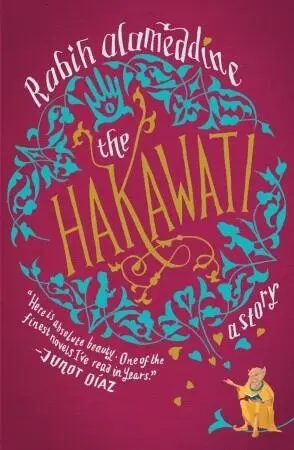
- Название:The Hakawati
- Автор:
- Издательство:Anchor
- Жанр:
- Год:2009
- ISBN:нет данных
- Рейтинг книги:4 / 5. Голосов: 1
-
Избранное:Добавить в избранное
- Отзывы:
-
Ваша оценка:
The Hakawati: краткое содержание, описание и аннотация
Предлагаем к чтению аннотацию, описание, краткое содержание или предисловие (зависит от того, что написал сам автор книги «The Hakawati»). Если вы не нашли необходимую информацию о книге — напишите в комментариях, мы постараемся отыскать её.
, or storyteller, and his bewitching tales are interwoven with classic stories of the Middle East. Here are Abraham and Isaac; Ishmael, father of the Arab tribes; the beautiful Fatima; Baybars, the slave prince who vanquished the Crusaders; and a host of mischievous imps. Through Osama, we also enter the world of the contemporary Lebanese men and women whose stories tell a larger, heartbreaking tale of seemingly endless war, conflicted identity, and survival. With
, Rabih Alameddine has given us an
for this century.
The Hakawati — читать онлайн бесплатно полную книгу (весь текст) целиком
Ниже представлен текст книги, разбитый по страницам. Система сохранения места последней прочитанной страницы, позволяет с удобством читать онлайн бесплатно книгу «The Hakawati», без необходимости каждый раз заново искать на чём Вы остановились. Поставьте закладку, и сможете в любой момент перейти на страницу, на которой закончили чтение.
Интервал:
Закладка:
Uncle Jihad was nursing his drink. He still wore his suit, his tie slightly askew. “Why engineering?” he asked me. “You told me a month ago you wanted to study math.”
I looked at the dents and ridges of his bald head. Sweat collected in them, forming miniature pools. Every few minutes he ran his handkerchief over his scalp, momentarily reducing the sheen. Whenever he and my father went gambling, my father kissed the top of Uncle Jihad’s head for good luck.
“I like math, Uncle. It’s what I’m good at. Engineering is applied math, basically.”
“Are you sure that’s what you want?”
“Of course he is,” my father interrupted from behind the paper. “He can’t make a living with a math degree.”
It was almost one in the morning, eleven in the morning Beirut time, and I had been up for more than thirty-six hours, but I wasn’t ready to sleep yet. I slumped in my chair, my mind racing. “It’s raining a lot,” I said in English, hoping to engage Melanie in conversation.
“It’s been raining all over,” Uncle Jihad said.
“This isn’t normal,” Melanie said. A smooth, melodic voice. “It’s unseasonable. The California deserts are having major floods. It even rained in Vegas.”
“Is that where you met?” I asked.
In the large bed, with the lights out, I lay thinking. My father had gone into his room with her, closing the door. The night was humid.

The dialysis machine chugalugged my father’s blood and regurgitated it back into him. Could a scene be déjà vu if it was truly repeating itself? This was another day. Salwa sat on the bed and held my father’s hand. “This won’t take long,” she told him. “Only another forty-five minutes.” My sister, on the rust recliner, leaned back and covered her eyes with her forearm. The narcoleptic technician’s head rested on his chest. I stood at the foot of the bed, counting off red time with the dialysis machine.
There was a knock on the open door. I was the only one who could see out, and my sister waved for me to send whoever it was away. A beautiful woman of indeterminate age stood in the doorway in an extravagant sable coat and stiletto heels. She wore stylish, heavy makeup, which made her face look as white and pure as a cake of halloumi. Her short bouffant hair was dyed a chestnut brown with precisely equidistant blond streaks. I recognized her after she smiled a childlike smile yet terribly saucy. I hadn’t seen her in over twenty years.
“Nisrine,” I said softly as I walked toward her. I surprised myself by using her first name. How old was she? She kissed me, cheek to cheek, three times. “I don’t think it’s a good idea for you to go in,” I said. “He doesn’t like to be seen when he’s sick.”
She kept her hand on my cheek. “I knocked only to make sure he’s decent.” She strolled in and stopped as if she had encountered an invisible electric fence, as if she were face to face with death’s scythe. A tiny cry escaped her lips, and her face crumpled. Her first tear carved a furrow in her foundation. Nisrine’s hand went to her left eye, and her finger removed one contact lens, then the other. She cried, holding her tiny lenses in the palm of her hand as an offering to the gods of grief.
Nisrine and Jamil Sadek moved into the third floor of the building behind ours in 1967. In no time, they had established themselves as the most popular couple in the neighborhood. She was beautiful, witty, and flirtatious, and he was a delightful drunk. Few remembered she was a mother of three, for she was rarely seen with her children in public. Fewer still could help enjoying the misshapen, congenital liar she was married to. Captain Jamil was the only man in the neighborhood I was able to look down on, literally and figuratively. He was shorter than many children, but not exactly a dwarf. His huge paunch always seemed about to topple him. He canted his side hair like a sheaf over the top of his bald head. And he was no captain.
Stories about him were legion, but none were as famous as the one about his repeated failures at being promoted to full-fledged pilot. He made sure that all called him Captain Jamil. He was the oldest copilot at the airline and flunked every captain exam, but you’d never know it from talking to him. He told tall tales of saving flights from sure disasters, of passengers writing him sheaves of letters detailing their gratitude. He told of the other captains’ looking up to him and pleading with him for flying lessons. None of his listeners believed him, and all pretended they did.
One day, he arrived at our house for lunch. As a gift, he brought a bottle of blended scotch whisky in a yellow box sporting pictures of affluent, well-dressed men. “This whisky is called House of Lords,” he announced. “It’s specifically made for English royalty and nobles. A member of the British Parliament who happens to be the queen’s best friend presented it to me on my last trip to London.” This was the only time anyone unraveled his lie publicly. Uncle Jihad drove to Spinneys, the supermarket, while lunch was being served, and returned within half an hour with another yellow box of the cheap brand. He placed it on the table and announced that the queen herself had given it to him, but on one condition. “The queen told me, in her perfect British accent, of course, that she loved me and considered me worthy of such a perfect bottle of whisky, but that this magnificent brew should be served only to the best of men, to the greatest of friends.” And he poured a glass for Captain Jamil.
It was the captain’s young wife, though, who ensured that the couple received an invitation to every event. She was a bon vivant, and bright, if not too cultured or sophisticated; an uneducated Sunni from Tripoli who realized that she had to rely on her piercing wit and charm to overcome being married to a parody and get ahead in life. And did she ever get ahead. At every gathering, men roamed her summers like fireflies. She amused them, teased and cajoled them. Told the best dirty jokes and the funniest bawdy tales. She was the only woman who could turn our neighborhood militiaman, Elie, into an ogling, trembling teenage boy who desperately tried to cover his excitement every time she walked by. She and Uncle Jihad formed a mutual-admiration society. They would sit in the corner and make fun of everybody else. He once asked her why she married her husband when she could have done so much better. She replied that she’d been young. Captain Jamil had appeared at her doorstep in his sports car. She was blinded by the pilot’s uniform. He spoke to her of flying, what it felt like to be up in the air, the freedom, the glory, the escape from the mundane. She dreamed of magic carpets.
One day, Uncle Akram made the mistake of hinting to my father and Uncle Jihad that he had slept with Nisrine. At an evening gathering on our balcony, as Nisrine delicately puffed her hookah, my father said to her, “Nisrine, my dear, Akram is telling quite a few people that he has bedded you.” She cracked up and crackled, smoke sprouting from her mouth like the sudden eruption of a mountain hot spring. I could see the unadulterated glee in Uncle Jihad’s brown eyes. “Hey, Akram,” she shouted across the balcony. “Come over here and entertain me for a minute.” He hurried over like a child called by his favorite teacher to the blackboard. “Tell me, dear,” she cooed. “I hear you have a wonderful story, and I love stories.” She smiled, batted her eyelashes a few times, and took a long drag from the hookah. She blew the smoke seductively into his eager face. “I hear that you fucked me, and I want to know whether I was good.”
Интервал:
Закладка:
Похожие книги на «The Hakawati»
Представляем Вашему вниманию похожие книги на «The Hakawati» списком для выбора. Мы отобрали схожую по названию и смыслу литературу в надежде предоставить читателям больше вариантов отыскать новые, интересные, ещё непрочитанные произведения.









Обсуждение, отзывы о книге «The Hakawati» и просто собственные мнения читателей. Оставьте ваши комментарии, напишите, что Вы думаете о произведении, его смысле или главных героях. Укажите что конкретно понравилось, а что нет, и почему Вы так считаете.